
Which VOC, Odor, Fogging and Flammability Tests Should Automotive Nonwoven Suppliers Meet?
For automotive Tier 1 and Tier 2 interior component buyers, selecting needle punched nonwoven materials involves more than checking basis weight, thickness, color, and mechanical properties.
Once the material enters an automotive interior project, the supplier's ability to provide VOC, FOG, Odor, Fogging, and Flammability test data can directly affect sample approval, material validation, and subsequent bulk purchasing.
Therefore, automotive buyers should not simply write “Low VOC” or “Automotive Grade” in an RFQ. A more effective approach is to specify the required test items, test methods, sample condition, and reporting requirements according to the final application.
This is particularly important for needle punched nonwoven materials because they may be used as standalone interior felt or combined with adhesives, foam, textiles, plastics, or other materials. The final performance may not be determined by the needle punched nonwoven alone.
Why Should Automotive Buyers Not Specify Only “Low VOC”?
“Low VOC” can be part of an automotive material purchasing requirement, but it is not a sufficiently specific supplier acceptance criterion by itself.
Different automotive projects may use different internal specifications, test methods, and limits. If an RFQ only states “Low VOC,” a supplier may provide a general VOC report, while the purchasing engineer may actually need VOC, FOG, or other cabin-air-quality data based on a specific test method.
VDA 278 is a typical example. According to VDA materials, VDA 278 is a thermal desorption analysis method for automotive non-metallic materials. It can be used to characterize emissions from materials including textiles, carpets, adhesives, foams, leather, plastics, films, and material combinations, with cumulative evaluations for VOC and condensable substances known as FOG.
Therefore, when purchasing automotive needle punched nonwoven materials, the RFQ should not simply state “Low VOC Felt.” It should specify the test method required by the project and identify which test results the supplier must provide.
The actual delivery condition of the material should also be considered. If the supplier provides a needle punched felt that is later combined with adhesive, film, foam, or another material, the test object has changed. The test result of the standalone material therefore cannot automatically represent the final component.
This is why Tier 1 buyers should clarify during supplier evaluation whether the test applies to the raw material, semi-finished material, or final composite component.
The earlier this is confirmed, the easier it becomes to avoid repeated testing during sample development and laboratory validation.
How Should VDA 278 Be Used to Evaluate VOC and FOG in Automotive Needle Punched Nonwoven?
VDA 278 is a thermal desorption analysis method for automotive non-metallic materials. VDA materials indicate that the method can characterize organic substances released from materials and generate cumulative VOC and FOG values.
For automotive interior needle punched nonwoven, this means buyers can use the relevant testing to understand the material's organic emissions under specified test conditions rather than relying only on supplier descriptions such as “low odor” or “eco-friendly material.”
In actual purchasing, VDA 278 is better understood as a material-emission validation tool, rather than simply a product label.
Purchasing engineers should also confirm the test sample's material composition, thickness, surface treatment, and composite structure. If the needle punched felt has adhesive, coating, foam lamination, or other post-processing, the test sample has changed and the resulting performance may also differ.
This is particularly important for automotive projects because the same base needle punched nonwoven can show different emission characteristics when different adhesives, coatings, or composite structures are used.
Therefore, an automotive supplier RFQ can clearly specify:
VDA 278 test method
VOC result
FOG result
Test sample condition
Material structure and post-processing information
Corresponding test report or laboratory documentation
This allows buyers to compare different suppliers using data obtained under more consistent conditions.
It is also important to understand that a VDA 278 result does not automatically mean that a material is approved for a specific automotive project. Whether it meets a particular vehicle or OEM requirement still depends on the applicable limits and project specifications.
Why Should DIN 75201 Fogging Requirements Be Confirmed Separately?
VOC, FOG, and Fogging often appear together in automotive purchasing documents, but they are not exactly the same concept.
DIN 75201 is specifically used to determine the fogging characteristics of automotive interior materials. The current version listed by DIN Media is DIN 75201:2024-06, which is used to determine the fogging characteristics of materials used inside passenger compartments and can also be applied to liquid, paste, powder, and solid raw materials that make up such interior materials.
The basic concern with Fogging is that volatile components released from a material under specified conditions may form deposits on a cooler glass surface. In automotive interiors, this can affect the visual clarity of vehicle windows, particularly the windshield.
Therefore, if needle punched nonwoven is used for headliners, door panels, trunk materials, carpet substrates, acoustic materials, or other interior structures that may affect the cabin environment, buyers should confirm whether the project requires a Fogging test.
It is especially important to understand that FOG data from VDA 278 and Fogging testing under DIN 75201 should not simply be treated as exactly the same test. Although both involve condensable or volatile substances, their test methods and evaluation approaches are different.
For an RFQ, the safer approach is not to let the supplier decide which test is “close enough.” Instead, the purchasing document should directly specify the required project standard.
If the project requires DIN 75201, the buyer should specify the applicable version and evaluation method. If the OEM uses its own internal specification, the OEM or Tier 1 project requirement should take priority.
This helps prevent suppliers from submitting a seemingly relevant test report that cannot actually be used for project approval.
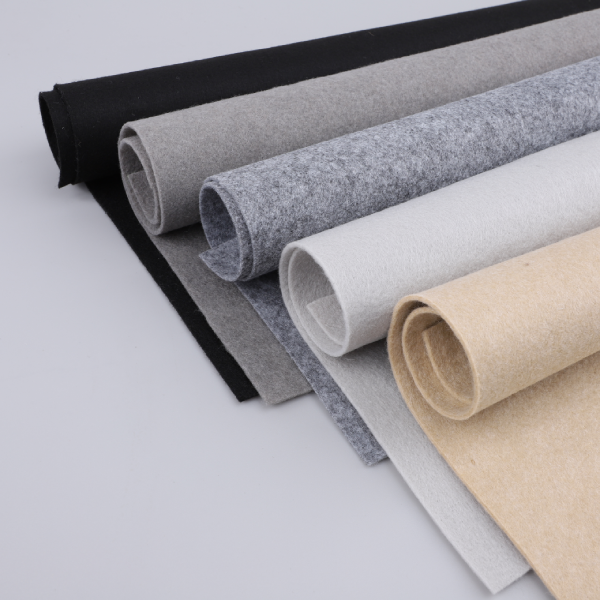
What Do VDA 270 and FMVSS 302 Evaluate?
In automotive interior purchasing, Odor and Flammability are two completely different validation areas, and one test cannot replace the other.
VDA 270 is used to evaluate the odor characteristics of automotive interior materials. Current VDA information identifies VDA 270 05/2022 as a method for evaluating the odor characteristics of automotive interior materials and components that come into contact with cabin air under temperature and climate influences.
Therefore, if an automotive project has specific cabin odor requirements, buyers should confirm whether the supplier can provide the required Odor test data according to the specified method.
FMVSS 302, on the other hand, focuses on the burning behavior of automotive interior materials. NHTSA information indicates that FMVSS 302 applies to relevant materials used in the occupant compartment of new motor vehicles, including materials used in seats, headliners, interior trim panels, carpets, sun visors, and other specified interior components.
Therefore, automotive buyers should not assume that a needle punched nonwoven material meeting VOC or Odor requirements also meets flammability requirements.
Likewise, passing FMVSS 302 does not mean that the material automatically has low VOC or low odor characteristics.
These tests address different project risks:
VOC / FOG: Material emissions
Odor: Cabin odor characteristics
Fogging: Deposition of volatile substances on glass surfaces
Flammability: Material burning performance
For export projects, the exact tests and limits required should still be determined according to the target OEM, Tier 1 project specification, and requirements of the destination market.
How Can Tier 1 Buyers Include Test Requirements in an RFQ?
If an RFQ only states “Automotive Interior Needle Punched Felt, Low VOC, Flame Retardant,” the supplier will still need to ask for many additional details.
A more effective RFQ should clearly define the final application and testing requirements.
For example, the buyer should first specify which component the material will be used in and whether the material will be used as a single layer or combined with foam, adhesive, textile, plastic, or another component.
The RFQ can then specify the required tests, such as:
VOC / FOG: VDA 278 or another OEM-specified method
Odor: VDA 270 or another OEM-specified method
Fogging: DIN 75201 or another OEM-specified method
Flammability: FMVSS 302 or another market-specific requirement
The RFQ should also define the material condition, including basis weight, thickness, color, fiber type, surface treatment, adhesive backing, and composite structure.
These factors can affect the test sample and mean that the tested material may no longer be exactly the same as the final mass-production product.
For supplier evaluation, buyers should also confirm the test report date, sample number, material specification, and laboratory information. This makes it easier to trace the relationship between the approved sample and the production material during PPAP, sample approval, and mass production.
This is particularly important for long-term automotive projects. Purchase price is only one part of supplier evaluation. Test-document completeness, batch consistency, and the ability to continuously meet project specifications can also affect long-term cooperation.
How Can JHC Support Automotive Interior Projects?
For automotive interior applications, HuiZhou JinHaoCheng Nonwoven Co., Ltd. provides needle punched nonwoven, automotive interior felt, and related customized nonwoven materials, with support for different basis weights, thicknesses, widths, colors, and OEM/ODM development.
For Tier 1 and Tier 2 projects, buyers can provide the final application, material structure, target thickness and basis weight, as well as the required testing standards during the RFQ stage.
For projects with specific requirements, providing VOC, Odor, Fogging, and Flammability requirements at the sample-development stage can help the supplier understand the purchasing conditions more accurately, rather than quoting a standard nonwoven material first and then modifying the material later during testing.
For long-term automotive projects, material consistency, production stability, and quality control are equally important. The supplier needs to maintain consistency with the approved sample during mass production, rather than simply providing a one-time test sample.
Therefore, when evaluating needle punched nonwoven suppliers for automotive projects, buyers can consider understanding of test standards, sample-development capability, and mass-production consistency together as part of the supplier evaluation process.
Conclusion
Supplier evaluation for automotive interior needle punched nonwoven should not focus only on the terms “Low VOC” or “Flame Retardant.”
For Tier 1 and Tier 2 buyers, it is more important to clearly define the specific tests required for the material in the RFQ, together with the applicable test methods and project requirements.
VDA 278 can be used to characterize VOC and FOG emissions from automotive non-metallic materials; VDA 270 is used to evaluate odor characteristics of automotive interior materials; DIN 75201 is used to determine the fogging characteristics of automotive interior materials; and FMVSS 302 addresses the flammability requirements for relevant automotive interior materials.
However, these standards do not mean that every automotive project uses exactly the same limits or combination of tests. Actual purchasing requirements should still be determined according to the specific OEM, Tier 1 project specification, and target market.
For overseas buyers, the most effective approach is not simply to look for an “Automotive Grade” supplier, but to confirm test standards, material condition, test reports, and mass-production consistency throughout the RFQ, sample, and supplier evaluation stages.




