Floor Protection Film vs Protective Fleece: Which Floor Protection Material Is Better for Renovation Projects?
How to Choose the Right Floor Protection Solution During Renovation?
During renovation, remodeling, and construction projects, protecting existing floors is an important step to ensure project quality. Whether the surface is hardwood flooring, tiles, marble, carpet, or other high-value materials, construction activities can create various risks, including paint spills, water damage, dust contamination, tool impact, and heavy foot traffic.
Choosing the right Temporary Floor Protection can not only reduce repair costs but also improve construction efficiency and protect the final renovation results.
Currently, two common floor protection solutions are widely used in renovation projects:
Floor Protection Film
Although both products are designed to protect floors during construction, they have significant differences in structure, performance, durability, and application scenarios.
So, between Floor Protection Film and Protective Fleece, which one is better for renovation projects?
The answer depends on the construction environment, protection requirements, and the type of flooring.
What Is Floor Protection Film?
Features of Plastic Floor Protection Film
Floor Protection Film is one of the most commonly used temporary protection materials in renovation projects. It is usually made from plastic materials such as PE (polyethylene) and creates a protective barrier by covering the floor surface.
It is mainly used to prevent: Paint spills, Dust contamination, Liquid penetration, Minor surface damage.
Due to its low cost, lightweight structure, and easy transportation, Floor Protection Film is widely used for short-term renovation projects and basic construction protection.
Advantages of Floor Protection Film
1. Good Waterproof Performance
Plastic film provides good waterproof protection and can effectively prevent water, paint, and other liquids from reaching the floor surface.
For painting projects and cleaning operations where liquid contamination is the main concern, plastic film can provide basic protection.
2. Lightweight and Easy Installation
Because the material is thin and flexible, Floor Protection Film is easy to transport, cut, and install.
It is suitable for projects that require simple and temporary floor coverage.
3. Lower Cost
For projects with limited budgets or short construction periods, plastic floor protection film is an economical option.
Limitations of Floor Protection Film
Although Floor Protection Film provides basic protection, it also has limitations in professional renovation environments.
1. Limited Impact Protection
Plastic film is usually thin and cannot effectively absorb impact caused by dropped tools, moving equipment, or heavy objects.
For valuable surfaces such as hardwood floors and marble, its protection ability may not be sufficient.
2. Limited Anti-Slip Performance
Some plastic films have smooth surfaces, which may increase the risk of slipping when workers frequently walk across the protected area.
This is especially important in: Stair areas, Corridors, Commercial construction sites.
3. Requires Additional Fixing
Traditional Floor Protection Film usually requires tape for installation.
This increases labor time, and some adhesive tapes may leave residue that affects the appearance of the floor.
4. Limited Reusability
After long-term use, heavy foot traffic, contamination, or construction wear, ordinary plastic film is usually difficult to reuse.
What Is Protective Fleece?
A Professional Next-Generation Floor Protection Material
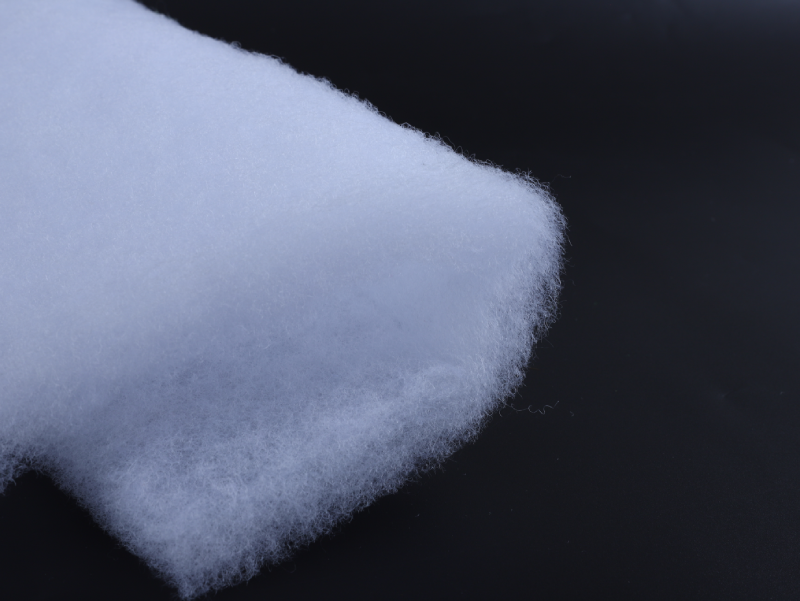
Protective Fleece is also known as: Floor Protection Fleece / Paint Cover Fleece / Protective Fleece Roll.
It is a high-performance temporary protection material specially designed for renovation, painting, and construction applications.
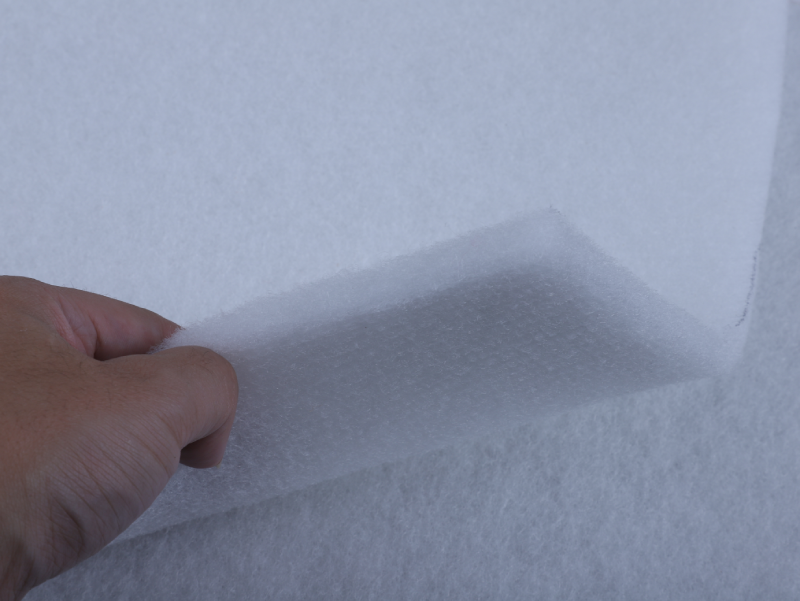
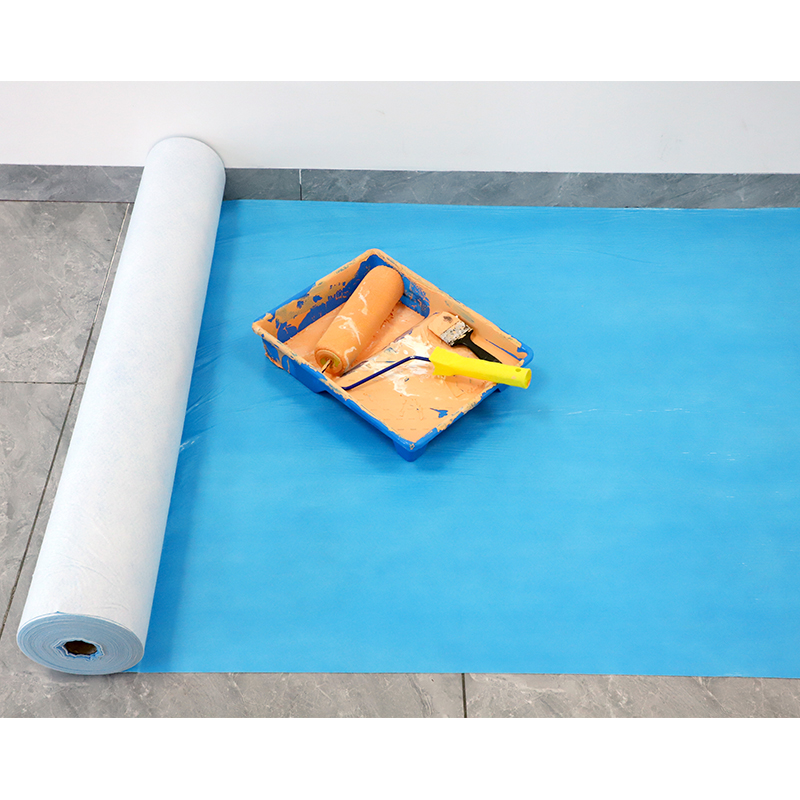
Unlike traditional plastic film, Protective Fleece usually features a multi-layer composite structure:
Top layer: Waterproof protective film
Middle layer: Absorbent cushioning layer
Bottom layer: Soft nonwoven fabric
Optional layer: Self-adhesive backing
This structure not only prevents liquid penetration but also provides cushioning, anti-slip performance, scratch resistance, and impact protection.
Why Is Protective Fleece Better Than Floor Protection Film?
For professional renovation projects, floor protection is not only about covering the surface. It is about reducing risks throughout the entire construction process.
Compared with traditional plastic film, Protective Fleece provides more comprehensive protection.
1. Stronger Floor Protection Performance
During renovation, dropped tools, moving equipment, and frequent worker movement can damage flooring surfaces.
The soft nonwoven layer inside high-quality Protective Fleece can absorb impact and reduce: Scratches, Pressure marks, Surface wear, Construction damage.
Therefore, Protective Fleece is especially suitable for: Hardwood floors, Tiles,Marble surfaces, High-end renovation projects.
2. Better Anti-Slip Safety
Construction safety is an important concern in the building industry.
Compared with smooth plastic film, Protective Fleece provides better friction and a more stable walking surface.
It is especially suitable for: Stair protection, Corridor areas, High-traffic construction zones.
3. Faster Installation Without Excessive Tape
Self-adhesive Protective Fleece can be installed directly without complicated fixing methods.
Main advantages include:
Quick roll-out installation
Stable positioning
Easy cutting and adjustment
Reduced adhesive residue after removal
For large renovation projects, this can significantly reduce labor time.
4. Reusable and More Environmentally Friendly
With increasing demand for sustainable construction practices, reusable protection materials are becoming more popular.
Compared with disposable plastic coverings, durable Nonwoven Protective Fleece helps reduce material waste and lowers long-term project costs.
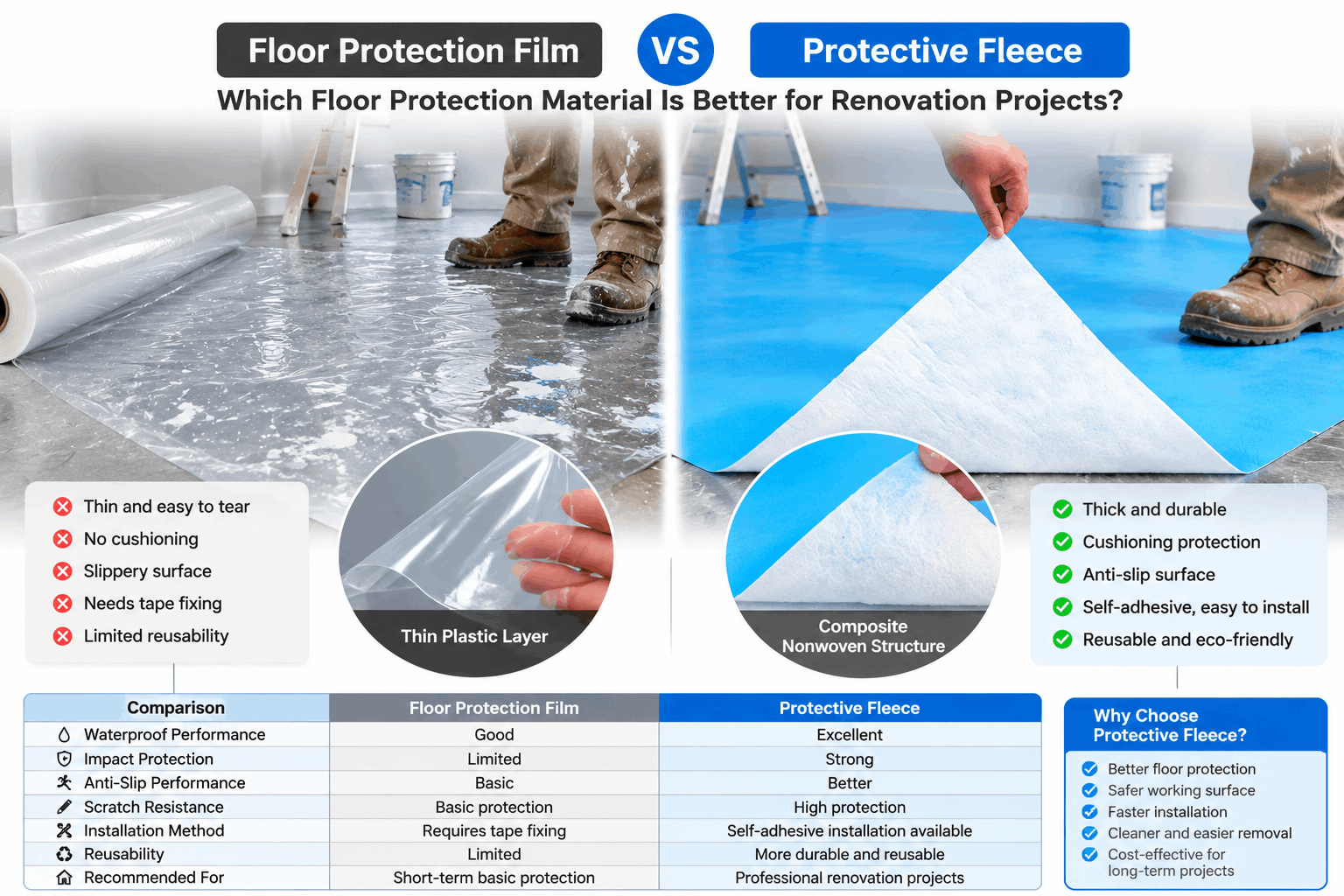
Floor Protection Film vs Protective Fleece: Key Differences Comparison
When selecting the right floor protection sheet for renovation, understanding the differences between Floor Protection Film and Protective Fleece can help contractors, distributors, and construction professionals choose the most suitable solution.
Which Floor Protection Material Should You Choose for Renovation Projects?
The best renovation floor protection solution depends on the project requirements, flooring type, construction environment, and protection duration.
When to Choose Floor Protection Film
Floor Protection Film may be suitable for:
Basic waterproof protection requirements
Short-term renovation projects
Low-cost temporary coverage
Projects where budget is the main consideration
For simple construction environments, plastic film can provide basic protection against dust, paint, and liquid contamination.
However, for professional renovation projects involving valuable flooring, frequent worker movement, or long construction periods, a higher-performance protection material may be required.
When to Choose Protective Fleece
Protective Fleece is a better choice for projects that require stronger protection performance.
It is recommended for:
Protecting expensive flooring surfaces
Painting and renovation projects
Areas with frequent worker traffic
Projects requiring anti-slip and impact protection
Applications where reusable protection materials are preferred
For professional renovation companies, contractors, and high-value floor protection projects, Protective Fleece usually provides more complete protection compared with traditional plastic film.
How to Choose the Right Floor Protection Sheet for Renovation?
Choosing the right Floor Protection Sheetfor Renovation requires considering several important factors.
1. Flooring Type
Different flooring materials require different protection solutions.
Hardwood floors:
Need scratch resistance, moisture protection, and soft surface protection.
Tile and marble:
Require impact protection and protection against heavy traffic damage.
Carpet:
Requires dust resistance, stain protection, and liquid prevention.
2. Construction Duration
Short-term projects may use basic protection materials.
Long-term renovation projects are better suited for durable and reusable products such as Protective Fleece Roll, which can maintain protection performance throughout the construction period.
3. Safety Requirements
For areas with frequent worker movement, safety should be a key consideration.
Choosing a floor protection material with anti-slip performance can help reduce slipping risks and create a safer working environment.
4. Supplier Capability
For distributors, wholesalers, and brand owners, choosing a reliable manufacturer is important.
A professional supplier should provide:
Stable product quality
OEM/ODM services
Customized solutions
Flexible production capability
International quality certifications
Jinhaocheng: Customized Protective Fleece Solutions for Global Renovation Markets
Choosing the right Protective Fleece supplier requires more than product quality. Customization capability, production flexibility, and reliable cooperation support are also important factors for long-term business growth.
With more than 20 years of experience in nonwoven material development and manufacturing, Huizhou Jinhaocheng Nonwovens Co., Ltd. specializes in providing professional floor protection solutions for renovation, painting, and construction applications.
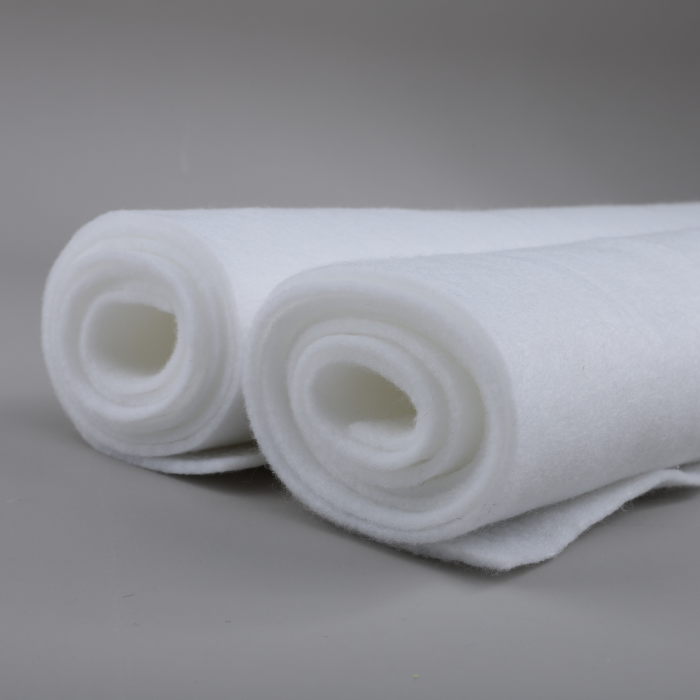
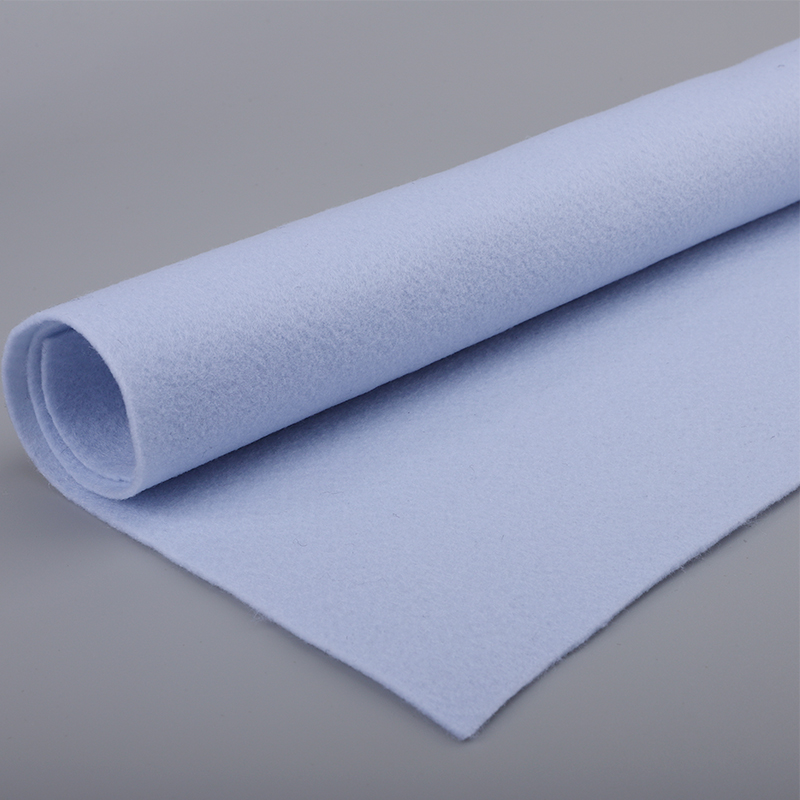
Our Protective Fleece Roll and Paint Cover Fleeceproducts are available in different weights to meet various protection requirements.
Available weights include: 130gsm, 140gsm, 160gsm, 180gsm, 200gsm, 220gsm.
Customers can choose different thickness and protection levels according to their application needs.
Standard roll sizes include: 1m × 25m, 1m × 50m, 0.65m × 25m, 0.65m × 30m, 0.65m × 50m.
In addition to standard specifications, Jinhaocheng provides complete OEM/ODM customization services, including:
Custom product weight
Custom roll size and length
Custom colors
Customized packaging design
Private label logo printing
Product structure and function optimization
For overseas distributors and brand customers, Jinhaocheng provides free packaging design support and free stock samples for product evaluation before cooperation.
With flexible manufacturing capabilities and extensive nonwoven material expertise, Jinhaocheng helps global partners develop competitive floor protection products and expand their renovation protection markets.