How to Choose Thermal Bonded Wadding for Different Applications? A Complete Material Selection Guide
When choosing filling materials, many buyers focus mainly on price and thickness while ignoring the actual performance requirements of different applications. However, the same type of filling material may perform completely differently in clothing, bedding, medical products, automotive interiors, and industrial applications.
Selecting the wrong material can lead to problems such as poor resilience, uneven thickness, insufficient breathability, unpleasant odor, or reduced product lifespan. For manufacturers and distributors, these issues can directly affect product quality, customer satisfaction, and market competitiveness.
Thermal bonded wadding has become an increasingly popular solution for modern filling applications because of its excellent softness, lightweight structure, breathability, and stable performance.
Unlike traditional glue-bonded materials, thermal bonded wadding is produced through thermal bonding technology. Low melting point fibers are heated and bonded together without adding chemical adhesives, creating a cleaner and more environmentally friendly nonwoven filling material.
As an experienced thermal bonded wadding manufacturer, Kenjoy provides customized nonwoven solutions according to different application requirements, helping global customers choose the right material structure and specifications.
What Is Thermal Bonded Wadding and Why Is It Widely Used?
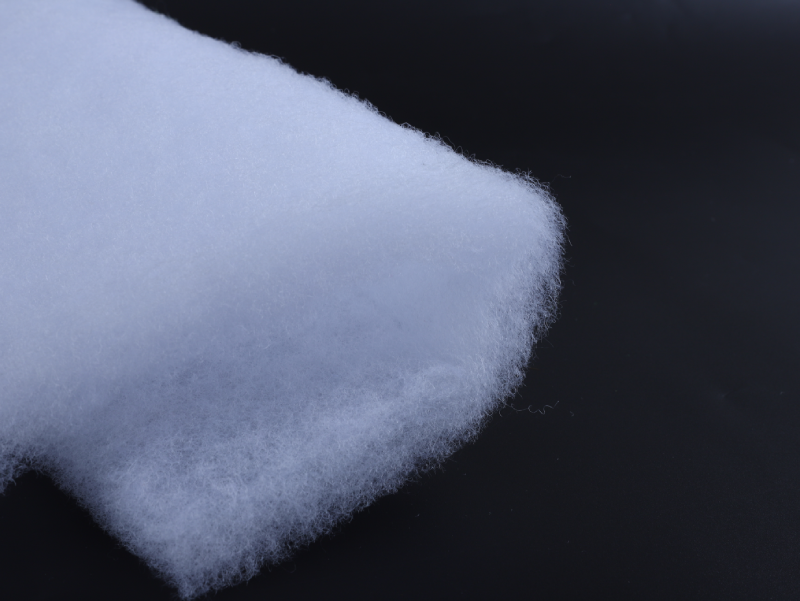
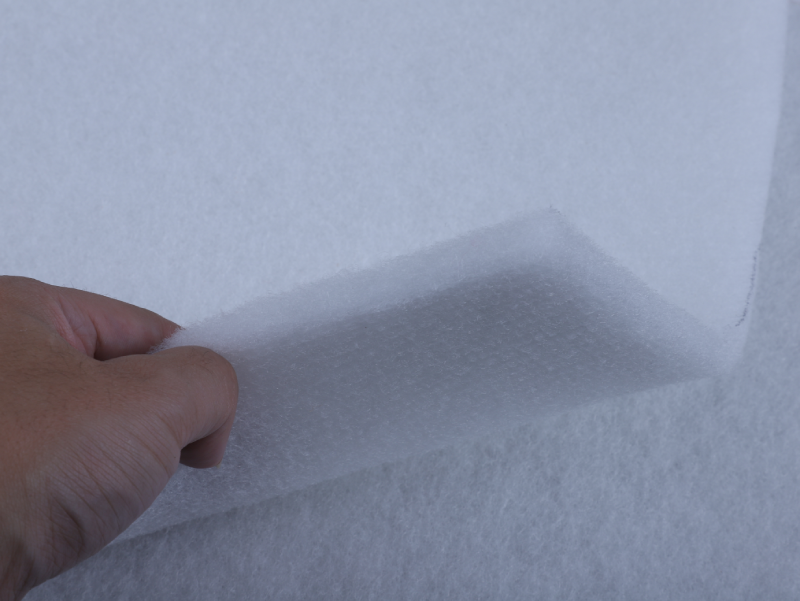
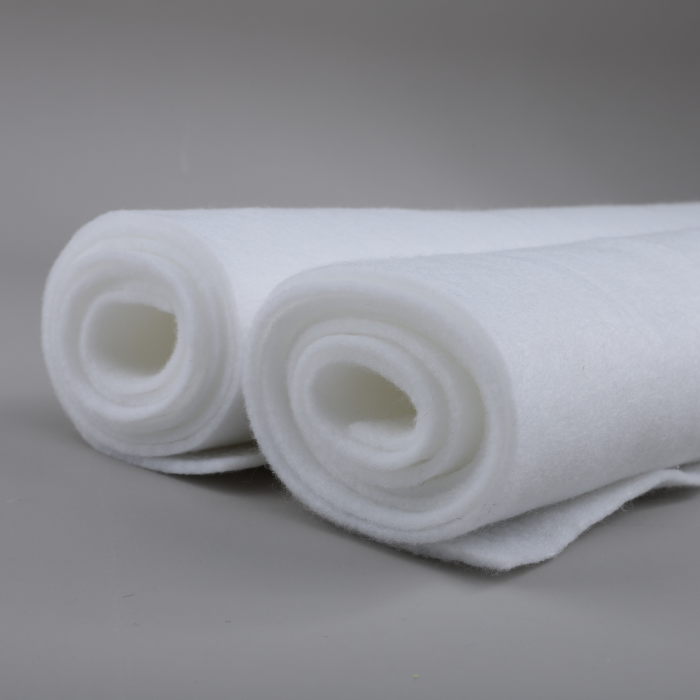
Thermal bonded wadding, also known as thermally bonded wadding, is a type of nonwoven filling material manufactured through a hot air bonding process.
During production, different types of fibers are blended, opened, carded, and formed into a web structure. After passing through a high-temperature bonding process, low melting fibers melt and connect the fiber network together, creating a stable and soft filling layer.
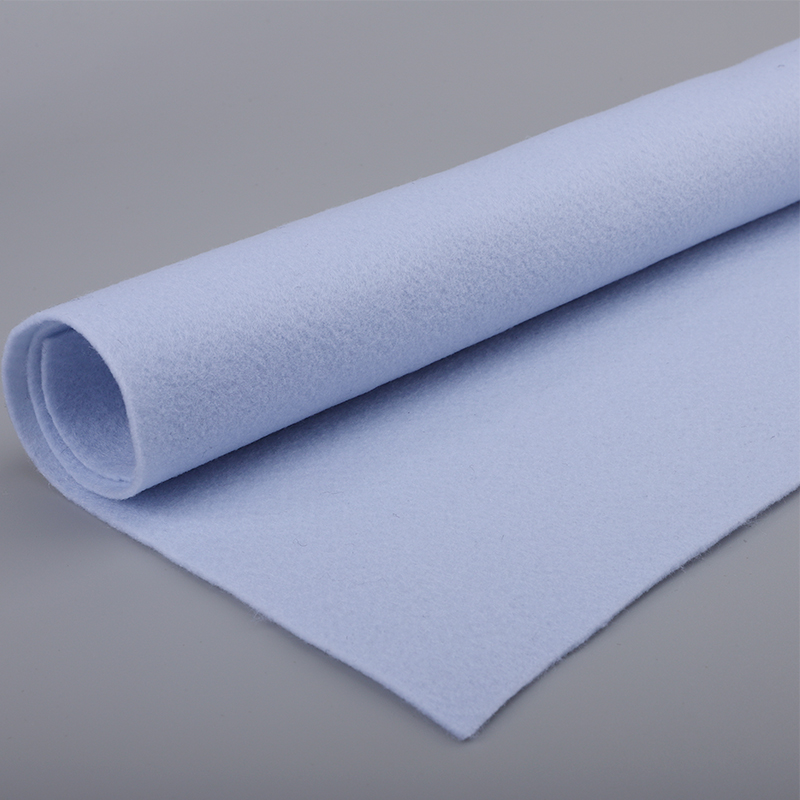
This manufacturing method is also commonly known as hot air through nonwoven fabric technology.
Compared with traditional adhesive-bonded filling materials, thermal bonded wadding offers several advantages:
Better air permeability
Soft and comfortable hand feel
Stable thickness and structure
Low odor performance
Environmentally friendly production process
Excellent resilience
Because of these advantages, thermal bonded wadding is widely used in bedding, apparel, medical care, automotive, filtration, and industrial products.
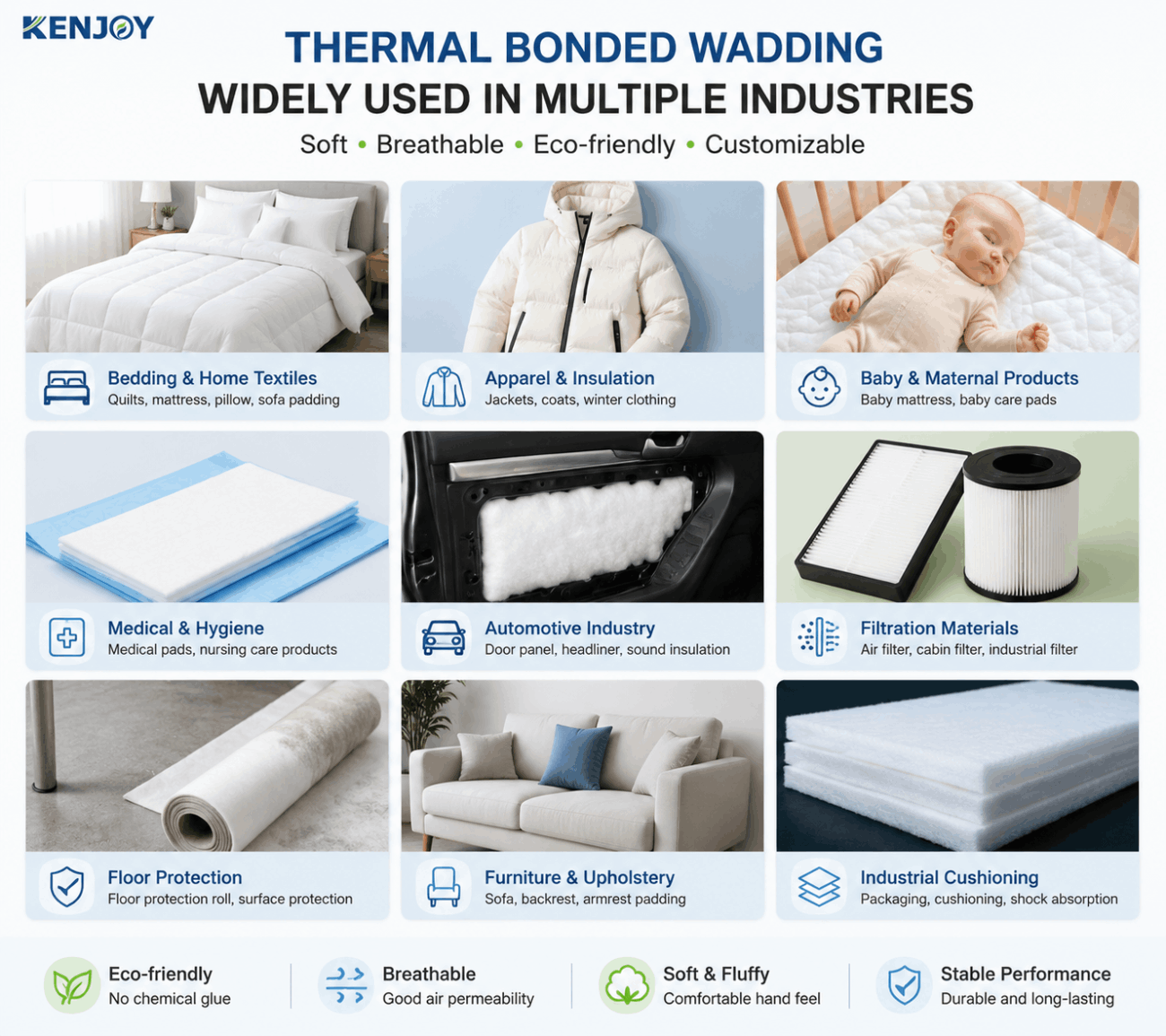
How to Select Thermal Bonded Wadding Based on Different Applications?
Thermal Bonded Wadding for Clothing and Insulation Products
For jackets, coats, outdoor clothing, and winter garments, filling materials need to provide warmth while maintaining lightweight performance.
In these applications, manufacturers usually choose lightweight polyester wadding or thermally bonded nonwoven filling materials.
The key performance requirements include:
Good loft retention to maintain warmth
Soft touch for wearing comfort
Lightweight structure
Good recovery after compression
Stable washing performance
For international apparel brands and garment manufacturers, material consistency is especially important. Low-quality recycled fibers may cause uneven thickness, fiber shedding, and unstable performance between production batches.
Therefore, choosing a reliable wadding manufacturer with strict quality control helps ensure stable final products.
Thermal Bonded Wadding for Bedding and Home Textile Applications
Mattresses, quilts, pillows, and sofa fillings require different performance compared with clothing materials.
For home textile applications, the filling material must provide long-term support, softness, and shape retention.
High-quality thermal bonded batting is designed to offer:
Uniform fiber distribution
High loft structure
Excellent compression recovery
Long-lasting softness
For bedding manufacturers, simply selecting a higher GSM material does not always mean better performance. The fiber composition, bonding method, thickness stability, and recovery ability should also be evaluated before mass production.
Thermal Bonded Wadding for Medical and Baby Care Products
Medical and baby care products have strict requirements for material safety because they are often in direct contact with human skin.
For these applications, manufacturers usually focus on:
Skin-friendly softness
Excellent breathability
Clean production process
Reliable safety standards
Thermal bonding technology reduces the need for chemical adhesives, making the material more suitable for sensitive applications.
Kenjoy can provide customized nonwoven filling materials with international certifications including:
OEKO-TEX STANDARD 100
REACH
RoHS
ISO13485
GRS
These certifications help customers meet different market requirements and improve confidence in overseas sales.
Thermal Bonded Wadding for Automotive and Industrial Applications
Automotive interiors and industrial products require materials with higher durability and functional performance.
Depending on the application, customers may require:
Sound insulation performance
Flame retardant properties
Temperature resistance
Mechanical strength
Long-term stability
Through customized fiber selection and production technology, custom nonwoven products can be developed for different industries.
For example:
High density thermal bonded wadding for sound insulation
Flame retardant materials for automotive applications
Special structures for filtration and industrial protection
A professional custom wadding supplier can help customers optimize material performance according to their final product requirements.
Important Factors to Consider When Choosing Thermal Bonded Wadding
Before placing a large order, buyers should confirm several important technical parameters.
First is the material composition.
Different fiber combinations influence softness, strength, elasticity, and temperature resistance.
Common fiber options include:
PET polyester fiber
ES fiber
Low melting point bonding fiber
Functional modified fibers
Second is the weight and thickness.
Different GSM levels are suitable for different applications. Lightweight materials are ideal for thin products, while high GSM materials provide stronger support and insulation performance.
Third is production quality.
A reliable thermal bonded wadding supplier should provide:
Stable GSM control
Uniform thickness
Consistent fiber distribution
Clean appearance
Reliable batch quality
Sample testing before mass production is always recommended to reduce purchasing risks.
Why Choose Kenjoy as Your Thermal Bonded Wadding Manufacturer?
Huizhou Jinhaocheng Nonwovens Co., Ltd. is a professional nonwoven felt manufacturer China with more than 20 years of manufacturing experience.
Located in Guangdong, China, Kenjoy operates a 26,000㎡ production facility equipped with 15 automated production lines and an annual production capacity exceeding 10,000 tons.
As an experienced thermal bonded wadding manufacturer, we provide complete OEM and ODM solutions including:
Thermal bonded wadding
Hot air through nonwoven fabric
Needle punched nonwoven felt
Floor protection roll
Painter felt
Anti-condensation felt
Industrial nonwoven materials
Our factory supports customized production according to customer requirements, including different GSM, thickness, width, fiber composition, and functional performance.
With strong manufacturing capability and quality management systems, Kenjoy has obtained international certifications including:
OEKO-TEX STANDARD 100
ISO9001
ISO13485
ISO14001
ISO45001
IATF16949
GRS
BSCI
UL94
REACH
RoHS
We also own more than 20 patent inventions and provide product inspection certifications covering flame retardant performance, sound insulation, breathability, EN13130 food-grade requirements, and degradable materials.
Conclusion: Choose the Right Thermal Bonded Wadding for Better Product Performance
Different industries require different material structures and performance characteristics. The best filling material is not always the thickest or lowest-priced option, but the one that matches the actual application requirements.
By selecting a professional thermal bonded wadding manufacturer, buyers can achieve better product consistency, reduce production risks, and develop more competitive products.
Kenjoy provides customized thermal bonded wadding, nonwoven batting, and custom wadding solutions for global customers.
Contact us to discuss your project requirements and receive professional material recommendations.