
Pre-Construction Temporary Floor Protection Planning for Finished Hardwood Floors
For contractors, building material importers, floor protection distributors, and renovation brands, professional floor protection begins before construction starts, not after the first scratch appears.
Finished hardwood flooring is often one of the highest-value surfaces in a renovation project. Painting, drywall sanding, furniture installation, and material transportation can all cause scratches, stains, moisture damage, and impact marks. That is why more contractors now install temporary hardwood floor protection on the first day of site preparation rather than waiting until construction is already underway.
This article is not about repairing hardwood floors. It focuses on how to plan an effective temporary floor protection system before construction begins.
Why Should Floor Protection Be Planned Before Construction Starts?
Many renovation projects treat floor protection as a task during construction. In reality, it should be part of the pre-construction planning stage.
The highest level of foot traffic, tool movement, and material transportation usually happens from the first day of the project. Without a planned protective layer, finished hardwood floors may be damaged before major renovation work has even begun.
For contractors and project managers, preparing the floor protection plan in advance helps reduce rework, improve site organization, and protect finished surfaces throughout the construction period.
Which Areas Should Be Protected First?
A practical protection plan does not always begin by covering every square meter. Instead, it prioritizes the areas with the highest risk of damage.
Main walkways should be protected first because they receive continuous foot traffic and material movement.
Doorways and corners are common impact zones where tools, ladders, and equipment frequently contact the floor.
Completed hardwood flooring should be covered before other interior trades continue working, especially if painting, ceiling installation, or furniture delivery is still in progress.
Prioritizing these zones creates a more efficient protection strategy than repairing damaged flooring after construction.
How Do You Choose a Temporary Protection Layer for Long Renovation Projects?
For renovation projects lasting several days or even weeks, the protective material should provide cushioning, moisture resistance, and safe walking conditions.
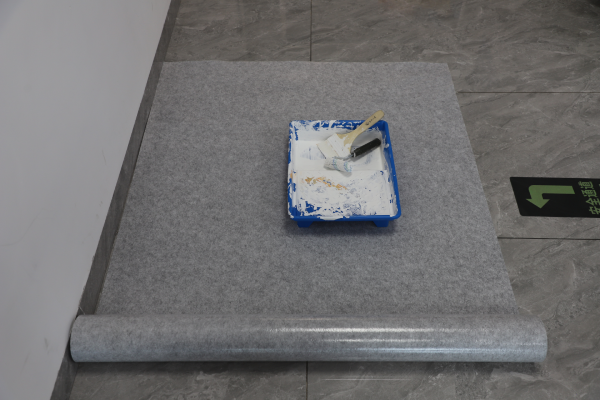
PE Laminated Floor Protection Fleece has become a popular solution because it combines two functional layers. The PE film helps prevent paint, water, and construction liquids from reaching the floor surface, while the needle punched nonwoven backing provides cushioning that helps reduce scratches caused by moving tools and furniture.
Compared with ordinary plastic film, it offers better stability for workers walking across the protected surface. Compared with cardboard, it performs better in damp construction environments where moisture resistance is important.
For this reason, many contractors and floor protection brands select laminated fleece as a long-term temporary floor covering during remodeling projects.
What Should Buyers Confirm Before Requesting a Quotation?
Before contacting a supplier, buyers should define the project requirements rather than asking only for pricing.
Protection period: How long will the renovation project last?
Coverage area: Is the material for one room, multiple apartments, or a commercial project?
Floor type: Is it finished hardwood, engineered wood, or another hard surface?
Roll dimensions: What roll width and length best match local installation practices?
Logistics and storage: Does the packaging fit transportation and warehouse requirements?
Once these project details are clear, quotations from different suppliers become much easier to compare objectively.
How Does Jinhaocheng Support Temporary Floor Protection Projects?
HuiZhou JinHaoCheng Nonwoven Co., Ltd. has more than 20 years of experience in nonwoven manufacturing and specializes in Floor Protection Fleece and laminated needle punched nonwoven materials.
For renovation protection projects, Jinhaocheng supplies temporary floor protection materials in different roll sizes and composite structures to support importers, wholesalers, and contractor brands.
With automated production lines and stable bulk manufacturing capability, the company supports projects from sample development through consistent large-volume production.
Conclusion
Professional hardwood floor protection starts long before renovation work begins.
By planning the protection layout, identifying high-risk areas, selecting a suitable temporary protective layer, and confirming roll specifications before purchasing, contractors can reduce repair costs and improve overall project efficiency.
A well-planned temporary hardwood floor protection system is one of the simplest ways to protect finished flooring throughout the entire renovation process.




