Why Does Thermal Bonded Wadding Quality Vary Between Suppliers?
Many companies sourcing thermal bonded wadding encounter a common problem: two products may have the same GSM and thickness, and even share the same product name, but their actual performance can be very different.
Differences may appear in softness, loft, resilience, thickness uniformity, tensile strength, durability, and overall consistency.
An even bigger concern for buyers is when a sample performs well during testing, but the mass-produced order shows changes in thickness, hand feel, loft, or recovery after compression.
This is why choosing thermal bonded wadding should not be based only on price or GSM. The actual quality of the material depends on the complete manufacturing process, including raw material selection, fiber blending, opening, carding, web formation, thermal bonding, cooling, finishing, and quality control.
For manufacturers of bedding, apparel, furniture, automotive interiors, and industrial products, working with a reliable thermal bonded wadding manufacturer can help reduce production problems and improve long-term material consistency.
Why Can Thermal Bonded Wadding With the Same GSM Perform Differently?
GSM is an important specification when purchasing thermal bonded wadding, but it does not determine the complete performance of the material.
Two products can both be 200 GSM while having different fiber compositions, fiber ratios, web structures, bonding levels, thicknesses, and recovery properties.
For example, one 200 GSM wadding may be soft and highly lofty, making it suitable for bedding, pillows, and apparel. Another 200 GSM material may have a denser structure and provide greater support, making it more suitable for furniture, automotive interiors, or other applications.
Therefore, professional buyers should not ask only for GSM. They should also confirm thickness, density, fiber composition, softness, resilience, and intended application.
This is why an experienced nonwoven felt manufacturer China should evaluate the customer's actual application before recommending a specific material specification.
How Do Raw Materials Affect Thermal Bonded Wadding Quality?
Raw materials are one of the most important factors affecting the final performance of thermal bonded wadding.
Different types of polyester fibers, low-melt fibers, and functional fibers can influence the material's softness, loft, strength, resilience, durability, and thermal stability.
If the raw materials vary significantly from one production batch to another, the finished product may also show performance differences even when the manufacturing process remains unchanged.
This makes raw material management particularly important for long-term buyers.
If a supplier frequently changes its raw material sources or fiber specifications simply to reduce production costs, buyers may experience a common problem: the first sample performs well, but subsequent batches do not have the same characteristics.
For companies requiring stable long-term supply, choosing a thermal bonded wadding manufacturer with reliable raw material management can be more valuable than simply choosing the lowest quotation.
Why Does Fiber Blending Affect Softness and Resilience?
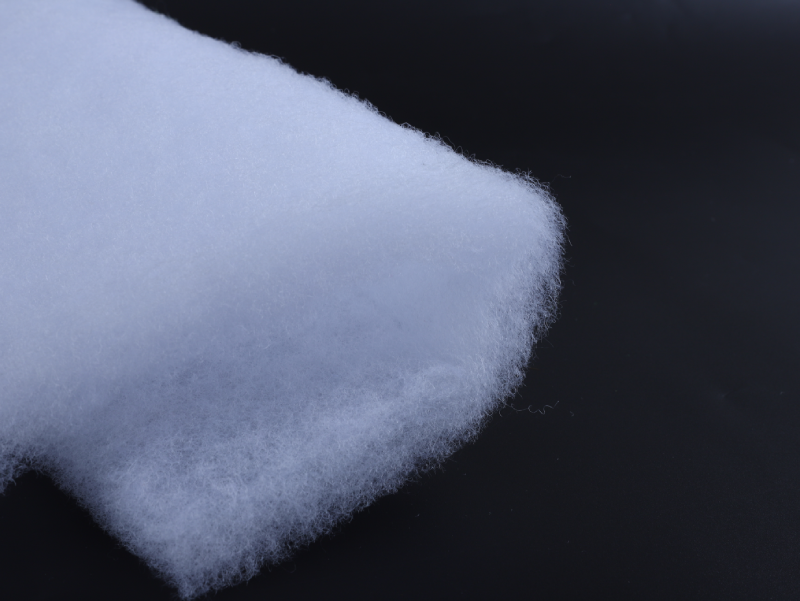
Thermal bonded wadding is not simply a collection of loose fibers.
During production, different fibers can perform different functions. Depending on the application, manufacturers may combine polyester fibers, low-melt bonding fibers, and other functional fibers to create the required structure.
Changes in the fiber ratio can directly affect the finished material.
A higher proportion of bonding fibers may create more bonding points and improve structural stability. However, excessive bonding can also affect softness and loft.
Insufficient bonding may result in a loose structure, poor strength, fiber shedding, or loss of thickness during long-term use.
Therefore, high-quality thermal bonded wadding is not simply about making the material softer or harder. The goal is to achieve the right balance between softness, strength, resilience, loft, and structural stability according to the final application.
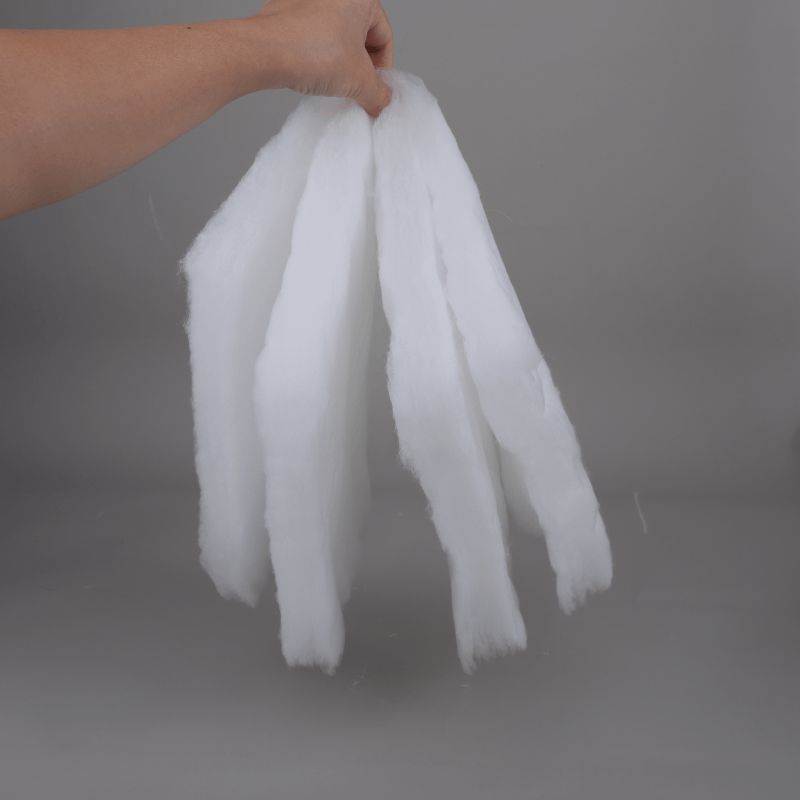
How Can Carding and Web Formation Affect Thickness Uniformity?
Before thermal bonding, the fibers normally go through processes such as opening, blending, carding, and web formation.
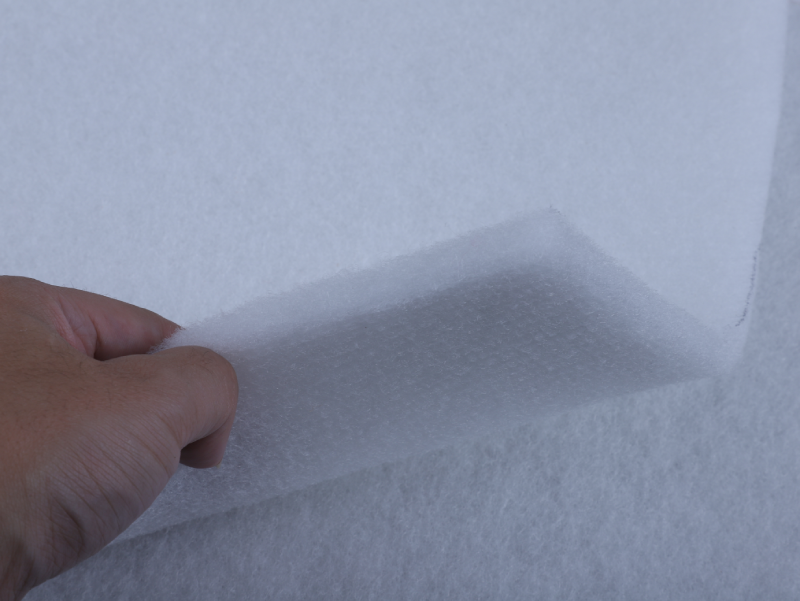
These processes help distribute the fibers into a relatively uniform web.
If the fiber distribution is uneven, the finished material may have variations in thickness, GSM, density, and loft across different areas.
For simple filling applications, small variations may not immediately become obvious. However, for products requiring cutting, quilting, lamination, molding, or automated processing, material uniformity becomes much more important.
For example, a bedding manufacturer may find different loft levels within the same roll. A furniture manufacturer may experience inconsistent filling thickness, while an apparel manufacturer may notice differences in garment insulation performance.
Therefore, stable fiber distribution and web formation are important indicators of a manufacturer's production capability.
Why Does Thermal Bonding Temperature Affect Wadding Performance?
Thermal bonding is one of the key stages in the production of thermal bonded wadding.
During this process, bonding fibers need to create stable connections within the fiber web under controlled processing conditions.
If the thermal treatment is insufficient, the bonding between fibers may not be strong enough, which can result in poor structural stability or inadequate strength.
If the material is exposed to excessive thermal treatment, the structure may become too compact, potentially affecting softness, loft, flexibility, and hand feel.
Temperature is not the only factor. Airflow, processing time, material thickness, production speed, and cooling conditions can also affect the final performance.
Therefore, consistent thermal bonded wadding quality depends not simply on whether a factory has modern equipment, but on whether the manufacturer can maintain stable process control for different material specifications.
This is an important difference between an experienced thermal bonded wadding manufacturer and a supplier that simply performs basic processing.
Why Can Different Production Batches Have Different Quality?
Even within the same factory, different batches can show variations if production management is not sufficiently controlled.
Changes in raw material batches, fiber ratios, machine conditions, production parameters, or processing settings can all affect the finished material.
For small orders, these differences may not always be obvious.
For importers, distributors, brands, and manufacturers purchasing materials regularly, however, batch-to-batch consistency is extremely important.
Buyers do not simply need one batch of excellent material. They need every future shipment to remain as close as possible to the approved sample and agreed specifications.
This is why buyers should evaluate not only sample quality but also the supplier's ability to maintain stable production over time.
Why Does the Sample Sometimes Look Good While the Bulk Order Is Different?
This is one of the biggest concerns when sourcing thermal bonded wadding from overseas suppliers.
The sample stage may receive special attention, while mass production tests the manufacturer's real production capability.
Without standardized production procedures, differences can appear between samples and bulk orders.
For example, a supplier may use one raw material batch for samples and another for mass production. Production parameters may also be adjusted during large-scale manufacturing, or small samples may not reveal uniformity problems that become visible in a full production run.
For this reason, buyers should confirm the GSM, thickness, width, fiber composition, raw materials, and key performance requirements before mass production.
A clear product specification and approved sample can provide an important reference for quality control throughout future production.
Why Can the Lowest Thermal Bonded Wadding Price Lead to Higher Overall Costs?
Price differences between thermal bonded wadding suppliers are influenced by factors such as raw materials, fiber composition, production efficiency, specifications, quality control, and customization requirements.
If buyers focus only on the price per kilogram, they may overlook the actual cost of using the material.
For example, lower-quality wadding may require a higher GSM to achieve the required loft. Poor thickness uniformity can increase cutting waste, while weak resilience may affect the appearance and durability of the final product.
Therefore, professional buyers should evaluate not only the purchase price, but also the material's overall cost performance.
For high-volume manufacturing, stable quality can help reduce material waste, rework, production interruptions, and potential customer complaints.
How Can Buyers Evaluate a Reliable Thermal Bonded Wadding Manufacturer?
There are several factors buyers can evaluate before choosing a supplier.
First, determine whether the supplier has its own manufacturing facility and production equipment rather than relying entirely on outsourced production.
Second, confirm whether the supplier can consistently control GSM, thickness, width, fiber composition, softness, and other important specifications.
Third, request samples and clearly confirm the technical specifications before placing a bulk order.
For international sourcing, buyers may also evaluate the supplier's quality management system, testing capabilities, certifications, production capacity, and export experience.
For long-term projects, production scale, delivery capability, OEM and ODM services, and communication efficiency should also be considered.
These factors can provide much more useful information about a supplier's long-term reliability than product photographs or a low initial quotation.
How Does Kenjoy Help Customers Reduce Thermal Bonded Wadding Sourcing Risks?
As an experienced nonwoven manufacturer China, Kenjoy provides thermal bonded wadding for different applications and can adjust material specifications according to customer requirements.
With approximately 26,000 square meters of production facilities, 15 automated production lines, and annual production capacity of more than 10,000 tons, our factory is equipped to support both regular production and customized material projects.
Depending on the final application, we can customize GSM, thickness, width, fiber composition, softness, and functional requirements to develop custom nonwoven products for different industries.
Our nonwoven materials are used in applications including bedding, apparel, furniture, automotive interiors, and industrial products.
We also provide OEM and ODM services, helping customers move from initial material requirements and sampling to bulk production.
For companies looking for long-term supply, the real value is not simply receiving one good sample. It is finding a thermal bonded wadding manufacturer capable of maintaining stable specifications, consistent quality, and reliable production over repeated orders.
What Should Buyers Compare When Sourcing Thermal Bonded Wadding?
When two suppliers offer thermal bonded wadding with the same GSM and thickness, buyers should not compare quotations alone.
A more complete evaluation should include raw material quality, fiber composition, thickness uniformity, loft, resilience, production consistency, batch-to-batch stability, quality control, customization capability, production capacity, and delivery performance.
For bedding applications, buyers may place greater emphasis on softness, loft, resilience, and long-term recovery.
For apparel, factors such as weight, warmth, softness, flexibility, and processing performance may be more important.
For automotive and industrial applications, buyers may need to consider additional requirements such as structural stability, durability, flame resistance, acoustic performance, or other functional properties.
There is no single thermal bonded wadding specification that is suitable for every product. A professional supplier should match the material to the customer's final application rather than simply offering a fixed standard specification.
Conclusion: Thermal Bonded Wadding Quality Reflects Manufacturing Capability
The quality differences between thermal bonded wadding suppliers are usually not caused by the product name itself. They are more closely related to differences in raw material control, fiber blending, web formation, thermal bonding, equipment stability, process management, and quality control.
For buyers, the goal should be to find a supplier capable of consistently delivering stable GSM, uniform thickness, consistent hand feel, reliable resilience, and repeatable batch quality.
If you are looking for a reliable thermal bonded wadding manufacturer, thermal bonded wadding supplier, custom wadding supplier, or nonwoven manufacturer China, Kenjoy can develop suitable wadding specifications according to your application and technical requirements while supporting OEM, ODM, and customized production.