Washable Underpad Construction Guide: How 5-Layer Nonwoven Design Improves Absorbency & Leak Protection
Short Description: Learn how a 5-layer washable underpad is engineered with hydrophilic nonwoven fabric, thermal bonded wadding, needle punched absorbent felt, TPU waterproof membrane, and anti-slip backing. A practical guide for brands, OEM manufacturers, and product developers.
What Makes a High-Quality Washable Underpad Different?
The washable underpad market has expanded far beyond baby care. Today, reusable underpads are widely used for adult incontinence, women's hygiene, pet training pads, hospitals, nursing homes, and home healthcare.
Yet many buyers still evaluate products only by thickness, weight, or price. In reality, the biggest difference between premium and low-cost washable underpads lies inside the product—the multi-layer nonwoven construction.
Two underpads with the same appearance may perform very differently after repeated washing. Problems such as leakage, poor absorbency, delamination, and fiber clumping are usually caused by an unbalanced layer structure rather than a single material.
Understanding each layer helps brands develop longer-lasting and higher-value reusable hygiene products.
Disposable vs. Washable Underpads: What's the Difference?
Although both products serve the same purpose, their absorbent technologies are completely different.
Disposable underpads rely on SAP (Super Absorbent Polymer) to convert liquid into gel. Once saturated, the product is discarded.
Washable underpads use needle punched nonwoven felt as the absorbent core. Instead of chemical absorbent beads, thousands of interconnected fiber pores quickly absorb, distribute, and retain liquid while allowing the product to be washed and reused many times.
A standard washable underpad typically consists of five functional layers:
Hydrophilic Surface → Distribution Layer → Needle Punched Absorbent Felt → TPU Waterproof Membrane → Anti-Slip Bottom Layer
Each layer contributes to overall comfort, absorbency, durability, and leak protection.
Layer 1 – Hydrophilic Top Surface
The top layer is the only part that directly touches the skin, making softness and rapid liquid penetration essential.
Premium washable underpads generally use hydrophilic polyester nonwoven fabric or viscose-blended nonwoven materials. After surface treatment, liquid quickly passes through the fabric instead of remaining on top, keeping the skin noticeably drier.
A poor-quality top sheet may look similar, but untreated hydrophobic fibers often cause liquid pooling and slow penetration, increasing the risk of skin irritation for babies, elderly users, and pets.
For OEM development, hydrophilicity and fabric softness should always be specified alongside GSM.
Layer 2 – Liquid Distribution Layer
This is one of the most overlooked components, yet it significantly improves absorbent efficiency.
The distribution layer spreads liquid horizontally across the absorbent core, preventing moisture from concentrating in one small area. By utilizing more of the absorbent material, it reduces localized saturation and minimizes leakage.
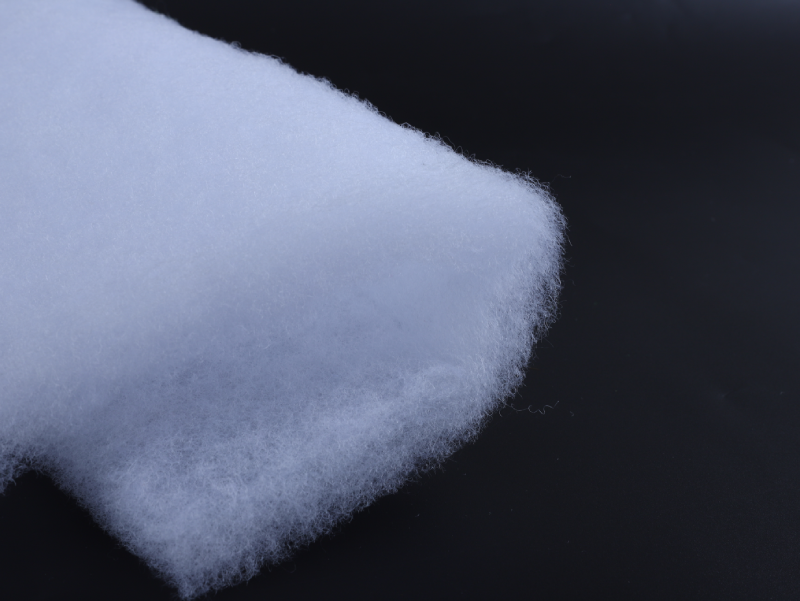
Most manufacturers use lightweight thermal bonded wadding or thin needle punched nonwoven fabric for this layer.
Products that eliminate the distribution layer often experience uneven absorbency despite having a thick absorbent core.
Layer 3 – Needle Punched Absorbent Felt (The Core of the Product)
The absorbent core is the heart of every reusable underpad.
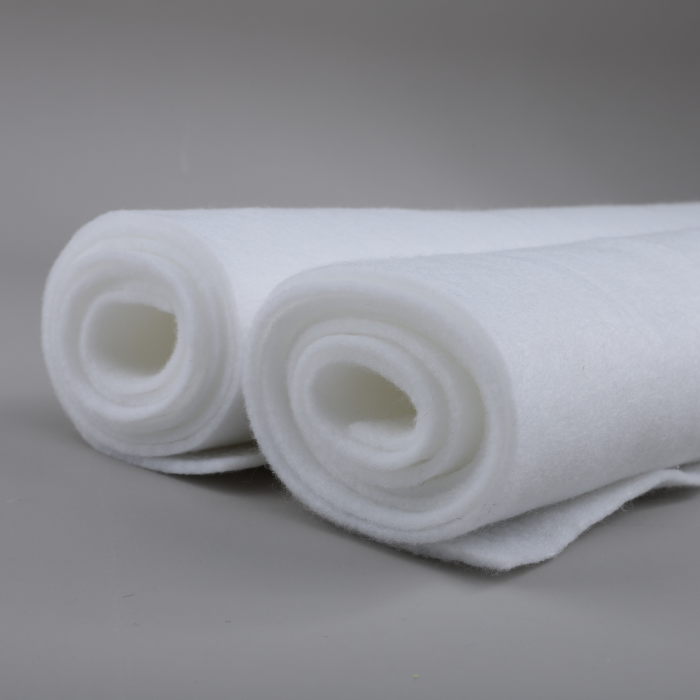
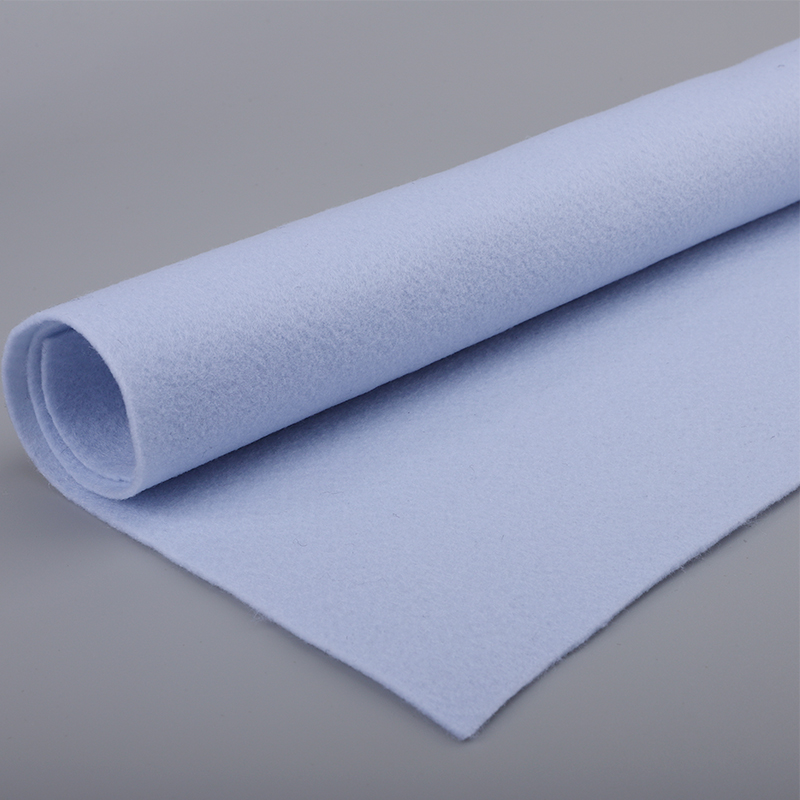
Unlike spray-bonded filling or ordinary padding, polyester needle punched felt is mechanically reinforced through thousands of barbed needles. The fibers become physically entangled into a stable three-dimensional structure without chemical adhesives.
This construction provides several important advantages.
First, it creates a large internal pore network capable of storing significant amounts of liquid.
Second, the material maintains its integrity after repeated washing, resisting clumping, shedding, and delamination.
Third, the fiber blend can be customized according to different end-use requirements.
Most washable underpads combine polyester fiber with plant-based viscose fiber. Polyester provides strength and wash durability, while viscose improves absorbency and skin comfort.
Different markets require different specifications:
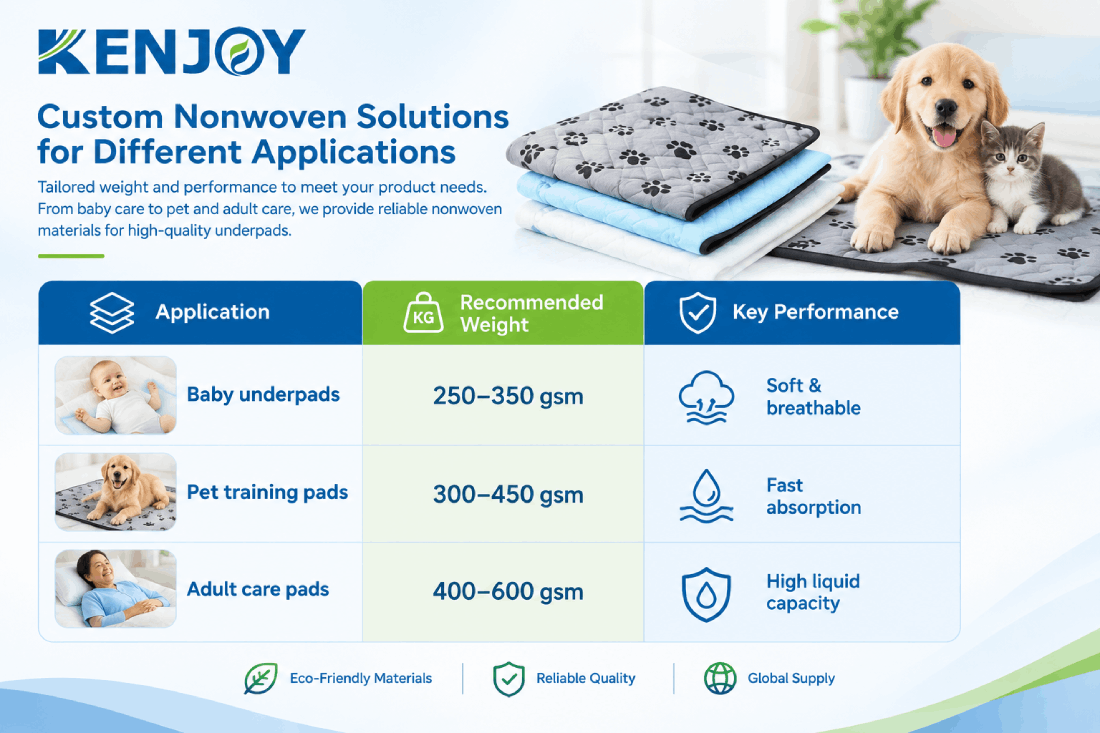
As a professional needle punched nonwoven felt manufacturer, Kenjoy offers custom fiber ratios, thicknesses, widths, and absorbent performance for OEM washable hygiene products.
Layer 4 – TPU Waterproof Barrier
Absorbing liquid is only half the job. Preventing leakage is equally important.
High-quality washable underpads typically use a TPU waterproof membrane, which combines flexibility, durability, and excellent water resistance. Compared with ordinary PE film, TPU performs better during repeated machine washing and folding.
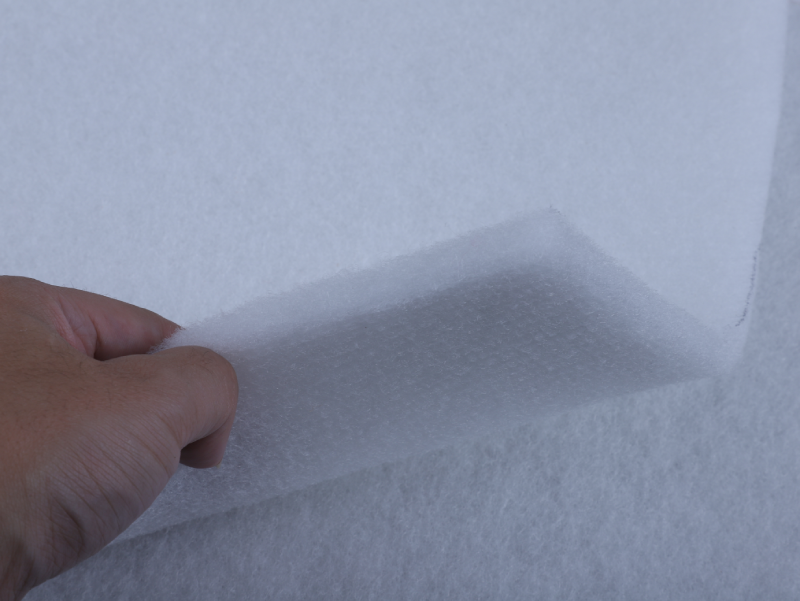
Some premium products also incorporate laminated foam fabric technology to improve bonding strength between the waterproof membrane and surrounding nonwoven layers.
A reliable waterproof layer should remain soft while maintaining consistent leak protection throughout the product's service life.
Layer 5 – Anti-Slip Bottom Layer
The final layer improves stability during daily use.
Anti-slip needle punched fabric or dot-coated nonwoven fabric increases friction against mattresses, sofas, and floors, preventing the underpad from shifting during movement.
This feature is especially valuable for pet underpads, where frequent movement can easily cause ordinary products to slide or wrinkle.
A stable bottom layer greatly improves the overall user experience without affecting absorbent performance.
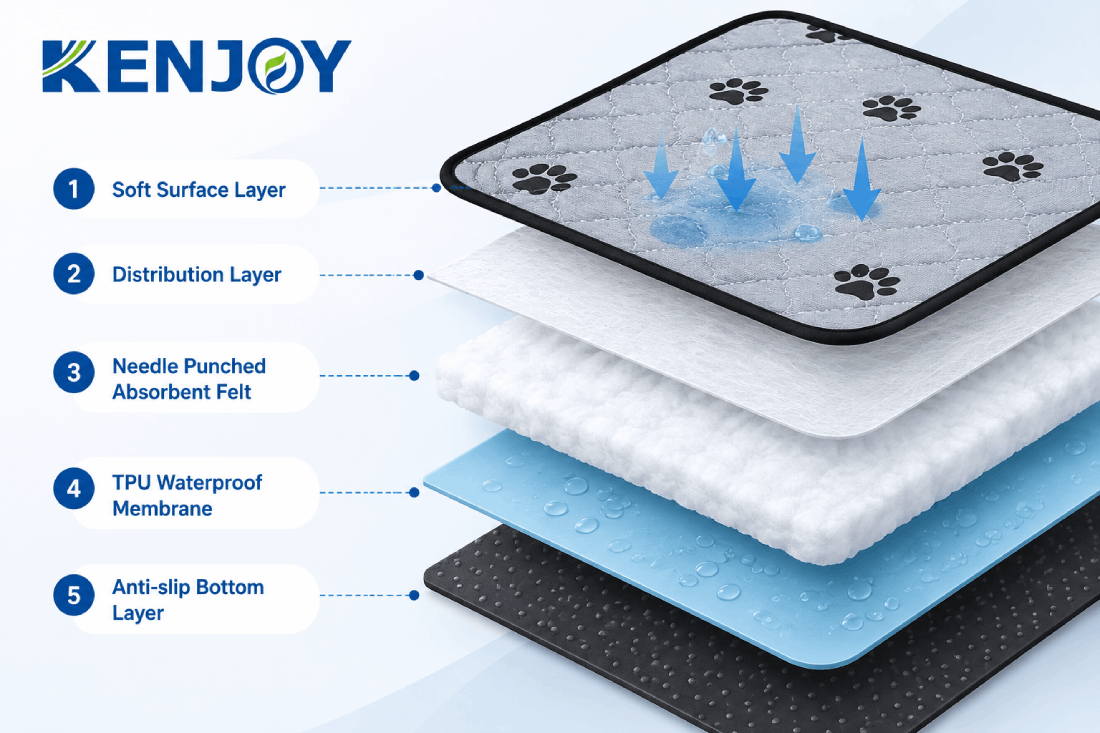
Simplified Washable Underpad Structures
Not every reusable underpad uses the same construction.
A 4-layer structure typically removes the independent distribution layer, directly laminating the top sheet to the absorbent felt. This design reduces manufacturing cost and works well for light-duty applications such as pet pads.
A 2-layer laminated structure contains only the surface fabric and absorbent layer, requiring an additional waterproof mattress protector for leak prevention.
When comparing quotations, confirming the number of functional layers is often more important than comparing total weight alone.
How to Choose the Right Structure for Different Markets
Different applications require different material combinations rather than one universal design.
Baby underpads prioritize softness, breathability, and rapid moisture transfer.
Adult incontinence pads require higher GSM absorbent felt for greater liquid retention.
Women's reusable pads emphasize lightweight comfort and wash durability.
Pet washable pads focus on fast absorption, dimensional stability, and anti-slip performance.
Selecting the appropriate custom nonwoven products allows brands to optimize both product performance and manufacturing cost.
Kenjoy – Your One-Stop Nonwoven Material Manufacturer for Washable Underpads
Huizhou Jinhaocheng Nonwovens Co., Ltd. (Kenjoy) is a professional nonwoven felt manufacturer and needle punched felt factory in China, specializing in engineered nonwoven materials for hygiene, home, industrial, and construction applications.
Our 26,000 m² manufacturing facility operates 15 fully automated needle punched production lines with an annual capacity exceeding 10,000 tons. We provide complete OEM and ODM material solutions for washable underpads, including:
Hydrophilic nonwoven top fabric
Thermal bonded distribution wadding
Polyester needle punched absorbent felt
TPU laminated waterproof materials
Anti-slip nonwoven backing
In addition to washable underpad materials, we also manufacture floor protection rolls, painter felt, anti-condensation felt, meltblown nonwoven fabric, and other custom nonwoven products for global distributors and brand owners.
Whether you're developing baby care products, reusable nursing pads, or pet hygiene solutions, our engineering team can recommend the most suitable layer structure, fiber blend, and technical specifications for your market.
Conclusion
A washable underpad is far more than a piece of absorbent fabric. Its performance depends on how each nonwoven layer works together—from the hydrophilic surface and distribution layer to the needle punched absorbent felt, TPU waterproof membrane, and anti-slip backing.
For brands seeking durable, reusable hygiene products, choosing the right needle punched nonwoven felt manufacturer is the first step toward achieving consistent quality, longer product life, and stronger market competitiveness.