
How to Verify Aquarium Filter Fleece Consistency Before Bulk Production
For aquarium equipment manufacturers and filter media distributors, approving a sample is only the first step in purchasing aquarium filter fleece. The next challenge is ensuring that bulk production remains consistent with the approved sample in terms of specifications, filtration performance, and roll feeding behavior.
Differences between samples and bulk rolls can affect equipment compatibility, production efficiency, and the consistency of the final product. Before placing a repeat or large-volume order, buyers should establish clear specifications, define inspection procedures, and agree on how deviations will be handled.
This guide explains how to verify aquarium filter fleece consistency before bulk production and how to turn sample approval into a practical, repeatable purchasing standard.
Why Does an Approved Sample Not Guarantee Consistent Bulk Production?
An approved sample represents a specific piece of material produced under particular conditions. It does not automatically guarantee that every roll in a bulk order will have the same specifications or perform identically during use.
Potential differences may involve GSM, thickness, width, density, material composition, water permeability, particle retention, and roll feeding behavior. The relevance of each factor depends on the filter design and the intended application.
For example, a roll may meet the agreed width and weight specifications but behave differently when installed in an automatic aquarium roller filter. Variations in material structure or thickness may affect how the fleece moves through the equipment.
For this reason, buyers should evaluate both measurable product specifications and application-related performance. The goal is not simply to confirm that the bulk material looks similar to the sample, but to verify that it meets the agreed requirements under comparable conditions.
How Should Buyers Establish a Specification Baseline for the Approved Sample?
Before bulk production begins, buyers and suppliers should establish a clear specification baseline for the approved sample. This baseline becomes the reference for subsequent production checks and quality discussions.
The specification should cover the characteristics relevant to the actual application, such as:
Material specifications: Confirm the agreed fiber composition and material type.
Weight and dimensions: Define the required GSM, thickness, roll width, roll length, core diameter, and other relevant dimensions where applicable.
Material structure: Identify the required appearance, surface condition, and structural characteristics that matter to the intended use.
Functional requirements: Specify the required water permeability, particle retention, and equipment feeding behavior where these properties are relevant to the application.
The approved sample should also be clearly identified and retained as a reference. Buyers and suppliers should record the sample version, agreed specifications, and any applicable tolerances before production starts.
Tolerance limits should be agreed upon by both parties according to the product requirements and application. They should not be assumed to be universal across all PET filter fleece rolls.
A documented specification baseline helps prevent misunderstandings and provides a consistent reference for comparing samples with bulk production.
How Can Buyers Compare Sample and Bulk Performance Under Consistent Conditions?
Visual inspection and dimensional measurements are useful, but they may not reveal every difference that affects actual performance. Buyers should compare the approved sample and bulk material under consistent test conditions whenever functional performance is important.
Water permeability
Water permeability should be evaluated using the same test setup and comparable operating conditions. Differences in water flow may indicate variations in material structure or other product characteristics.
Buyers should avoid drawing conclusions from tests conducted under different conditions, as the results may not be directly comparable.
Particle retention
Where particle retention is an important application requirement, the approved sample and bulk material should be evaluated using the same test method and comparable water conditions. The results should be assessed against the requirements agreed upon for the intended application.
A visual comparison alone cannot establish whether two materials provide equivalent particle retention.
Equipment feeding behavior
For automatic aquarium roller filters, buyers should also verify how the material feeds through the intended equipment. Relevant observations may include whether the roll installs correctly, advances as expected, and runs without feeding problems under the agreed operating conditions.
The test should use the actual equipment or a representative setup whenever possible. Material performance in a static water test does not, by itself, establish compatibility with an automatic roller filter.
By comparing the sample and bulk material under comparable conditions, buyers can identify differences that may not be apparent from appearance or basic measurements alone.
How Should Buyers Record Batch Information, Test Conditions, Sampling Results, and Acceptable Deviations?
A consistent inspection process depends on clear records. Without documented information, it can be difficult to determine whether a difference comes from the material, the test method, the equipment, or the sampling process.
Buyers and suppliers should record the relevant information for each production batch, including:
Batch identification: Record the production batch number and relevant roll identification details.
Specification baseline: Keep the approved sample reference and the agreed product specifications available for comparison.
Inspection conditions: Document the test method and conditions used to assess water permeability, particle retention, or equipment feeding behavior.
Sampling results: Record the measured values, observed differences, and inspection results for the samples taken from bulk production.
Acceptable deviations: Document the tolerances and acceptance criteria agreed upon before production.
These records make it easier to compare different production batches, trace quality issues, and review whether the delivered material meets the agreed requirements.
For recurring orders, keeping consistent records also helps buyers and suppliers identify changes over time and improve communication about product quality.
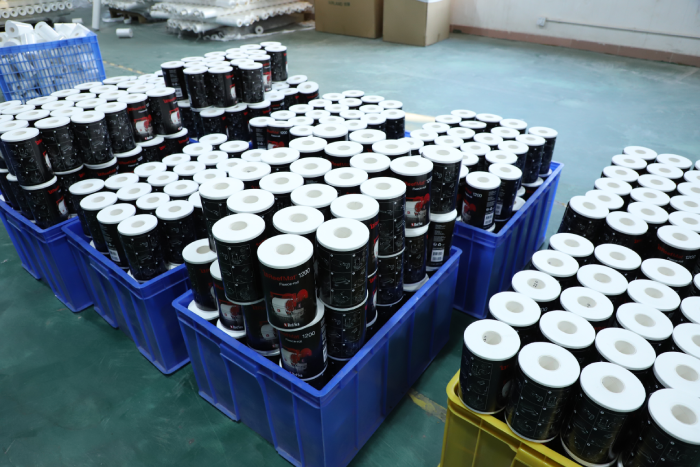
How Should Buyers Agree on First-Article Approval, Bulk Sampling, and Nonconformity Handling?
A practical quality agreement should explain how the approved sample will be used during production and how the supplier and buyer will respond when a difference is found.
First-article confirmation
Before proceeding with full-scale production, buyers and suppliers should confirm that the initial production material meets the agreed specifications and application requirements. This step helps identify potential differences before a large quantity is produced.
Bulk sampling and inspection
The parties should agree on how samples will be selected from bulk production, which characteristics will be inspected, and what acceptance criteria will apply. The sampling approach should reflect the product requirements and the level of quality control needed for the order.
Nonconformity handling
The agreement should also define what happens when inspection results fall outside the agreed requirements. Depending on the issue, the parties may need to conduct additional checks, investigate the cause, review affected rolls, or agree on corrective action before shipment or acceptance.
For custom aquarium filter media orders, these procedures should be discussed before production begins rather than after a discrepancy has already affected the order.
Clear responsibilities and documented procedures reduce uncertainty and make bulk purchasing more manageable for both sides.
Which Differences Require a New Sample or a Pause in Acceptance?
Not every difference automatically means that a batch must be rejected. However, some changes should trigger further investigation before the material is accepted or used in production.
A new sample or additional approval may be necessary when:
The material composition or manufacturing specification differs from the approved reference.
GSM, thickness, width, roll dimensions, or other agreed specifications fall outside the accepted limits.
Water permeability or particle retention differs materially from the agreed application requirements.
The fleece feeds differently through the intended equipment and may affect normal operation.
The supplier changes a relevant material or production specification without the required approval.
When a difference is identified, buyers should compare the inspection results with the agreed specification and determine whether the issue affects product conformity or application performance.
If the cause or impact remains unclear, the affected material should be held for review according to the agreed acceptance procedure. A new sample may be required when the material or manufacturing specification has changed, or when the existing reference no longer adequately represents the product being supplied.
The decision should be based on documented requirements and test results rather than visual judgment alone.
How Can Buyers Turn Sample Approval into a Long-Term Purchasing Specification?
Sample approval is most useful when it becomes part of a documented purchasing process that can be applied to future orders.
Buyers should retain the approved reference sample, maintain the agreed specification sheet, and ensure that inspection methods remain consistent between orders. Any changes to material composition, dimensions, functional requirements, or relevant production specifications should be reviewed and approved before they are introduced into bulk supply.
For repeat purchases, the specification should clearly identify the product, required dimensions, quality criteria, inspection approach, and procedure for handling deviations. This helps both parties understand what constitutes an acceptable product and how consistency will be evaluated.
When selecting a polyester filter roll manufacturer, buyers should also assess whether the supplier can communicate specifications clearly, support sample confirmation, maintain relevant production records, and respond systematically to quality concerns.
As a manufacturer of nonwoven materials, HuiZhou JinHaoCheng Nonwovens Co., Ltd. supports customized product specifications and OEM/ODM supply requirements. Buyers should communicate their equipment requirements, application conditions, and inspection expectations before confirming a bulk order.
A clear specification and inspection process helps turn a one-time sample approval into a repeatable standard for long-term purchasing.
Conclusion
Verifying aquarium filter fleece consistency before bulk production requires more than comparing the appearance of a sample and a finished roll. Buyers should establish an agreed specification baseline, compare functional performance under consistent conditions, record batch inspection results, and define procedures for sampling and handling deviations.
For automatic aquarium roller filters, equipment feeding behavior should be checked alongside material specifications and relevant filtration requirements.
By documenting the approved sample and applying the same agreed standards to subsequent batches, aquarium equipment manufacturers and filter media distributors can make purchasing decisions more consistent and reduce avoidable quality disputes.




