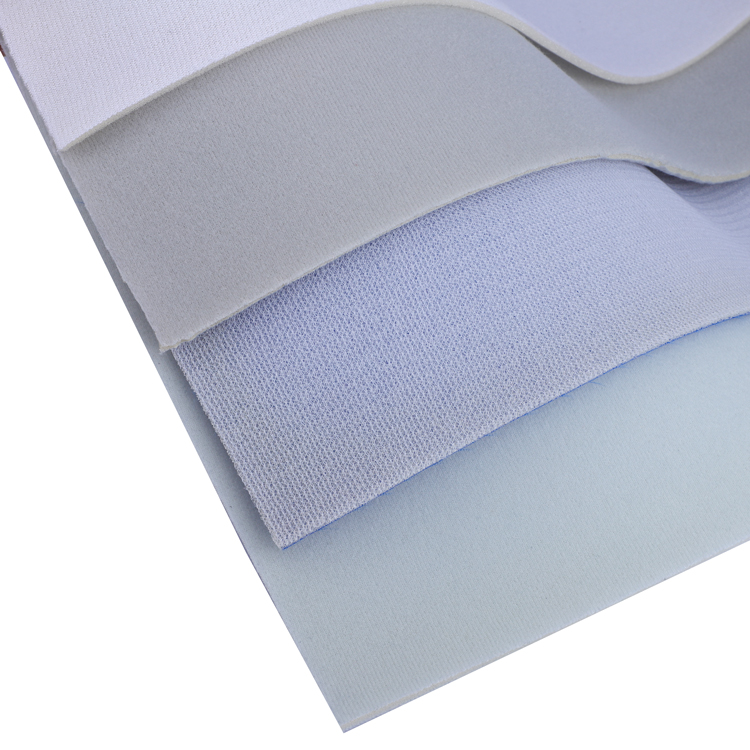
Wrist, Ankle and Elbow Brace Padding: Flexible Foam Laminated Materials for Joint Supports
Wrist, ankle, and elbow supports are designed for different parts of the body, and their padding requirements are not necessarily the same. The materials used in these products need to match their construction, contact areas, bending directions, and manufacturing processes.
For brace manufacturers, selecting a suitable foam laminated material involves more than choosing a foam type or specifying a thickness. The fabric substrate, foam flexibility, lamination structure, edge construction, and compatibility with cutting and sewing all need to be considered together.
This article explains how manufacturers can evaluate foam laminated materials for wrist, ankle, and elbow supports, compare different foam and fabric options, and confirm material suitability through actual product samples before bulk purchasing.
What Are the Common Structures of Wrist, Ankle, and Elbow Supports?
Wrist, ankle, and elbow supports can have different constructions depending on their intended use and product design. Their padding positions and material requirements should therefore be evaluated separately.
Wrist supports may use an elastic sleeve, a wrap-around strap, or a design with localized support areas. Some products include padding around the wrist, while others use foam laminated fabric as an inner lining or a cushioning layer in selected sections. The required material flexibility depends on how the wrist support is constructed and which areas need to bend.
Ankle supports may be designed as sleeve-style supports, strap-based supports, or products with localized padding. The material may be used around the ankle, near the heel, or in selected sections of the support. These areas can experience different bending and compression conditions during movement.
Elbow supports may use an elastic sleeve, localized padding, or a more structured support design. Foam laminated fabric may be used as an inner padding layer or as part of the material construction around the elbow. The bending area is particularly important because the material needs to follow the shape of the elbow without creating excessive folds or restricting the intended construction.
Although all three product categories belong to joint-support applications, they should not automatically use the same foam thickness, fabric substrate, or lamination structure. Manufacturers should first identify the product type, padding position, and construction method before selecting materials.
How Do Padding Positions Differ Between Wrist, Ankle, and Elbow Supports?
The location of the padding affects how the foam laminated material needs to perform during product use and manufacturing.
For wrist supports, the material may be placed around the wrist joint, inside a wrap-around section, or in a localized padding area. If the material is used near a bending area, manufacturers should check whether the foam and fabric can follow the required shape without excessive creasing or separation between layers.
For ankle supports, padding may be positioned around the ankle joint, near the heel, or along selected sections of the support. The shape of the product and the direction in which the ankle bends should be considered when evaluating the material. A material that works in a relatively flat section may behave differently when used around a curved area.
For elbow supports, the padding may cover part of the elbow or extend into the surrounding sections. Since the elbow area repeatedly changes shape during bending, the material should be evaluated for its flexibility, surface appearance, and layer stability in the actual product construction.
Manufacturers should also distinguish between the material used in direct contact with the wearer and the material used as an intermediate cushioning or structural layer. These positions may require different fabric surfaces and foam characteristics.
The most suitable structure depends on the complete brace design. A foam laminated fabric sample should therefore be evaluated in the intended position rather than judged only by its appearance as a flat sheet.
How Should Soft PU Foam and Different Foam Densities Be Evaluated?
Soft PU foam is one possible option for flexible padding applications. It can be considered when manufacturers need a soft foam layer combined with a fabric substrate. However, the suitability of a particular foam depends on its actual specifications and how it behaves after lamination.
High-resilience PU foam may also be considered for projects that require different recovery characteristics. Manufacturers should compare the actual foam samples rather than assume that one foam category is suitable for every wrist, ankle, or elbow support.
Foam density and foam hardness are different properties. Density alone does not determine whether a foam feels soft or firm, how quickly it recovers, or whether it is suitable for a particular padding position. These characteristics should be evaluated using the foam's technical specifications and physical samples.
Thickness also needs to be considered carefully. The foam thickness is not the same as the total thickness of the finished laminated material. The fabric substrate, lamination process, and compression during processing can all affect the final construction.
When comparing foam options, manufacturers should consider the intended padding position, required flexibility, foam thickness, density, hardness, recovery characteristics, and the finished composite thickness. These specifications should be confirmed for the actual project rather than selected from a general thickness or density recommendation.
The final decision should be based on the finished laminated sample and its performance in the intended brace construction.
How Should Knitted Fabric, Mesh, and Brushed Fabric Be Selected?
The fabric substrate affects the surface, flexibility, appearance, and processing characteristics of foam laminated materials. Knitted fabric, mesh, and brushed fabric are possible substrate options, but they serve different purposes and should not be treated as interchangeable.
Knitted fabric can be considered when the product design requires a flexible fabric surface. Its stretch and construction characteristics depend on the specific yarn, knitting structure, and fabric specification. Manufacturers should evaluate the actual fabric rather than assume that all knitted materials have the same elasticity.
Mesh fabric may be considered when the design requires an open fabric structure. Mesh can be produced through different textile constructions, so its characteristics depend on the specific material. It is not a completely separate category from knitted or woven fabrics in every application. The exact construction should be confirmed before material selection.
Brushed fabric provides a different surface texture and may be considered for the inner side of a support, depending on the product design and contact requirements. Its suitability should be assessed through the actual fabric surface, foam combination, and finished construction.
Manufacturers may also evaluate other fabric options, such as spacer mesh or nonwoven substrates, when they are compatible with the product requirements.
It is important to note that the breathability of the base fabric does not automatically mean that the finished foam laminated material has the same breathability. The foam layer and lamination structure can change the properties of the composite.
Before confirming a fabric substrate, manufacturers should evaluate its surface, flexibility, thickness, compatibility with the selected foam, and suitability for the intended contact area and manufacturing process. For a broader comparison of fabric substrates, refer to our guide to foam laminated fabric base material selection.

What Flexibility Requirements Should Be Considered in Joint Bending Areas?
Flexibility is an important consideration when foam laminated materials are used around wrist, ankle, and elbow joints. However, the bending direction and product construction differ between these applications.
For wrist supports, manufacturers should check how the material behaves when the wrist section is bent or wrapped. For ankle supports, the material may need to follow curved sections around the joint. For elbow supports, the material should be evaluated in the area that changes shape when the elbow bends.
During sample evaluation, manufacturers should observe whether the foam becomes excessively compressed, whether the fabric surface forms unwanted wrinkles, and whether the laminated layers remain properly bonded. They should also check whether the material creates excessive bulk or interferes with the intended product shape.
The bending behavior of a finished composite depends on several factors, including foam type, foam thickness, fabric construction, lamination structure, and the direction in which the material is cut.
A material that appears flexible when handled as a flat sheet may behave differently after it is cut, sewn, folded, or assembled into a brace. Therefore, flexibility should be checked in the actual product structure rather than judged only by manually bending a flat sample.
Manufacturers should define their bending requirements according to the product design and confirm them through representative samples. There is no single flexibility specification that can be applied to every wrist, ankle, and elbow support.
What Should Be Considered for Edges, Sewing Areas, and Binding Structures?
The edge construction and sewing method can affect how foam laminated materials are used in finished joint supports. These details should be considered before confirming the material specification.
During cutting, manufacturers should check whether the foam and fabric layers can be cut cleanly according to the required shape. The material should be evaluated for edge appearance, dimensional consistency, and possible layer separation after cutting.
During sewing, the thickness and flexibility of the composite may affect how it passes through the production equipment and how the finished seam appears. Manufacturers should test the actual material with their intended sewing process instead of assuming that every foam laminated structure can be processed in the same way.
For binding and edge finishing, the material may need to be folded, covered, or joined with other components. The foam thickness and fabric flexibility can influence how easily the edge can be finished and whether the final appearance meets the product requirements.
The construction around the bending area also deserves attention. Excessive material thickness or an unsuitable edge structure may cause unwanted bulk or wrinkles when the support is bent.
There is no universal sewing needle, stitch spacing, thread, or binding specification for all foam laminated materials. These details depend on the material combination, equipment, product design, and production requirements. Manufacturers should confirm the appropriate processing parameters through trials using the actual materials and production conditions.
How Can Actual Brace Samples Be Used to Verify Material Processing Compatibility?
A flat foam laminated sample cannot fully demonstrate how the material will behave after it becomes part of a finished wrist, ankle, or elbow support. A representative product sample is therefore important before bulk production.
A practical verification process can include the following stages.
First, confirm the material construction. Check the foam type, foam thickness, fabric substrate, lamination structure, and overall composite specifications against the agreed requirements.
Second, carry out cutting trials. Use the intended cutting method and check the cut edges, dimensions, surface appearance, and layer condition.
Third, carry out sewing and edge-finishing trials. Use the actual production process to evaluate seam appearance, material handling, edge construction, and possible separation between layers.
Fourth, assemble a representative brace sample. Place the laminated material in its intended position and check whether the finished structure matches the product design.
Fifth, evaluate the assembled sample in its intended bending conditions. Observe wrinkles, excessive compression, edge lifting, layer movement, and other issues relevant to the product's construction.
If a project requires specific performance tests, manufacturers should agree on the test method, testing conditions, and acceptance criteria before production. Results should be based on actual testing rather than assumed from the material category.
This process helps manufacturers identify material or processing problems before confirming a bulk order. It also provides a clearer basis for communication between the material supplier and the brace manufacturer.
What Information Should Wrist, Ankle, and Elbow Brace Manufacturers Provide Before Purchasing?
Clear product information helps material suppliers evaluate whether a proposed foam laminated structure is suitable for a specific application. Before requesting a quotation or sample, manufacturers should prepare the following project details.
Product information: Specify whether the material is intended for a wrist support, wrist splint, ankle support, elbow support, or another orthopedic brace. Product drawings, photographs, or existing samples can help explain the construction.
Padding position: Identify where the foam laminated material will be used, such as an inner lining, localized padding section, or another layer within the product.
Foam specifications: Provide the preferred foam type, thickness, density, hardness, and other required characteristics. If these specifications have not yet been finalized, explain the intended application and request suitable sample options for evaluation.
Fabric specifications: Indicate whether the project requires knitted fabric, mesh, brushed fabric, spacer mesh, nonwoven fabric, or another substrate. Include the required color, surface, and other relevant details.
Lamination structure: Confirm whether the project requires fabric on one side of the foam or fabric on both sides. The required total thickness and any other structural details should also be specified.
Flexibility and processing requirements: Explain the bending areas, cutting method, sewing process, binding structure, and assembly requirements. If there are specific production limitations, include them in the inquiry.
Performance and quality requirements: Provide any agreed requirements for the finished material, together with the relevant test methods and acceptance criteria. Do not rely on general descriptions such as soft, flexible, or durable without defining what the project needs.
Supply and order information: Specify whether the material is required in rolls or sheets, the required dimensions, estimated order quantity, sampling schedule, and expected bulk production timeline.
With experience in PU and EVA foam lamination with different fabric substrates, HuiZhou JinHaoCheng Nonwovens Co., Ltd. can discuss material structures and processing options for customized projects. Available lamination approaches may include flame lamination, adhesive lamination, and hot-melt lamination, depending on the project. Specific foam and fabric combinations, processing arrangements, and final specifications need to be confirmed through project evaluation and sample approval.
Providing clear specifications and representative product information helps both sides evaluate material compatibility more efficiently. For wrist, ankle, and elbow brace manufacturers, the most reliable approach is to confirm the foam laminated structure through actual cutting, sewing, bending, and assembly samples before moving to bulk purchasing.