What Are the Key Properties of Composite Needle Punched Felt? Why Is It Widely Used in Industrial Nonwoven Applications?
In the industrial nonwoven industry, Composite Needle Punched Felt is increasingly used in a wide range of products. The reason is not simply that it provides a thicker material structure, but that its composite construction can combine multiple functions, including high strength, barrier performance, waterproofing, abrasion resistance, thermal insulation, and sound insulation.
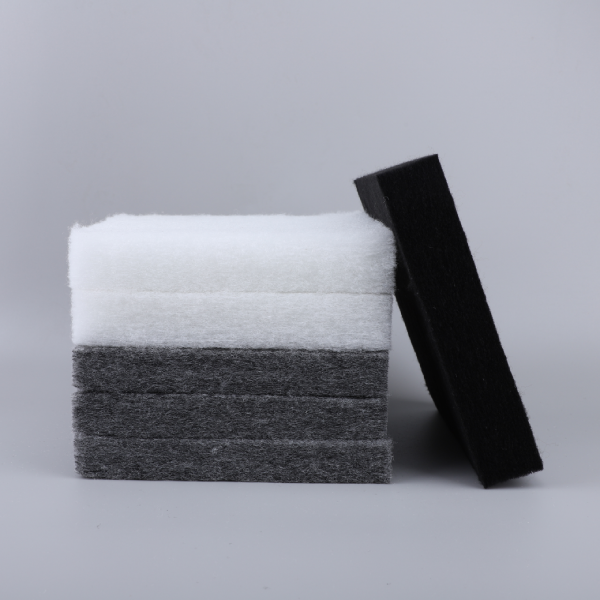
Compared with standard needle punched felt, composite needle punched felt can be processed with polyester fibers, low-melting-point fibers, plant fibers, resin fibers, PE, TPE, aluminum foil, and other functional materials according to different application requirements. This makes it possible to develop functional nonwoven products for construction, automotive, filtration, packaging, geotextile, and household applications.
As a professional needle punched nonwoven felt manufacturer, HUIZHOU JINHAOCHENG NONWOVENS CO., LTD has a 26,000㎡ production facility and 15 automated needle punching production lines, providing customized OEM/ODM composite needle punched felt solutions for customers worldwide.
What Is Composite Needle Punched Felt?
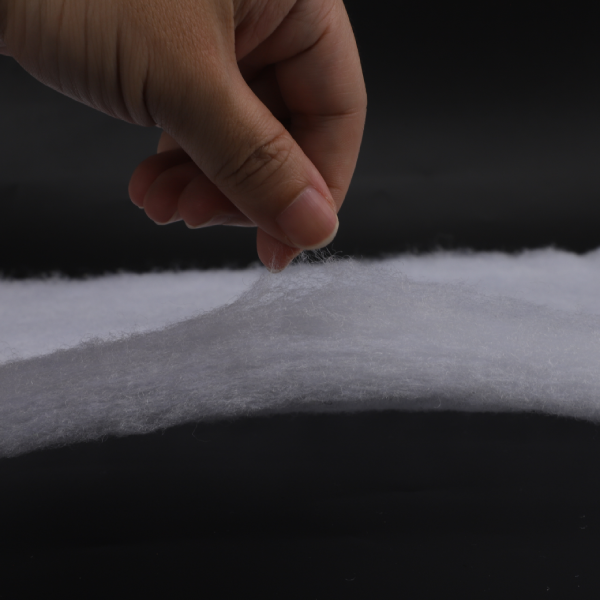
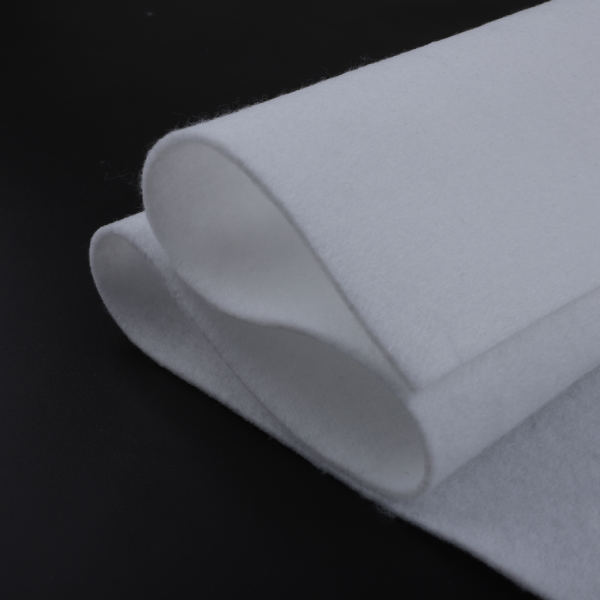
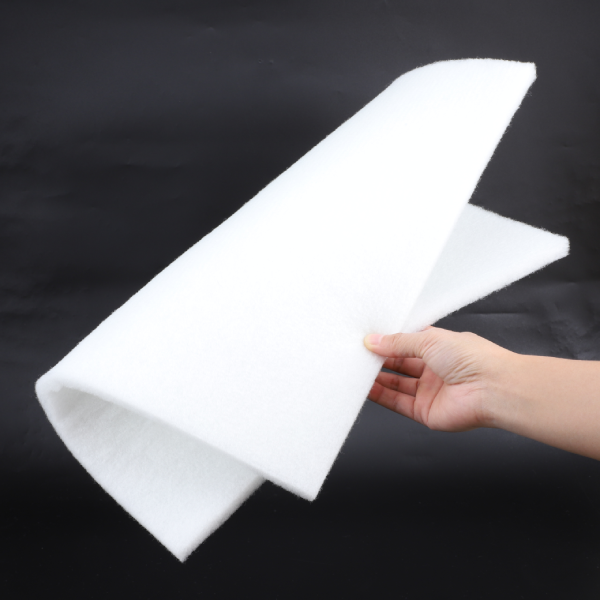
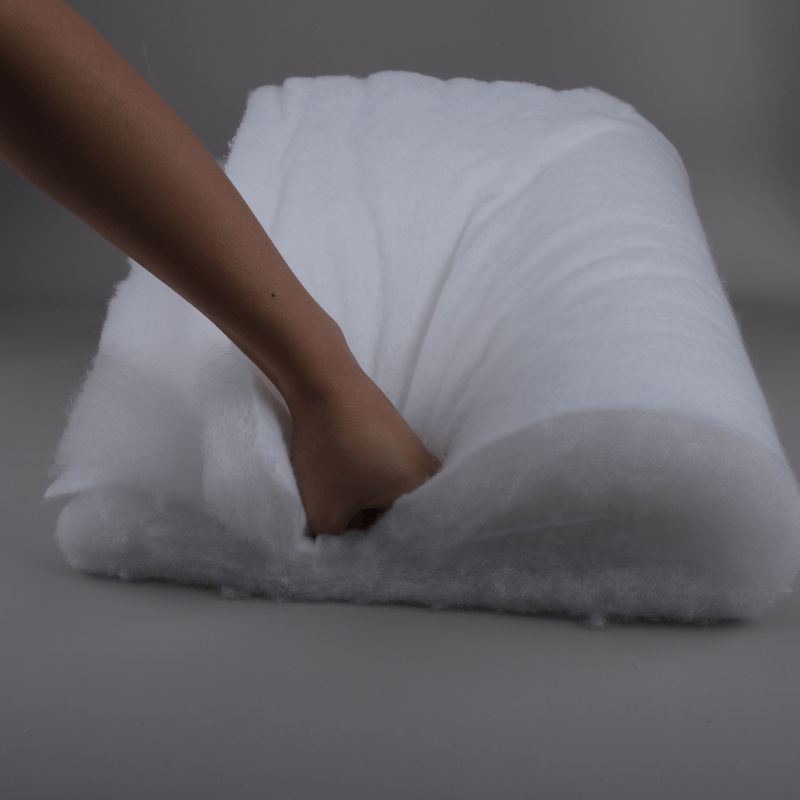
Composite Needle Punched Felt is a functional nonwoven material based on needle punched nonwoven felt. Through lamination, thermal bonding, film coating, or other composite processes, two or three different materials are combined into one integrated structure.
The purpose is not simply to stack different materials together, but to allow each material to contribute its own advantages. For example, polyester fibers provide strength and abrasion resistance, resin fibers can improve structural stability, plant fibers can contribute to more environmentally conscious material solutions, PE or TPE backing can provide waterproof and barrier performance, while an aluminum foil layer can enhance thermal insulation.
This composite structure allows the material to achieve a combination of properties that may be difficult to obtain from a single layer of needle punched felt, making it suitable for a wide range of industrial and construction applications.
Property 1: Excellent Abrasion Resistance and Barrier Performance
Abrasion resistance is one of the most important properties of Composite Needle Punched Felt for industrial applications.
Needled fibers form an interconnected three-dimensional structure through high-density entanglement, helping distribute mechanical stress during friction and repeated use. When an abrasion-resistant layer or waterproof backing is further laminated onto the felt, the finished product can maintain better structural integrity during repeated walking, equipment movement, and handling.
Therefore, composite needle punched felt is widely used in floor protection rolls, garage floor mats, automotive repair mats, and industrial equipment protection layers.
For products designed for repeated use, abrasion resistance can directly influence service life and overall cost effectiveness.
Property 2: High Tensile Strength and Tear Resistance
Many industrial applications choose Composite Needle Punched Felt not simply because the material is thicker, but because it can provide improved structural strength.
The needle punching process creates interlocking connections between fibers in different directions, while the composite process can further improve bonding between different layers. This gives the finished material good tensile strength and tear resistance.
As a result, composite needle punched felt can meet the mechanical performance requirements of industrial packaging, automotive interiors, geotextile materials, filtration substrates, and construction protection materials.
Property 3: A Good Balance Between Breathability and Waterproofing
Many people assume that breathability and waterproofing are contradictory properties. In practice, Composite Needle Punched Felt can achieve both through a multi-layer structure.
The internal fiber network of needle punched felt contains numerous pores, allowing a certain level of air permeability. When a PE or TPE waterproof film is laminated to the bottom, it can create an effective liquid barrier.
This structure is particularly suitable for products such as Floor Protection Roll, Garage Floor Mat, Painter Floor Protection, and construction protective fleece.
The felt layer can help handle surface moisture, while the waterproof backing helps prevent liquid from continuing to penetrate toward the floor, improving the overall protection performance.
Property 4: Excellent Thermal Stability and Processing Performance
Composite Needle Punched Felt offers good thermal stability and can therefore be adapted to a variety of secondary processing methods.
Depending on the product requirements, the material can undergo thermal molding, die cutting, punching, sewing, lamination, digital printing, and anti-slip dot coating.
This means that the same basic material can be developed into different finished products according to different customer requirements, improving OEM product development efficiency.
For brand customers, this flexibility is also an important reason why composite needle punched felt has significant customization value.
Property 5: Environmentally Friendly, Non-Toxic, and No Dyeing Required
As global markets place increasing emphasis on environmentally responsible materials, Composite Needle Punched Felt is also developing toward more sustainable manufacturing solutions.
Polyester needle punched felt can be manufactured using solution-dyed fibers. Many products therefore do not require additional dyeing processes to achieve stable colors, which can reduce the need for subsequent dyeing and finishing while providing good color fastness.
Depending on the product requirements, materials such as viscose fibers and plant fibers can also be incorporated into the composite structure to provide additional material options for environmentally conscious applications.
For products exported to European and North American markets, these types of environmentally conscious composite material solutions are increasingly relevant to modern construction and household applications.
Why Is Composite Needle Punched Felt Also Used as Geotextile in Industrial Applications?
In industrial and infrastructure applications, Composite Needle Punched Felt can also be used in the form of geotextile materials.
It is commonly based on polyester fibers and can incorporate resin fibers or other functional materials according to engineering requirements. Through the needle punching process, the fibers form a high-strength and structurally stable nonwoven material.
The key performance indicators can include tensile strength, elongation at break, tear strength, abrasion resistance, flame retardancy, light color fastness, wet color fastness, rubbing color fastness, and thermal shrinkage.
These properties allow the material to be used in road engineering, drainage systems, slope protection, building foundations, and industrial separation applications.
How Do Different Industries Use the Performance Advantages of Composite Needle Punched Felt?
Composite Needle Punched Felt is not a single fixed product. It is a versatile material platform that can be engineered according to different application requirements.
The construction industry places greater emphasis on abrasion resistance, waterproofing, and floor protection, so PE or TPE backing is commonly used.
The automotive industry focuses more on sound insulation, vibration reduction, and dimensional stability, so multi-layer needle punched structures or rubber composite constructions can be developed.
The filtration industry places greater emphasis on air permeability, heat resistance, and structural uniformity, so fiber fineness and needle punching density can be optimized according to filtration requirements.
The packaging industry focuses more on absorption, protection, and cushioning, allowing composite needle punched felt to be developed into moisture-retaining materials, industrial packaging pads, and transportation protection materials.
Different applications require different composite structures rather than one material being used for every application.
How Can You Evaluate the Quality of Composite Needle Punched Felt?
For importers, distributors, wholesalers, and brand customers, it is not recommended to compare composite needle punched felt only by GSM or price.
Material consistency and overall performance are more important factors.
A high-quality Composite Needle Punched Felt should generally have a uniform and stable fiber structure, appropriate needle punching density, stable composite bonding strength, good dimensional stability, excellent abrasion and tear resistance, and consistent GSM and thickness between production batches.
These factors work together to determine whether the product can maintain stable performance during long-term industrial applications.
How Does Jinhaocheng Provide OEM Solutions for Composite Needle Punched Felt?
As a professional nonwoven felt manufacturer China, HUIZHOU JINHAOCHENG NONWOVENS CO., LTD has integrated production capabilities covering needle punching, lamination, thermal bonding, slitting, and OEM manufacturing.
We can customize polyester composite needle punched felt, PE or TPE waterproof composite structures, aluminum foil thermal insulation materials, high-density abrasion-resistant needle punched felt, acoustic and thermal insulation composite materials, automotive interior felt, floor protection rolls, and industrial filtration substrates according to different application requirements.
We also support customization of GSM, thickness, color, width, roll length, and branded packaging, providing stable custom nonwoven felt manufacturer services for customers in different markets.
Conclusion: Composite Structure Determines the Real Value of Needle Punched Felt
The competitiveness of Composite Needle Punched Felt does not come only from the needle punching process itself. Its value also comes from the functional combination created by different materials within the composite structure.
Its abrasion resistance, barrier performance, waterproofing, breathability, high strength, thermal stability, and environmental advantages make it an important material for construction, automotive, filtration, packaging, and industrial manufacturing.
For companies developing high-performance nonwoven products, choosing a manufacturer with complete composite processing capabilities can make product upgrades, OEM development, and long-term stable supply more efficient.
Working with a professional needle punched felt manufacturer with integrated production and customization capabilities can provide greater flexibility when developing composite nonwoven solutions for different applications.