
What Should Overseas Buyers Confirm About NRE, Tooling and Prototypes Before Custom Nonwoven Development?
For overseas buyers developing custom nonwoven materials, needle punched felt, or non-standard composite materials, the real risk is not only whether the supplier can successfully produce the final product.
If a project requires additional engineering, dedicated tooling, prototype development, or testing costs, buyers should also clarify in advance: what these development costs cover, who owns the tooling, when a prototype is considered approved, who controls the technical information, and whether the development results can continue to be used if the supplier is changed in the future.
Therefore, before starting a custom OEM project, purchasing documents should not only specify the product price and lead time. They should also establish clear rules for managing the development project.
Why Should Custom Development Not Be Based Only on the Product Price?
Standard nonwoven purchasing can often be quoted directly according to an existing specification, while custom development projects usually require additional work and upfront investment.
Forexample, the buyer may provide product drawings, samples, dimensional requirements, or final application requirements, while the supplier further handles material selection, structural design, process adjustments, prototype production, and dedicated tooling development.
This means that the project cost may include more than the final unit price. It may also include engineering development, prototyping, testing, tooling, or other non-recurring development costs.
If these items are only confirmed briefly through emails or quotations without clearly defining the development results and responsibilities, different interpretations may arise later in the project.
For example, the buyer may believe that because it has paid the tooling fee, the tooling should belong to the buyer, while the supplier may consider the payment simply part of the development cost.
Similarly, the buyer may have approved a prototype, while both parties have not clearly defined what constitutes formal approval. If differences occur during mass production, this can create disputes.
Therefore, before entering custom development, overseas buyers should clearly distinguish between costs, development deliverables, approval milestones, and subsequent usage rights.
What Do NRE, Tooling and Prototypes Represent in Custom Manufacturing?
In custom manufacturing projects, NRE (Non-Recurring Engineering) generally refers to one-time engineering development costs, although the specific scope of NRE may differ between suppliers.
It may include engineering design, process development, development testing, prototype support, or other one-time project work.
Tooling generally refers to dedicated molds, tooling, fixtures, or other production aids developed or used specifically for manufacturing a particular product.
A Prototype is a development-stage sample used to confirm product structure, dimensions, materials, or production feasibility.
These three concepts should not simply be combined into one general “Development Fee.”
Buyers should clearly specify in the project documents:
Which costs are NRE;
Which costs are actual Tooling costs;
What the Prototype development cost is;
Whether modifications or additional prototypes will generate extra costs;
Which development deliverables will be provided to the buyer after final payment.
The purpose is not to make the purchasing process unnecessarily complicated, but to ensure that both parties understand exactly what each development cost represents.
What Ownership Issues Should Be Clarified After the Buyer Pays for Tooling?
This is an issue that is easily overlooked in custom development projects.
Paying a Tooling Fee and having ownership rights over the Tooling are not necessarily the same thing.
In actual manufacturing agreements, buyers and suppliers may establish different tooling ownership arrangements. For example, some projects explicitly define buyer-owned tooling and require the supplier to identify, store, and restrict its use, while other arrangements may allow the supplier to own the tooling while granting the buyer specific usage rights. Publicly available manufacturing agreements show that these arrangements can vary.
Therefore, buyers should clarify in advance:
Who legally or contractually owns the tooling;
Whether the Tooling Fee represents a one-time tooling purchase or part of the development cost;
Where the tooling will be stored;
Who is responsible for maintenance and repairs;
Whether the supplier can use the tooling for other customers;
Whether the buyer can request the tooling to be transferred;
How the tooling will be handled when the project ends.
For dedicated tooling paid for by the buyer, it is better not to simply write “Tooling Cost” on an invoice. The relevant asset and its conditions of use should be clearly defined in the project documents.
Why Should Prototype Approval Have a Clearly Defined Acceptance Milestone?
A Prototype should not simply be something that is “sent to the customer for review.”
For custom nonwoven development projects, the prototype may become a common reference for future mass production. Therefore, the buyer should clearly define what conditions constitute formal prototype approval.
Depending on the project, prototype approval may include confirmation of material type, GSM, thickness, width, color, surface condition, composite structure, dimensions, and final application requirements.
If the prototype needs to undergo internal customer testing, the project should also specify:
When the prototype will be submitted;
Who is responsible for testing;
Which tests are required;
When the prototype is considered approved;
What happens if it fails;
How the revision and re-prototyping lead time and costs will be handled.
This helps prevent situations where the supplier considers the prototype approved while the buyer considers it only an internal evaluation sample.
For development projects, Sample Approval should be a clearly defined project milestone rather than an ambiguous statement that “the customer has confirmed it.”
What Should an NDA Protect Beyond Simply “Keeping Information Confidential”?
For OEM/ODM projects, the purpose of an NDA is not simply to prevent a supplier from publishing customer product photos online.
Custom development may involve product drawings, samples, brand information, technical requirements, product structures, test data, pricing, and other non-public information.
Therefore, buyers should clearly define which information constitutes Confidential Information within the project.
They should also consider:
Which personnel may access the information;
Whether the supplier may disclose it to third parties or subcontractors;
For what purposes the information may be used;
Whether information must be returned or deleted after the project ends;
How long the confidentiality obligations will remain in effect.
If the supplier needs to outsource part of the development work to a third party, the buyer should also confirm whether the relevant information may be disclosed and whether the supplier must ensure that the third party is subject to appropriate confidentiality obligations.
For cross-border OEM projects, the most important purpose of an NDA is not to make it as complicated as possible, but to clearly define what information is protected, how it may be used, and how it should be handled after the project ends.
How Should Drawings, Samples and Technical Documents Created During Development Be Managed?
In addition to physical tooling, technical information created during development also needs to be managed.
For example, a project may generate product drawings, dimensional files, material requirements, sample records, test results, tooling drawings, and other documents related to the custom product.
Buyers should clarify at the beginning of the project which information is provided by the buyer, which information is developed by the supplier, and which information represents the supplier's pre-existing manufacturing know-how.
In particular, the following should be distinguished:
Buyer-provided information
and
Supplier-developed manufacturing know-how
These two categories should not simply be treated as the same type of intellectual property.
For product designs, brand information, or proprietary technology provided by the buyer, the purchasing documents should define how the information may be used.
For the supplier's existing manufacturing processes and general technical know-how, buyers should also avoid creating unnecessary ownership disputes simply because these technologies were used during an OEM project.
This distinction helps both parties maintain clearer IP boundaries throughout the development process.
What Should Buyers Confirm in Advance If the Supplier Can No Longer Manufacture the Product?
Many buyers only consider tooling and development-document transfer when they actually need to change suppliers.
For non-standard OEM projects, however, this issue is better addressed when the project begins.
For example, if the supplier can no longer continue production due to capacity, business changes, or other reasons, the buyer should know:
Whether paid dedicated tooling can be transferred;
Where the tooling is located;
Whether it has a clear asset identification number;
Whether relevant drawings or technical documents can be delivered;
Whether samples and approval records can be provided;
Who will be responsible for packaging, transportation, and related transfer costs.
Some established manufacturing agreements further define the location, identification, usage restrictions, and transfer conditions of buyer-owned tooling.
For overseas buyers, the purpose of these provisions is not to assume that a supplier will necessarily stop production. Instead, they help ensure that when the supply chain changes, the development resources already invested in the project can continue to be used without being blocked by missing documentation.
How Should Overseas Buyers Put These Requirements into OEM Project Documents?
Buyers do not necessarily need a complex legal contract for every standard nonwoven order.
However, for custom projects involving dedicated tooling, engineering development, or multiple prototype rounds, the key requirements can be organized into an OEM Development Specification or project appendix.
At a minimum, the project should define:
Project Scope: What product needs to be developed.
NRE Cost: Which costs are considered one-time engineering development costs.
Tooling: What tooling will be used and how much the tooling costs.
Tooling Ownership: Who owns the tooling and when ownership is established.
Prototype: Prototype quantity, development lead time, and delivery requirements.
Sample Approval: What conditions constitute prototype approval.
Revision: How modifications and additional prototypes will be handled if the sample does not meet requirements.
Confidentiality: Which product information is considered confidential.
Technical Documents: How drawings, sample records, and other development documents will be managed.
Tooling Transfer: How tooling and related documents will be handled if the project ends or the supplier is changed.
These requirements do not necessarily need to be included in one long contract. They can also be managed through a purchasing agreement, SOW, Tooling Schedule, NDA, or project specification.
For cross-border procurement, the final formal agreement should still be reviewed by qualified legal professionals according to the jurisdictions of the parties and the specific project circumstances.
How Can JHC Support Custom Nonwoven Development?
For overseas buyers developing custom nonwoven products, the key question is not only whether a supplier can provide a prototype, but also whether the supplier can understand the product application, cooperate with the development process, and maintain stable mass production after the specifications are approved.
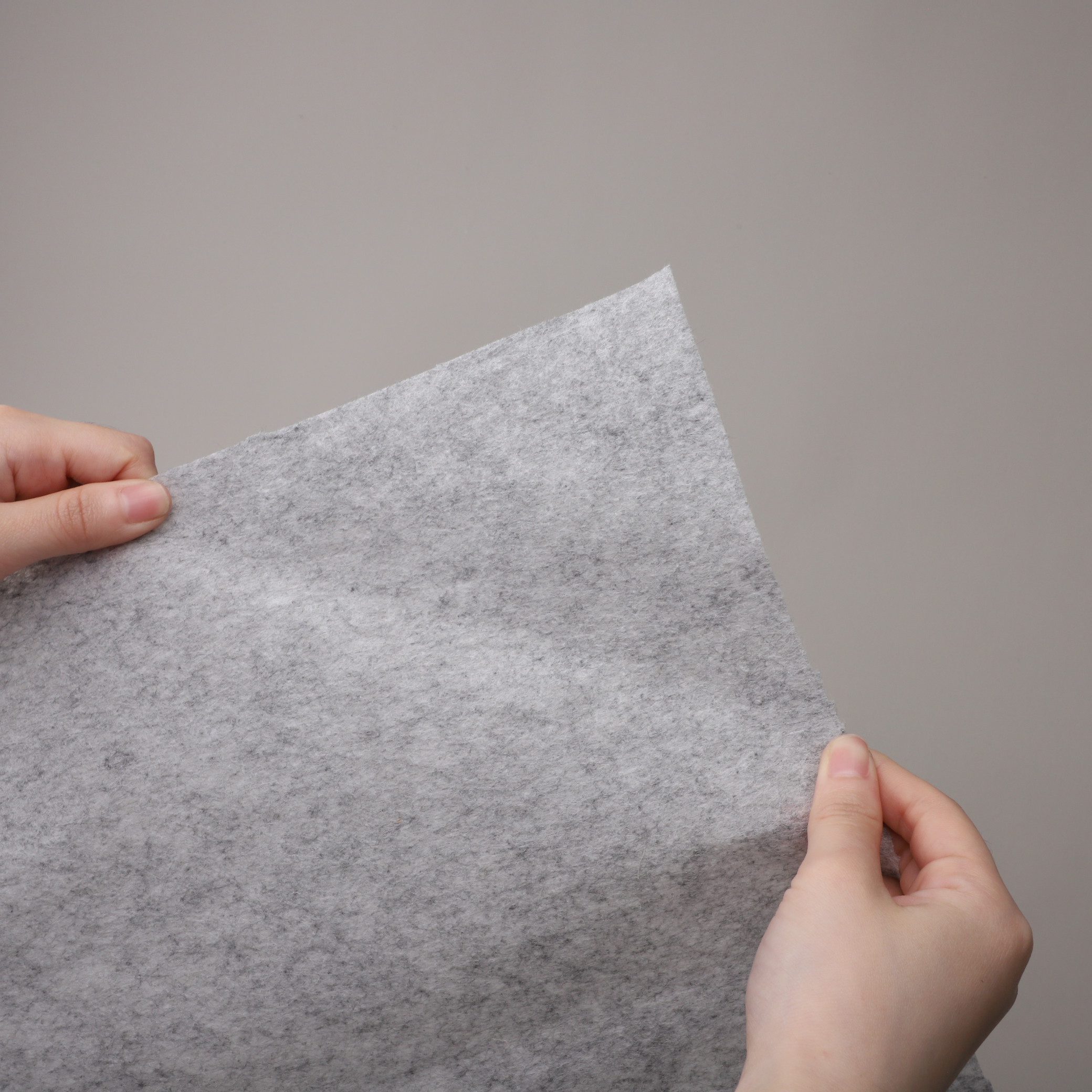
HuiZhou JinHaoCheng Nonwovens Co., Ltd. has more than 20 years of nonwoven manufacturing experience and supports OEM/ODM projects involving needle punched nonwoven, needle punched felt, and various customized nonwoven materials.
Depending on the project requirements, buyers can confirm materials, GSM, thickness, width, color, structure, surface treatment, lamination method, and other product requirements during development, followed by sample approval before moving into bulk production.
For long-term OEM projects, establishing clear product specifications, sample approval procedures, and development-document management processes in advance can also help reduce communication errors during subsequent mass production.
Conclusion
For custom nonwoven OEM projects, the key issues to confirm in advance go beyond the product price.
If a project involves NRE, dedicated Tooling, Prototypes, or customer-owned designs, overseas buyers should clarify what the development costs cover, who owns the tooling, how prototypes are approved, what information is confidential, how technical documents are managed, and how tooling and development resources will be transferred if the supplier changes before paying development costs.
The goal is not necessarily to use a complicated standard contract. Instead, each important development asset should have a clearly defined owner, permitted use, and exit condition.
For standard products, it may not be necessary to address all of these issues in detail. For non-standard OEM/ODM projects intended for long-term mass production, however, clarifying these points early can create a clearer procurement chain from development and prototype approval through to subsequent mass production.




