
How to Specify Glue-Free, Surface-Gripping Film for Reusable Floor Protection
When sourcing floor protection fleece, terms such as “self-adhesive floor protection,” “glue-free floor protection,” and “reusable painter’s fleece” may not give suppliers enough information to understand the exact requirements. Products that look similar can have different backing structures, grip mechanisms, and application limitations. If an RFQ relies only on a broad product name, misunderstandings may arise between quotation, sample approval, and bulk production.
For importers, wholesalers, professional painting-tool suppliers, and private-label buyers, a more reliable approach is to describe the product name and backing structure separately, then define the required functions and conditions of use. This article explains how to specify glue-free, surface-gripping backing in a purchasing document to reduce ambiguity when sourcing floor protection fleece.
Why Shouldn't Buyers Describe the Backing Only as “Self-Adhesive” or “Glue-Free”?
The term “self-adhesive floor protection” usually suggests a product that can attach to the floor without separate fixing materials. However, the name alone does not fully explain the backing structure or confirm which adhesion mechanism the product uses.
Similarly, “glue-free” can be interpreted in different ways. A buyer may mean that the product must not use conventional adhesive, while the supplier may not know whether the buyer also requires a certain level of surface grip, compatibility with specific flooring types, or inspection of the surface after removal.
For this reason, purchasing documents should not rely solely on short labels such as “self-adhesive,” “glue-free,” “residue-free,” or “reusable.” A more reliable specification separates the backing structure, intended function, compatible surfaces, and acceptance requirements.
For example, if the purchasing requirement is for protective fleece with a backing that does not use conventional adhesive and is designed to provide grip through contact with suitable flooring, the RFQ should state this requirement directly and ask the supplier to confirm the actual construction. Buyers should not assume that a product has the required grip performance simply because its name, promotional images, or description includes the term “glue-free.”
What Is the Difference Between Conventional Adhesive Backing and Surface-Gripping Backing?
Conventional adhesive backing generally uses an adhesive layer to create attachment when it contacts a floor. Surface-gripping backing describes a different type of functional design intended to help the protective fleece stay in position on specified surfaces without relying on conventional pressure-sensitive adhesive backing for that function.
The purchasing objective is not simply to decide which structure is better. It is to confirm whether the supplied construction meets the requirements of the project. Performance may vary with the material formulation, surface condition, contact characteristics, and actual working environment. The term “surface-gripping” alone cannot guarantee a particular result.
Buyers should ask suppliers to confirm the following information in writing:
Item to Confirm | What the Buyer Should Specify |
Backing construction | Whether conventional adhesive or an adhesive coating is present |
Functional description | Whether the product is designed to provide grip on specified surfaces |
Compatible surfaces | Flooring materials and surface conditions confirmed by the supplier |
Removal requirements | Whether residue, discoloration, coating changes, or other surface effects must be checked |
Use limitations | Surfaces, environments, or operating conditions for which the product is not recommended |
Construction changes | Whether a revised backing material or structure requires renewed sample approval |
These details should reflect the actual product being supplied. If a project requires a structure without conventional adhesive, buyers should request explicit written confirmation instead of treating “non-adhesive” and “self-gripping” as interchangeable labels.
How Should Buyers Describe the Backing Structure in a Specification?
A useful purchasing specification should clearly communicate what the buyer requires and allow both parties to verify compliance during sample approval and bulk-order inspection.
First, describe the functional layers of the product. For example, protective fleece may include a nonwoven layer and a waterproof film layer, while the backing should be described separately in terms of its material construction and function. A waterproof film does not automatically indicate a particular grip mechanism. Likewise, the fiber composition of the nonwoven layer does not prove that the backing is glue-free or reusable.
Second, state explicitly whether conventional adhesive is permitted. If the project requires backing without conventional adhesive or an adhesive coating, list this as a specific construction requirement and ask the supplier to confirm it. Do not rely on adding the words “glue-free” to the product name alone.
Third, require the supplier to record the actual backing construction in the sample approval documents or product specification sheet. For long-term supply programs and private-label products, link the confirmed construction to a product model, sample reference, or specification revision. This helps prevent repeat orders from being placed using an ambiguous product name.
If a supplier proposes replacing the backing material, coating, or lamination structure, the change should be explained before the buyer decides whether to accept it. Even when the product's appearance and roll dimensions remain unchanged, a change in backing construction may affect grip performance and conditions of use.
How Should Buyers Define Grip Performance and Compatible Surfaces?
The phrase “surface-gripping” does not mean that a product will remain equally stable on every type of flooring. Actual performance may be affected by the flooring material, surface coating, texture, dust, oil, cleaning-agent residue, moisture, and other conditions.
Therefore, a specification should not simply state “strong grip” or “non-slip.” It should identify the intended flooring surface and specify which conditions the supplier must confirm.
For example, buyers can provide the target flooring material, whether the surface is smooth or textured, whether it has a special coating, and the intended construction environment. The supplier should then confirm whether the proposed product configuration is suitable. If the available information is insufficient, the unresolved points should be identified rather than replaced with a blanket claim that the product works on all floors.
Grip performance should be verified using samples under conditions relevant to the intended application. The parties can agree in advance on observations such as whether the product shifts noticeably after installation, whether the edges lift easily, and whether the product meets the project's requirements under expected use conditions. The test method and acceptance criteria should be established according to the product construction and application. Universal numerical limits should not be invented without supporting validation.
For projects involving sensitive coatings, specially treated surfaces, or high-value flooring, buyers should also follow the flooring manufacturer's recommendations. Even if the backing does not use conventional adhesive, that does not automatically make the product suitable for every surface.
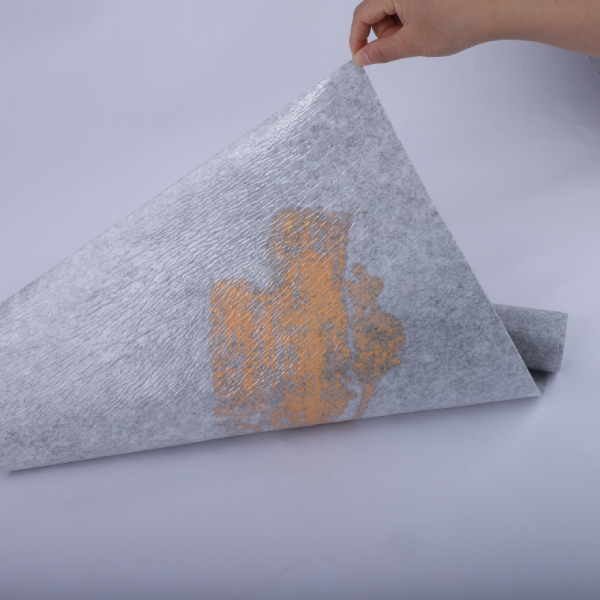
How Should Buyers Specify Removal Requirements and Reusability?
Buyers may want a product that can be removed easily after work is completed and reused under appropriate conditions. However, “no conventional adhesive,” “residue-free removal,” and “reusable” are separate requirements that should be confirmed independently.
If the condition of the floor after removal is important, specify what needs to be checked, such as visible residue, discoloration, coating changes, or other abnormal effects. Whether these requirements can be met must be assessed using the actual product and target flooring combination. The backing name alone is not sufficient evidence.
If the product is intended for repeated use, the specification should also describe the expected reuse process. Buyers can ask suppliers to confirm whether the backing needs to be checked for contamination, material damage, or changes in grip performance after removal, rolling, transport, storage, and reinstallation. The number of reuse cycles and any maintenance requirements should be supported by the product's actual performance and validation results. “Reusable” should not be interpreted as meaning that the product can be used indefinitely.
For projects sourcing reusable floor protection fleece, treat reusability as a performance requirement that needs confirmation, rather than merely a marketing term. The buyer and supplier should agree on the conditions of use, inspection items, and actions to take if the product fails to meet the agreed requirements.
How Can Buyers Ensure Consistency Between Samples, Specifications, and Bulk Orders?
A clear specification is only useful if subsequent deliveries match the approved construction. For importers, wholesalers, and private-label buyers, sample approval, specification revision control, and change management are particularly important.
The following process is recommended.
Step 1: Send complete purchasing requirements. In the RFQ, describe the overall product construction, backing requirements, intended flooring surfaces, expected grip function, and removal requirements separately. Do not send only a product image or an ambiguous product name.
Step 2: Ask the supplier to confirm the construction. The supplier should state in writing whether the backing contains conventional adhesive, describe the actual construction, and identify the applicable conditions and known limitations. If a performance requirement cannot yet be confirmed, list it as an item requiring validation.
Step 3: Approve an identifiable sample. Record the product model, specification revision, backing construction, and approval date. Where necessary, retain a reference sample or photographs for comparison with future bulk orders.
Step 4: Include the key requirements in the order documents. The bulk order should refer to the approved specification revision. It should also state that changes to the backing construction or related configuration require the buyer's prior written approval.
Step 5: Manage changes and discrepancies. If the raw material, backing, coating, or lamination process changes, the supplier should explain the change in advance and submit a new sample for approval when necessary. If the grip performance of a delivered product differs from the approved sample, both parties should review the confirmed construction, surface conditions, and acceptance requirements.
This process helps reduce the risk of receiving products that look similar but have different backing structures. It also supports more consistent specifications for repeat orders.
A Backing Specification Checklist Buyers Can Use in an RFQ
The following checklist can serve as a starting point for purchasing documents. Buyers should adjust it to the actual product and project requirements. Unverified performance should not be written as a guaranteed fact.
Product name: Floor Protection Fleece / Painter's Fleece
Overall material construction: Please describe the materials and arrangement of each functional layer.
Backing construction requirement: The backing must not use conventional adhesive. Please confirm whether the backing contains conventional adhesive or an adhesive coating, and provide a construction description consistent with the actual product to be supplied.
Intended function: The backing must provide the required grip on the target surfaces under conditions agreed by both parties. Please state the compatible conditions and any limitations.
Target surface: The buyer should specify the flooring material, surface treatment, texture, and intended working environment.
Grip performance verification: Please propose a sample verification method suitable for the product construction and target surface. The method should be agreed upon before testing, together with the acceptance criteria.
Removal requirements: Please identify the items to inspect after removal, including visible residue, surface changes, and material damage. Requirements should be based on the target flooring and sample validation results.
Reusability requirements: If repeated use is required, please describe the expected removal, storage, and reinstallation conditions, and confirm the performance items that need to be inspected.
Sample and bulk-order consistency: Bulk products must match the approved sample and specification revision. Any change affecting the backing construction requires the buyer's prior approval.
Required documentation: Please provide the product specification sheet, backing construction description, conditions of use, and sample verification records agreed upon by both parties.
The purpose of this checklist is not to make the RFQ unnecessarily complicated. It is to clarify requirements that are particularly easy to misunderstand. Buyers can use it to compare supplier responses based on technical details rather than relying only on promotional terms such as “glue-free,” “self-gripping,” or “reusable.”
Conclusion: Turn Backing Requirements into Verifiable Purchasing Conditions
When sourcing glue-free, surface-gripping floor protection fleece, the most important step is not finding a product name that sounds precise. It is ensuring that the backing construction, intended grip function, compatible surfaces, removal requirements, and reuse conditions are clearly confirmed by the supplier.
For projects requiring consistent bulk supply, buyers should also link the approved sample to a specification revision and establish an approval process for changes affecting the backing construction. This helps reduce misunderstandings during quotation and supports consistency across repeat orders.
As a manufacturer specializing in nonwoven materials and composite products, HuiZhou JinHaoCheng Nonwovens Co., Ltd. can discuss material construction, lamination configurations, and customization requirements based on each purchasing project. For custom floor protection solutions, buyers should provide the target surface, required backing function, and acceptance criteria during the RFQ stage. This allows the supplier to assess a suitable configuration and confirm the bulk specification after sample approval.




