
Protecting Laminate Floors During Painting: How to Reduce the Risk of Moisture Entering at the Edges
When painting walls, renovating interiors, or carrying out other renovation work on laminate flooring, contractors often lay floor protection fleece to reduce the impact of paint splashes, dust, and everyday construction activities on the floor.
For waterproof floor protection rolls with a PE film layer, the intact film surface can help prevent liquid from penetrating downward. However, actual installation usually involves joining multiple rolls and cutting the material around walls, doorways, furniture, and fixed fixtures. Even when the material itself has a waterproof layer, liquid may still enter underneath the covering through these areas.
This means that choosing a suitable floor protection roll for laminate requires more than checking the material's resistance to liquid penetration. Installation methods and inspections during the renovation also matter. Understanding where liquid may enter makes it easier to take targeted steps to reduce the risk of moisture affecting laminate flooring.
Why Can Moisture Still Get Under Waterproof Floor Protection After Installation?
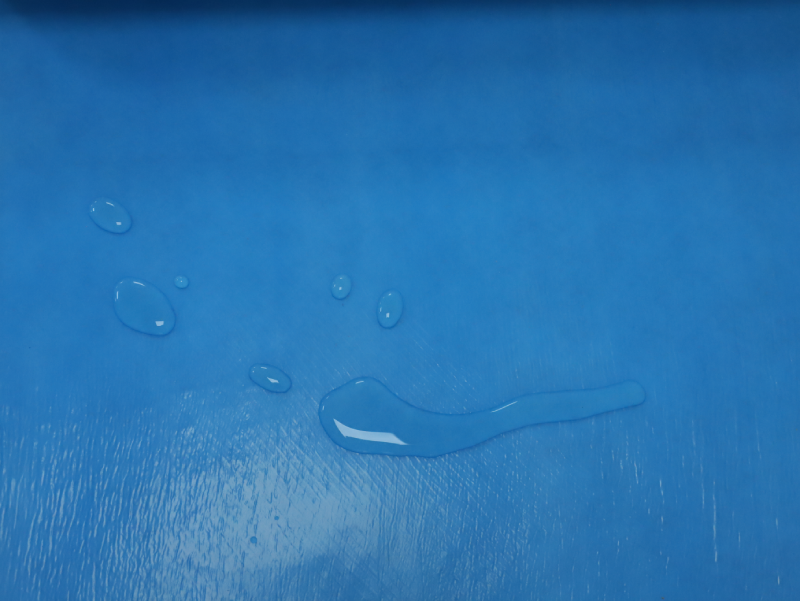
The PE film layer of waterproof floor protection fleece can create a liquid barrier across intact areas of the material, but the entire covered area is not necessarily a completely sealed system.
On an actual renovation site, the covering may consist of multiple rolls joined together. The material may need to be cut along walls and around room layouts, while doorways and other edges may be difficult to cover completely. These areas differ from the intact central surface because liquid may travel along a joint or enter beneath the covering through an exposed edge.
In addition, the protective material may shift when workers walk across it, move tools, or reposition equipment. If previously aligned joints separate or an edge curls upward, the risk of liquid getting underneath may increase.
Therefore, the waterproof performance of the material itself and the protection provided by the entire installed covering must be considered separately. Water droplets remaining on the PE film do not prove that every joint and edge is protected against liquid entry. Likewise, moisture entering at an edge does not automatically mean that the material itself is defective.
Roll Joints: How Liquid Can Enter Through Connections Between Rolls
In larger rooms and hallways, contractors often need to install several rolls of floor protection material. The connections between adjacent rolls are among the areas that deserve particular attention during installation.
If there is a noticeable gap between two rolls, spilled water, diluted paint, or other liquids may flow through the opening and reach the area beneath the covering. If a joint is pulled or disturbed during construction, a connection that was initially close-fitting may gradually separate.
Before installation, plan the roll layout and installation sequence to minimize unnecessary joints. Avoid leaving obvious open gaps in areas where liquid spills are more likely. The appropriate method of joining the material—whether close-fitting edges, suitable overlap, or another joint treatment—should depend on the product structure, supplier instructions, and project requirements. Do not assume that every roll is suitable for the same joining method.
After installation, inspect the joints to confirm that the material is aligned, there are no obvious gaps, and the connections remain stable after normal foot traffic.
If liquid spills are likely in the work area, make the joints a regular inspection priority rather than checking them only once immediately after installation. This makes it easier to identify shifting rolls or joints that have opened during use.
Walls and Doorways: Edges That Are Easy to Overlook
Wall edges, doorways, and room entrances differ from large, flat areas because the protective material often needs to be cut or adjusted to fit the space. If these areas are not adequately covered, liquid may bypass the intact PE film and enter beneath the floor protection.
When laying material along walls, check that the covering extends continuously across the areas that need protection. Avoid leaving exposed floor edges because the roll is too short or has not been positioned correctly. At doorways and passageways, pay particular attention to movement caused by frequent foot traffic. Repeated walking and carrying equipment can gradually curl up an edge or push the material to one side.
If buckets, paint containers, or other potential sources of spills are near the work area, avoid placing them close to joints or incompletely covered edges whenever practical. This cannot guarantee that liquid will never enter underneath, but it can reduce the chance of liquid flowing directly toward vulnerable areas.
The way walls and doorways are covered should also take the product's structure and instructions into account. Do not use unapproved fixing methods simply to create what appears to be a completely sealed edge, especially when the floor surface is sensitive or the product has specific usage restrictions.
Cut Edges and Corners: Check for Exposed Areas Beneath the Covering
During renovation, floor protection fleece often needs to be cut around door frames, columns, pipes, fixed equipment, and other obstacles. Cutting allows the material to fit the space, but inaccurate cuts may leave parts of the floor uncovered.
After cutting, check whether the edges fit the areas that need protection and whether there are visible gaps around corners and obstacles. In locations where liquid could flow easily, pay particular attention to whether it could travel along a cut edge and reach the area beneath the covering.
If two pieces of material are needed to cover an irregular area, inspect their connection for open gaps and confirm that the pieces remain in position during normal site activity. Do not leave a large exposed area simply to avoid cutting, and do not assume that loosely overlapping small pieces automatically create a reliable liquid barrier.
For complicated areas, measuring and planning the cuts in advance is usually easier to manage than repeatedly patching the covering after installation. The goal is not to eliminate every joint, but to identify locations where liquid could bypass the intact material surface and inspect those areas carefully.
Clean and Dry the Floor Before Installation to Avoid Trapping Moisture
Before installing waterproof floor protection fleece, confirm that the laminate floor surface meets the product's stated installation conditions and is sufficiently dry. Residual water, cleaning solutions, or other liquids may become trapped beneath the covering, making it difficult for workers to see the actual condition of the floor.
Before laying the material, remove dust, debris, and visible liquid residue. Inspect the floor for damp areas. If the floor has recently been cleaned, allow sufficient time for it to dry rather than installing waterproof protection immediately to save time.
This is particularly important for laminate flooring. Different products have different surface and joint structures, and their tolerance for moisture may vary. The presence of a PE film on the protective covering does not mean that the floor beneath it will be unaffected by all moisture.
If the floor is not yet dry or the site has an ongoing leak or standing-water problem, address those issues before installing the protective material. Waterproof floor protection is intended to reduce the impact of renovation activities on the floor, not to replace floor drying or moisture management at the site.
How Can Contractors Reduce Liquid Buildup and Movement During Renovation?
Managing the installation remains important after the floor protection has been laid. If liquid accumulates in one area for an extended period, it may enter beneath the covering through joints, edges, or other vulnerable points, even when the main film surface has no obvious damage.
Workers should promptly deal with noticeable paint spills and other liquids instead of allowing them to remain near joints or walls for long periods. During cleanup, take care not to push liquid toward the roll edges or uncovered areas.
In areas with frequent foot traffic, substantial equipment movement, or a greater risk of the rolls being pulled out of position, regularly inspect joints, cut edges, and exposed boundaries. If the material shifts, an edge curls upward, or a connection develops a gap, correct the problem promptly rather than waiting until the renovation is finished.
Do not assume that every floor protection product with a PE film is suitable for prolonged liquid pooling or every type of construction condition. The product's resistance to liquid penetration, usage restrictions, and intended applications should be assessed using the actual product information and agreed requirements.
For renovation projects requiring protection over an extended period, inspect the covering and the floor beneath it at suitable intervals, taking site humidity, construction progress, and floor conditions into account. Do not assume that the floor is fully protected simply because the material has been installed.
What Should You Check If Liquid Gets In at an Edge?
If liquid reaches an edge, joint, or cut area of the floor protection fleece, act promptly to prevent further spreading and check whether the liquid has entered beneath the covering.
First, remove surface liquid where it can be handled safely, preventing it from flowing into adjacent areas. Then, depending on the situation, lift the protective material around the affected area and inspect the floor below for damp marks, pooled liquid, or other visible signs of moisture. Do not simply wipe the exposed edge and immediately cover it again.
If the underlying area is damp, respond according to the floor type and the liquid involved. Confirm that the floor surface and relevant joints have returned to a condition suitable for covering again. If the possibility of floor damage or ongoing moisture is unclear, follow the flooring manufacturer's guidance rather than assuming that a surface that looks dry is free of risk.
Also identify where the liquid entered. If damp marks are concentrated along the connection between two rolls, inspect the joint and installation alignment. If they are concentrated near a wall, doorway, or cut edge, check for exposed areas or movement of the protective material.
If moisture appears beneath an intact central area of the material, inspect the PE film and composite structure for damage or investigate other possible causes. Distinguishing between different entry paths helps determine whether the problem is related to installation, site handling, or the material itself, rather than replacing all the material before the cause is understood.
How to Choose Waterproof Floor Protection for Renovation Projects
When selecting floor protection for laminate flooring renovations, consider both the material's liquid barrier structure and the conditions at the installation site. Needle-punched nonwoven protection rolls laminated with PE film can provide surface liquid protection through their composite construction, but actual performance still depends on the product structure, conditions of use, and installation management.
When requesting a quotation, buyers should explain the floor type, renovation activities, liquids the material may encounter, expected coverage period, and whether the installation will require frequent joints or cuts. This information helps the supplier determine whether the product structure is suitable for the project.
For painting and interior renovation, you can explore our waterproof painter cover roll to learn about the PE film and needle-punched felt composite structure of our grey self-adhesive floor protection roll. Before use, check the product information for compatible surfaces and installation requirements. Do not assume that a product is suitable for every type of flooring or construction condition simply because it is described as waterproof.
For purchasing projects that require verification of the material's resistance to liquid penetration, refer to a guide on testing waterproof floor protection rolls. Assessing the material's performance and managing joints during installation are separate tasks and should be evaluated accordingly.
Conclusion: Protect the Intact Film Surface and Manage the Joints and Edges
When renovating laminate flooring, floor protection fleece with a PE film layer can help reduce the impact of paint and other liquids on the floor. However, a waterproof layer in the material does not guarantee that liquid can never enter beneath the entire installed covering.
A more effective approach is to confirm that the floor is clean and dry before installation, plan the roll joints, inspect coverage along walls, doorways, and cut edges, and respond promptly to spills or material movement during renovation. If liquid enters at an edge, inspect beneath the covering to identify the specific entry point and cause.
For overseas importers, wholesalers, renovation contractors, and floor protection distributors, choosing a suitable floor protection roll for laminate requires consideration of both the material's resistance to liquid penetration and its correct use under actual site conditions.
HuiZhou JinHaoCheng Nonwovens Co., Ltd. specializes in nonwoven material and composite product development and manufacturing. The company can discuss needle-punched nonwoven materials, PE film laminated structures, and related customized solutions according to project requirements. Clearly defining the application, material requirements, and installation conditions in advance helps buyers and suppliers select suitable products and establish clear quality requirements for future bulk orders.




