Is Needle Punched Felt Suitable for My Product? A Buyer’s Application Guide
For overseas importers, wholesalers, product manufacturers, and industrial buyers, one of the most important questions when purchasing needle punched felt is not simply “Which specification is the best?” but:
Is needle punched felt actually suitable for my product?
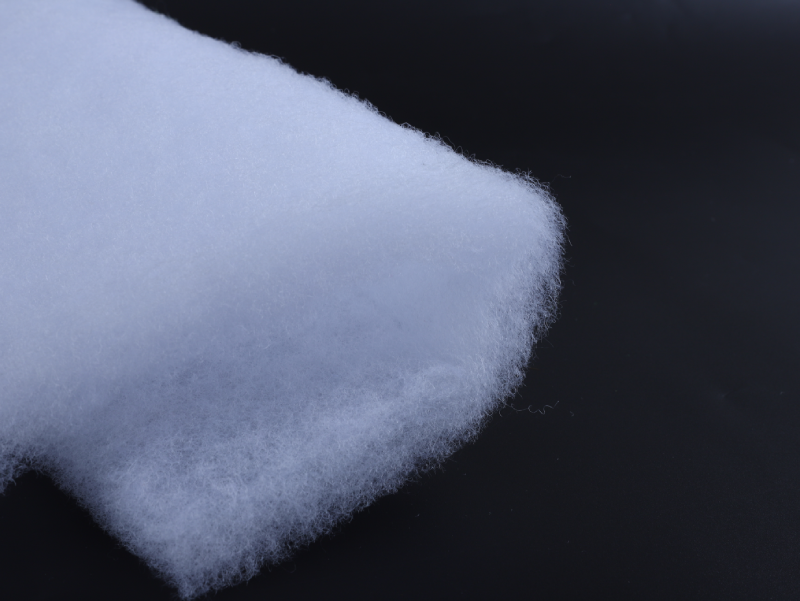
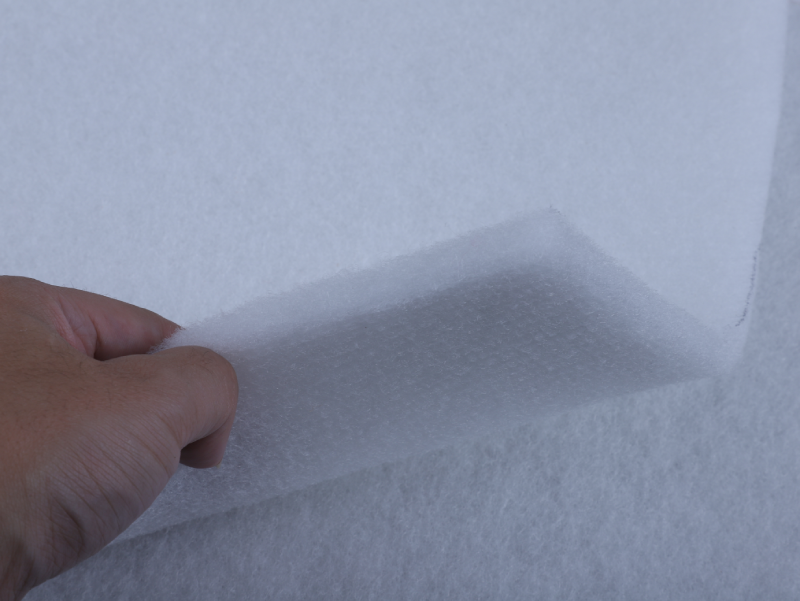
Needle punched felt can be manufactured with different fiber types and production processes to provide flexibility, cushioning, sound absorption, abrasion resistance, and structural stability. As a result, it can be used in a wide range of products, including floor protection, automotive interiors, acoustic materials, protective packaging, and absorbent products.
However, this does not mean that needle punched felt is suitable for every product.
For buyers, the more important step is to determine whether the material’s characteristics match the way the final product will be used before requesting quotations or placing a bulk order.
This guide does not focus on one specific GSM or thickness. Instead, it helps overseas buyers determine whether needle punched felt is worth considering as a material for their product based on the product’s actual requirements.
1. Before Asking “Which Needle Punched Felt Is Best?”, Ask “What Does My Product Need?”
When purchasing needle punched felt, a common mistake is to immediately ask a supplier:
“Do you have 3 mm needle punched felt?”
Or:
“What is your best GSM?”
For product manufacturers, however, thickness or GSM alone cannot determine whether a material is suitable for the final product.
Different types of needle punched felt can vary in fiber type, fiber structure, density, surface characteristics, and finishing or laminating methods. These differences can affect the final performance of the material.
Your existing specification guide already covers how to choose GSM, thickness, and width, so this article will not repeat those details. Instead, it addresses the purchasing question that comes earlier:
Is needle punched felt suitable for my product in the first place?
If the answer is yes, you can then move on to confirming the specific material and product specifications.
2. If Your Product Needs to Be Soft but Still Provide Some Support, Needle Punched Felt Is Worth Considering
One important characteristic of needle punched felt is that its fibers are mechanically entangled through needle punching, creating a three-dimensional fiber structure rather than relying on woven yarns.
This structure can be adjusted through the manufacturing process to provide different levels of softness, loft, support, and structural stability.
Therefore, if your final product should not use a very loose filling material but also does not require a rigid board-like material, needle punched felt can be considered as a potential material.
For example, some products that require a certain level of thickness, cushioning, or surface protection can consider needle punched nonwoven materials during the material development stage.
The key question is not whether needle punched felt is always “better,” but:
Does the product need a material whose fiber structure can provide softness, cushioning, and a certain degree of support?
If the answer is yes, it may be worthwhile to request samples from a needle punched felt supplier for further evaluation.
3. If Your Product Needs Cushioning and Protection, Needle Punched Felt May Be More Suitable Than a Thin Film Alone
Some products need to reduce friction, impact, or pressure during transportation, installation, or use.
For these products, the material requirements may go beyond simply providing waterproofing or separation. A certain level of thickness and fiber-based cushioning may also be required.
Needle punched felt can be produced with different levels of softness and structural characteristics according to the application, making it suitable for some protective and cushioning products.
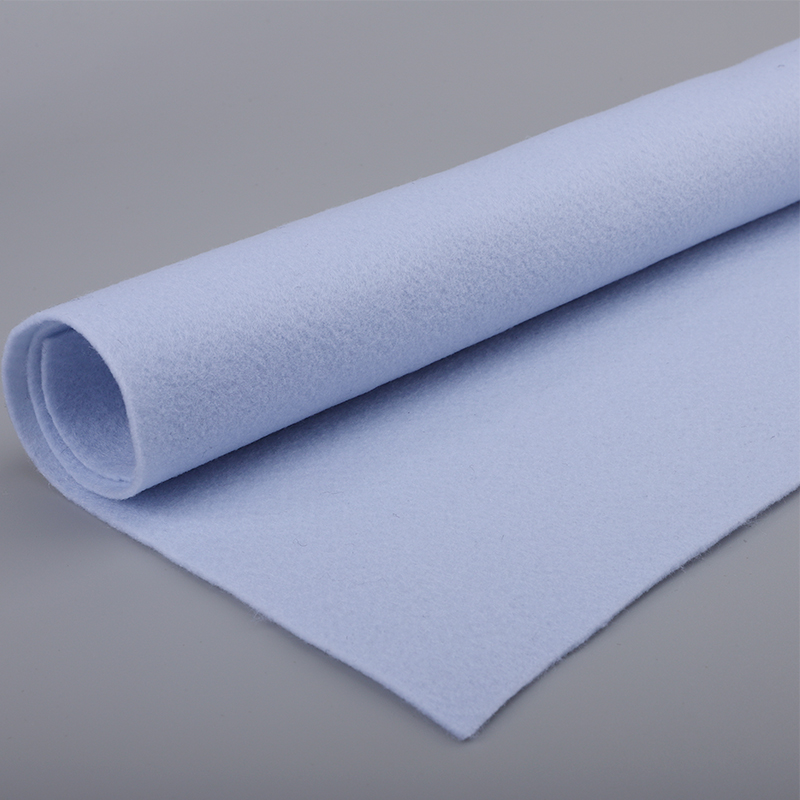
For example, products such as Floor Protection Roll, Painter Felt, and Protective Felt use the fiber structure of nonwoven materials to provide a certain level of separation and cushioning for protected surfaces.
However, buyers should pay attention to one important point:
If the main requirement of the final product is complete waterproofing, needle punched felt alone may not provide the full solution.
In this situation, it may be necessary to evaluate whether a PE, TPE, or other backing structure should be added.
Your website already has a dedicated article discussing how to choose PE and TPE waterproof backing according to the application, so this article will not repeat the detailed backing selection process.
4. If Your Product Needs Sound Absorption or Certain Thermal Insulation Properties, Needle Punched Felt Can Also Be Considered
Needle punched felt has a three-dimensional fiber structure with spaces formed between the fibers.
As a result, needle punched nonwoven materials can be used in certain product designs for sound absorption, cushioning, or thermal resistance-related applications.
This is one reason why needle punched felt can be found in automotive interiors, acoustic materials, furniture, and certain industrial products.
However, buyers need to distinguish between two concepts:
“Can be used for sound absorption or thermal insulation” does not mean that every needle punched felt product will have the same acoustic or thermal performance.
Actual performance can still be affected by fiber material, structure, thickness, density, and product design.
Therefore, if your product has specific acoustic or thermal performance requirements, the correct purchasing approach is not to simply order standard needle punched felt. Instead, communicate the final performance requirements to the supplier and confirm them through samples and appropriate testing.
5. If Your Product Needs Liquid Absorption or Liquid Retention, Needle Punched Felt May Also Be Suitable
Some needle punched nonwoven materials can use the spaces between fibers to absorb or temporarily retain liquids.
Therefore, needle punched nonwoven materials can have value in absorbent materials, cleaning products, and certain industrial and household products.
However, the actual application environment is particularly important for these products.
For example:
How much liquid does the product need to absorb?
Does the liquid need to be absorbed quickly or retained for a longer period?
Will the material need to be squeezed or reused after use?
Does the material need to dry quickly?
Does it need to be laminated with another material?
These questions are more important than simply asking, “Is needle punched felt absorbent?”
If your product is an absorbent material, describe the actual usage conditions to the supplier instead of only providing the material name “needle punched felt.”
6. If Your Product Needs Abrasion Resistance, Consider Whether the Needle Punched Felt Can Meet the Actual Friction Conditions
Needle punched felt does not automatically have the same level of abrasion resistance in every application.
Different fiber types, fiber structures, and manufacturing conditions can affect the final abrasion performance.
If your product will be exposed to frequent friction, such as floor protection, industrial protection, automotive interiors, or other products that require repeated contact, abrasion resistance should be included in the purchasing evaluation.
One important point should be considered:
Abrasion resistance should be evaluated according to the actual use environment, rather than simply assuming that a thicker material will always be more abrasion resistant.
Materials with the same thickness do not necessarily have the same abrasion performance in actual use.
Therefore, buyers can first determine the actual type of friction, frequency of use, and expected service life, and then ask the supplier to provide samples based on the application.
7. If Your Product Requires Further Processing, Needle Punched Felt’s Processing Flexibility Is Also Important
For many overseas product manufacturers, the material they purchase is not the finished product. Instead, it needs to go through additional manufacturing processes.
For example, the material may need to be:
Cut
Die-cut
Sewn
Laminated
Heat-pressed
Coated
Processed into specific shapes
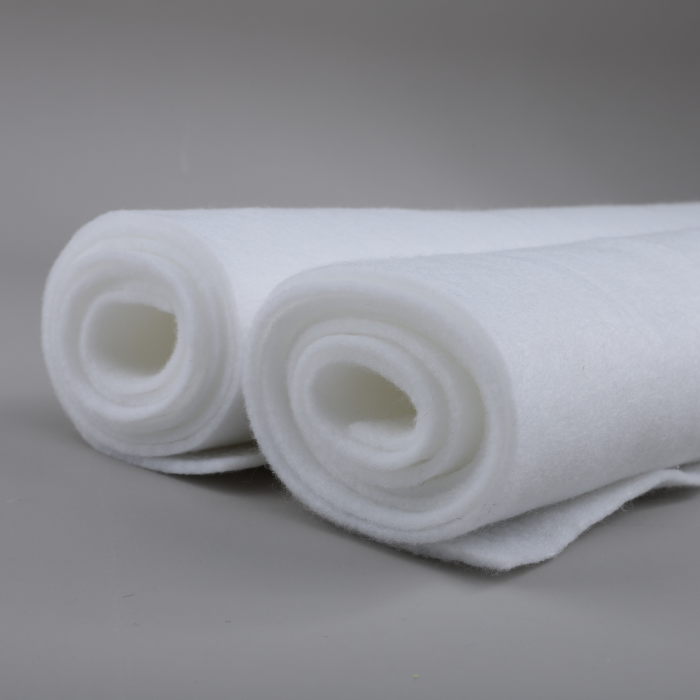
Supplied in rolls for further production
In these situations, whether the material can be processed efficiently becomes another part of the purchasing decision.
Needle punched nonwoven materials can be processed and laminated in different ways according to the requirements of the final product. This is also one reason they can be considered for OEM product development.
However, it is important to distinguish between:
“Can be processed” and “Is suitable for your specific production process.”
If you plan to convert needle punched felt into a finished product, it is better to provide the supplier with product drawings, sample photos, or details of the processing method instead of only giving the material name.
This allows the supplier to evaluate whether the material is suitable for your production process more accurately.】
8. When Might Needle Punched Felt Not Be the Right Material?
A professional purchasing decision should not only consider the advantages of a material. It should also identify situations where the material may not be suitable.
If your product mainly requires:
Extremely high transparency;
An extremely thin and lightweight structure;
A highly rigid support structure;
Special high-temperature performance;
Strict liquid barrier performance;
Specific chemical resistance;
Or clearly defined industry certifications and testing standards,
standard needle punched felt may not be able to meet all requirements on its own.
This does not necessarily mean that needle punched felt cannot be used.
For some products, fiber modification, functional treatment, lamination, or composite structures can allow needle punched nonwoven materials to perform part of the required functions.
However, when the product requirements clearly exceed the capabilities of standard needle punched felt, buyers should not choose the material simply because of its lower price.
9. How Can You Decide Whether Your Product Is Worth Trying Needle Punched Felt Before Requesting a Quote?
Overseas buyers can first answer the following questions.
First, does my product need a certain level of softness, cushioning, or fiber structure?
Second, will the product experience friction, impact, or surface pressure during use?
Third, does the product need one or more of the following functions: sound absorption, thermal insulation, liquid absorption, or protection?
Fourth, does the material need to be cut, die-cut, laminated, sewn, or processed in another way?
Fifth, does the product require waterproofing, barrier protection, or another function that standard needle punched felt cannot provide by itself?
Sixth, does the product have specific performance standards, testing requirements, or limitations related to the operating environment?
If the answers to the first several questions closely match the actual requirements of your product, needle punched felt is worth considering as one of your material options.
The next step is to determine the fiber material, GSM, thickness, width, and whether a composite structure is required.
10. Don’t Just Tell the Supplier “I Need Needle Punched Felt”—Tell Them How the Final Product Will Be Used
For professional B2B purchasing, information that is often more valuable to a supplier than simply saying:
“I need needle punched felt.”
is:
“We are developing a floor protection product for renovation projects.”
Or:
“We need a felt material for an automotive interior component.”
Or:
“We need a soft material with cushioning and sound absorption properties.”
The final product’s application environment can directly affect material selection.
If you do not yet know the exact GSM, thickness, or fiber material, that does not necessarily mean you cannot start an inquiry.
You can provide the supplier with:
Final product photos;
Existing samples;
Product drawings;
Intended application;
Operating environment;
Processing method;
Required functions.
A professional needle punched nonwoven manufacturer can use this information to discuss possible material solutions with you.
11. From “Material Suitability” to “Specific Purchasing Specifications”
If, after the evaluation above, you confirm that needle punched felt is suitable for your product, the next step is to determine the specific specifications.
At this stage, you can further confirm:
Fiber Type
GSM
Thickness
Width
And, when necessary, the composite structure, surface treatment, and other functional requirements.
However, this is a different purchasing question.
For specific guidance on choosing GSM, thickness, and width, you can refer to the existing article on your website:
How to Choose Composite Needle Punched Nonwoven Specifications? A Buyer’s Guide to GSM, Thickness, and Width
Keeping these two topics separate prevents “material suitability” and “specific specification selection” from being mixed into the same article.
12. Why Should Buyers Evaluate Material Suitability Before Comparing Supplier Prices?
When buyers compare prices from the beginning, one common problem can occur:
Different suppliers may actually be quoting materials that are not completely equivalent.
Even when products are all called Needle Punched Felt, the actual fiber material, structure, weight, thickness, and finishing can be different.
Therefore, a more practical purchasing process is:
Product Requirements → Material Suitability Evaluation → Sample → Performance Confirmation → Specific Specifications → Bulk Purchasing
rather than:
Supplier Quotation → Choose the Lowest Price → Determine Whether the Material Is Suitable
For long-term importing and bulk purchasing, the first approach can help reduce the risk of having to redevelop or replace the material later.
13. What Else Should You Look for When Choosing a Needle Punched Felt Supplier?
Once you have confirmed that needle punched felt is suitable for your product, the supplier itself also needs to be evaluated.
In addition to the quotation for a single order, buyers should consider:
Whether the supplier can maintain stable production;
Whether the supplier has experience with different fiber materials;
Whether customized specifications are available;
Whether composite and further processing capabilities are available;
Whether consistency can be maintained between different production batches;
Whether samples can be provided for testing;
Whether the supplier can support long-term OEM or ODM projects.
For overseas importers, what matters is not simply whether a supplier can produce one roll of needle punched felt, but whether the supplier can consistently provide materials that meet your requirements over the long term.
HUIZHOU JINHAOCHENG NONWOVENS CO., LTD. has production capabilities for needle punched nonwoven, needle punched felt, and various composite nonwoven materials. The company can provide material and processing solutions according to different product applications and supports OEM/ODM projects.
Conclusion: Determine “Whether It Fits” Before Deciding “What to Buy”
Needle punched felt is not a material limited to only one industry.
Its value comes from the ability to enter different products through different fiber structures and processing methods, particularly products that require softness, cushioning, protection, sound absorption, liquid absorption, or a certain level of structural stability.
For buyers, however, the most important question is not:
“Is needle punched felt a good material?”
It is:
“Is needle punched felt suitable for my product and its operating environment?”
If the answer is yes, you can then determine the fiber material, GSM, thickness, width, and whether a composite structure is required.
This purchasing approach can help importers, wholesalers, and product manufacturers reduce the risks associated with selecting materials based only on price or a single specification. It can also help suppliers understand your product requirements more accurately.
If you are looking for Needle Punched Felt or Needle Punched Nonwoven for your product, start with the final product application, operating environment, and required functions rather than starting with a single specification number.