
What Is PE-Backed Cover Fleece? How Does the Two-Layer Structure Provide Floor Protection?
For importers, wholesalers, brand buyers, and OEM customers sourcing PE-Backed Cover Fleece, Painter Cover Fleece, or other composite floor protection materials, understanding the product name does not necessarily mean understanding the material structure.
Many purchasing inquiries simply say:
“PE-backed fleece.”
However, this description is still not complete enough for a manufacturer.
A PE-Backed Cover Fleece is not a single material. It is a composite material structure made from different functional layers.
In a typical construction, the basic structure can be understood as:
Nonwoven Fleece Layer
PE Film Layer
The two layers perform different functions and are combined through a lamination process to form a complete product structure.
Therefore, the key questions for buyers are not simply “What is PE-backed fleece?” but:
What does the Nonwoven Fleece Layer do?
What does the PE Film Layer do?
Why are the two materials combined?
How should Thickness, GSM, and Width be confirmed?
How should the complete structure be defined for an OEM project?
This article explains PE-Backed Cover Fleece from a material-structure perspective, helping buyers understand the two-layer construction, the function of each material layer, and the key specifications that should be confirmed during quotation and customized product development.
What Is PE-Backed Cover Fleece?
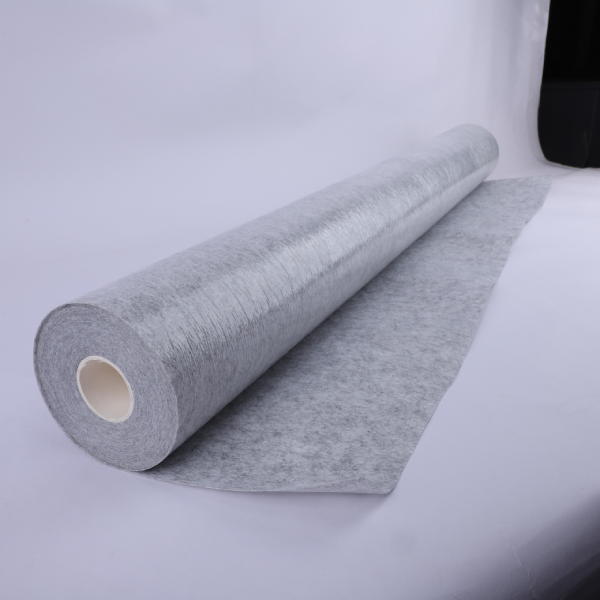
PE-Backed Cover Fleece is a composite material structure consisting of a nonwoven fleece layer and a PE film backing.
Its basic construction can be understood as:
Nonwoven Fleece Layer + PE Film Layer
The Nonwoven Fleece Layer is located on one side of the product, while the PE Film Layer is located on the other side.
The key feature of this structure is that different material layers perform different functions rather than requiring one material to perform every function at the same time.
For Floor Protection Material, this structure can combine surface protection and liquid barrier functions according to the product design.
Therefore, when purchasing, customers should not only confirm:
“PE-backed.”
They should also confirm:
What is the fleece layer?
What is the PE film layer?
What is the final construction?
These details together form the actual material specification.
What Role Does the Nonwoven Fleece Layer Play in PE-Backed Cover Fleece?
The Nonwoven Fleece Layer is an important part of this composite material.
Needle punched nonwoven felt can be produced with different fiber systems, GSM levels, thicknesses, and needle punched structures, allowing different material characteristics to be developed for different product requirements.
Within the composite structure, the Fleece Layer normally serves as the main nonwoven material layer.
It can provide:
Surface Protection
Cushioning
Absorption
as well as a certain level of structural support.
However, different Fleece Layers are not necessarily the same.
Even if two products are both called Protective Fleece, their final characteristics can differ when their fiber types, GSM, thickness, and structures are different.
Therefore, buyers should ideally confirm the specific material specifications during inquiry rather than relying only on the product name.
Why Is the PE Film Layer an Important Part of This Material Structure?
The PE Film Layer is located on the opposite side of the composite structure.
One of its main functions is to create a continuous material barrier underneath the Nonwoven Fleece Layer.
For protection applications involving water, liquids, or other contaminants, this structure can help reduce the risk of liquids continuing to penetrate downward.
Therefore, from a structural perspective:
Fleece Layer
mainly provides surface protection and certain absorption functions.
While:
PE Film Layer
mainly provides a bottom barrier function.
This is one important structural difference between PE-Backed Cover Fleece and single-layer Nonwoven Fleece.
For buyers, the key question is how the two functional layers work together rather than simply focusing on one material name.
Why Do the Absorbent Layer and Liquid Barrier Need to Exist Together?
Many buyers may easily treat:
Absorption
and:
Liquid Barrier
as the same concept.
In reality, they perform different functions.
If there is only a Fleece Layer, the material may absorb and hold a certain amount of liquid, but this does not necessarily mean that the bottom side is completely isolated.
When a PE Film Layer is added, the composite structure gains a bottom barrier.
Therefore, the product can provide a combination of:
Absorption + Surface Protection + Liquid Barrier
For products intended for Temporary Floor Protection, this multi-layer structure can create a more clearly defined division of material functions according to the final design.
Therefore, buyers should understand:
How do the two layers work together?
rather than simply deciding whether one particular material is “good.”
How Is the Two-Layer Structure of PE-Backed Cover Fleece Formed?
From a material-structure perspective, a typical product can be understood as:
Nonwoven Fleece
↓
Composite Bonding
↓
PE Film
forming:
PE-Backed Cover Fleece
It is important to understand that a composite product is not simply created by placing two materials together.
The manufacturer needs to use an appropriate composite method to combine the two functional layers into a stable overall structure according to the material system and product design.
For buyers, the key specifications to confirm are:
Fleece Material
PE Film
Overall Thickness
Finished Width
and the final product structure.
This is also why OEM projects should confirm the complete Composite Construction during the sample stage.
How Should Thickness Be Evaluated in PE-Backed Cover Fleece?
Thickness is an important specification when purchasing this type of material.
However, buyers should not ask only:
“What is the overall thickness?”
because a composite product includes at least two structural layers.
A more complete specification should confirm:
Fleece Thickness
PE Film Thickness
Overall Thickness
This provides a more accurate description of the finished product.
Different projects may require different overall thicknesses.
Overall thickness is also related to the material system, GSM, and final method of use.
Therefore, during OEM development, thickness should be confirmed as part of the overall material structure rather than treated as an isolated parameter.
What Does GSM Mean for PE-Backed Cover Fleece Purchasing?
GSM is one of the most important specifications when purchasing needle punched nonwoven materials.
For PE-Backed Cover Fleece, GSM mainly helps buyers confirm the weight per unit area of the Nonwoven Fleece Layer.
Therefore, buyers should distinguish between:
Fleece GSM
and:
Overall Product Weight
These are not exactly the same concept.
If a customer only requests:
“High GSM.”
the manufacturer still cannot accurately determine the complete product requirement.
A clearer purchasing specification should confirm:
Fleece Material
Fleece GSM
PE Film Specification
Overall Thickness
Finished Width
This creates a more complete material specification.
Why Is Finished Width an Important Specification When Purchasing Cover Fleece?
For roll-form Cover Fleece, Finished Width is a direct and important purchasing parameter.
Different projects require different coverage areas, so Width can directly affect:
The final coverage size
Roll utilization
Cutting method
Packaging method
and final transportation specifications.
Therefore, importers and wholesalers should not only ask:
“Can you make PE-backed fleece?”
They should also confirm:
Finished Width
Roll Length
Roll Format
For OEM projects, these dimensions can also be customized according to the customer's sales product size.
Why Should PE-Backed Cover Fleece Not Be Evaluated Based Only on the PE Film?
For buyers, it is easy to focus entirely on the PE Film because the product name contains:
PE-Backed
In reality, the overall product characteristics and processing behavior are also closely related to the Nonwoven Fleece Layer.
For example, changes in:
Fleece GSM
Fleece Thickness
Fiber Composition
Needle Punched Structure
can affect the overall condition of the finished product.
Therefore, the actual purchasing specification should be:
Fleece Layer + PE Film Layer + Overall Construction
rather than:
PE Film Alone
This is particularly important for OEM customers.
The final purchase is the complete finished product structure, not a roll of PE Film by itself.
How Should an OEM Project Define the Complete Structure of PE-Backed Cover Fleece?
If a customer simply tells the manufacturer:
“We need PE-backed fleece.”
this is usually not enough to begin accurate quotation and development.
For an OEM project, the following should be confirmed at minimum:
Fleece Material
Fleece GSM
Fleece Thickness
PE Film Specification
PE Film Thickness
Overall Thickness
Finished Width
Roll Length
Finished Product Format
If the customer also has special packaging or processing requirements, these should be confirmed during the sample development stage.
The final process can be defined as:
Material Specification → Sample Structure → Approved Specification → Bulk Production
This is much more suitable for long-term purchasing than confirming only a product name.
Why Should Different PE-Backed Cover Fleece Products Not Be Purchased According to One Standard?
Market-available Protective Fleece is not a single standardized product.
Different manufacturers may use different:
Fiber Composition
GSM
Thickness
Fleece Structure
PE Film Specification
Composite Construction
Therefore, even when two products have the same product name, they should not automatically be considered identical.
For buyers, a more appropriate purchasing method is to purchase according to specific specifications rather than relying only on the product name.
For example, when comparing different suppliers, buyers should ensure that quotations are based on, as closely as possible, the same:
Fleece GSM
Thickness
Width
PE Film Specification
and final product structure.
This makes supplier prices and products easier to compare meaningfully.
Why Is a Professional Nonwoven Manufacturer Important for Cover Fleece Structure Development?
For composite Cover Fleece, buyers do not simply need nonwoven fabric or PE Film separately.
What they really need is:
Nonwoven Material + Composite Construction
Therefore, whether the manufacturer has needle punched nonwoven production capability and composite processing capability can directly affect product development efficiency.
HUIZHOU JINHAOCHENG NONWOVENS CO., LTD. specializes in manufacturing needle punched nonwoven materials and related nonwoven products, with more than 20 years of nonwoven manufacturing experience.
The company has a production base of approximately 26,000 m² and 15 automated needle punching production lines, and can develop nonwoven materials with different GSM, thicknesses, widths, and structures according to customer requirements.
For customers requiring Custom Nonwoven Products, development can begin with the material specifications of the Fleece Layer and then be combined with the final composite structure.
How Does Jinhaocheng Provide OEM/ODM Customization for PE-Backed Cover Fleece?
As a professional nonwoven manufacturer China, Jinhaocheng can develop customized nonwoven and composite products according to customers' actual product requirements.
For PE-Backed Cover Fleece, the following can be confirmed according to project requirements:
Fleece Material
GSM
Thickness
Width
Roll Length
PE Film Structure
Overall Construction
Packaging
For OEM/ODM customers, the structure can be adjusted according to the final product dimensions and sales requirements.
This approach is particularly suitable for importers, wholesalers, brand customers, and buyers requiring fixed specifications for long-term purchasing.
What Information Should Buyers Confirm with a Supplier When Purchasing PE-Backed Cover Fleece?
Before sending a formal inquiry, buyers can prepare a complete product specification.
It is recommended to confirm at least:
Fleece Material
Fleece GSM
Fleece Thickness
PE Film Material
PE Film Thickness
Overall Thickness
Finished Width
Roll Length
Product Format
Packaging
With these parameters, the supplier can understand the product requirements more accurately.
For long-term orders, it is also recommended to keep the final approved sample and specifications as references for future purchasing.
This can reduce the communication required to reconfirm the product structure for every order.
When Is It Appropriate to Choose Custom Nonwoven Products?
If the buyer is purchasing a standard product and the existing specification already meets the requirements, the standard dimensions can be used directly.
However, if the customer has its own brand, product dimensions, or sales specifications, it may consider:
Custom GSM
Custom Thickness
Custom Width
Custom Roll Length
Custom Structure
Custom Packaging
This is the main value of Custom Nonwoven Products.
Customization does not mean that every parameter must be changed.
Buyers can adjust only the parts that actually need to be different according to their specific requirements.
Conclusion: PE-Backed Cover Fleece Is Not Just a Product Name but a Complete Material Structure
For PE-Backed Cover Fleece, the key is to understand:
Nonwoven Fleece Layer
PE Film Layer
Composite Construction
The Fleece Layer can provide surface protection, cushioning, and certain absorption functions.
The PE Film Layer can create a bottom barrier and help reduce the risk of liquids continuing to penetrate downward.
The overall material performance is related to:
Material
GSM
Thickness
Width
PE Film Specification
and the complete Composite Construction.
Therefore, for buyers sourcing PE-backed cover fleece, painter cover fleece, protective fleece, or custom nonwoven products, it is better to define the complete material structure clearly during quotation and sample development rather than confirming only the product name.
For importers, wholesalers, and brand customers requiring OEM/ODM customization, Jinhaocheng can provide needle punched nonwoven materials and composite structure development support according to specific requirements.




