Why Is Polyester Needle Punched Nonwoven Fabric a Preferred Choice for Industrial Filter Cloth? A Guide to Acid-Resistant Filtration Solutions
In chemical processing, pharmaceuticals, food production, metallurgy, mining, and other industries, the performance of a filter material directly affects filtration efficiency, equipment reliability, maintenance frequency, and operating costs. For industrial buyers, choosing a filter cloth is rarely just about unit price. More important questions include whether the material can withstand acidic media, whether it can tolerate repeated mechanical stress, whether filter cakes can be released efficiently, and how long the filter cloth can remain functional.
Polyester needle punched nonwoven fabric has become an important filtration substrate for industrial solid-liquid separation because its three-dimensional fiber structure can provide a useful balance of permeability, mechanical strength, abrasion resistance, and filtration stability.
For importers, filtration equipment manufacturers, distributors, and industrial users, understanding how polyester needle punched felt is manufactured and customized can help reduce material selection risks and improve the overall efficiency of filtration systems.
What Is Polyester Needle Punched Nonwoven Filter Cloth?
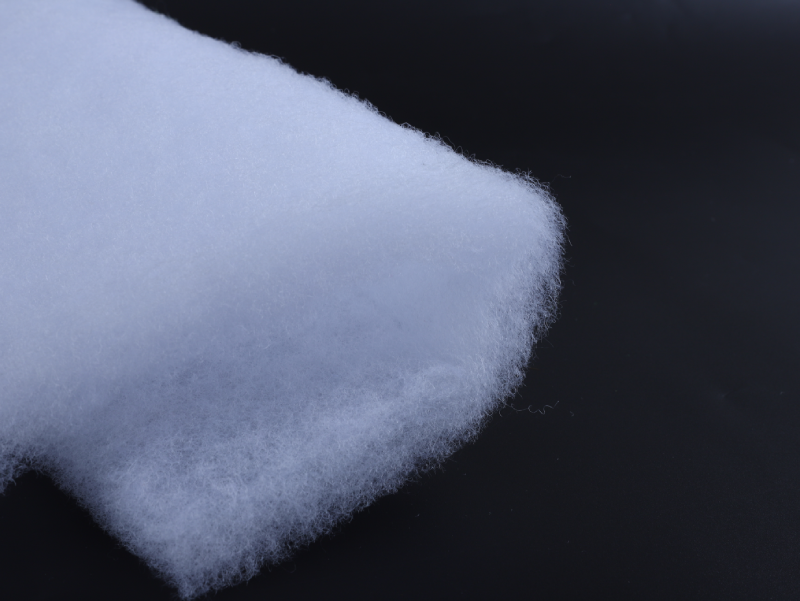
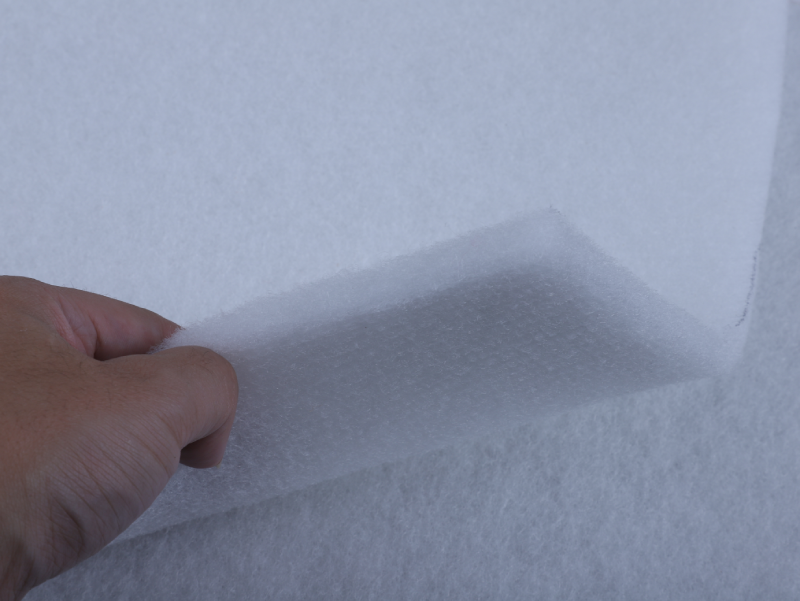
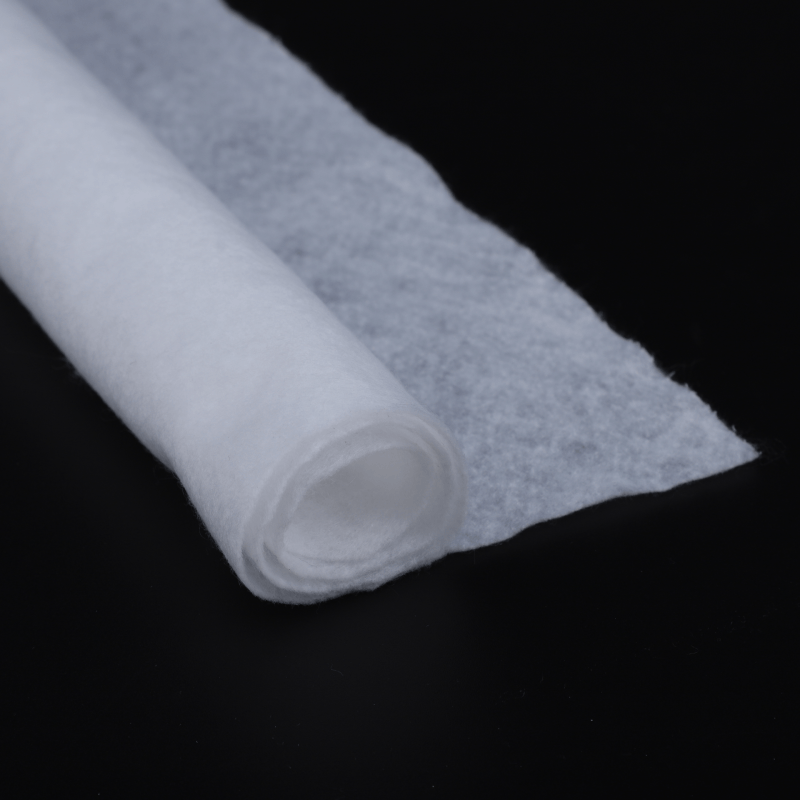
Polyester needle punched nonwoven fabric is primarily manufactured from polyester (PET) staple fibers. During production, the fibers are carded into a web and mechanically entangled through needle punching, creating a three-dimensional nonwoven structure. Depending on the intended application, the material can then undergo processes such as heat setting, thermal shrinkage, calendaring, or other surface treatments.
Unlike conventional woven filter cloth, needle punched felt does not rely on yarns being interlaced through a traditional weaving process. Instead, thousands of fibers are mechanically entangled to form a stable filtration network.
This structure can provide several useful characteristics for industrial filtration, including relatively high void volume, good air permeability, consistent filtration performance, and flexible customization of thickness and weight.
For industrial buyers looking for a reliable needle punched nonwoven felt manufacturer, Jin Hao Cheng can manufacture polyester needle punched materials in different weights, thicknesses, widths, and finishing configurations according to specific equipment and application requirements.
As an experienced nonwoven felt manufacturer China, we also support OEM and ODM production for international customers requiring customized industrial nonwoven materials.
Why Is Polyester Needle Punched Felt Widely Used for Industrial Filtration?
Industrial filtration environments can involve acidic liquids, pressure, abrasion, repeated washing, and continuous mechanical movement. A suitable filter material therefore needs to provide more than basic filtration.
The following characteristics make polyester needle punched felt a practical option for many solid-liquid separation applications.
Good Resistance to Many Acidic Media
Polyester fibers offer good resistance to many commonly encountered acidic environments. This makes polyester-based filter materials suitable for selected chemical processing and industrial filtration applications where the filter cloth is exposed to acidic liquids.
For equipment such as plate and frame filter presses, belt filter presses, and centrifugal filtration systems, material compatibility is particularly important. A filter cloth that is poorly matched to the process medium may experience premature degradation, loss of strength, or dimensional changes.
However, chemical compatibility should always be evaluated according to the specific acid concentration, temperature, exposure time, and process conditions rather than assuming that polyester is suitable for every chemical environment.
For buyers handling demanding filtration projects, discussing the actual working conditions with a needle punched felt manufacturer before mass production is an important step.
High Abrasion Resistance for Repeated Filtration Cycles
Industrial filter cloth can experience repeated compression, washing, cake discharge, vibration, and mechanical friction.
The mechanically entangled fiber network of polyester needle punched felt provides good resistance to repeated mechanical stress. This is especially valuable when filter cloth is expected to operate through numerous filtration cycles.
For high-volume industrial users, improved wear resistance can help reduce unplanned filter cloth replacement and contribute to more predictable maintenance costs.
Stable Performance Under Elevated Temperatures
Polyester filter felt can be used in many elevated-temperature filtration applications, with the actual operating temperature depending on the fiber specification, finishing process, equipment design, and chemical environment.
For many industrial polyester filtration materials, working temperatures in the approximate range of 130–150°C may be achievable under suitable conditions. Buyers should confirm the recommended continuous operating temperature with the manufacturer before selecting a material for high-temperature service.
Temperature resistance is particularly important in filtration systems where hot liquids, heated process streams, or thermal cleaning procedures are involved.
Key Performance Characteristics of Polyester Needle Punched Filter Felt
The performance requirements of industrial filter cloth vary considerably from one application to another. Instead of selecting a material based only on GSM, buyers should consider filtration pressure, permeability, particle size, chemical exposure, temperature, and cake-release requirements.
Performance Factor | Polyester Needle Punched Felt |
Acid Resistance | Good for many acidic media |
Weak Alkali Resistance | Generally good under suitable conditions |
Abrasion Resistance | High |
Typical Temperature Range | Application-dependent; up to approximately 130–150°C for suitable grades |
Mechanical Strength | High |
Dimensional Stability | Good with appropriate heat setting |
Cake Release | Good with suitable surface finishing |
Cleanability | Good, depending on process conditions |
Customization | Weight, thickness, width, finishing, and other specifications |
These characteristics explain why needle punched nonwoven materials are widely used in industrial filtration and other demanding technical applications.
For a buyer sourcing industrial felt, the key is not simply finding the thickest or heaviest material, but selecting a construction that matches the actual filtration process.
How Can Surface Finishing Improve Filter Cloth Performance?
Fiber selection is only one part of industrial filter cloth production. Post-treatment can significantly influence surface characteristics, dimensional stability, and cake-release behavior.
An experienced needle punched nonwoven manufacturer should therefore be able to adjust the finishing process according to the intended application.
Heat Setting for Better Dimensional Stability
Heat setting helps stabilize the fiber structure and reduce dimensional changes caused by temperature fluctuations during use.
For filter cloth used in repeated filtration and washing cycles, improved dimensional stability can help maintain consistent contact with filtration equipment and reduce unwanted deformation.
This is particularly important when the filter cloth must be manufactured to precise dimensions for specific filter press plates, belts, or other equipment.
Calendaring for a More Controlled Surface
Calendaring can compress and smooth the surface of needle punched felt. Depending on the required filtration characteristics, this treatment can influence surface uniformity and cake-release behavior.
A smoother surface may help reduce the amount of filter cake retained on the cloth, making discharge and cleaning more efficient.
For industrial buyers, the advantage is not simply a better-looking filter cloth. Appropriate surface treatment can contribute to easier maintenance and more consistent operation over repeated production cycles.
Balancing Permeability and Filtration Precision
Industrial filtration always involves a balance between filtration speed and particle retention.
A highly open structure may provide greater permeability, but excessively open pores may allow smaller particles to pass through. Conversely, an overly dense structure may improve particle retention while reducing filtration speed.
Therefore, filter cloth thickness, fiber structure, GSM, air permeability, and surface treatment should be considered together.
This is one reason why customized industrial needle felt can be more suitable than a standard one-size-fits-all filter material.
Which Industries Use Polyester Needle Punched Filter Cloth?
Chemical Processing
Chemical production frequently requires solid-liquid separation of slurries, precipitates, catalysts, and process residues.
Depending on chemical compatibility and operating conditions, polyester filter felt can be used in filter presses, belt filter systems, and centrifugal filtration equipment.
For chemical filtration buyers, the most important selection factors usually include chemical resistance, operating temperature, filtration pressure, permeability, and expected service life.
Pharmaceutical Manufacturing
Pharmaceutical filtration places greater emphasis on material consistency, cleanliness, and process control.
A uniform fiber structure can provide stable filtration performance, while an appropriate finishing treatment may make the material easier to clean between production cycles.
For pharmaceutical applications, however, buyers should also verify the required regulatory, cleanliness, and material-contact specifications before ordering.
Food and Sugar Processing
Food processing, sugar production, starch processing, and other industries require reliable separation of solids from liquids.
Polyester needle punched materials can be used in selected filtration processes where their chemical and mechanical characteristics match the process requirements.
For food-related applications, buyers should confirm whether the selected material meets the applicable food-contact or hygiene requirements for the intended market and application.
Metallurgy and Mining
Mining, mineral processing, coal washing, and non-ferrous metallurgy can expose filtration equipment to high pressure, abrasive particles, and continuous operating cycles.
In these environments, abrasion resistance and mechanical strength are particularly important.
A properly engineered needle punched felt structure can provide the durability required for demanding solid-liquid separation applications while allowing manufacturers to customize the material for different filtration equipment.
Which Industrial Filtration Equipment Can Use Polyester Needle Punched Felt?
Polyester needle punched filter materials can be manufactured in different widths, thicknesses, weights, and formats to accommodate different filtration systems.
Equipment Type | Typical Filtration Function |
Plate and Frame Filter Press | Solid-liquid separation |
Belt Filter Press | Continuous sludge dewatering |
Centrifuge | High-speed solid-liquid separation |
Disc Filter | Slurry filtration |
Vertical Disc Filter | Industrial and metallurgical filtration |
Other Customized Filtration Systems | Application-specific separation |
For equipment manufacturers and industrial users, customized dimensions are often just as important as the fiber composition.
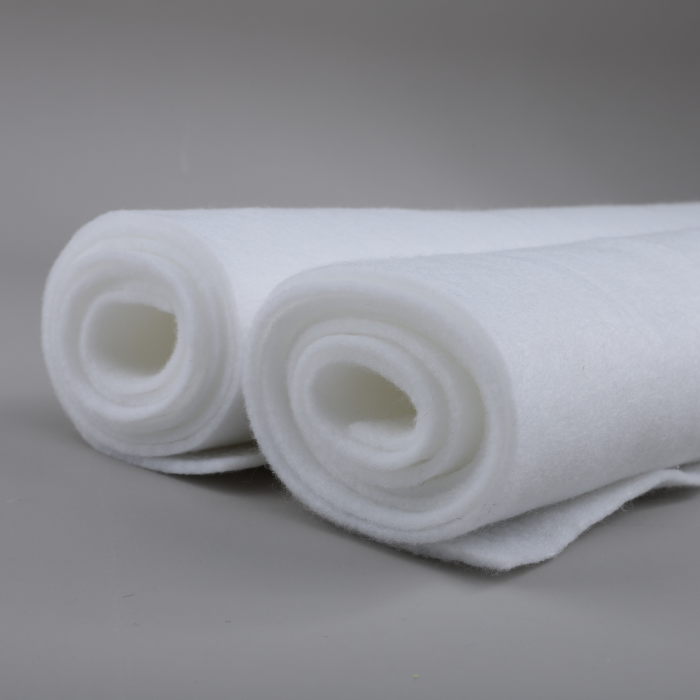
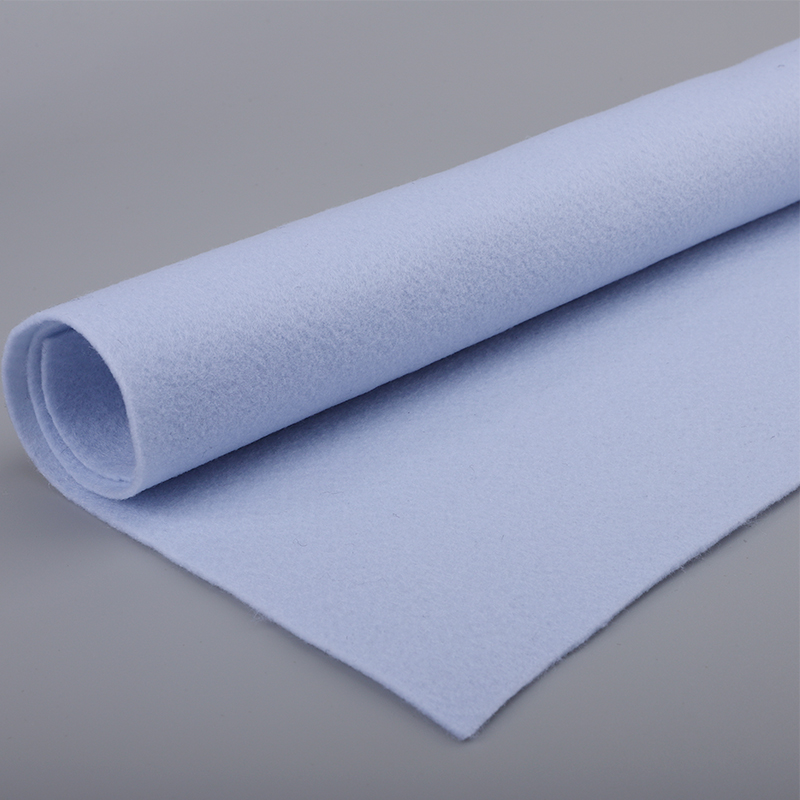
A professional needle punched felt factory can manufacture rolls, sheets, cut pieces, and other formats according to equipment dimensions and customer specifications.
How Should Buyers Choose the Right Polyester Needle Punched Filter Cloth?
Choosing industrial filter cloth according to GSM alone can lead to poor filtration results. Procurement teams should evaluate the entire operating environment before confirming the specification.
Start With the Filtration Medium
Identify the chemical composition of the liquid being filtered, including acid or alkali concentration, solvents, suspended solids, and other process chemicals.
Material compatibility should be evaluated based on the actual chemical conditions rather than a general material label.
Check Operating Temperature and Pressure
Temperature and filtration pressure directly influence filter cloth performance.
A material that performs well at room temperature may require a different specification when exposed to elevated temperatures or repeated pressure cycles.
Match Permeability With Particle Retention
The correct filtration structure must provide a suitable balance between filtration throughput and particle capture.
Buyers should consider air permeability, thickness, fiber density, pore structure, and particle size rather than choosing the material based solely on weight.
Consider Cake Release and Cleaning Requirements
If the process requires frequent cake discharge, surface characteristics become increasingly important.
A suitable finishing process can improve cake release and reduce residual material on the filter cloth, potentially reducing cleaning frequency and maintenance requirements.
Choose a Manufacturer With Custom Production Capability
For industrial filtration projects, standardized materials do not always meet equipment-specific requirements.
Working with an experienced nonwoven felt manufacturer China can give buyers access to customized GSM, thickness, width, finishing, roll length, and cutting specifications.
For OEM projects, a supplier that can provide stable production across repeated batches is also important because inconsistent material dimensions can create problems during equipment installation and operation.
Why Do Global Buyers Source Needle Punched Filter Materials From China?
China has become an important manufacturing base for nonwoven materials because of its established fiber supply chain, large-scale production capabilities, manufacturing infrastructure, and ability to support customized industrial materials.
For international buyers, working directly with a China nonwoven factory can provide several practical advantages.
These include flexible specifications, large-volume production, OEM and ODM capability, customized finishing, and direct communication with the production team.
Jin Hao Cheng has more than 20 years of nonwoven manufacturing experience and operates a 26,000-square-meter production facility with 15 automated needle punching production lines.
As an OEM needle punched felt factory, we support customized industrial nonwoven materials for customers in different markets and application sectors.
Our manufacturing capabilities cover different weights, thicknesses, widths, surface treatments, and product formats, allowing customers to develop materials according to their equipment and end-use requirements.
Beyond filtration materials, our production experience also covers floor protection felt, painter felt, protective fleece, anti-condensation felt, thermal bonded wadding, laminated foam fabric, and other nonwoven products.
This broader manufacturing capability enables us to support buyers looking for a long-term custom nonwoven products manufacturer rather than a single-product trading supplier.
What Should Industrial Buyers Ask Before Placing a Bulk Order?
Before confirming a large-volume purchase, procurement teams should provide the manufacturer with sufficient information about the application.
Important specifications may include the filtration equipment model, required dimensions, GSM, thickness, permeability, operating temperature, filtration pressure, chemical environment, desired roll or sheet format, and expected service conditions.
For customized projects, buyers should also clarify packaging, labeling, private-label requirements, sample approval procedures, and production quantities.
A professional needle felt supplier China should be able to discuss these factors before production rather than simply quoting a price based on weight.
This approach helps buyers reduce specification errors and improves the consistency of future repeat orders.
Conclusion: Is Polyester Needle Punched Felt the Right Choice for Industrial Filtration?
For many industrial solid-liquid separation applications, polyester needle punched nonwoven fabric offers a practical combination of mechanical strength, abrasion resistance, permeability, dimensional stability, and resistance to many acidic environments.
Its suitability for industrial filtration does not come from polyester alone. The final performance depends on fiber quality, needle punching density, material weight, thickness, surface finishing, equipment design, and actual operating conditions.
For chemical, pharmaceutical, food, metallurgy, mining, and other industrial applications, selecting the correct filter cloth specification can help improve filtration consistency and control long-term maintenance costs.
If you are looking for an experienced needle punched nonwoven felt manufacturer, nonwoven felt manufacturer China, or custom needle punched felt supplier, Jin Hao Cheng can provide customized nonwoven material solutions based on your filtration equipment and application requirements.
Contact us to discuss your required GSM, thickness, width, filtration conditions, and customized production requirements.