Wool or Thermal Bonded Wadding for Bedding? How to Choose the Right Filling Material
Bedding products such as quilts, comforters, mattress pads, pillows, blankets and mattress layers rely heavily on their filling materials. The right filling can directly affect warmth, softness, loft, resilience, breathability, durability and production cost.
Among the many filling materials available today, wool and thermal bonded wadding are both used in bedding applications, but they offer different performance characteristics.
Wool is valued for its natural warmth, moisture management and natural fiber properties, while thermal bonded wadding is known for its light weight, resilience, loft, washable performance and cost efficiency.
So, which one is better for bedding?
There is no universal answer. The better material depends on the product positioning, target market, required warmth, manufacturing process and cost structure.
As an experienced needle punched felt manufacturer and nonwoven manufacturer China, Jinhaocheng provides customized nonwoven filling materials for bedding and other textile applications, with OEM and ODM production capabilities.
What Are Wool and Thermal Bonded Wadding?
What Are the Characteristics of Wool Filling Material?
Wool is a natural animal fiber obtained primarily from sheep. Its naturally crimped fiber structure creates small air spaces within the material, contributing to its thermal insulation properties.
For bedding applications, wool is appreciated for its combination of warmth, moisture absorption, resilience and natural tactile comfort.
It is particularly suitable for products positioned around natural materials, premium comfort and winter warmth.
However, wool also presents some manufacturing challenges.
Different wool sources can vary in fiber length, fineness and impurity content. Processing and carding can therefore be more demanding than working with standardized synthetic fibers.
High-quality wool can also have a higher raw material cost than conventional polyester fibers.
For bedding manufacturers producing at scale, wool therefore needs to be evaluated in terms of product positioning, material cost and production consistency.
Why Is Thermal Bonded Wadding Widely Used in Bedding?
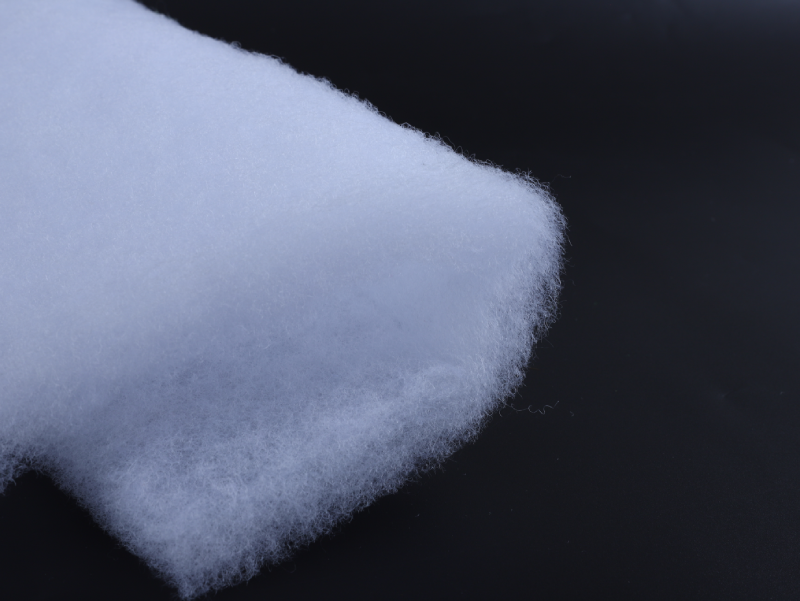
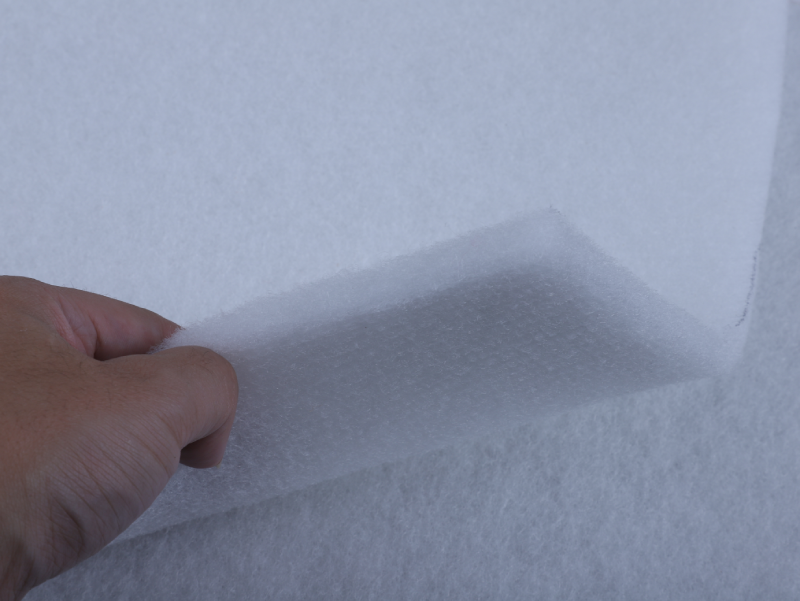
Thermal bonded wadding is a nonwoven filling material made from fibers that are bonded through thermal bonding or related fiber consolidation processes.
Unlike traditional adhesive-bonded cotton, thermal bonded wadding does not rely on conventional liquid adhesives to hold the fiber structure together.
Polyester fiber is commonly used because it provides good resilience, lightweight structure, dimensional stability and processing consistency.
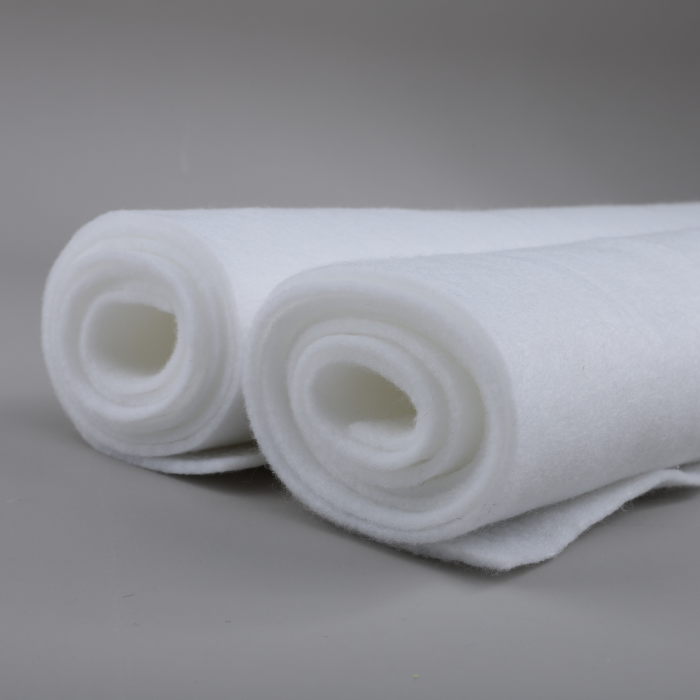
The GSM, thickness, loft and hardness can also be adjusted according to the requirements of the finished bedding product.
Because of these characteristics, thermal bonded wadding is widely considered for quilts, mattress pads, pillows and other soft furnishing products.
Which Is Warmer: Wool or Thermal Bonded Wadding?
When comparing the inherent thermal characteristics of natural fibers, wool generally offers excellent insulation and warmth.
The natural crimp of wool fibers creates numerous air pockets, and trapped air helps slow heat transfer. This is one reason wool has traditionally been used in winter clothing, blankets and thermal products.
However, the warmth of a finished bedding product does not depend on fiber type alone.
GSM, thickness, loft, density, fiber structure and product construction can all significantly affect thermal performance.
A properly engineered high-loft thermal bonded wadding can also provide effective warmth while maintaining a lightweight structure.
For bedding manufacturers, it is therefore more useful to evaluate the complete material construction rather than assuming that one fiber will always provide better insulation than another.
Why Is Thermal Bonded Wadding Suitable for Large-Scale Bedding Production?
For bedding manufacturers, material performance is only one part of the purchasing decision. Production consistency and cost control are equally important.
Thermal bonded wadding can be manufactured with relatively consistent fiber structures and customized according to required GSM, thickness and width.
This standardized production approach can help manufacturers maintain consistency across large production runs.
Polyester fibers also have a mature supply chain, making raw material costs relatively controllable.
As a result, thermal bonded wadding is suitable for mass-market bedding, hotel bedding, wholesale products and large-volume manufacturing.
For companies requiring stable long-term supply, working with a professional thermal bonded wadding manufacturer can make specification development, sample testing and bulk production more efficient.
What Are the Advantages of Wool in Bedding Products?
One of the biggest advantages of wool is its natural fiber composition.
For premium bedding brands emphasizing natural materials and a high-quality sleeping experience, wool can provide a strong material story.
Wool filling generally offers good thermal insulation, moisture absorption and resilience, making it suitable for winter quilts, blankets and selected premium bedding products.
Its distinctive natural touch can also appeal to consumers who prefer natural fibers.
However, wool products typically cost more, while natural wool can require more complex processing, carding and web formation.
For mass-market bedding products, therefore, using a high percentage of wool may not always be the most economical solution.
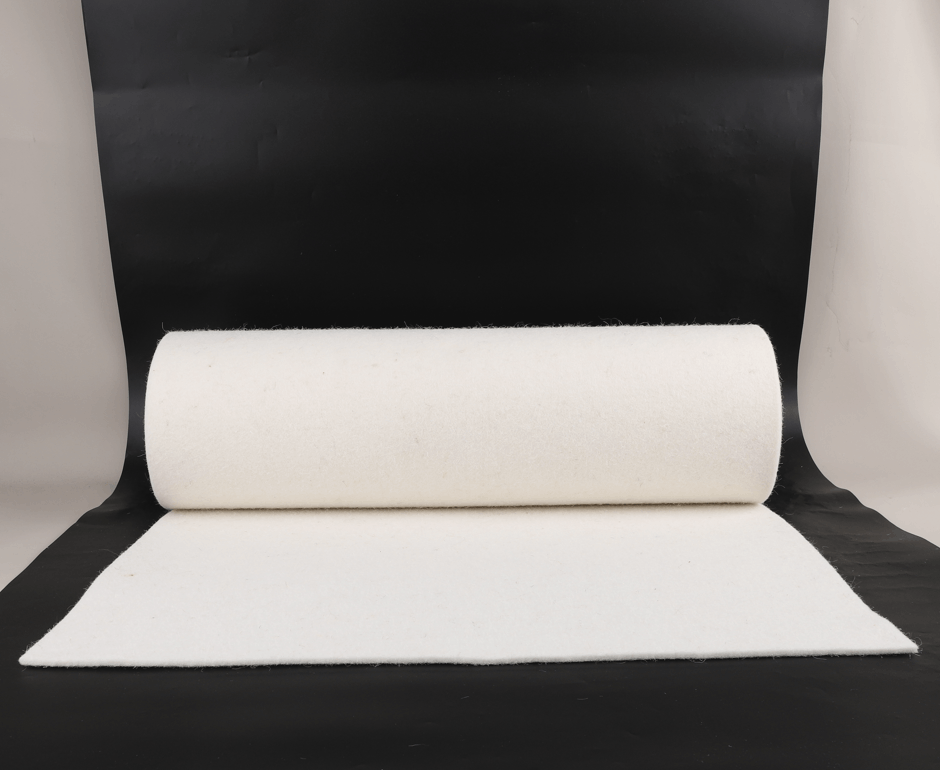
Can Wool and Thermal Bonded Wadding Be Used Together?
Yes.
Bedding manufacturers do not necessarily need to choose between wool and synthetic nonwoven filling as completely separate solutions.
Different fibers can be blended or combined to balance warmth, softness, resilience, dimensional stability and cost.
For example, wool can be blended with polyester to combine some of the characteristics of wool with improved processing stability and mechanical performance.
For products with a stronger focus on sustainable material concepts, wool can also be combined with viscose or bamboo fiber, depending on the desired product characteristics and manufacturing requirements.
This type of fiber engineering can be particularly useful for bedding brands developing differentiated products.
Which Bedding Products Are Suitable for Wool and Thermal Bonded Wadding?
Quilts and Winter Comforters
For products focused on winter warmth and natural fiber positioning, wool or wool-blend filling can be a suitable option.
For lightweight bedding where manufacturers need good loft while controlling production costs, thermal bonded wadding can provide significant advantages.
Pillows and Mattress Filling
Pillows and mattress products are exposed to repeated compression, so manufacturers need to consider more than thermal insulation.
Resilience, recovery, support and dimensional stability can be equally important.
Thermal bonded wadding offers good resilience and can therefore be considered for selected pillow, mattress pad and soft furnishing applications.
Wool materials can also be used as a functional filling layer or combined with other fibers.
Blankets and Home Thermal Products
Wool has a naturally warm tactile feel, making it attractive for premium blankets and thermal home products.
For products where lightweight construction, loft and cost control are priorities, engineered thermal bonded wadding may be a better fit.
Why Should Bedding Manufacturers Look Beyond Material Price?
For professional bedding manufacturers, comparing only the price per kilogram does not provide a complete picture of material cost.
Manufacturers should also evaluate GSM, thickness, loft, resilience, service life and processing efficiency.
For example, two filling materials with the same weight may have completely different thicknesses and loft levels. This can significantly change the final appearance, warmth and hand feel of the bedding product.
When developing a new product, manufacturers should therefore consider the finished product's dimensions, target market, seasonal positioning and retail price range.
For hotel and hospitality bedding, additional factors such as washability, batch consistency and long-term supply stability may also be important.
How Should You Choose Between Wool and Thermal Bonded Wadding?
If your product is positioned as premium natural bedding, with a strong emphasis on natural fibers and thermal comfort, wool or wool-blend filling may be worth considering.
If the product targets mass-market bedding, hotel supplies or high-volume production, and the priorities are lightweight construction, loft, resilience, washability and cost control, thermal bonded wadding is often a practical choice.
If you want to balance natural fiber positioning, manufacturing consistency and cost, a wool-blend nonwoven material can provide another option.
The right choice is therefore not simply about deciding which material is “better.” It is about matching the material structure with the intended product and target market.
Why Work With a Professional Nonwoven Manufacturer?
Bedding products have different filling requirements depending on their construction and intended use.
Manufacturers may require different GSM, thickness, width, fiber composition and hardness for different products.
Jinhaocheng has more than 20 years of nonwoven manufacturing experience, with an approximately 26,000㎡ production facility and 15 automated needle punching production lines.
As a professional nonwoven manufacturer China, needle punched felt manufacturer and custom nonwoven manufacturer, we support OEM and ODM production for customized nonwoven materials.
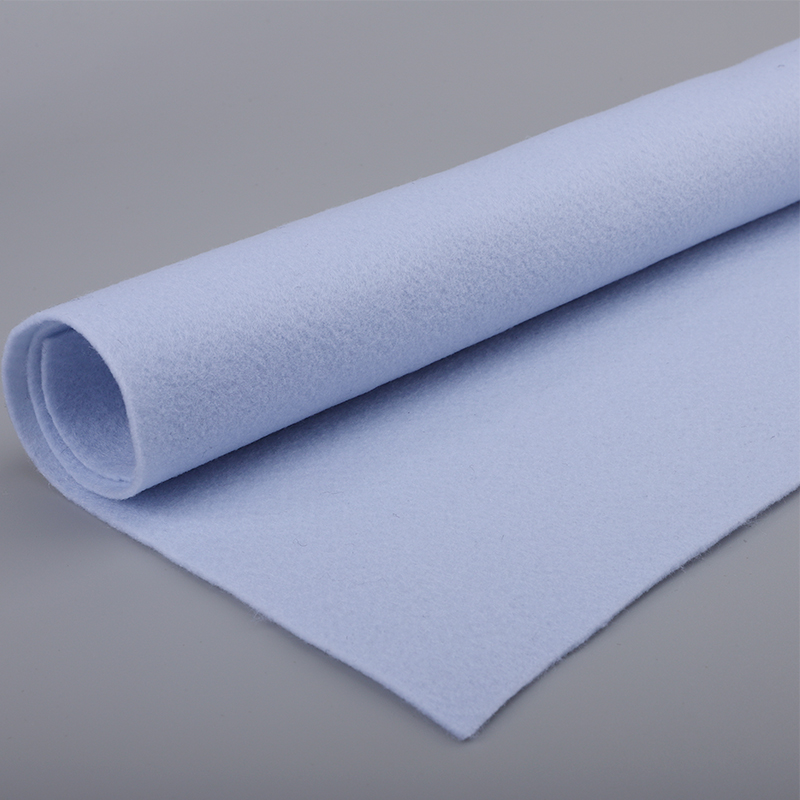
Our product range includes needle punched felt, thermal bonded wadding, wool-blend felt, industrial felt and other functional nonwoven materials for bedding, home textiles, automotive and industrial applications.
For bedding manufacturers requiring stable long-term supply, working directly with an experienced nonwoven products manufacturer can simplify material development, specification adjustments and bulk production.
Wool or Thermal Bonded Wadding? The Best Choice Depends on Your Bedding Product
Overall, wool stands out for its natural warmth, moisture absorption and natural fiber characteristics. It can be a strong option for premium bedding and products emphasizing natural materials.
Thermal bonded wadding offers advantages in lightweight construction, loft, resilience, washability and cost control, making it suitable for mass-market bedding, hospitality products and high-volume production.
For brands seeking a balance between natural material positioning, manufacturing performance and cost, wool-blend nonwoven materials can also be developed according to the finished product requirements.
If you are looking for a reliable thermal bonded wadding manufacturer, needle punched felt manufacturer, custom nonwoven manufacturer or nonwoven manufacturer China, Jinhaocheng can develop customized filling material solutions according to your bedding construction and product positioning.