Why Is Absorbent Cotton Used for Flower Packaging? How Can It Improve Moisture Retention During Flower Transportation?
Fresh flowers look beautiful when they are first harvested, but maintaining that freshness during transportation is a major challenge for flower growers, wholesalers, florists, e-commerce companies, and packaging suppliers. Long-distance shipping can expose flowers to dry air, temperature changes, vibration, and limited access to water, causing stems and roots to lose moisture quickly.
For this reason, absorbent cotton for flower packaging has become an increasingly practical material for improving moisture management during transportation. When properly designed and matched with suitable packaging, water-retaining nonwoven material can help provide continuous moisture to flower stems while also reducing direct friction and physical damage.
For companies looking for stable-quality needle punched nonwoven felt, the material structure, fiber selection, absorbency, water retention, thickness, and processing consistency all deserve careful consideration.
What Is Absorbent Cotton for Flower Packaging?
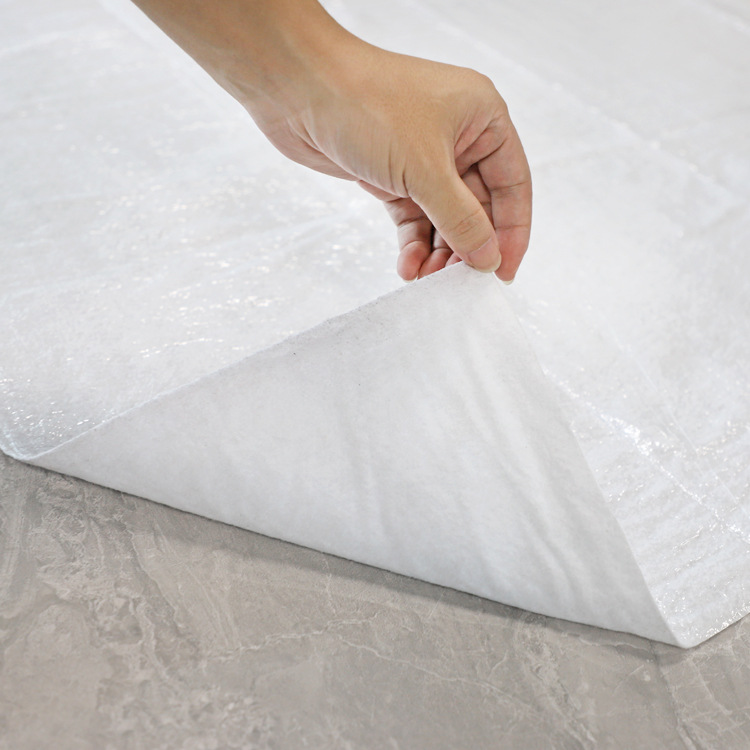
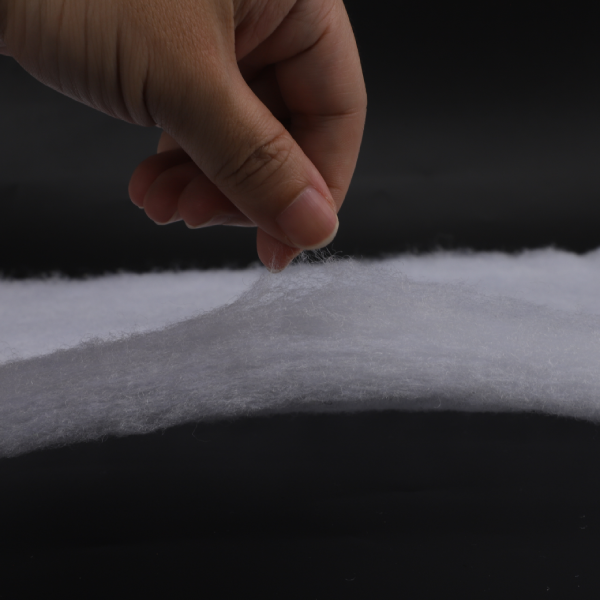
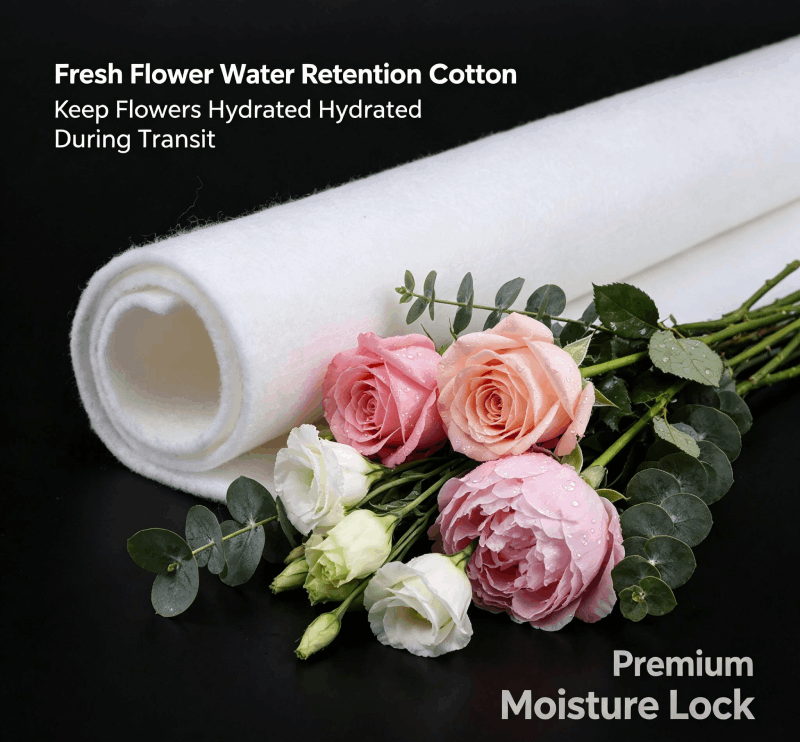
Flower packaging absorbent cotton is a porous nonwoven material designed to absorb and retain water. In many applications, PET polyester fibers are processed through a needle punching process to create a three-dimensional fiber network.
Unlike ordinary paper or tissue materials, the interconnected fiber structure provides space for water storage while maintaining a certain degree of strength and resilience.
When the material is placed around the stem or root area of flowers, it can absorb moisture in advance and gradually release or maintain that moisture around the contact area. This makes it particularly useful for flower packaging systems that need to control moisture during transportation.
The actual performance depends on fiber type, fiber fineness, material density, basis weight, thickness, needle punching parameters, and the design of the complete packaging system.
Why Do Fresh Flowers Lose Water During Transportation?
Fresh flowers continue to exchange moisture with their surrounding environment after harvesting. During transportation, several factors can accelerate moisture loss.
Dry air can increase evaporation from exposed flower surfaces and stems. Long transportation times can further reduce available moisture. Temperature fluctuations may also affect the water balance of the flowers.
At the same time, flowers are often packed tightly to reduce transportation volume. If the stem area is not properly protected, vibration and friction can damage the stems and accelerate moisture loss.
For exporters, wholesalers, and flower packaging companies, these problems can result in wilted flowers, shorter vase life, lower visual quality, and increased product loss.
A suitable water-retaining nonwoven material can therefore become an important part of the packaging solution.
Key Advantages of Absorbent Cotton in Flower Transportation
High Water Absorption Capacity
The first requirement for flower packaging is sufficient water absorption.
A properly engineered PET absorbent nonwoven can quickly take up water and distribute it through its internal fiber structure. This allows the material to function as a temporary moisture reservoir around the flower stem.
The exact absorption capacity varies according to material composition and manufacturing parameters, so buyers should evaluate actual test data rather than comparing products only by appearance.
Longer Moisture Retention
Absorbing water is only the first step. For long-distance transportation, the material also needs to retain moisture over an extended period.
The three-dimensional structure created by needle punched nonwoven technology helps the material hold water within its fiber network. Combined with appropriate packaging, this can help reduce rapid drying during transportation.
For flower exporters shipping products across regions or countries, stable moisture retention can be particularly valuable.
Soft Protection for Flower Stems and Roots
Flower stems and roots can be sensitive to pressure, friction, and vibration.
Compared with rough paper materials, soft absorbent nonwoven felt can provide a cushioning layer around the contact area. It can help reduce direct friction between stems and packaging materials during handling and transportation.
This makes it suitable for flower boxes, bouquets, root-wrapped plants, and other specialized packaging applications.
Clean and Practical Packaging Material
Traditional moisture-retention methods may involve wet paper, cloth, or other temporary materials. These solutions can become messy, lose moisture quickly, or provide inconsistent performance.
A manufactured nonwoven material offers better control over basis weight, thickness, dimensions, and material structure.
For commercial packaging operations, this consistency can make the packaging process easier to standardize.
How Can Absorbent Cotton Improve Flower Transportation?
The effectiveness of a flower moisture-retention system does not depend on absorbent cotton alone. The complete packaging design is equally important.
A practical system may include a moisture-retaining nonwoven layer, a controlled amount of water or preservation solution, protective packaging, and suitable sealing or ventilation.
The absorbent material first takes up the liquid. During transportation, the retained moisture remains available around the stem area, helping create a more stable micro-environment.
The material should not simply be made as thick as possible. Excessive material thickness may increase packaging volume and cost without necessarily improving transportation performance.
Instead, the appropriate GSM, thickness, absorption capacity, dimensions, and fiber structure should be selected according to flower type, transportation distance, packaging design, and moisture requirements.
Absorbent Cotton for Different Flower Packaging Applications
Cut Flower Packaging
For roses, carnations, lilies, chrysanthemums, and other cut flowers, moisture-retaining material can be positioned around the stem area to help reduce moisture loss during delivery.
This is especially useful for flower wholesalers, exporters, online flower retailers, and subscription flower companies.
Bouquet and Flower Box Packaging
For premium bouquets and flower gift boxes, packaging appearance and flower condition are both important.
A properly sized water-retaining felt pad can be integrated into the bottom or stem area of the package without taking up excessive space.
Rooted Plant Packaging
For small plants and seedlings, moisture-retaining nonwoven material can help maintain moisture around the root system during short- and medium-distance transportation.
The material structure can also provide a soft protective layer around the root area.
Fresh Produce and Other Moisture-Sensitive Products
The same material concept can also be considered for certain fruits, vegetables, seedlings, and other products that require temporary moisture management during transportation.
However, the appropriate material and regulatory requirements should always be evaluated according to the specific product and intended application.
What Makes a Good Flower Packaging Absorbent Material?
For buyers, simply asking whether a material can absorb water is not enough.
A more complete evaluation should include absorption capacity, water retention, thickness consistency, GSM consistency, wet strength, cleanliness, fiber composition, dimensional stability, and batch-to-batch consistency.
The material should also be easy to cut, fold, shape, or integrate into the customer's existing packaging process.
For large-volume applications, production stability is particularly important. A material that performs well in one sample but changes significantly between batches can create problems during mass production.
Why Needle Punched Nonwoven Technology Matters
The manufacturing process directly affects the final performance of absorbent nonwoven materials.
During needle punching, fibers are mechanically entangled to create a stable three-dimensional structure. By adjusting fiber selection, fiber blending, needle density, processing parameters, and finishing techniques, manufacturers can develop materials with different densities, thicknesses, strengths, and absorption characteristics.
This manufacturing flexibility allows custom nonwoven felt manufacturers to develop materials according to different application requirements.
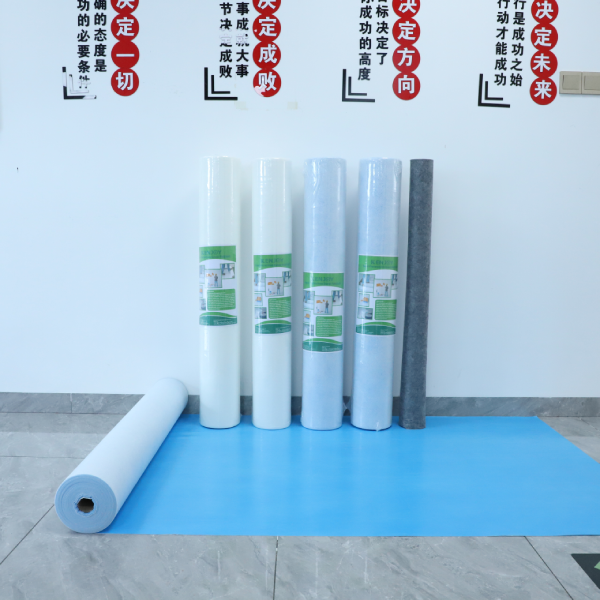
For flower packaging applications, customers may require specific roll widths, sheet dimensions, GSM, thickness, absorbency, or other properties. A manufacturer with flexible production capabilities can provide more practical customization options.
Why Choose a Professional Nonwoven Felt Manufacturer?
For distributors and industrial buyers, material quality is only one part of the purchasing decision. Stable supply and consistent production are equally important.
Jinhaocheng is a professional needle punched nonwoven felt manufacturer in China with more than 20 years of manufacturing experience.
Our production base covers approximately 26,000 square meters and is equipped with 15 automated needle punching production lines, providing large-scale production capacity for different nonwoven applications.
From fiber selection and web formation to needle punching, finishing, cutting, and final inspection, production can be managed through standardized processes to improve material consistency.
We also support OEM and ODM nonwoven solutions, allowing customers to specify material composition, GSM, thickness, width, roll length, color, and other requirements according to their application.
For customers developing flower packaging absorbent cotton, moisture-retaining pads, or other specialized nonwoven products, working directly with an experienced nonwoven manufacturer in China can simplify product development and long-term supply management.
A Better Way to Protect Freshness During Transportation
Fresh flower transportation is not simply a packaging problem. It is a moisture-management challenge.
A suitable absorbent nonwoven material can help retain water around the stem area, provide soft protection, and improve the consistency of the transportation packaging system.
For flower exporters, wholesalers, packaging companies, and fresh flower e-commerce businesses, choosing the right material at the beginning of product development can help reduce transportation losses and improve the final customer experience.
With professional needle punched nonwoven manufacturing, customized material structures can be developed for different flower packaging requirements.
From standard absorbent cotton to customized needle punched nonwoven felt, Jinhaocheng provides factory-direct manufacturing solutions for customers looking for stable quality, flexible customization, and long-term supply.
Contact us to discuss your flower packaging requirements and develop a suitable absorbent nonwoven solution for your application.