Why Does Absorbent Felt Shed, Deform or Absorb Unevenly? Key Factors Affecting PET Needle Punched Felt Quality
When purchasing absorbent felt, many buyers initially focus on price, GSM and absorption performance. However, once a product enters mass production, another problem often becomes apparent: even when products are all described as PET absorbent felt, their performance can vary significantly between suppliers.
Some materials may shed fibers during cutting or use, while others may deform, lose thickness or show uneven density. In some cases, products with the same specifications may also demonstrate different absorption speeds or uneven liquid distribution.
These problems are not necessarily caused by the material itself. They can be closely related to raw material quality, fiber length, needle punching density, GSM control, thickness control and production consistency.
For applications such as flower packaging, filter components, absorbent packaging, cleaning products and other industrial applications, the stability of absorbent felt can directly affect the performance of the finished product.
Therefore, instead of comparing suppliers only by price, buyers should understand how production processes affect the quality and consistency of PET needle punched absorbent felt.
As an experienced needle punched felt manufacturer, Jinhaocheng focuses on raw material management, automated production and process control to provide stable PET needle punched nonwoven materials for different applications. We also support custom nonwoven products according to customer requirements.
Why Does PET Absorbent Felt Quality Vary Between Suppliers?
PET absorbent felt is generally produced through several processes, including fiber opening, carding, web forming and needle punching. Although these processes are well established, each stage can influence the final material structure.
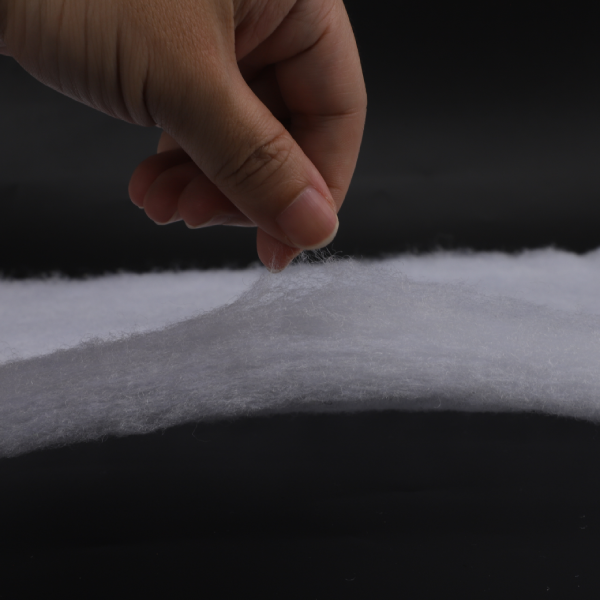
Absorbent felt is not simply a collection of polyester fibers. The fibers need to form a stable three-dimensional network through controlled web formation and needle punching.
If the fiber distribution is uneven, different areas of the material may have different densities. If the needle punching depth or frequency changes during production, the final product may show variations in strength, thickness and internal structure.
For this reason, evaluating an absorbent felt manufacturer should involve more than checking a sample. Buyers should also consider the supplier's raw materials, production equipment, process control and ability to maintain consistent quality during mass production.
How Does PET Fiber Quality Affect Absorbent Felt Performance?
PET fiber is one of the most important raw materials used in absorbent felt. Polyester fibers from different sources may vary in fiber length, fineness, strength and uniformity.
These differences can influence how the fibers behave during carding, web formation and needle punching.
Stable fiber quality makes it easier to create a more uniform fiber web and maintain consistent thickness and structure in the finished product.
For long-term buyers, raw material consistency is particularly important. Passing one sample test does not necessarily mean that every future production batch will have exactly the same performance.
A professional nonwoven felt manufacturer therefore needs to maintain effective raw material control rather than simply reacting to quality problems after they occur.
Does Fiber Length Affect the Structure of Needle Punched Absorbent Felt?
Yes. Fiber length can influence fiber distribution and entanglement during carding, web formation and needle punching.
When the fiber specifications are suitable for the production process, the fibers can form a more stable network structure after needle punching.
If the fiber characteristics are not properly matched to the production requirements, the material may have insufficient fiber entanglement, increasing the risk of fiber shedding, loose structure or insufficient local strength.
For absorbent felt that needs to be slit, die-cut, punched or laminated, structural stability becomes even more important.
Therefore, when selecting a needle punched felt supplier, buyers should consider whether the manufacturer can match appropriate fiber specifications to the intended application instead of simply choosing the lowest-cost raw material solution.
Why Does Absorbent Felt Shed Fibers?
Fiber shedding is usually related to the bonding condition of surface fibers and the overall needle punched structure.
One of the main purposes of needle punching is to repeatedly penetrate the fiber web with barbed needles, causing fibers from different directions to become mechanically entangled and form a stronger nonwoven structure.
If the needle punching process is insufficient, some surface fibers may not be adequately integrated into the fiber network. These fibers can become loose during cutting, handling or use.
Raw material characteristics, web uniformity and production parameters can also affect surface stability.
For filter components, packaging materials and cleaning products, excessive fiber shedding can affect the appearance of the material and may also interfere with subsequent processing.
Therefore, low fiber shedding and stable surface structure are important quality considerations when selecting industrial absorbent felt.
Why Does Absorbent Felt Deform or Have Uneven Thickness?
The thickness of absorbent felt is not determined simply by the amount of raw material used.
During production, factors such as web weight, needle punching intensity, material density and subsequent thermal treatment can all influence the final thickness.
If the fiber web is not evenly distributed, some areas may become thicker or thinner than others.
Likewise, significant changes in needle punching parameters can result in different levels of material compression, creating thickness variations across the product.
For customers who need absorbent felt for fixed-size components, thickness variation can affect filling performance, assembly accuracy and the appearance of the finished product.
This is why stable GSM and thickness control are essential for long-term industrial applications.
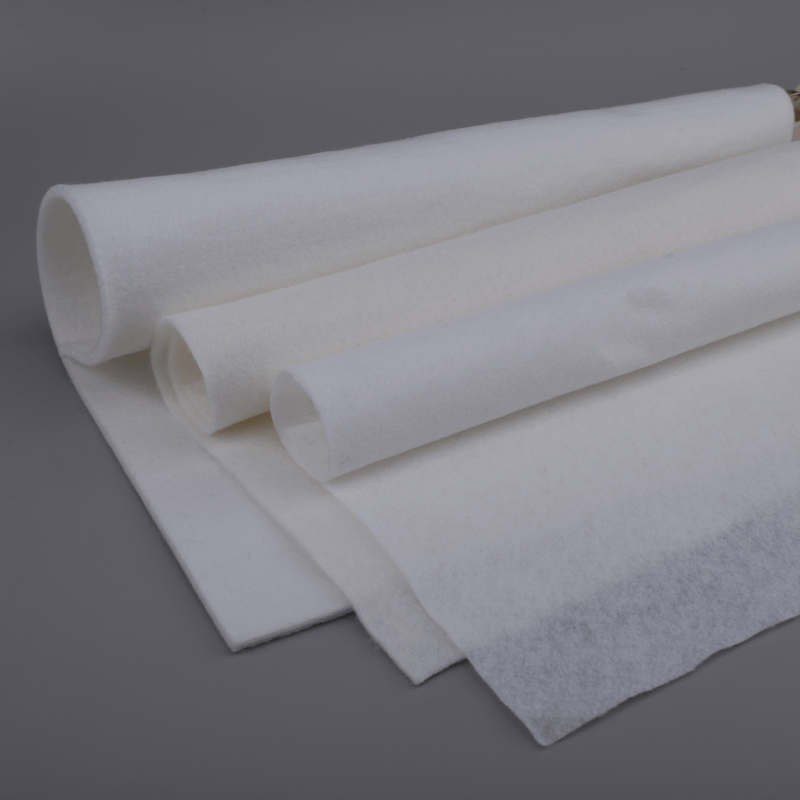
Why Is Stable GSM More Important Than Simply Pursuing Higher Absorption?
Many buyers naturally ask about the absorption capacity of absorbent felt when selecting a product.
However, maximizing absorption alone does not necessarily guarantee better performance in every application.
For products such as filter components, flower packaging and industrial absorbent materials, the material may need to balance absorption, thickness, density, strength and processing performance.
If GSM varies significantly from batch to batch, the final product may show inconsistent performance even when the average absorption capacity is satisfactory.
For long-term purchasing, stable GSM control can therefore be more valuable than a single high-performance test result.
Consistent GSM helps maintain a more predictable material structure and makes it easier for customers to design products, calculate material consumption and control production costs.
Why Can Absorbent Felt Have Uneven Absorption?
Uneven absorption can be related to the internal fiber structure and density distribution of the material.
When the fiber web is not sufficiently uniform during production, different areas may develop different pore structures.
Higher-density areas can affect the speed at which liquid enters the material, while more open areas may have different liquid storage characteristics.
Therefore, absorbent felt performance depends not only on what type of fiber is used, but also on how the fibers are formed into the final nonwoven structure.
When testing samples, buyers should therefore evaluate more than overall absorption capacity. Important factors can include absorption speed, liquid distribution, thickness consistency and material integrity.
How Can Production Processes Improve Batch-to-Batch Consistency?
Consistent quality comes from controlling the entire production process rather than relying on a single production step.
First, stable raw materials are needed so that the PET fibers entering the production line have consistent characteristics.
Next, the opening and carding processes should properly separate and distribute the fibers to create a uniform web.
The web forming and needle punching processes then need to maintain consistent parameters to produce a stable three-dimensional fiber structure.
During subsequent production, manufacturers should also control GSM, thickness, width and surface structure according to product specifications.
For large-volume orders, stable production equipment and standardized manufacturing processes can significantly reduce variation between batches.
This is one of the important differences between an experienced needle punched felt factory and a small-scale processing supplier.
How Can Buyers Evaluate an Absorbent Felt Manufacturer for Long-Term Cooperation?
For small orders, buyers may naturally focus on unit price.
However, for importers, distributors and manufacturers purchasing absorbent felt on a regular basis, supplier reliability should be evaluated more broadly.
First, buyers should determine whether the supplier has its own manufacturing facility rather than relying heavily on external purchasing.
Second, it is important to understand whether the supplier has stable production equipment and standardized manufacturing processes.
Third, buyers should check whether the manufacturer can provide different GSM, thickness, width, density and product formats according to application requirements.
If product development is involved, the supplier's ability to provide OEM, ODM and custom nonwoven products can also be important.
Finally, batch-to-batch consistency should be considered as a major factor in long-term cooperation. A supplier that can consistently maintain product specifications may create significantly less risk than a supplier offering a lower initial price but inconsistent quality.
How Does Jinhaocheng Control the Quality of PET Needle Punched Absorbent Felt?
Jinhaocheng has many years of experience in nonwoven material manufacturing. Our production facility covers approximately 26,000 square meters and is equipped with 15 automated needle punching production lines, providing strong capacity for large-scale needle punched nonwoven production.
As a professional needle punched felt manufacturer, nonwoven felt manufacturer and nonwoven manufacturer China, we focus not only on individual product performance but also on the consistency between raw materials, manufacturing processes and finished product specifications.
According to different application requirements, we can customize GSM, thickness, width, density and product format.
For customers requiring long-term supply, we support OEM nonwoven manufacturer and ODM cooperation models and can develop material specifications according to specific product requirements.
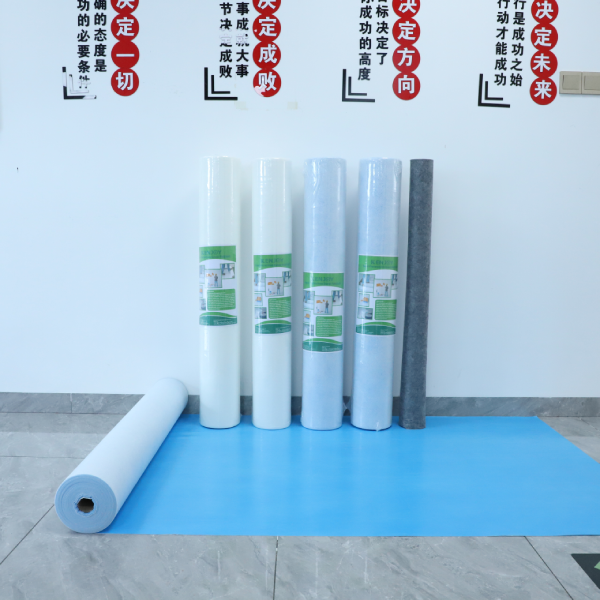
In addition to absorbent felt, our needle punched nonwoven materials are also used for floor protection felt, painter felt, anti-condensation felt, industrial felt, thermal bonded wadding and other nonwoven applications.
Conclusion: Consistent Quality Starts with a Stable Manufacturing System
Problems such as fiber shedding, deformation, uneven thickness and inconsistent absorption are rarely caused by a single factor. They can result from the combined effects of raw materials, fiber specifications, web formation, needle punching parameters, GSM control and production management.
For buyers purchasing PET needle punched absorbent felt on a long-term basis, supplier selection should not be based solely on price. Material stability, production capacity, specification control, batch consistency and customization capability are equally important.
An experienced needle punched felt manufacturer can use a stable production system to reduce batch-to-batch variation and help customers build a more reliable material supply chain.
If you are looking for a reliable nonwoven felt manufacturer China, needle punched felt factory or OEM nonwoven manufacturer for stable and customized PET needle punched materials, Jinhaocheng can provide suitable nonwoven solutions according to your application requirements.