How Should Buyers Evaluate Acoustic Felt for Wall and Ceiling Applications?
For commercial buildings, offices, meeting rooms, hotels, public spaces, and interior renovation projects, buyers often ask how to select Acoustic Felt for walls and ceilings.
Many buyers first ask about GSM, thickness, or price. However, for architectural acoustic projects, these factors alone are not enough to determine whether a material is suitable.
More importantly, buyers need to confirm the installation location, installation method, air gap, target frequency, material thickness and density, and fire requirements.
Therefore, before requesting a quotation, buyers should first understand the role of the material within the overall acoustic structure and then determine the specific material requirements.
1. Why Should Wall and Ceiling Acoustic Felt Be Evaluated Differently?
Although Acoustic Felt can be used for both walls and ceilings, the actual installation conditions may be different.
For wall applications, the material may be installed inside a wall structure, within a wall system, or directly on the surface as an exposed acoustic material.
Ceiling applications may involve suspended ceiling structures, available installation space, and the weight of the material itself.
Therefore, even when the same type of Acoustic Felt is used for both projects, the required specifications may not be exactly the same.
Buyers should not simply tell a supplier:
“We need acoustic felt for a building.”
More useful information should include:
Where will the material be installed?
Is it for a wall or ceiling?
Will the material be hidden inside the structure or installed directly on the surface?
What acoustic problem is the project intended to address?
Is there a specific target frequency or testing requirement?
Are there any fire requirements?
This information helps the supplier determine what conditions the material needs to meet more accurately.
2. First, Confirm Where the Acoustic Felt Will Be Installed
In building projects, Wall Acoustic Insulation and Ceiling Acoustic Insulation are both used for architectural acoustic purposes, but their actual installation environments may be different.
If Acoustic Felt is installed inside a wall, buyers need to consider the available installation space and how the material will work together with other structural layers.
If it is used for a ceiling, buyers should further confirm the ceiling structure, installation method, and available space.
If the material is installed directly on a wall or ceiling surface, buyers may also need to consider appearance, dimensions, cutting, and fixing methods.
Therefore, one of the most important pieces of information during the RFQ stage is the final installation location.
Instead of providing only:
Acoustic Felt
buyers should specify:
Wall Acoustic Felt
or:
Ceiling Acoustic Felt
and further explain the actual installation structure.
3. How Does the Installation Method Affect Material Selection?
The final performance of Acoustic Felt depends not only on the material itself but also on how it is installed.
For example, the material may be installed inside a wall or ceiling structure, combined with other materials, or used directly as an acoustic surface material.
Different installation methods can create different surrounding spaces, fixing conditions, and overall structures.
Therefore, buyers should tell the supplier in advance:
How will the material be installed?
Will it be combined with other materials?
Will it need to be fixed to a wall or ceiling structure?
Will it need to be cut or processed into specific dimensions?
This is particularly important for commercial projects because actual engineering conditions may differ from laboratory test conditions.
Therefore, buyers should not determine that a material is definitely suitable for the final project based only on one Acoustic Performance value provided by a supplier.
4. Why Does an Air Gap Need to Be Confirmed for Acoustic Felt Projects?
In wall and ceiling acoustic projects, the Air Gap is an easily overlooked condition.
The same Acoustic Felt may have different installation conditions depending on how it is installed, including the space between the material and the wall, ceiling, or other structural layers.
Therefore, buyers should not compare materials only by asking:
“Material A has better sound absorption than Material B.”
They should also confirm whether the testing conditions are similar to the actual project.
For example, buyers can ask the supplier to confirm:
Was an Air Gap used during testing?
What was the specific Air Gap condition?
What material thickness was used for the test?
Is the actual project installation method similar to the test condition?
This helps prevent laboratory data from being directly applied to a completely different building structure.
Therefore, for architectural Acoustic Felt projects, the Air Gap should be clearly discussed during the quotation and sample approval stages.
5. How Should Buyers Determine Thickness and Density for the Project?
Buyers often ask directly:
“What is the best thickness?”
However, there is no single “best thickness” that applies to every wall and ceiling project.
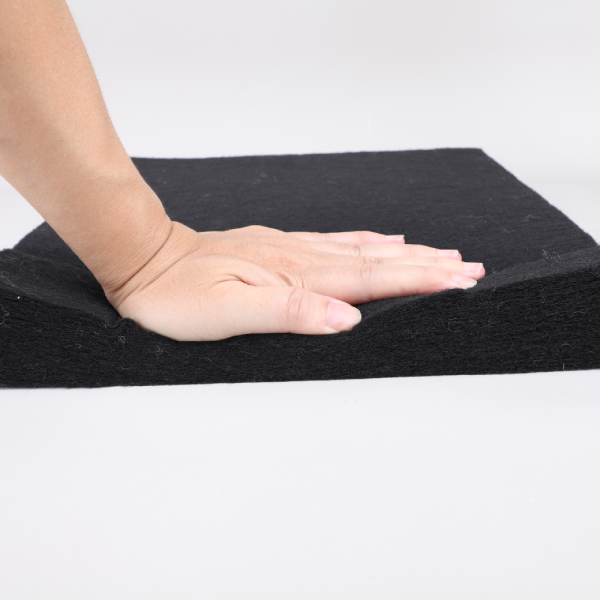
Thickness and Density should be evaluated based on the available installation space, target acoustic performance, installation method, and overall structure.
For example, if the available space inside a wall is limited, an overly thick material may not be suitable for actual installation.
If a ceiling project has weight limitations, simply increasing material thickness may not be the right way to address the acoustic requirement.
Therefore, buyers should provide the actual project conditions to the supplier and then confirm the material specifications based on the relevant test results.
Useful information can include:
Application
Installation Location
Available Space
Required Thickness
Target Acoustic Performance
Estimated Quantity
This information is more useful than simply asking for a standard GSM.
For long-term projects, buyers should also pay attention to the batch consistency of GSM, Thickness, and Density, because changes in material specifications may affect processing and final installation performance.
6. What Acoustic and Fire Requirements Should Be Confirmed Before an RFQ?
For architectural acoustic projects, buyers should also clarify the project testing requirements in advance.
First is Target Frequency.
Different building spaces may have different acoustic concerns, so buyers should not evaluate the material based only on a general description such as “sound absorption.”
Buyers should explain the acoustic range relevant to the project and confirm whether the available test data corresponds to the actual material.
Second is Fire Requirements.
Commercial buildings, public spaces, hotels, offices, and other construction projects may have different fire requirements.
Therefore, when sourcing Acoustic Insulation Material, buyers should not assume that all Acoustic Felt has the same Fire Performance.
If the project has a specific fire standard, buyers should provide the relevant requirement during the RFQ stage and ask the supplier to confirm whether the material can meet the required project testing and certification requirements.
This can help prevent the situation where a material fails to meet project requirements only after sample testing has been completed.
7. What Should Buyers Send to an Acoustic Felt Supplier?
For a Commercial Acoustic Insulation project, an effective RFQ should not simply say:
“Please quote acoustic felt.”
Buyers should preferably provide the following information:
Application: Wall / Ceiling
Installation Method: Internal / Surface / Composite Structure
Available Space: Required installation space
Air Gap: If applicable
Target Frequency: Project acoustic target
Thickness: Required or acceptable range
Density / GSM: If already specified
Fire Requirement: Required standard or project requirement
Size: Width, length, or panel dimensions
Quantity: Sample and estimated bulk order quantity
When this information is more complete, the supplier can provide a more targeted Acoustic Felt for Walls and Ceilings solution based on the actual project.
For long-term projects, buyers should also define the Approved Sample and key specifications after sample approval to ensure that subsequent bulk production remains consistent with the approved sample.
As HuiZhou JinHaoCheng Nonwoven Co., Ltd., we can provide corresponding nonwoven material solutions based on the installation location, material structure, and specification requirements of architectural acoustic projects, with OEM / ODM and customized production support.
Conclusion
When sourcing Acoustic Felt for building walls and ceilings, buyers should not start by asking:
“Which acoustic felt is the best?”
A more appropriate purchasing sequence is:
Installation Location → Installation Method → Air Gap → Target Frequency → Thickness / Density → Fire Requirements
Only after these project conditions are clear can buyers more accurately determine which Acoustic Felt is suitable for the actual project.
For commercial and construction projects, the right material choice is not about finding one “standard specification.” It is about matching the material specifications with the final installation structure and project requirements.