What Should Automotive Buyers Check When Sourcing Acoustic Felt for NVH Applications?
For automotive component manufacturers, automotive interior suppliers, and NVH material buyers, a common mistake when sourcing Automotive Acoustic Felt is to focus only on sound absorption, GSM, or price.
However, for materials used in actual automotive projects, simply knowing that an Acoustic Felt can be used in automotive applications is not enough.
Buyers also need to confirm whether the material meets the NVH requirements of the specific automotive component, whether it is suitable for the required processing methods, and whether it can maintain stable performance during mass production after sample approval.
Therefore, before requesting a quotation or approving samples, automotive buyers should evaluate the material from several aspects, including application location, acoustic test data, material properties, processing performance, and batch consistency.
1. Why Should Automotive NVH Acoustic Felt Not Be Evaluated Only by Sound Absorption?
Acoustic Felt used in automotive NVH projects is not simply intended to “absorb sound.”
NVH normally involves Noise, Vibration, and Harshness, so the material needs to work together with the specific automotive component and its overall structure.
For example, Car Door Acoustic Insulation may be installed within a door structure, while material used for a trunk, carpet backing, or another interior structure may have different working conditions and requirements.
Therefore, even if two products are both called Automotive Acoustic Felt, they cannot necessarily be used interchangeably.
The first thing buyers should confirm is where the material will be installed and what role it is expected to perform within the overall NVH system.
If a supplier quotes an “automotive acoustic felt” only based on the product name without understanding the final application, further material confirmation may still be required later.
The more useful purchasing question is not:
“Do you have automotive acoustic felt?”
It is:
“Can this acoustic felt meet the requirements of my specific automotive NVH application?”
These two questions may look similar, but they represent different stages of the purchasing process.
2. Step One: Where Will the Acoustic Felt Be Used in the Automotive Component?
In automotive NVH projects, the material location can directly affect the purchasing requirements.
For example, Car Door Acoustic Insulation may need to work within the internal door structure. A Trunk Liner may involve sound absorption, interior coverage, and dimensional stability at the same time. Carpet Backing may require consideration of long-term friction and processing. Headliner or other Interior Trim applications may have additional requirements for forming and assembly.
Therefore, when requesting a quotation, buyers should not provide only the product name “Automotive Acoustic Felt.”
At a minimum, buyers should tell the supplier:
What automotive component will the material be used for?
Where will the material be installed?
Will the material be used independently or together with other materials?
What processing methods will be required?
Is the main project requirement related to noise, vibration, or overall NVH performance?
This information can help the supplier determine which type of Automotive Acoustic Insulation or Automotive Insulation Felt is more appropriate.
For automotive material sourcing, the final application is more important than the product name itself.
3. Step Two: Can the Supplier Provide NVH Test Data Relevant to the Project?
For automotive NVH projects, buyers should not rely only on descriptions such as “Good Sound Absorption” or “Excellent Acoustic Performance.”
More useful information is test data that corresponds to the actual material and testing conditions.
For example, when evaluating Automotive Sound Absorbing Material, buyers can confirm whether the material has relevant Sound Absorption data and what material thickness, structure, and testing conditions were used.
If different suppliers provide Acoustic Felt with different thicknesses or material structures, simply comparing one test value may not provide a meaningful basis for evaluation.
Therefore, when requesting samples, buyers should confirm:
What are the exact material specifications?
What material thickness was used for the test?
What material structure does the test data represent?
What frequency range was tested?
What test method and test conditions were used?
Does the tested sample correspond to the actual material being purchased?
The purpose is not to ask suppliers for as many test reports as possible. The key is to make sure the test data actually corresponds to the buyer’s automotive NVH project.
For automotive buyers, data that corresponds to the actual product and application is more useful than general performance claims.
4. Step Three: What Material Properties Should Be Confirmed Besides Acoustic Performance?
Purchasing Acoustic Felt for automotive applications should not focus only on sound.
Different automotive projects may also require confirmation of Weight, Dimensional Stability, Abrasion Resistance, Formability, Flame Resistance, and VOC / Odor requirements.
First is Weight.
The automotive industry continues to focus on lightweighting, so material weight may directly affect the final component design and cost. Buyers should not simply assume that “thicker is better.” Instead, they should confirm whether the material weight meets the project requirements.
Next is Dimensional Stability.
If the material changes significantly during production, transportation, or use, it may affect subsequent processing and assembly. Therefore, dimensional stability is an important property to confirm for long-term automotive projects.
Third is Abrasion Resistance.
Some automotive interior materials may be exposed to long-term friction, compression, or mechanical contact. If the Acoustic Felt also provides protection or cushioning, abrasion resistance should be evaluated according to the actual application.
Fourth is Formability.
If the material needs to undergo Die Cutting, Molding, Lamination, or other processing, buyers should confirm whether the material is suitable for the final manufacturing process.
Fifth is Flame Resistance.
Automotive projects may have specific flame resistance requirements, but this does not mean that every Automotive Acoustic Felt should be sourced according to the same flame-resistant solution.
Buyers should confirm the applicable Flame Resistance requirements according to the specific vehicle, component, and project testing requirements, rather than assuming that an Acoustic Felt automatically meets automotive flame resistance requirements.
Sixth is VOC / Odor.
For automotive interior materials, odor and volatile organic compound requirements may directly affect final product acceptance. Therefore, if the material is used for Automotive Interior applications, buyers should confirm in advance whether the project has specific VOC or Odor requirements.
These properties do not need to reach the same level for every project.
The correct purchasing approach is to determine which properties must be verified based on the final automotive component and project requirements.
5. Why Must Automotive NVH Projects Also Confirm Processing Performance?
Even if an Acoustic Felt performs well in material testing, this does not necessarily mean that it can be successfully introduced into automotive component production.
Automotive components may require different processing methods, such as Die Cutting, Lamination, Forming, Molding, or Assembly.
If the material meets laboratory test requirements but experiences dimensional changes, forming difficulties, surface problems, or unstable bonding with other materials during actual processing, it may still fail to meet the project requirements.
Therefore, when evaluating an Automotive Acoustic Felt sample, buyers should not ask only:
“Does it absorb sound?”
They should also ask:
“Can it be processed into my final component?”
This is particularly important for automotive NVH materials.
For example, if the material needs to be die-cut into a specific shape, buyers should confirm whether the material is suitable for the required processing method.
If the material needs to be combined with another material, the Lamination requirements should be explained in advance.
If the material needs to be formed, the supplier should understand the final Forming Process.
The earlier the supplier understands the final processing method, the easier it is to provide suitable Automotive Acoustic Material for the actual project.
6. What Should Be Confirmed for Mass Production After Sample Approval?
For automotive projects, sample approval does not mean that the purchasing process is complete.
Once the material enters long-term production, another important question is:
Can the bulk production remain consistent with the approved sample?
This is a very practical issue in automotive material sourcing.
For example, if the GSM, Thickness, Density, Surface Structure, and overall material feel meet the requirements during sample approval but change significantly during mass production, this may affect subsequent component processing and final product performance.
Therefore, before mass production, buyers should clearly define the Approved Sample and use the key specifications as the basis for subsequent production control.
For long-term Automotive Acoustic Felt projects, buyers should also pay attention to:
Whether GSM remains stable.
Whether Thickness remains stable.
Whether the material structure remains consistent.
Whether the surface appearance remains stable.
Whether there are significant differences between batches.
Whether mass-produced material remains consistent with the approved sample.
This is also why automotive buyers should not compare suppliers based only on Sample Price.
For long-term projects, stable production capability and batch consistency are equally important.
For continuous supply projects, whether a supplier can support the project from sample development through Bulk Production is an important part of supplier evaluation.
7. How Can JHC Support Automotive NVH Acoustic Felt Projects?
For customers sourcing Automotive Acoustic Felt, HuiZhou JinHaoCheng Nonwoven Co., Ltd. can provide different nonwoven material production solutions based on the final application.
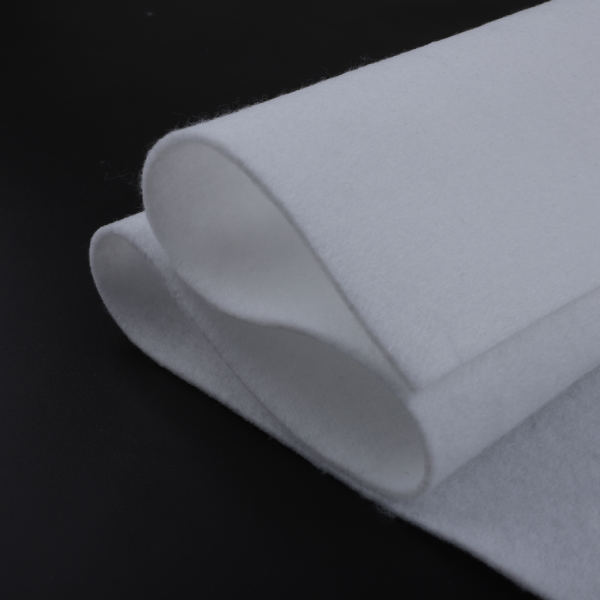
JHC has Needle Punched Nonwoven and Thermal Bonding production capabilities and can develop different structures of Acoustic Nonwoven and related functional materials according to specific automotive project requirements.
For customized projects, material GSM, Thickness, Width, Fiber Structure, and other performance requirements can be further confirmed according to the final application, with OEM / ODM production support.
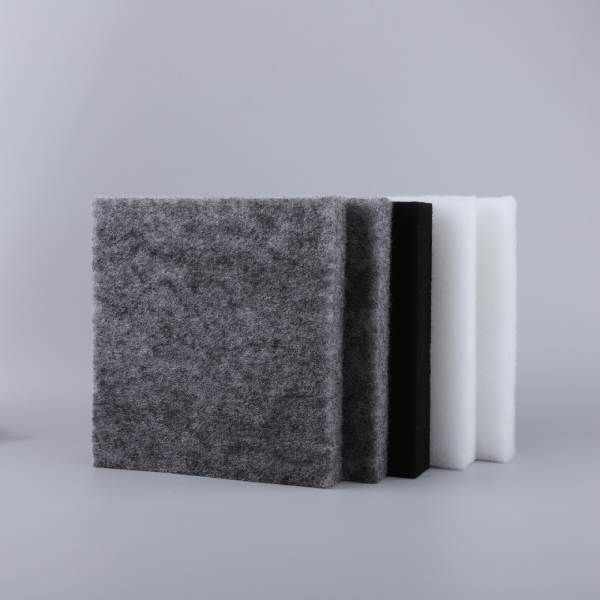
JHC has also launched Thermal Bonded Acoustic Insulation Felt Board for related acoustic material projects.
However, for automotive NVH projects, material selection should not be based only on the product name.
The actual Acoustic Felt structure and specifications still need to be confirmed according to the final automotive component, installation location, NVH requirements, and processing methods.
For customers with long-term purchasing requirements, JHC can also support subsequent projects through material production, quality control, and bulk supply.
Conclusion
When sourcing Automotive Acoustic Felt, the real question is not simply whether a supplier has an “automotive acoustic felt.”
The more important question is:
Can this material meet the NVH target, component requirements, processing requirements, and production consistency of my automotive project?
First, confirm which automotive component the material will be used for.
Then, confirm the relevant NVH test data.
Next, confirm project requirements for Weight, Dimensional Stability, Abrasion Resistance, Formability, Flame Resistance, and VOC / Odor.
Finally, after sample approval, confirm whether the mass-produced material can remain consistent with the Approved Sample.
For automotive buyers, this purchasing process can reduce the risks of evaluating materials based only on product names, GSM, or price, while also helping suppliers better understand the actual requirements of an Automotive NVH project.