
How Should GSM and Thickness of Anti-Condensation Felt Match Roofing Projects?
When purchasing anti-condensation felt, GSM and thickness are usually the first two specifications shown on a quotation. However, for a metal roofing project, confirming only a GSM value and a thickness value may not fully describe the material required.
For example, two types of PET needle-punched felt can have the same mass per unit area but different thicknesses because of differences in fiber distribution, loft, and structural compaction. If the product also includes a self-adhesive backing or other composite layers, the specification basis for the base felt may differ from that of the finished product.
These differences can affect how buyers evaluate material consumption, roll weight, processing compatibility, and sample acceptance requirements.
Therefore, when purchasing PET anti-condensation felt, buyers should first clarify which part of the material the GSM and thickness specifications refer to. The specifications should then be determined according to the roofing panel structure, processing method, and roll requirements, rather than simply selecting a higher GSM or greater thickness.
What Do GSM and Thickness Mean in Anti-Condensation Felt Specifications?
GSM stands for grams per square meter. It indicates the mass of a material per square meter and is usually expressed in g/m². It describes how much a given area of material weighs, not how thick it is.
Thickness refers to the physical thickness of a material, usually expressed in millimeters (mm). It describes the material's thickness under specified measurement conditions.
These two parameters answer different questions.
GSM mainly helps buyers confirm material consumption per unit area, estimate the theoretical weight of a roll, and establish a reference for quotations, orders, and batch inspections.
Thickness helps buyers understand the material's dimensional characteristics and determine whether it meets the requirements of the product structure, available fitting space, and subsequent processing.
For example, the GSM of an anti-condensation felt roll can be used to calculate the theoretical material mass per square meter, while its thickness needs to be confirmed according to the measurement method and actual product construction. Two materials with the same GSM should not automatically be considered to have the same thickness.
When purchasing, buyers should list these two parameters separately in the technical specification sheet and define the target values and allowable tolerances. If thickness is particularly important for the project, the measurement conditions should also be agreed upon in advance. This helps prevent suppliers and buyers from using different measurement standards.
Why Can PET Needle-Punched Felt with the Same GSM Have Different Thicknesses?
For needle-punched PET roofing felt, the same GSM only means that the mass per unit area is the same. It does not mean that the internal fiber structures are identical.
After PET fibers are formed into a web, needle punching and other processing steps help create a nonwoven structure with a certain degree of stability. Fiber distribution, web loft, and subsequent structural compaction can all affect the final material thickness.
If the fiber web retains more internal space, the material may have a relatively lofted structure. If the fiber structure is more compact, the material may have a different thickness and hand feel even when its mass per unit area is the same.
Therefore, the same GSM does not prove that two materials have the same structural characteristics or that they will perform identically during roofing production.
If buyers provide only a GSM value without a thickness requirement, reference sample, or other structural information, suppliers may quote according to their own standard material construction. Even when different suppliers quote the same GSM, the actual materials they offer may not be identical.
For projects requiring consistent purchasing specifications, buyers should confirm the PET fiber material, GSM, thickness, allowable tolerances, and reference sample. If the material will also undergo bonding, lamination, or continuous production, its structural suitability should be further evaluated through actual samples.
Should the GSM of Anti-Condensation Felt Refer to the Base Felt or the Finished Self-Adhesive Product?
This is a common source of specification misunderstandings when purchasing self-adhesive anti-condensation felt.
For ordinary PET needle-punched felt, GSM can be defined according to the mass per unit area of the base felt itself. However, a self-adhesive product may consist of several components, such as PET needle-punched felt, an adhesive layer, and release material. Since product constructions can vary, buyers must first clarify which parts are included in the stated specification.
For example, if one supplier quotes 100 g/m² based on the PET needle-punched base felt, while another supplier quotes 100 g/m² based on the complete adhesive-backed product, these two figures cannot be directly compared using the same specification basis.
When requesting a quotation, buyers should clarify the following questions:
First, does the GSM refer to the PET needle-punched base felt or the complete finished product?
Second, if the product has an adhesive layer, is the adhesive weight included in the finished-product GSM?
Third, if the product includes a release liner, is the release liner considered part of the delivered product? Is its weight recorded separately?
Fourth, does the thickness refer to the PET base felt or the finished material including the adhesive layer and other composite layers?
Fifth, do the sample, quotation, technical data sheet, and bulk inspection use the same specification definitions?
These questions may seem like minor details in a technical data sheet. However, if they are not confirmed before sampling, buyers may later find that products with the same quoted GSM have different actual material constructions.
For self-adhesive PET anti-condensation felt, buyers should pay particular attention to recording the base felt specifications and finished-product specifications separately. Only when the specification basis is consistent can buyers make meaningful supplier comparisons and establish appropriate bulk-order inspection requirements.
How Does GSM Affect Material Consumption and Total Roll Weight?
GSM is an important reference for purchasing costs and logistics calculations because it determines the theoretical mass of material per unit area.
Once the GSM, roll width, and roll length have been confirmed, buyers can estimate the theoretical weight of a material roll.
The calculation is:
Theoretical material weight (kg) = GSM (g/m²) × Roll width (m) × Roll length (m) ÷ 1000
For example, assume a roll has a specification of 100 g/m², a width of 1 m, and a length of 50 m.
100 × 1 × 50 ÷ 1000 = 5 kg
The 5 kg result is the theoretical material weight calculated from 100 g/m². It does not represent the actual shipping weight after adding the paper core, packaging, or other structural components.
If the product is a self-adhesive composite material, buyers must also clarify whether the calculation uses the base felt GSM or the complete finished-product GSM. If the calculation is based on the base felt GSM, the result should not be treated as the total weight of the finished product containing adhesive and release materials.
For bulk purchasing, buyers should confirm the GSM, roll width, roll length, theoretical weight per roll, and actual packaging requirements in the quotation and purchase order. This helps estimate material consumption, total roll weight, and shipping arrangements while reducing differences in quotation calculations between suppliers.
Why Should Thickness Be Confirmed According to Metal Roofing Processing Requirements?
Anti-condensation felt is generally applied to the underside of metal roofing panels. Therefore, thickness should not be evaluated as an isolated material parameter.
First, buyers need to clarify which layer the thickness measurement refers to. For single-layer PET needle-punched felt, the measurement usually refers to the base felt. For products with adhesive backing or other composite layers, buyers need to specify whether the measurement refers to the base felt or the finished product.
Second, needle-punched felt is a fibrous material, and the pressure applied during measurement may affect the reading. If different suppliers use different measuring pressures, instruments, or test methods, they may obtain different thickness values even when the actual material conditions are similar. For projects with strict thickness requirements, the measurement method and allowable tolerance should therefore be agreed upon in advance.
Third, thickness needs to be confirmed according to the roofing panel structure and actual processing method. For projects requiring continuous bonding or integration into a roofing panel production process, buyers should verify whether the finished material construction meets the equipment and processing-space requirements. A thickness value measured from a flat material sample alone cannot prove that the material is suitable for every roofing panel structure.
If the project involves pressing, lamination, or continuous processing, the material should also be evaluated using an actual metal roofing panel sample to confirm its bonding and fitting condition. Specific production-line trial, feeding, and roll-handling requirements should be confirmed according to the customer's equipment rather than inferred from a single thickness value.
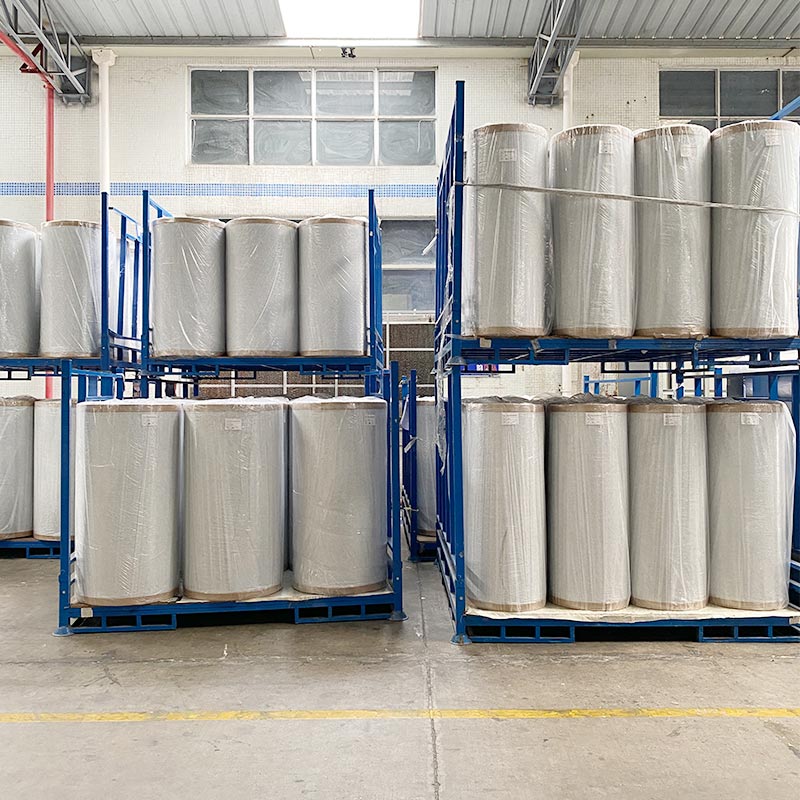
Why Can't GSM Alone Be Used to Judge Anti-Condensation Felt Performance?
GSM represents the mass of a material per unit area. It is not the water absorption capacity or a direct measurement of anti-condensation performance.
A higher GSM does not automatically mean that the material can absorb more moisture, nor does it prove that the material will provide better drip-control performance under actual metal roofing conditions.
The actual performance of anti-condensation felt is also related to fiber material, internal structure, product construction, roofing conditions, and ventilation. Even when two products have the same GSM, their water absorption and drying behavior cannot be assumed to be identical based on weight alone.
If a purchasing project has specific water absorption requirements, buyers should separately confirm the test method, sample specifications, test conditions, and result units. GSM and water absorption are different technical indicators, and one cannot replace the other.
Buyers can also refer to anti-condensation felt water absorption test data to understand how different test results should be evaluated. However, the focus of this article is material specification definition, not water absorption testing or drying time.
How Should Buyers Define GSM, Thickness, and Roll Specifications for Different Roofing Projects?
Different metal roofing projects have different processing methods and purchasing requirements. Therefore, one fixed GSM or thickness value should not automatically be treated as the standard for every project.
A more reliable approach is to confirm the actual roofing project conditions first and then define the material specifications one by one.
For metal roofing panel manufacturers, the first step is to confirm whether the anti-condensation felt will be bonded during continuous production or used at another processing or installation stage. Buyers should then specify the base felt GSM, finished-product thickness, material width, roll length, and adhesive construction, while confirming the roll delivery specifications according to the equipment requirements.
For steel structure contractors and construction project buyers, the roofing panel type, material coverage area, and actual installation method should be clarified first. The required material construction, width, roll length, and thickness can then be confirmed. If the project already has a specified material sample or technical drawing, these documents should be used as the primary reference for specification confirmation.
For importers and building material distributors purchasing standard rolls or planning regular replenishment, specification consistency is particularly important. In addition to GSM and thickness, buyers should record roll width, roll length, color, packaging method, and allowable tolerances to prevent differences between subsequent orders and the initial approved sample.
If the technical specifications have not yet been established, buyers do not need to guess which GSM value to choose. They can first provide the supplier with roofing panel information, material application, existing samples, and expected processing methods. The supplier can then discuss which specifications are suitable for further sampling.
For custom PET nonwoven roofing felt, specifications should be determined jointly by the material construction, roofing panel processing requirements, and final acceptance criteria, rather than by the product name or a single GSM value alone.
What Should Be Confirmed in Samples and Technical Data Sheets?
The purpose of sample approval is not simply to check the material's appearance. It is to ensure that the supplier's quotation, approved sample, and subsequent bulk production all follow the same technical specifications.
Buyers should confirm at least the following information during the sample stage:
Item to Confirm | Information to Specify | Purchasing Purpose |
Material type | PET needle-punched felt or another specified material | Confirm the basic material construction |
GSM | Base felt GSM or complete finished-product GSM | Establish a consistent weight calculation basis |
GSM tolerance | Allowable weight variation | Support bulk production inspection |
Thickness | Base felt thickness or finished-product thickness | Confirm the measurement target |
Thickness measurement conditions | Measuring instrument, pressure, or agreed method | Ensure comparable measurement results |
Composite construction | Whether adhesive, release material, or other layers are included | Avoid misunderstandings about product construction |
Roll width | Target width and allowable tolerance | Confirm coverage and processing requirements |
Roll length | Length per roll and allowable variation | Support material consumption and delivery calculations |
Roll weight | Definition of theoretical material weight and actual packaged weight | Support logistics and purchasing calculations |
Sample acceptance | Reference sample, appearance, and dimensional requirements | Align sample and bulk production standards |
For adhesive-backed products, the adhesive layer and release material should also be defined separately. This helps prevent situations where the purchase order specifies only one GSM value without explaining which layer of the product it refers to.
For continuous metal roofing production projects, samples should also be evaluated using the actual metal sheet and processing conditions. For requirements involving unwinding, feeding, winding, and production trials, buyers can refer to the purchasing guidance on continuous metal roofing production.
After sample approval, the confirmed material construction, GSM, thickness, measurement conditions, width, roll length, and tolerances should be recorded in the final technical data sheet or purchase order. Subsequent bulk production should be inspected according to the same standards rather than relying only on sample appearance or the supplier's verbal description.
Conclusion: Confirm the Specification Basis Before Selecting GSM and Thickness
When purchasing anti-condensation felt, GSM and thickness are two important parameters, but they cannot replace each other. GSM represents mass per unit area, while thickness describes the physical dimension of the material under specified measurement conditions. Fiber distribution, needle-punched structure, and structural compaction may cause materials with the same GSM to have different thicknesses.
For self-adhesive or composite anti-condensation felt, buyers must also clarify whether GSM and thickness refer to the base felt or the complete finished product. Roll weight should be calculated according to GSM, width, and roll length, while taking into account other weight components such as adhesive, release material, paper cores, and packaging.
HuiZhou JinHaoCheng Nonwovens Co., Ltd. has been engaged in nonwoven material research and production since 2005. Its anti-condensation felt product pages provide customization information for weight, thickness, width, and roll length. For different metal roofing projects, buyers can provide roofing panel details, target specifications, and actual samples so that the material construction and specification feasibility can be further evaluated.
The right specification for a project is not simply a matter of choosing a higher GSM or greater thickness. It is about ensuring that the material construction, measurement basis, roll dimensions, and roofing processing requirements are consistent, with mutually approved samples and technical data sheets serving as the reference for bulk purchasing.




