
From Nonwoven Roll to Finished Cleaning Cloth: Production Details Buyers Must Confirm
When developing a private-label cleaning cloth, buyers need to confirm more than the material and basic product specifications. They also need to decide how the nonwoven material will be supplied, whether it will be converted into individual sheets, how the edges should look, and how the finished products should be packed.
A custom nonwoven cleaning cloth project may start with a large roll of nonwoven material, but the final product could be supplied as rolls, pre-cut sheets, folded cloths, or packaged sets. Each format involves different production and packaging requirements.
Before placing a bulk order, buyers should clarify these details with their cleaning cloth manufacturer. Clear specifications help both sides understand the expected finished product, reduce misunderstandings during sampling, and make it easier to repeat the same requirements in future orders.
What Is the Difference Between Nonwoven Rolls and Finished Cleaning Cloths?
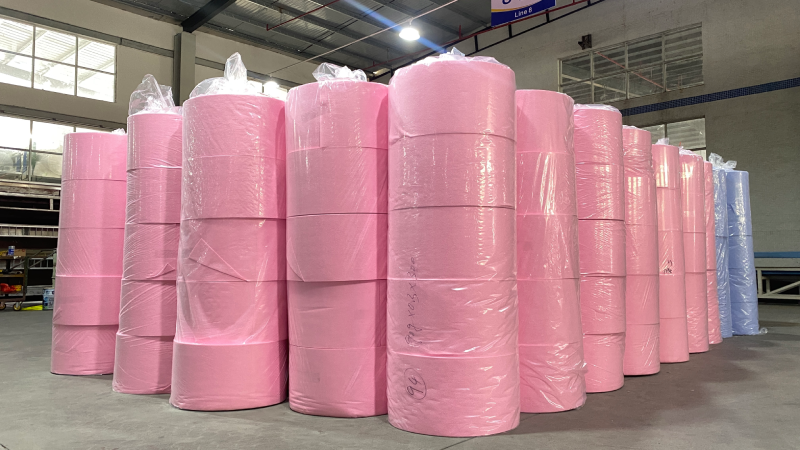
A nonwoven roll is a semi-finished material supplied in a continuous length. Buyers who have their own converting equipment may purchase the material in roll form and handle the subsequent cutting, folding, or packaging themselves.
A finished cleaning cloth is a product that has already been processed into the required format. Depending on the selected product and confirmed manufacturing arrangements, it may be supplied as individual sheets, folded cloths, or packaged units.
The main difference is the stage of processing and the form in which the buyer receives the goods.
Supply format | What the buyer receives | What the buyer needs to consider |
Nonwoven roll | Continuous material in roll form | Roll width, roll length, weight, and subsequent processing |
Pre-cut sheets | Cleaning cloths cut to specified dimensions | Sheet size, cutting consistency, and quantity |
Folded cloths | Finished cloths folded into a specified format | Folded dimensions and presentation |
Packaged finished products | Cloths supplied in individual or multi-piece packs, where available | Pack quantity, packaging materials, labels, and carton requirements |
For buyers developing a reusable cleaning cloth or a private-label product, the right supply format depends on their production arrangements, sales channels, and packaging requirements.
It is important to confirm the actual delivery format before quotation and sampling. A product described as a roll should have clearly defined roll specifications, while a finished-sheet product should have confirmed dimensions and quantities.
Should Buyers Choose Rolls, Sheets, or Prepackaged Cleaning Cloths?
The best supply format depends on how the buyer plans to process, distribute, or sell the cleaning cloth.
A roll format may be suitable for buyers who have their own cutting and packaging facilities. It allows them to carry out further processing according to their production requirements. Before ordering, they should confirm the roll width, length, winding direction if relevant, and whether the material is supplied in a continuous roll.
Pre-cut sheets are more suitable when the buyer needs cleaning cloths in a fixed size and wants to reduce the need for additional cutting after delivery. The required sheet dimensions and quantity per order should be confirmed in advance.
Folded or prepackaged products may be more convenient for distributors, retailers, and private-label brands that sell finished cleaning cloths directly. However, the available folding and packaging formats should be checked against the specific product model.
Buyer’s situation | Format to discuss | Main points to confirm |
Has its own converting equipment | Roll material | Roll width, length, and material specifications |
Needs a standard finished size | Pre-cut sheets | Sheet dimensions, cutting consistency, and quantity |
Sells ready-to-use products | Folded or packaged cloths | Folding format, pack quantity, and packaging |
Develops a private-label product | Finished product with customized presentation | Product specifications, logo, labels, and packaging |
Do not assume that every cleaning cloth material can be supplied in all these formats. The available options may differ according to the material structure, product model, and processing requirements.
What Dimensions Should Be Confirmed When Converting Rolls into Sheets?
When converting nonwoven rolls into finished cleaning cloth sheets, buyers should confirm both the original roll dimensions and the required finished dimensions.
For roll material, the key specifications include the roll width and length. Buyers should also confirm the material weight and other agreed product specifications so that the supplied material matches the approved sample.
For finished sheets, the most important details are the length and width of each piece. If the buyer has a specific application or packaging requirement, the dimensions should be based on the actual finished product rather than an approximate measurement.
The following information should be included in the specification sheet:
Specification | What to confirm |
Roll width | The required width of the supplied material |
Roll length | The required length per roll |
Finished sheet width | The width of each cut piece |
Finished sheet length | The length of each cut piece |
Size tolerance | The acceptable dimensional variation |
Quantity | The number of sheets per pack, carton, or order, as applicable |
Buyers should also clarify whether the quoted dimensions refer to the material before processing or the finished cleaning cloth after cutting.
If a product needs to fit a particular container, cleaning tool, or retail package, the buyer should provide the actual dimensions or a reference sample. This helps the manufacturer understand the intended finished size.
Cutting requirements and material utilization should also be considered together. The requested sheet dimensions may affect how the material is divided during processing. Therefore, buyers should confirm the final cutting plan and quotation with the manufacturer rather than estimating the finished quantity from roll dimensions alone.
How Should Buyers Confirm the Cutting Edges of Cleaning Cloths?
The cutting edge is an important part of the finished product's appearance. Buyers should clarify their expectations before sampling, especially when the cleaning cloth will be sold under a private label.
Different materials and product structures may require different processing methods. Ordinary cutting, die cutting, laser cutting, or other edge-processing methods should not be treated as interchangeable. Their suitability depends on the specific material and the required finished appearance.
Before placing an order, buyers should provide a reference sample or describe the edge appearance they expect. They can also ask the manufacturer which processing method is suitable for the selected product.
The following details should be checked:
Item | What buyers should confirm |
Edge appearance | Whether a regular cut edge is acceptable |
Edge consistency | Whether the edges should look consistent across all pieces |
Shape | Whether the product needs a standard rectangular shape or a customized outline |
Processing method | Which cutting method is suitable and available for the selected material |
Sample approval | Whether the actual cut edge has been checked and approved |
JHC has equipment and processing capabilities such as laser cutting and die cutting listed on its website. However, this does not mean that every cleaning cloth model can use every processing method. The specific process must be confirmed according to the product material and order requirements.
Buyers should approve the edge appearance on an actual sample before bulk production. A written description alone may not communicate the expected result clearly enough.
How Should Product Appearance, Surface Structure, and Logos Be Confirmed?
The finished cleaning cloth should match the approved sample in its key visual details. Buyers should therefore confirm the product's appearance before moving to bulk production.
Important details include the material color, surface structure, texture, and overall appearance. If the buyer has a specific reference product, photos or physical samples can help communicate the requirements.
For needle punched nonwoven cleaning cloth, the fiber composition and surface structure may affect the appearance and feel of the finished material. Buyers should confirm the selected product model and its agreed specifications rather than relying only on a general product description.
If a logo or other branding element is required, buyers should clarify where it will appear. A logo printed directly on the cleaning cloth is different from a logo printed on its packaging. The printing method, artwork, position, size, and color should be discussed according to the selected product and confirmed production process.
Before sampling, buyers should prepare the following information where applicable:
Item | Information to provide |
Product color | Color reference or approved sample |
Surface appearance | Photos or physical reference |
Logo artwork | Clear logo file and required colors |
Logo position | Location on the cloth or packaging |
Logo size | Required dimensions |
Printing requirements | Expected appearance and confirmed printing method |
The sample should be checked for both the material appearance and the placement of any branding. If the buyer needs to make changes, these should be confirmed before approving the final sample.
What Should Be Confirmed About Finished Product Packaging and Labels?
Packaging is part of the finished product specification. It affects how the cleaning cloth is presented, stored, transported, and sold.
Buyers should first decide whether they need bulk packaging, folded products, individual packs, or multi-piece packs. The available packaging formats should be confirmed for the specific cleaning cloth model.
For private-label orders, buyers should also consider whether the packaging needs a company logo, product information, labels, or barcodes.
The following details should be confirmed before production:
Packaging item | Details to confirm |
Packaging format | Bulk packaging, individual packs, or multi-piece packs |
Pack quantity | Number of cloths in each pack |
Folding | Whether folding is required and the expected format |
Packaging material | Required packaging material and appearance |
Logo | Whether branding is printed on the cloth or packaging |
Label | Product name, specifications, and other required information |
Barcode | Barcode artwork and placement, if required |
Carton | Carton dimensions, quantity, and marking requirements |
Buyers should provide their packaging artwork, label information, and barcode files in advance if these are required. Any language, product description, or branding details should be checked before printing.
Packaging requirements may affect the final quotation and production arrangements. Therefore, buyers should confirm them together with the product specifications rather than treating packaging as a separate detail after the sample has been approved.
What Samples, Drawings, and Packaging Information Should Buyers Provide?
The more clearly buyers communicate their requirements, the easier it is for the manufacturer to prepare a sample that reflects the intended finished product.
For a custom nonwoven cleaning cloth project, buyers should prepare the information relevant to their selected product and supply format.
Information | What to provide |
Product reference | Existing sample, product photo, or product description |
Material requirements | Required material type and agreed specifications |
Roll specifications | Required roll width and length, if ordering rolls |
Finished dimensions | Required sheet length and width, if ordering cut pieces |
Edge requirements | Reference photo or sample showing the expected edge |
Appearance | Color and surface appearance reference |
Logo | Logo artwork, size, color, and position |
Packaging | Packaging sample, artwork, pack quantity, and carton requirements |
Quantity | Estimated order quantity and required product format |
A physical sample is particularly useful when the buyer has specific expectations for the material's appearance, texture, dimensions, or finished edges.
If the buyer does not have an existing sample, clear photos and drawings can help explain the requirements. However, the final specifications should still be confirmed through sample evaluation.
Buyers should avoid relying on incomplete descriptions such as "standard size" or "normal packaging." These terms may be understood differently by different suppliers. Providing actual dimensions, reference images, and packaging details makes the requirements easier to verify.
What Steps Should Buyers Complete from Sample Approval to Bulk Production?
After the product requirements have been communicated, buyers and the manufacturer should confirm the details in a clear sequence.
The process can be organized into the following stages:
Stage | What needs to be confirmed |
Requirement communication | Product model, material, supply format, and intended finished product |
Specification confirmation | Roll dimensions or finished sheet dimensions, appearance, and other agreed details |
Processing confirmation | Cutting requirements, edge appearance, and applicable processing methods |
Packaging confirmation | Folding, pack quantity, labels, logo, and carton requirements |
Sample preparation | A sample made according to the confirmed requirements |
Sample approval | Buyer checks and approves the material, dimensions, appearance, and packaging |
Bulk order confirmation | Final specifications, quantity, packaging, and other agreed order details |
The approved sample should serve as a reference for the bulk order. Buyers should also keep a written record of the final product specifications and packaging requirements.
If any details change after sample approval, such as sheet dimensions, logo position, or packaging format, both sides should confirm the changes before production begins.
This process helps reduce misunderstandings between the buyer and manufacturer. It also provides a clearer reference when the buyer places repeat orders.
How Can Buyers Confirm the Final Delivery Format with a Cleaning Cloth Manufacturer?
Before requesting a final quotation, buyers should make sure that the manufacturer understands exactly what they expect to receive.
A request for nonwoven cleaning cloth may refer to roll material, pre-cut sheets, or fully packaged finished products. These are different delivery requirements and should be described clearly.
Buyers should confirm the following points with the cleaning cloth manufacturer:
Confirmation point | Question to ask |
Product model | Which cleaning cloth material and structure will be supplied? |
Supply format | Will the product be delivered in rolls, sheets, or another confirmed format? |
Dimensions | What are the roll or finished sheet dimensions? |
Cutting | Which cutting method is suitable for this product? |
Edges | What will the finished edges look like? |
Branding | Can the required logo or branding be included in the confirmed format? |
Packaging | What packaging formats are available for this product? |
Sample | Can the sample be prepared according to the complete requirements? |
Bulk order | Will the approved sample and written specifications be used as the production reference? |
For example, buyers comparing custom nonwoven cleaning cloth options should distinguish between a supplier that provides nonwoven material in rolls and one that can deliver the required finished product format. The quotation should clearly state what is included in the supply.
HuiZhou JinHaoCheng Nonwovens Co., Ltd. has been engaged in nonwoven manufacturing since 2005 and offers cleaning cloth products with customization options such as material composition, weight, dimensions, colors, and OEM/ODM requirements, depending on the selected product. Buyers should confirm the available roll or finished-product format, cutting process, and packaging arrangements for their specific model before sample approval and bulk production.
A clear specification sheet, an approved sample, and confirmed packaging details help both sides establish a consistent reference for production and future orders.




