Chemical Fiber Nonwoven Fabric: How Bonding Technology Creates Versatile Nonwoven Materials
When sourcing nonwoven fabric, many buyers focus first on price, GSM, width and roll length. However, for importers, wholesalers and industrial buyers, the fiber type and bonding process can have a major impact on the final product's strength, abrasion resistance, flexibility, breathability and durability.
Chemical fiber nonwoven fabric is made from synthetic or man-made fibers and formed into a web before being bonded through mechanical, thermal, chemical or other processes. Unlike traditional woven fabrics, nonwoven materials do not require yarn spinning and weaving, allowing manufacturers to develop materials with different structures and performance characteristics.
For professional buyers, understanding how fiber selection, web formation and bonding technology work together can make supplier comparison much more effective.
What Is Chemical Fiber Nonwoven Fabric?
Chemical fiber nonwoven fabric is a type of nonwoven material made primarily from man-made fibers. Instead of weaving yarns together, the fibers are arranged into a web and then bonded to create a stable sheet or roll material.
Common fibers used in nonwoven production include:
Polyester (PET): Known for good strength, abrasion resistance and dimensional stability. It is widely used in industrial materials, automotive applications, filtration and protective products.
Polypropylene (PP): Lightweight and resistant to many chemicals, making it suitable for packaging, filtration, medical products and industrial applications.
Other fibers, including polyamide (PA), viscose, acrylic and HDPE, can also be selected according to the required performance and end use.
It is important for buyers to understand that chemical fiber alone does not determine the final performance of a nonwoven product. The manufacturing process used to form and bond the fibers is equally important.
Why Does the Manufacturing Process Matter to Buyers?
Two products can both be labeled "nonwoven fabric" while having significantly different performance characteristics.
For example, a floor protection material needs good abrasion resistance and mechanical strength. A filtration material requires a suitable fiber structure and pore distribution. Automotive materials may require a combination of thickness, resilience, sound absorption and dimensional stability.
Therefore, professional sourcing should go beyond simply comparing:
GSM
Width
Roll Length
Color
Unit Price
Buyers should also consider the fiber composition, web formation method, bonding technology and finishing process.
For wholesalers and importers, these factors can influence not only product performance but also customer satisfaction, return rates and long-term repeat orders.
Main Manufacturing Processes for Chemical Fiber Nonwoven Fabric
Different manufacturing technologies create different fiber structures and performance characteristics. The major processes include needle punching, thermal bonding, spunbond, spunlace, meltblown and wet-laid production.
1. Needle Punched Nonwoven Fabric
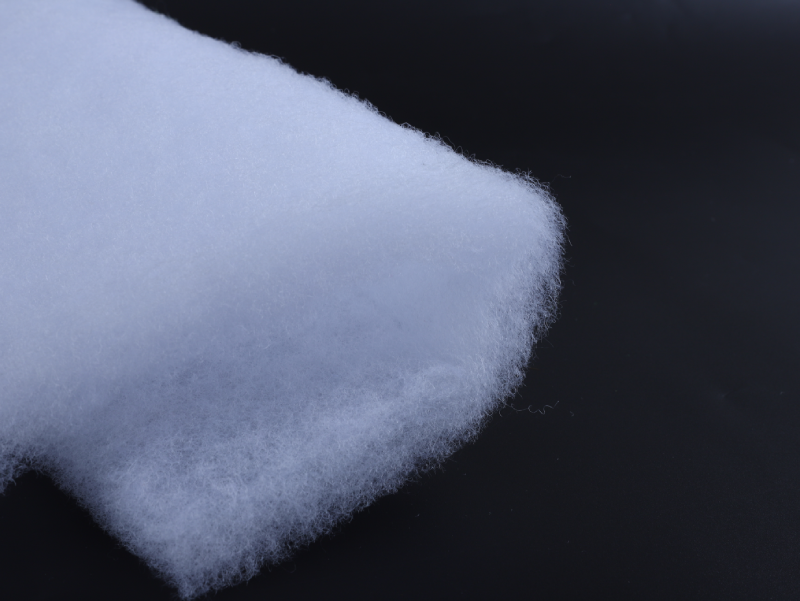
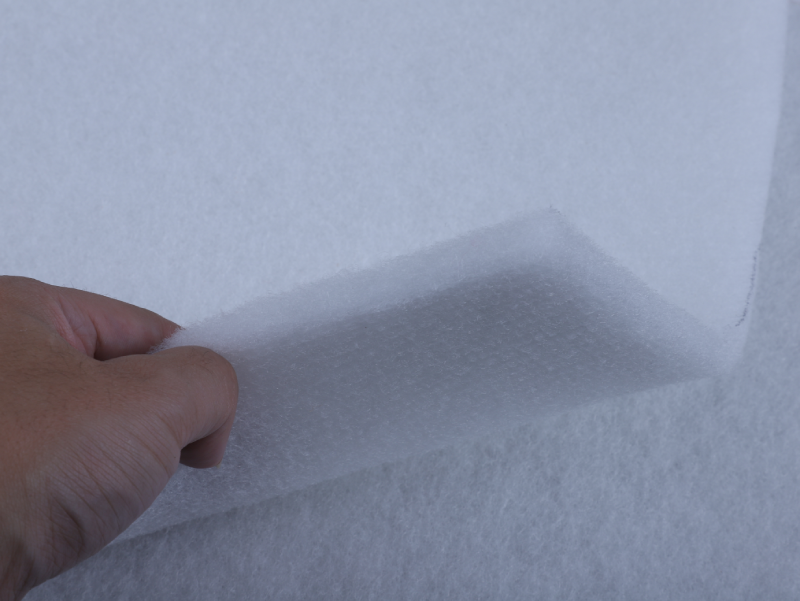
Needle punching uses barbed needles to repeatedly penetrate a fiber web. The needles pull and entangle fibers with each stroke, creating a mechanically bonded structure.
This process allows manufacturers to produce materials with different GSM levels, thicknesses, densities and degrees of firmness.
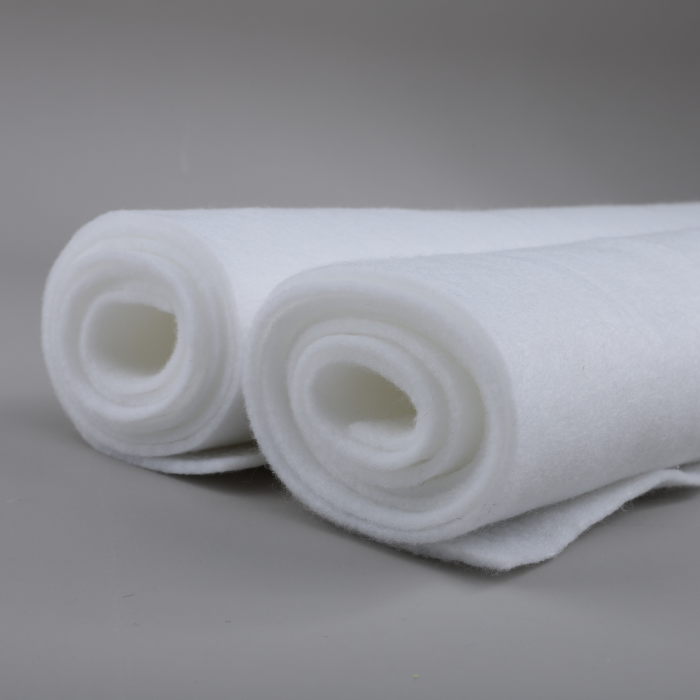
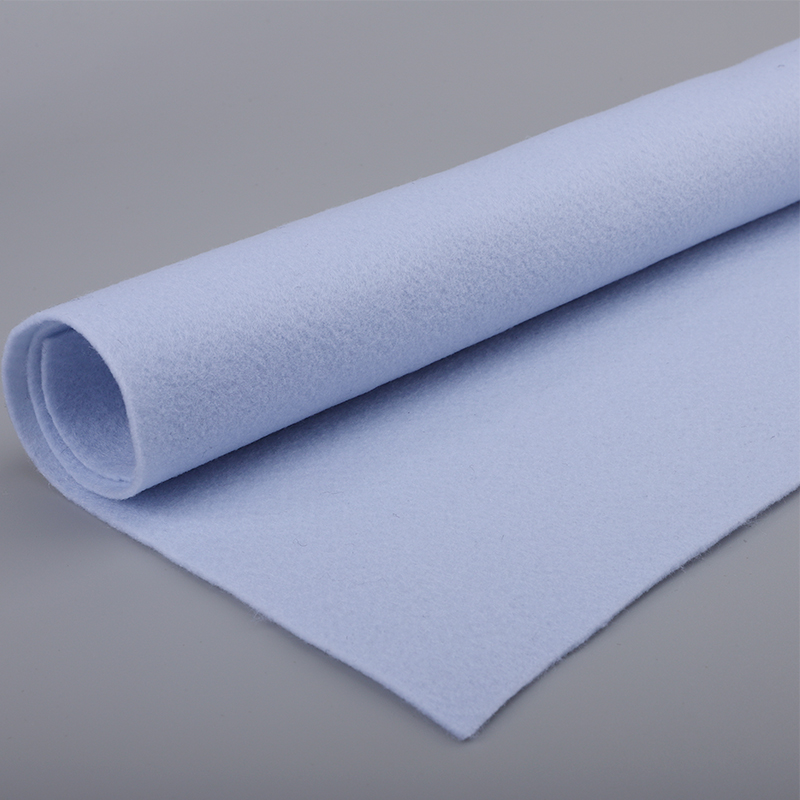
Needle punched nonwoven felt can offer:
High mechanical strength
Good abrasion resistance
Breathability
Moisture absorption
Adjustable thickness
These characteristics make needle punched materials suitable for floor protection, automotive interiors, industrial materials, filtration, sound insulation and other demanding applications.
For buyers sourcing materials that need to withstand repeated foot traffic, friction or handling, needle punched felt can be a practical choice.
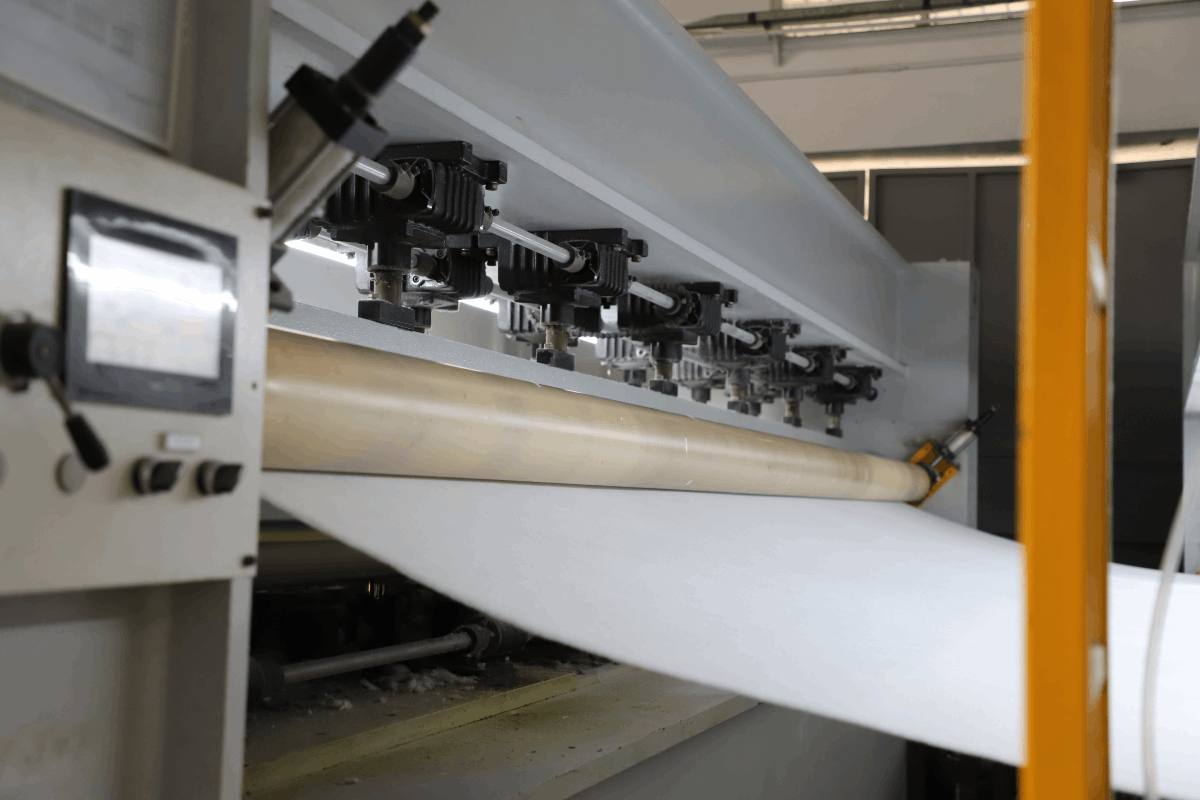
2. Thermal Bonding
Thermal bonding uses heat to soften or melt thermoplastic fibers, allowing the fibers to bond together and form a stable nonwoven structure.
This process provides good control over thickness and material structure and can be adapted according to the fiber composition and application requirements.
Thermally bonded nonwovens are commonly used in filling materials, insulation, automotive components and various industrial products.
3. Spunbond Nonwoven Fabric
The spunbond process generally involves extruding molten polymer into continuous filaments, laying the filaments into a web and then bonding them together.
Because the process is continuous and highly productive, spunbond nonwoven fabric is widely used for packaging, hygiene products, agricultural materials and other high-volume applications.
For buyers requiring large quantities of standardized products, spunbond technology can provide efficient mass production.
4. Spunlace Nonwoven Fabric
Spunlace, also known as hydroentanglement, uses high-pressure water jets to entangle fibers within a web.
Compared with many mechanically bonded materials, spunlace nonwoven fabric is generally known for its soft hand feel and textile-like surface.
It is widely used in wipes, medical and hygiene products, personal care products and cleaning materials.
When softness, absorbency and surface feel are important purchasing criteria, spunlace can be a suitable manufacturing option.
5. Meltblown Nonwoven Fabric
Meltblown production melts polymer and uses high-speed hot air to draw the polymer into very fine fibers. These fibers are collected to form a web with a high surface area.
Because of its fine fiber structure, meltblown material is commonly used in air filtration, liquid filtration and specialized protective applications.
For filtration buyers, fiber diameter, filtration efficiency, pressure drop and web structure are important specifications to evaluate.
6. Wet-Laid Nonwoven Fabric
Wet-laid production disperses fibers in a liquid medium before forming them into a web. The web is then dewatered, dried and bonded.
This technology is suitable for applications where relatively uniform fiber distribution and specific material structures are required.
Wet-laid nonwovens can be found in filtration materials, industrial products and specialty applications.
How Should Buyers Choose the Right Nonwoven Manufacturing Process?
There is no single "best" nonwoven manufacturing process for every application.
The right choice depends on the relationship between the application, required performance, fiber type and production technology.
For floor protection, painter protection, automotive interiors, sound insulation and many industrial applications, buyers can focus on needle punched nonwoven felt and evaluate its strength, abrasion resistance, thickness and GSM.
For products where softness, absorbency and a textile-like surface are priorities, spunlace may be more appropriate.
For lightweight materials and high-volume applications, spunbond can be considered.
For high-performance filtration applications, meltblown technology may provide more suitable fiber structures.
A practical sourcing approach is:
Application → Performance Requirements → Fiber → Manufacturing Process → GSM & Dimensions → Packaging
Following this sequence can help buyers avoid choosing a material based only on price.
Why Work Directly With an Experienced Nonwoven Manufacturer?
For long-term sourcing, a supplier's manufacturing capability can directly affect quality consistency, production capacity, delivery schedules and customization.
Jinhaocheng is an experienced needle punched nonwoven felt manufacturer in Guangdong, China, with more than 20 years of manufacturing experience.
The company operates a 26,000㎡ production facility with 15 automated needle punching production lines and an annual production capacity of more than 10,000 tons.
This production capability allows us to support different requirements from importers, wholesalers, distributors and industrial customers.
Direct communication with a manufacturer also makes it easier to customize:
GSM and thickness
Width and roll length
Fiber composition
Color
Material structure
Packaging
OEM and ODM requirements
For buyers who need stable supply over multiple orders, direct manufacturing capability can provide better control over specifications and production consistency.
From Needle Punched Felt to Floor Protection Solutions
Jinhaocheng focuses on needle punched nonwoven materials and customized applications.
As a professional needle punched felt manufacturer, we provide materials for different industrial and commercial applications. Our product range also includes floor protection rolls, painter felt and protective fleece, helping customers source related protection products from one manufacturing partner.
For customers developing their own brands or product lines, our custom nonwoven felt manufacturer and OEM/ODM capabilities allow specifications to be adjusted according to market requirements.
Our manufacturing positioning also supports customers looking for a reliable nonwoven felt manufacturer in China, particularly for floor protection, painting, automotive, construction and industrial applications.
Jinhaocheng: A Manufacturing Partner for Global Buyers
Choosing the right nonwoven supplier is not simply about finding the lowest quotation. A reliable manufacturing partner should be able to provide consistent quality, stable capacity, flexible specifications and professional customization support.
With more than 20 years of experience, automated production capacity and OEM/ODM capabilities, Jinhaocheng serves importers, wholesalers, distributors and industrial buyers seeking dependable nonwoven material solutions.
Whether you need standard needle punched felt or a customized specification, our production team can work with your requirements from material selection through finished-product production.
Conclusion
Chemical fiber nonwoven fabric can be produced through different web-forming and bonding technologies, with each process offering different performance advantages.
For buyers, understanding the relationship between fiber, manufacturing process and application is the key to selecting the right material.
If you are sourcing needle punched felt for floor protection, painting, automotive, construction or industrial applications, contact Jinhaocheng for OEM, ODM and customized needle punched nonwoven felt solutions.