Why Is Composite Needle Punched Nonwoven Batch Consistency So Important? How to Avoid Quality Fluctuations in Long-Term Purchasing?
For importers, wholesalers, distributors, and brands that purchase nonwoven materials on a long-term basis, the biggest concern is often not whether the first sample is qualified, but whether bulk production can remain consistent over time.
Many buyers face a similar situation: the sample passes all required tests, but the first bulk order is different from the approved sample. The first production batch may have good quality, while the fifth or tenth batch may show variations in GSM, thickness, color, width, or lamination strength.
For customers who need continuous production, these quality fluctuations can affect manufacturing efficiency, finished-product consistency, customer complaints, and inventory management.
Therefore, when purchasing composite needle punched nonwoven, buyers should look beyond price, specifications, and sample performance. They should also evaluate whether the supplier has stable batch production capabilities and can maintain consistency between Sample, Trial Order, and Bulk Production.
Why Is Batch Consistency So Important for Long-Term Purchasing of Composite Needle Punched Nonwoven?
Passing one production batch does not necessarily mean that a supplier can continuously produce qualified products.
For long-term buyers, what really matters is whether the material can maintain stable performance and specifications from the first batch to subsequent orders. If every batch is noticeably different, it becomes difficult for buyers to establish a reliable production plan.
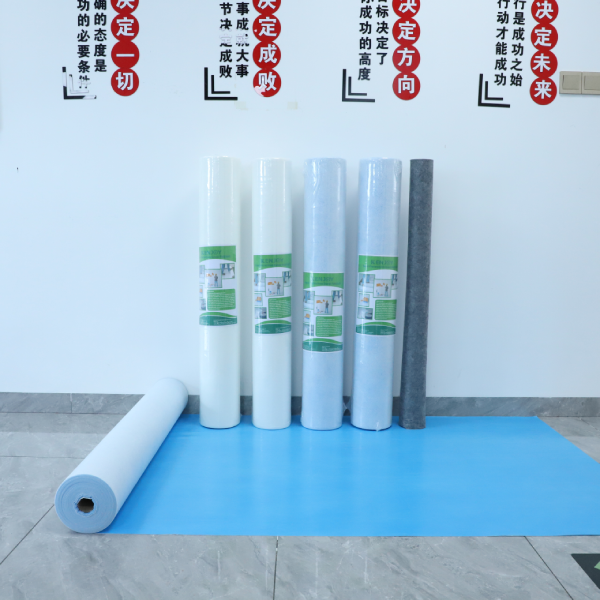
For example, a customer may use composite needle punched nonwoven for floor protection products. If the thickness and lamination strength of the first batch meet production requirements but change in later batches, this may affect cutting dimensions, processing efficiency, and even finished-product performance.
Batch consistency is equally important for wholesalers and distributors. When customers receive products from different batches, obvious differences in color, thickness, or hand feel can affect their brand image and final sales.
Therefore, batch consistency is not simply one quality parameter. It is an important indicator of long-term supply capability.
Why Is “Sample Is Good, But Bulk Production Is Different” One of the Biggest Concerns for Buyers?
Differences between samples and bulk production are among the most common concerns when overseas buyers evaluate a new supplier.
During the sampling stage, the production quantity is usually relatively small, allowing the manufacturer to make adjustments according to the buyer's requirements. Once bulk production begins, however, raw materials, equipment conditions, production speed, manufacturing environment, and production batches can all affect the final product.
If a supplier does not have a stable production management system, problems may include:
The sample meets the required GSM, but the bulk order has noticeable GSM variation.
The sample has stable thickness, but the thickness of bulk production changes.
The sample color meets the requirement, but different production batches show visible color differences.
The sample meets the required tensile strength, but bulk production shows lower performance.
The sample has strong lamination, but localized delamination appears during mass production.
The sample has accurate width, but the roll width varies significantly during bulk production.
These issues do not necessarily mean that the product is completely unqualified. However, for long-term buyers, continuous specification fluctuations can increase the actual cost of procurement.
First: Why Does GSM Affect Batch-to-Batch Consistency?
GSM, or grams per square meter, is one of the most common specifications when purchasing needle punched nonwoven.
For example, if a buyer orders 160gsm, 180gsm, or 200gsm needle punched nonwoven, significant variations in actual GSM between different batches can affect thickness, density, hand feel, strength, and final application performance.
For products used in floor protection, industrial filtration, automotive interiors, and other applications that require stable material performance, consistent GSM is an important foundation.
Therefore, buyers should not only confirm that a supplier “can produce a specific GSM.” They should also evaluate whether the manufacturer can maintain stable GSM control throughout long-term bulk production.
This is one reason why a professional needle punched nonwoven felt manufacturer needs a stable system for raw material management, production parameters, and quality inspection.
Second: Why Should Thickness Be Evaluated Beyond the Sample?
Thickness is another specification that is easily overlooked in composite needle punched nonwoven purchasing.
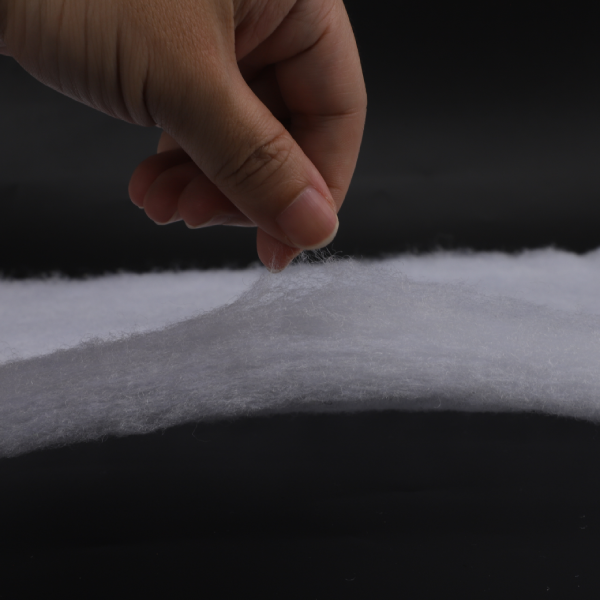
Products with the same GSM can have different final thickness and compression behavior depending on fiber structure, needle punching density, and production parameters.
For products that require cutting, folding, lamination, or further processing, thickness fluctuations can affect subsequent processing dimensions.
Especially for long-term buyers, what matters is not whether the thickness of one roll meets the requirement, but whether different production batches can maintain a relatively stable thickness range.
Therefore, during sample approval, buyers should include Thickness as part of the long-term quality standard rather than treating it as a specification that only needs to be checked during sampling.
Third: Why Can Color Become a Hidden Problem in Long-Term Purchasing?
When composite needle punched nonwoven is used for floor protection, automotive interiors, home textile products, or branded products, color usually affects more than appearance. It can also influence how end customers perceive product consistency.
When noticeable color differences occur between production batches, wholesalers may not be able to mix different batches for sales, while brand customers may need to reconfirm the product.
Therefore, when a specific color is required, buyers should establish the color standard during sample approval and maintain the same production requirements for subsequent orders.
For long-term OEM purchasing, color management should be part of the product specification rather than something that needs to be discussed again for every order.
Fourth: Why Must Strength Be Stable Over the Long Term?
Tensile strength, tear strength, and overall structural strength all affect the reliability of needle punched nonwoven during actual use.
Buyers can test Strength during the sample stage to determine whether the product meets basic application requirements. However, long-term cooperation also requires attention to whether performance remains stable across different production batches.
If the first batch has excellent strength but later batches show a decline, customers may experience breakage, tearing, or reduced service life during processing and use.
Therefore, long-term purchasing should establish stable performance standards instead of redefining product requirements for every batch.
For an industrial felt factory, stable production parameters and quality control systems are an important foundation for maintaining consistent Strength.
Fifth: Why Is Lamination a Critical Quality Indicator for Composite Needle Punched Nonwoven?
For needle punched nonwoven laminated with PE, PVC, EVA, sponge, or other materials, the bonding stability between layers is just as important as the performance of the needle punched layer itself.
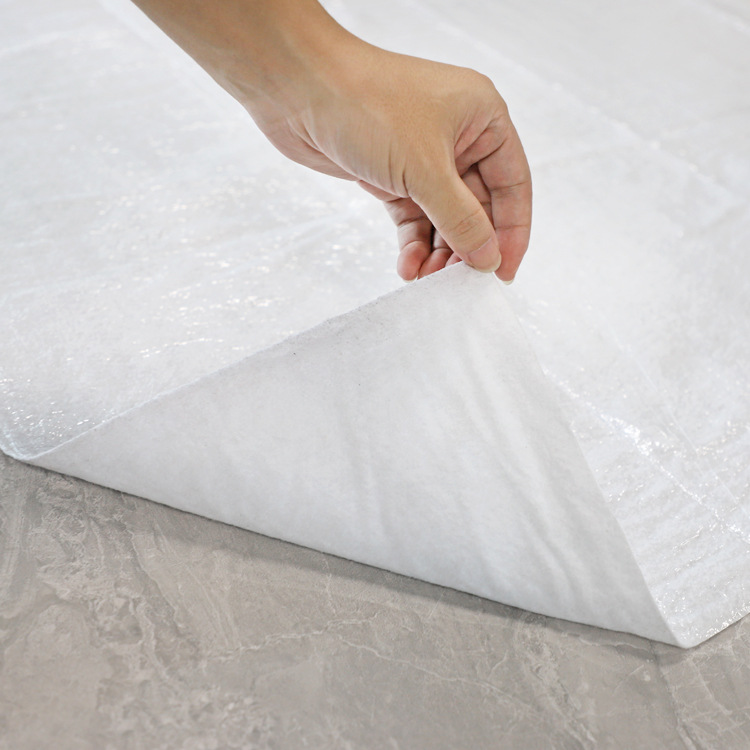
For example, PE backed needle punched felt is commonly used for products that require waterproofing, moisture protection, or surface protection. If the laminated layers are not firmly bonded, delamination may occur during bending, stretching, friction, or long-term use.
This is why buyers selecting a composite needle punched felt manufacturer should not only ask whether the supplier can perform lamination. They should also evaluate the lamination process, bonding strength, and long-term batch consistency.
For long-term orders, the real value is not that one batch has good lamination performance, but that different batches can maintain stable Lamination quality.
Sixth: Why Can Width Directly Affect a Buyer's Processing Costs?
Width may appear to be a simple dimensional specification, but it is very important for customers engaged in large-scale production.
If the customer uses nonwoven rolls directly for cutting, slitting, lamination, or finished-product manufacturing, consistent roll width directly affects material utilization.
If the actual width differs significantly from the required specification, it may increase material waste or even affect the normal operation of downstream production equipment.
Therefore, when confirming product specifications, buyers should not only confirm the “standard width.” They should also define the Width control requirements for long-term orders.
For customers requiring OEM customization, Width, Roll Length, and packaging requirements can all be confirmed together during the order process.
Why Does Passing the First Batch Not Mean the Tenth Batch Will Also Be Qualified?
One of the most common mistakes in long-term purchasing is using the quality of the first order to judge the quality of all future orders.
In reality, batch consistency tests a supplier's continuous manufacturing capability.
The first order may require only a relatively small production quantity, while long-term cooperation may involve several tons or even larger quantities over several months or years.
During this process, raw material sourcing, production equipment, production parameters, operator procedures, order scheduling, and quality inspection can all affect product consistency.
Therefore, a genuine needle punched felt factory China should be able to use standardized production and quality management to turn a one-time “good product” into a consistently reliable “bulk product.”
How Can Buyers Determine Whether a Supplier Has Real Batch Control Capability?
Buyers can evaluate this through several stages of the actual cooperation process.
First, compare the Sample and Bulk Production in terms of GSM, Thickness, Color, Strength, Lamination, and Width.
Second, compare different production batches instead of testing only the first batch.
Third, require the supplier to clearly define product specifications and quality standards so that future orders have a clear basis for production.
For long-term OEM customers, it is also possible to establish a connection between sample approval, order confirmation, production inspection, and pre-shipment inspection.
If a supplier can clearly explain these processes and demonstrate stable production and quality control procedures, it is generally more suitable for long-term cooperation.
Why Is Automated Production Capability Important for Batch Consistency?
Batch consistency depends not only on operator experience, but also on whether the entire production system is stable.
Automated production lines can help manufacturers maintain more consistent production speeds, production parameters, and material running conditions while reducing variations caused by manual operations.
For long-term buyers, the larger the production scale and order volume, the more important standardized and automated production management becomes.
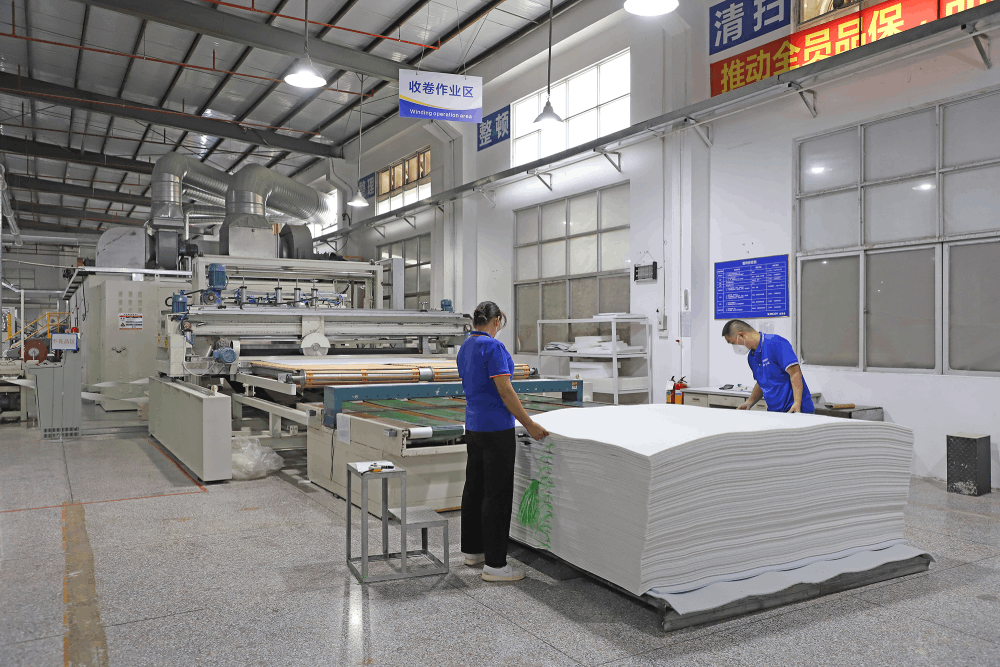
Jinhaocheng has a 26,000㎡ production facility, 15 fully automated needle punched nonwoven production lines, and annual production capacity of more than 10,000 tons. From raw materials to needle punching, lamination, slitting, and finished products, we can provide systematic production management.
This allows us to provide more stable production support for long-term buyers rather than simply completing a one-time sample order.
Why Can 100% Virgin Raw Material Also Help Support Long-Term Quality Consistency?
Raw materials are one of the fundamental factors affecting batch consistency.
If raw materials with significantly different sources and quality are used across different orders, the final product may also show variations in fiber structure, color, strength, and surface condition.
Jinhaocheng focuses on using 100% Virgin Raw Material for relevant products rather than relying on mixed recycled materials across different production batches.
Stable raw material management provides a more consistent foundation for subsequent needle punching and lamination processes, making it easier to maintain consistent product performance across long-term orders.
For importers, wholesalers, and brand customers, this is particularly important because long-term purchasing requires predictability.
How Should Buyers Establish Quality Control Standards for Long-Term Composite Needle Punched Nonwoven Purchasing?
Long-term purchasing should not rely only on a supplier saying, “Quality is Stable.”
A more effective approach is to establish clear product specifications at the beginning of the cooperation.
For example, buyers can confirm GSM, Thickness, Color, Width, Roll Length, Strength, and Lamination as key parameters.
After sample approval, these parameters can be used as reference standards for subsequent bulk production.
During bulk production, they can then be verified through production inspection and pre-shipment quality checks.
In this way, “Is the product good?” can be converted into the more specific question: “Does the product meet the previously approved standard?”
This standardized approach is especially important for OEM customers because once a product enters long-term production, any specification change may affect the final product.
Why Should Long-Term Buyers Choose a Genuine Needle Punched Nonwoven Factory?
The biggest difference between long-term purchasing and one-time purchasing is that the supplier needs to take continuous responsibility for manufacturing.
Trading channels may be suitable for small-volume orders, standard products, or multi-category purchasing. However, for customers requiring long-term OEM, large-volume purchasing, and strict specification management, working directly with a manufacturing factory generally makes production control easier.
A genuine needle punched nonwoven felt manufacturer can directly participate in raw material management, production, lamination, slitting, packaging, and quality control.
When customers need to adjust GSM, Thickness, Width, Backing, or other product parameters, the factory can also participate more directly in product development and production adjustments.
This is why long-term buyers should not compare suppliers based only on unit price. They should also evaluate whether the supplier can continuously provide stable products.
Why Is Jinhaocheng Suitable as Your Long-Term Composite Needle Punched Nonwoven Supplier?
Jinhaocheng was established in 2005 and has more than 20 years of experience in nonwoven manufacturing, specializing in the development and production of needle punched nonwoven and related composite products.
We have a 26,000㎡ production facility, 15 fully automated needle punched nonwoven production lines, and annual production capacity of more than 10,000 tons, together with OEM/ODM customization capabilities.
For long-term buyers, we can help confirm specifications including Fiber, GSM, Thickness, Color, Width, Roll Length, Backing, Surface Treatment, and Packaging according to the application requirements.
Whether you need standard needle punched nonwoven, composite needle punched nonwoven, PE-backed felt, Floor Protection Roll, or Painter Felt, our focus is stable long-term supply rather than simply completing a single order.
Our goal is not simply to provide customers with a “good sample” for the first order, but to ensure that customers can continue receiving stable products that meet the approved specifications throughout long-term purchasing.
How Can Buyers Truly Avoid Quality Fluctuations When Purchasing Composite Needle Punched Nonwoven Long Term?
Avoiding quality fluctuations does not mean finding a supplier whose products will “never change.” The key is to establish a quality standard that can be consistently implemented.
Buyers should confirm product specifications during the Sample stage, verify bulk production capability through a Trial Order, and then continue monitoring product consistency across subsequent batches.
The focus should not be on whether one individual parameter passes inspection, but whether key specifications such as GSM, Thickness, Color, Strength, Lamination, and Width can remain stable over the long term.
For importers, wholesalers, distributors, and brand customers, this consistency ultimately translates into lower quality risks, fewer production adjustments, and a more reliable supply chain.
Conclusion: Long-Term Cooperation Is About Consistency, Not Just One Qualified Batch
For composite needle punched nonwoven buyers, “Sample Is Good, But Bulk Production Is Different” is one of the situations that should be avoided.
A reliable supplier should not only be able to produce a qualified sample, but should also have the manufacturing capability to consistently reproduce the approved sample standard in the first batch, fifth batch, tenth batch, and subsequent long-term orders.
Therefore, when choosing a needle punched nonwoven felt manufacturer, do not only ask:
“Can you make this product?”
You should also ask:
“Can you make the same quality consistently for every batch?”
That is the real supply capability that long-term OEM buyers should evaluate.