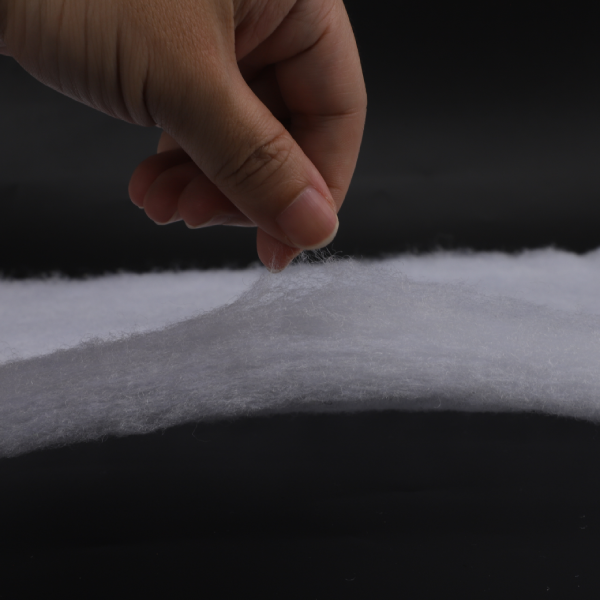
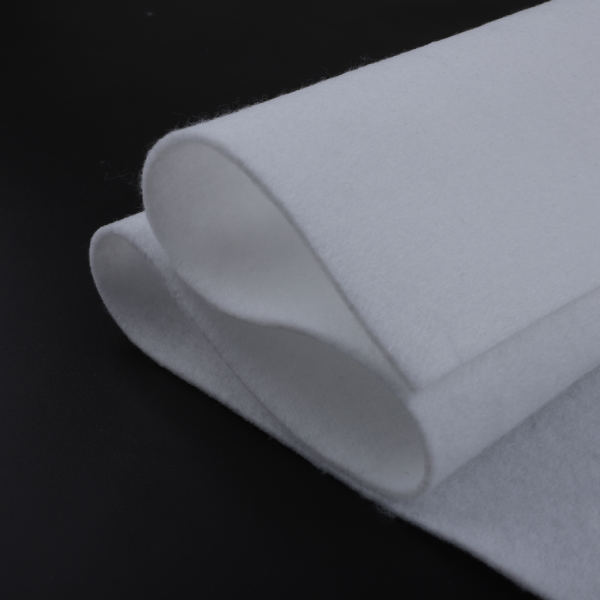
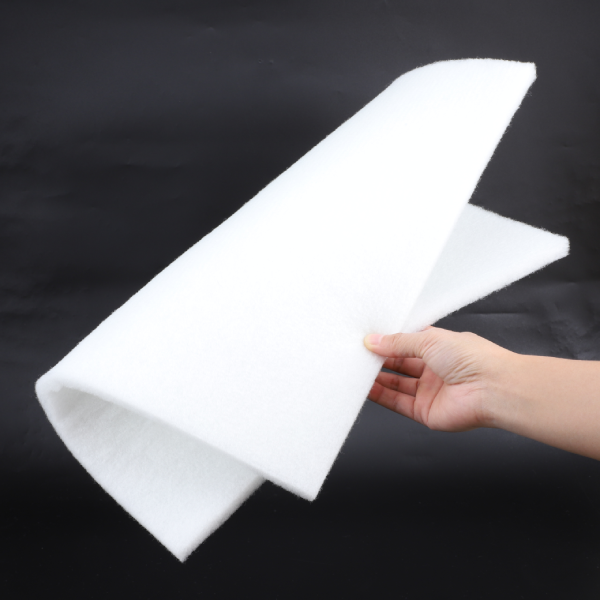
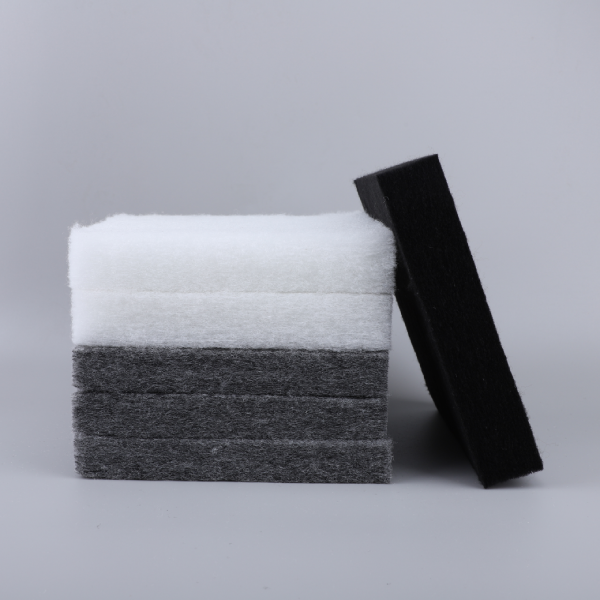
How to Choose a Composite Needle Punched Nonwoven Manufacturer in China? A Complete Sourcing Guide for Overseas Buyers
For overseas importers, wholesalers, distributors, and product manufacturers, sourcing composite needle punched nonwoven from China is not simply about finding a supplier with a lower price.
The real challenge is finding a Chinese factory that understands your product requirements, can maintain stable production, control quality, and provide reliable long-term supply.
Especially for composite needle punched nonwoven, the manufacturing process may involve needle punching, lamination, backing, slitting, packaging, and other production stages. If buyers only compare quotations without evaluating the supplier's manufacturing capabilities and quality control system, they may later encounter problems such as differences between samples and bulk production, specification deviations, delayed delivery, or batch-to-batch quality fluctuations.
Therefore, for overseas buyers, a more reliable approach to sourcing composite needle punched nonwoven from China is to establish a complete purchasing process:
Supplier Search → RFQ → Specification Confirmation → Sample → Testing → Quotation → Order → Production → QC → Packaging → Export
This guide examines each stage from the perspective of overseas buyers and explains what to look for when selecting a needle punched felt factory China for long-term cooperation.
Step 1: How Should Buyers Find a Composite Needle Punched Nonwoven Supplier in China?
Finding the right supplier is the first step in the entire purchasing process.
Overseas buyers can search for Chinese suppliers through Google, B2B platforms, industry trade shows, supplier recommendations, and manufacturer websites.
However, it is important to understand that companies appearing in search results are not necessarily actual manufacturers.
Some companies mainly operate as trading companies, while others sell many different categories of products. A professional manufacturing factory usually focuses on its core products and builds dedicated production capabilities around them.
When searching for suppliers, buyers can focus on keywords such as:
needle punched nonwoven felt manufacturer
needle punched felt manufacturer
needle punched felt factory China
nonwoven felt manufacturer China
These keywords can help buyers identify suppliers specializing in the needle punched nonwoven manufacturing field.
If you are purchasing composite products, you should also confirm whether the supplier has actual lamination and composite processing capabilities rather than simply purchasing from a third party and reselling the products.
Step 2: What Product Information Should Buyers Prepare Before Requesting a Quotation?
Many overseas buyers contact a Chinese factory for the first time with a simple message:
“Please send me your best price.”
In reality, this approach makes it difficult for the supplier to provide an accurate quotation.
The price of composite needle punched nonwoven can be affected by Fiber, GSM, Thickness, Width, Roll Length, Color, Backing, Lamination Structure, order quantity, and other requirements.
Therefore, buyers should determine the basic product requirements before sending an RFQ.
For example, buyers should clarify the type of needle punched nonwoven required, target GSM, thickness range, width, roll length, whether PE or TPE backing is required, and the expected purchasing quantity.
The clearer the product information, the easier it is for the factory to calculate a quotation based on actual production conditions.
Step 3: Why Is Specification Confirmation More Important Than Simply Comparing Prices?
Quotations from different manufacturers may refer to products that have the same product name but are not actually the same material.
For example, two suppliers may both quote for 180gsm needle punched felt, while their actual fiber structures, needle punching density, thickness, strength, and production standards may be different.
For composite products, buyers also need to confirm the laminated material, backing thickness, lamination method, and final material structure.
Therefore, overseas buyers should confirm the product specifications before comparing supplier prices.
The comparison should be based on:
Same Specification + Same Quality Standard + Same Quantity + Same Packaging Requirement
rather than simply comparing one unit price.
For long-term purchasing, the clearer the specifications are, the easier it is to maintain consistency between samples, bulk production, and quality control.
Step 4: Why Should Overseas Buyers Always Confirm a Sample First?
A sample is an important way for overseas buyers to evaluate the actual manufacturing capability of a Chinese supplier.
Through sample evaluation, buyers can check the product appearance, hand feel, GSM, Thickness, Width, and other required performance characteristics.
For composite needle punched nonwoven, buyers can also examine whether the laminated layer is uniform, whether the bonding is strong, and whether the overall structure meets the requirements of the final application.
However, the purpose of a sample is not simply to “look at the product.”
For OEM purchasing, an approved sample can become an important reference standard for subsequent Bulk Production.
Therefore, during sample approval, buyers should define the specific product parameters and quality requirements as clearly as possible rather than simply replying:
“Sample approved.”
A better approach is to confirm the specific product specifications and quality standards.
Step 5: Which Quality Parameters Should Be Tested During Sample Evaluation?
For composite needle punched nonwoven, overseas buyers should not judge quality based only on appearance.
Depending on the final application, buyers can focus on GSM, Thickness, Tensile Strength, Tear Strength, Lamination Strength, Water Resistance, and Abrasion Resistance.
For example, if the product is used for Floor Protection, buyers should pay particular attention to waterproofing, abrasion resistance, tear resistance, and lamination stability.
If the material is used in industrial applications, buyers may focus more on strength, density, filtration performance, durability, or other application-specific properties.
The purpose of testing is not simply to find a product that “looks good,” but to confirm whether the material can actually meet the requirements of the final application.
Therefore, Sample Testing should be an important part of the purchasing process when sourcing from a Chinese factory.
Step 6: Why Should Overseas Buyers Avoid Choosing a Chinese Supplier Based Only on the Lowest Quotation?
Price is certainly an important factor in purchasing decisions, but the lowest quotation does not necessarily mean the lowest total procurement cost.
If a supplier offers a very low price but the actual product has unstable GSM, significant thickness variation, insufficient lamination strength, or noticeable differences between batches, buyers may face additional hidden costs later.
These costs may come from production waste, rework, quality complaints, returns, replacement orders, or delivery delays.
For wholesalers and product manufacturers in particular, one quality problem may affect not only the current order but also their own customers.
Therefore, when comparing Chinese suppliers, buyers should consider:
Product Quality + Production Capacity + Batch Consistency + Lead Time + OEM Capability + After-Sales Support
rather than focusing only on Price.
Step 7: What Should Overseas Buyers Confirm Before Placing an Order?
After the sample has been approved, buyers should still reconfirm the order details before placing the final order.
The confirmed product specifications and commercial terms should be recorded together, including product structure, GSM, Thickness, Width, Roll Length, Color, Backing, Packaging, Quantity, and expected lead time.
For OEM products, buyers should also confirm Logo, Label, Printing, and outer packaging requirements.
This step is especially important for long-term purchasing.
The more complete the order information is, the easier it is for the production department to follow the same requirements and reduce production errors caused by unclear communication.
Step 8: Why Is Bulk Production a Key Test of a Chinese Factory's Capability?
A sample can demonstrate that a factory can make a particular product, but Bulk Production truly demonstrates its manufacturing capability.
Small-volume sample production and long-term bulk production are significantly different.
A bulk order may involve several tons or larger quantities and may require continuous production across multiple batches.
At this stage, raw material consistency, equipment operating conditions, production parameters, operator management, and quality control systems become increasingly important.
For overseas buyers, one of the most important questions is whether the supplier can consistently reproduce the approved Sample standard during Bulk Production.
This is also an important way to evaluate whether a factory truly has long-term supply capability.
Step 9: Who Should Be Responsible for QC and What Should Buyers Check?
Quality control should not happen only after production has been completed.
A complete QC process should cover raw materials, production processes, and finished products.
Buyers can confirm Quality Control standards with the Chinese factory in advance, including raw material inspection, GSM inspection, Thickness inspection, Width inspection, appearance inspection, and lamination quality inspection.
For long-term OEM customers, more specific Inspection Standards can also be established according to the final product requirements.
This makes the buyer's and supplier's understanding of a “qualified product” more consistent.
For bulk purchasing, the real value of Quality Control is reducing quality fluctuations between production batches.
Step 10: Why Should Packaging Also Be Considered When Sourcing from China?
Many buyers focus entirely on the product itself and overlook packaging.
In reality, for roll materials exported from China to overseas markets, packaging directly affects product protection during transportation, container loading efficiency, and the condition of the products upon delivery.
Buyers should confirm Roll Packaging, Label, Pallet, Carton, or other packaging requirements in advance.
For branded products, Logo, Product Label, and outer packaging information should also be confirmed.
For long-term orders, packaging standards should also remain as consistent as possible to reduce communication costs caused by reconfirming packaging requirements for every order.
Step 11: What Should Be Confirmed Before the Export Process?
For overseas buyers sourcing from China for the first time, the Export process can also become an easily overlooked part of purchasing.
Buyers should confirm product quantity, packaging method, loading method, Shipping Mark, and relevant export document requirements in advance.
If the buyer has limited experience importing from China, the specific export arrangements can be discussed with the supplier before placing the order.
A mature Chinese manufacturer should not only be responsible for manufacturing the products, but should also be able to support customers through the supply chain process from production to shipment.
Why Is a Supplier's Manufacturing Capability More Important Than Its Quotation When Sourcing Composite Needle Punched Nonwoven from China?
When buyers purchase a product only once, price may be a very important factor.
But when purchasing becomes a long-term relationship, the real value comes from whether the supplier can maintain stable production over time.
For example, if a supplier offers a very low price for the first order, but the specifications change in the second order, delivery is delayed in the third order, and quality problems appear in the fourth order, the low price does not actually reduce the total procurement cost.
In contrast, a manufacturer with stable production capabilities can help buyers reduce quality risks and communication costs over the long term.
Therefore, overseas buyers should evaluate Chinese suppliers based on Supplier Capability, rather than simply starting with the Quotation.
Why Is Direct Sourcing from a Chinese Needle Punched Nonwoven Factory Better for OEM Purchasing?
For overseas customers requiring customized specifications, purchasing standard products and purchasing OEM products involve different requirements.
OEM purchasing may involve GSM, Thickness, Width, Roll Length, Color, Backing, Surface Treatment, Printing, Packaging, and many other parameters.
If the supplier is also the actual manufacturer, customers can communicate more directly with the production team during product development.
When customers need to adjust the material structure, product specifications, or production method, the manufacturer can participate more directly in product development and production adjustments.
This is why for long-term OEM customers, finding a genuine OEM needle punched felt factory is often more valuable than simply finding a product trading company.
Why Should Overseas Buyers Focus on Long-Term Supply Capability When Choosing a Chinese Needle Punched Nonwoven Factory?
Overseas buyers should not only ask, “Can this company make the product now?”
The more important question is:
Can this factory supply the same quality consistently for the next order?
Long-term supply capability includes stable raw materials, stable production equipment, stable production parameters, stable quality control, and reliable delivery.
For importers, wholesalers, and distributors, this consistency can help them establish a more reliable inventory plan.
For product manufacturers, it can reduce the need to repeatedly adjust their production processes because of changes in incoming materials.
Therefore, the real value of a nonwoven felt manufacturer China is not simply producing products, but providing overseas customers with stable, predictable, long-term manufacturing support.
Why Is Jinhaocheng a Suitable Long-Term Supplier of Composite Needle Punched Nonwoven for Overseas Buyers?
Jinhaocheng Nonwovens was established in 2005 and has more than 20 years of experience in nonwoven R&D and manufacturing, specializing in needle punched nonwoven and related composite products.
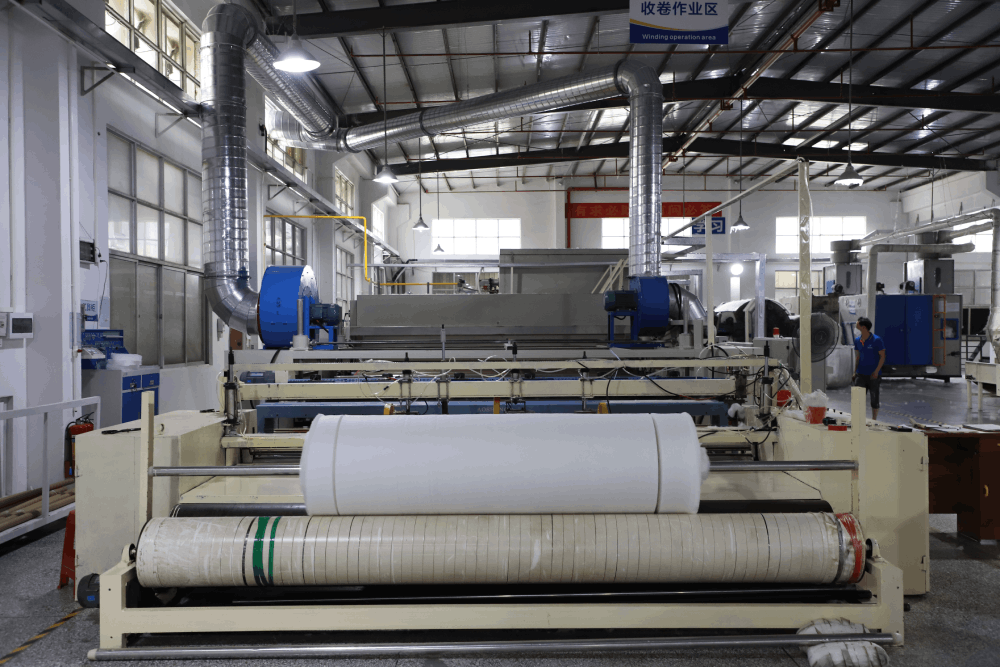
The company has an approximately 26,000㎡ production facility, 15 fully automated needle punched nonwoven production lines, and annual production capacity of more than 10,000 tons, together with OEM/ODM capabilities.
From raw materials to needle punching, lamination, slitting, and finished-product packaging, we can provide systematic production management based on customer requirements.
For overseas importers, wholesalers, distributors, and product manufacturers, we can help confirm specifications including Fiber, GSM, Thickness, Color, Width, Roll Length, Backing, Surface Treatment, and Packaging according to the application.
Our product range includes Composite Needle Punched Nonwoven, PE Backed Needle Punched Felt, Floor Protection Roll, Painter Felt, and other customized needle punched nonwoven products.
At the same time, we focus on raw material consistency. Relevant products are manufactured using 100% Virgin Raw Material, helping long-term buyers establish a more stable foundation for product quality.
If your purchasing needs go beyond a one-time order and you are looking for a Chinese factory that can continuously support product development, sample approval, bulk production, and long-term supply, choosing a genuine needle punched nonwoven felt manufacturer becomes especially important.
What Purchasing Process Can Overseas Buyers Follow When Sourcing Composite Needle Punched Nonwoven from China?
A relatively complete purchasing process can be summarized as:
Find Supplier → Send RFQ → Confirm Specifications → Request Sample → Test Sample → Compare Quotation → Place Order → Bulk Production → QC Inspection → Packaging → Export
Each stage serves a different purpose.
Supplier Search helps determine whether the factory is genuinely suitable for your product requirements.
RFQ helps obtain an accurate cost based on clearly defined specifications.
Specification Confirmation helps prevent different suppliers from quoting products with different structures.
Sample and Testing help verify whether the product meets the actual application requirements.
Order Confirmation helps lock in specifications, quantity, and commercial terms.
Bulk Production and QC help ensure that the approved sample standard can be reproduced consistently.
Packaging and Export determine whether the products can complete international delivery safely and efficiently.
Therefore, overseas buyers should not view sourcing from China as simply “finding a cheap supplier and placing an order.” It should be treated as a complete Supply Chain Management Process.
What Should Overseas Buyers Really Compare When Sourcing Composite Needle Punched Nonwoven from China?
If you are an Importer, Distributor, Wholesaler, or Product Manufacturer, you can focus on five major factors when evaluating Chinese suppliers.
The first is Product Quality—whether the product meets your actual application requirements.
The second is Production Capacity—whether the supplier can meet your order volume and long-term demand.
The third is Batch Consistency—whether the supplier can maintain stable quality between different orders.
The fourth is OEM Capability—whether the manufacturer can develop and customize products according to your requirements.
The fifth is Long-Term Supply—whether the supplier has the manufacturing and delivery capabilities required for continuous supply.
Price remains important, but it should be compared on the basis of consistent product specifications, quality standards, and supply capabilities.
For long-term buyers, the most valuable supplier is usually not the one with the lowest quotation, but the manufacturing partner that makes the entire purchasing process more stable, transparent, and predictable.
Conclusion: When Sourcing from China, You Are Choosing More Than a Product—You Are Choosing a Long-Term Supply Chain Partner
For overseas buyers, sourcing composite needle punched nonwoven from China is not simply a matter of requesting a quotation and placing an order.
From Supplier Search, RFQ, Specification Confirmation, Sample, Testing, to Production, QC, Packaging, and Export, every stage can affect the final purchasing result.
If buyers focus only on the lowest price, they may overlook product consistency, production capabilities, and long-term supply risks.
When choosing a supplier from the perspective of long-term cooperation, buyers should evaluate whether the manufacturer has stable production capabilities, a clear quality control system, OEM customization capabilities, and reliable long-term supply capacity.
For overseas customers who need to purchase composite needle punched nonwoven over the long term, a Chinese supplier worth choosing should not only be able to answer:
“Can you make this product?”
It should also be able to answer:
“Can you make it consistently, customize it to our requirements, and supply it reliably over the long term?”
That is the core value overseas buyers should look for when searching for a needle punched felt factory China.