Why Are Composite Needle Punched Nonwoven Prices So Different? How Can Buyers Judge Whether the Price Matches the Quality?
Composite needle punched nonwoven fabric is widely used in floor protection, automotive interiors, industrial filtration, construction materials, packaging, sound insulation, thermal insulation, and other applications. For importers, wholesalers, brands, and industrial product buyers, one question often comes up during purchasing:
Why can different suppliers quote significantly different prices for composite needle punched nonwoven fabric, even when the products appear to have similar specifications?
Some suppliers offer prices significantly below the market average, while some manufacturers quote considerably more. For buyers making their first purchase, it is easy to assume that “the lowest price means the best cost advantage.”
In reality, the purchasing price of composite needle punched nonwoven is determined by multiple factors. Products with the same stated GSM, width, or even composite material may still differ significantly in raw materials, fiber structure, needle punching density, lamination process, thickness control, quality consistency, and manufacturing methods.
Therefore, for bulk purchasing, the real question is not simply “Who offers the lowest price?” but why are the prices different, and does the price match the actual value of the product?
Why Are Composite Needle Punched Nonwoven Quotes So Different?
Composite needle punched nonwoven is not a completely standardized product.
When a buyer requests “300gsm composite needle punched nonwoven,” this description alone is not enough to determine the final product cost.
The supplier also needs to consider fiber materials, fiber ratios, needle punched structure, actual thickness, width, surface treatment, composite materials, lamination method, roll length, packaging, and order quantity.
For example, two products may both be 300gsm needle punched nonwoven, but one may use standard fibers while the other uses more stable raw materials. One product may require a basic needle punched structure, while another may require higher needle punching density and tighter thickness control.
If additional PE film, TPE, aluminum foil, adhesive layers, or other functional materials are added, the production process and cost will also change.
Therefore, when buyers see different quotations from different suppliers, the first question should not be “Why is your price higher?” but:
Are the two quoted products actually the same?
First Price Factor: Different Raw Materials Create Different Cost Bases
Raw materials are one of the important factors affecting the cost of composite needle punched nonwoven fabric.
Different fiber types can affect the product's strength, softness, abrasion resistance, absorbency, resilience, and service life.
For buyers, even when products have the same product name, it is important to confirm what type of fibers the supplier uses, whether the fiber ratio is stable, and whether the raw materials can remain consistent over long-term production.
If a supplier frequently changes raw materials to reduce costs, differences may occur between the first approved sample and subsequent bulk orders.
For wholesalers and importers who need long-term supply, this type of batch variation can be more important than saving a small amount on the initial purchase price.
Therefore, when choosing a needle punched nonwoven felt manufacturer, buyers should not only ask, “What is your price per square meter?” They should also understand how the supplier controls its raw materials.
Second Price Factor: The Same GSM Does Not Mean the Same Cost or Performance
GSM, or grams per square meter, is one of the most common specifications when purchasing composite needle punched nonwoven.
However, GSM only indicates the weight per unit area. It does not fully describe the product's structure or actual performance.
Two products may both be labeled 300gsm, but their thickness, density, fiber distribution, punching level, and surface condition can still be different.
For buyers, the more important questions are:
Is the actual GSM stable?
Is it consistent from roll to roll?
Is it consistent between different production batches?
Is the thickness stable?
For large-volume purchasing, differences between individual rolls can affect subsequent processing, packaging, sales, and the end customer's experience.
Therefore, when comparing quotations, buyers should not simply assume that “the same 300gsm product with the lower price is the better deal.”
A professional purchasing comparison should be based on the same specifications, the same acceptable tolerances, and the same quality requirements.
Third Price Factor: Needle Punching Density and Fiber Structure Affect Product Value
Needle punching is an important step in the production of needle punched nonwoven felt.
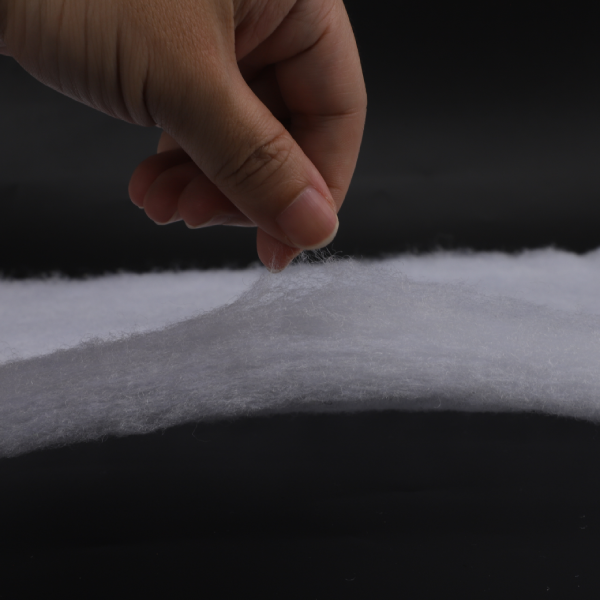
During the needle punching process, fibers become mechanically entangled to form an interconnected structure, giving the material strength, thickness, and dimensional stability.
However, different applications do not necessarily require the same level of needle punching.
If the application requires good abrasion resistance, tensile performance, support, or long-term stability, the material structure generally needs to be adjusted according to its final use.
For example, a floor protection product needs to withstand frequent foot traffic, tool friction, dust, moisture, and other conditions during construction.
For automotive interiors or acoustic materials, flexibility, sound absorption, thickness stability, and processing performance may be more important.
Therefore, needle punching structure is not simply a matter of “the denser, the better.” The appropriate structure should be determined according to the final application.
This is also one reason why quotations from a professional needle punched felt manufacturer may differ from those of a general trading supplier.
Fourth Price Factor: Different Composite Materials Create Different Product Applications
The term “composite needle punched nonwoven” covers a relatively broad category of products.
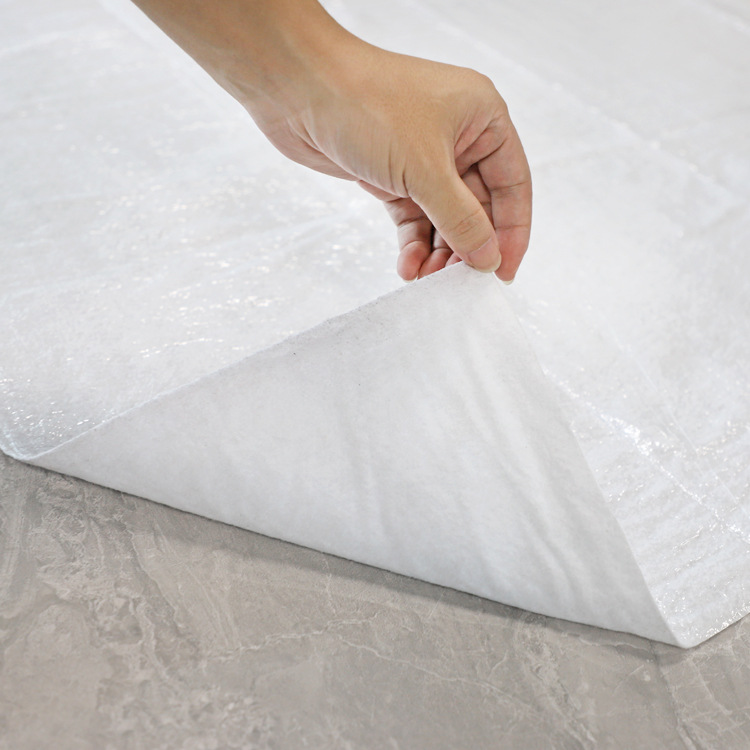
Depending on the final application, needle punched nonwoven can be laminated or combined with different materials, including PE film, TPE, aluminum foil, other nonwoven fabrics, adhesive layers, anti-slip layers, and other functional materials.
Different composite materials have different costs, and their production processes are also different.
For example:
PE composite structures can be used for products that require waterproofing and resistance to water penetration.
TPE and other flexible materials can be used for products requiring higher flexibility, durability, or waterproof performance.
Aluminum foil composite structures can be used in applications requiring certain thermal insulation or reflective properties.
Self-adhesive structures are suitable for protective products that require quick installation.
Since different composite structures provide different performance characteristics, their production costs naturally vary.
Therefore, when comparing quotations, buyers should confirm what material is used for the composite layer, its thickness, the lamination method, and the bonding strength after lamination.
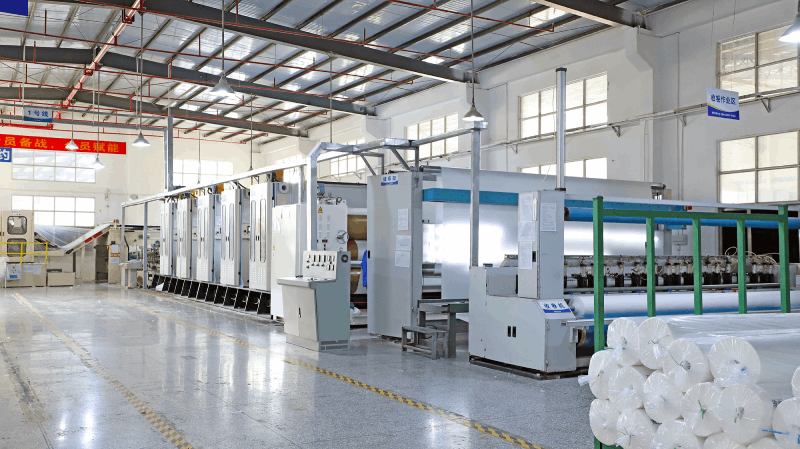
Fifth Price Factor: The Lamination Process Determines Whether the Product Is Truly Durable
For composite needle punched nonwoven fabric, simply combining two materials does not necessarily mean that the composite quality is reliable.
If the bonding between the layers is unstable, the product may develop bubbling, delamination, or edge separation during transportation, cutting, use, or repeated bending.
For products such as floor protection rolls, automotive materials, and industrial products, lamination stability is particularly important.
When comparing quotations, buyers can ask suppliers to clarify:
What composite materials are used?
What is the composite structure?
Has the laminated product undergone stability testing?
Can the lamination strength remain consistent between different production batches?
These questions can help buyers determine whether a low quotation represents genuine manufacturing efficiency or simply reflects reduced investment in materials and quality control.
Sixth Price Factor: Order Quantity Changes the Manufacturer's Cost Structure
The quotation for the same product is usually different when purchasing 100 rolls compared with purchasing a full 40-foot container.
Larger orders allow manufacturers to arrange raw material purchasing, production schedules, equipment utilization, and packaging more efficiently.
For wholesalers, importers, and brand customers, if the purchasing volume is relatively large, obtaining a quotation directly from a nonwoven felt manufacturer China can be more suitable for long-term purchasing than going through multiple trading channels.
However, one point needs to be understood:
A low price does not necessarily mean direct factory supply.
Some suppliers may offer a very low quotation but still rely on multiple outsourced production processes. This can eventually affect delivery time, quality control, and batch consistency.
Therefore, for large-volume purchasing, buyers should compare not only the unit price but also the structure of the supply chain.
Seventh Price Factor: The More Complex the Custom Specifications, the More the Price Can Vary
Many overseas buyers do not purchase standard products.
They may require special widths, specific GSM, special thicknesses, specific colors, customized roll lengths, or special composite structures.
Some customers may also require customized packaging, logo printing, special surface treatments, or self-adhesive structures.
These customization requirements can all affect production costs.
For example, a standard product can enter the regular production schedule directly, while a special specification may require adjustments to equipment parameters, raw material combinations, lamination processes, and packaging.
Therefore, when suppliers offer different quotations, buyers must confirm whether both suppliers are quoting exactly the same customized specifications.
Otherwise, the apparent “price difference” may actually be a “product difference.”
Eighth Price Factor: Quality Control Costs Are Often Hidden in the Quotation
This is an aspect that buyers can easily overlook.
Professional manufacturers need to invest in quality control throughout production, including raw material inspection, GSM testing, thickness inspection, width control, surface inspection, lamination strength testing, and finished product inspection.
For long-term purchasing, what really matters is not whether one roll performs well, but whether dozens or hundreds of tons of subsequent orders can maintain relatively stable quality.
If a supplier reduces quality control to lower costs, the quotation may look attractive, but the buyer also takes on greater quality risks.
Therefore, when evaluating a composite needle punched felt manufacturer, quality control capability should be considered as part of the quotation comparison rather than something unrelated to price.
Ninth Factor: Why Can Cheap Composite Needle Punched Nonwoven Eventually Have a Higher Purchasing Cost?
Purchasing cost should not be calculated based only on the product unit price.
The real purchasing cost can also include transportation, packaging, material loss, rework, quality complaints, returns, replacement purchases, and potential customer losses.
Suppose one supplier offers a slightly lower price per square meter, but the bulk order has unstable thickness, delamination, or dimensional variations. The buyer may then have to bear additional labor, logistics, and after-sales costs.
Especially for wholesalers and importers, if the end customer has already approved the product based on the sample but the bulk order shows significant quality differences, the resulting loss may be much higher than the initial purchasing savings.
Therefore, a more reasonable calculation should be:
Actual Purchasing Value = Product Price + Quality Consistency + Delivery Capability + Service Life + After-Sales Risk + Long-Term Supply Capability
This is one of the important reasons why professional buyers do not simply choose the supplier with the lowest quotation.
Tenth Factor: How Can Buyers Determine Whether a Quotation Is Reasonable?
When you receive quotations from multiple composite needle punched nonwoven suppliers, first standardize all product specifications before comparing prices.
At a minimum, confirm the raw material, GSM, thickness, width, roll length, color, composite material, composite structure, packaging method, order quantity, and quality requirements.
If these specifications are not the same, the quotations from different suppliers are not truly comparable.
For example, Supplier A may offer a lower price but use different raw materials. Supplier B may be slightly more expensive but provide more stable GSM and thickness control. Supplier C may offer the lowest price but use a different composite structure.
In this situation, simply comparing the price per square meter has little meaning.
What buyers should really compare is:
Who can provide more stable products under the same specifications?
Who can maintain consistent quality under the same quality requirements?
Who can continue to deliver according to your purchasing volume?
Who can respond quickly if a product problem occurs?
These questions are more important for long-term purchasing than simply pursuing the lowest price.
Why Should Wholesalers and Importers Pay More Attention to Long-Term Pricing?
For a one-time purchase, price may be one of the most important factors.
However, for wholesalers, importers, and brand customers, long-term supply stability is often more important.
If the supplier has to reconfirm raw materials, specifications, and production methods for every order, the purchasing process can become increasingly complicated.
A mature needle punched felt factory China can help customers establish a stable purchasing system through consistent raw material supply, fixed product specifications, and standardized production processes.
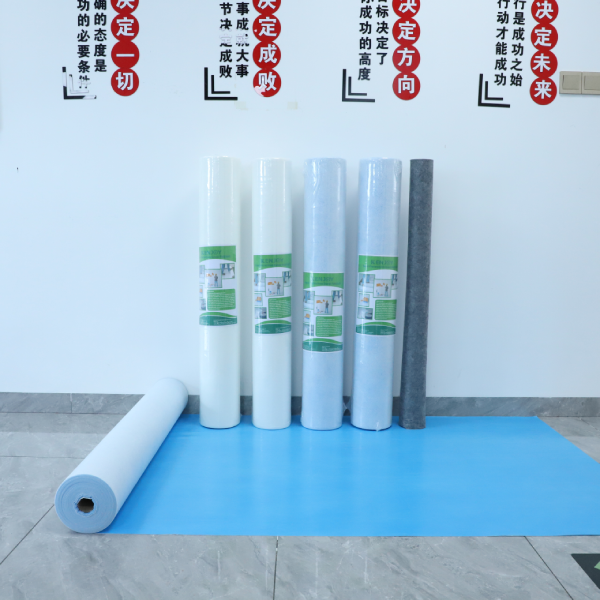
For products that require continuous sales, such as Floor Protection Roll, Painter Felt, industrial felt, and automotive nonwoven materials, stable bulk quality can help buyers reduce repeated testing and after-sales problems.
Therefore, buyers should distinguish between the price of a single order and the price of long-term supply.
A lower price once does not necessarily mean a lower cost in the long run.
Why Is Direct Purchasing from a Professional Manufacturer More Suitable for Long-Term Orders?
For standard products and small-volume orders, purchasing through trading channels can be convenient.
However, for bulk purchasing, OEM/ODM projects, and customized specifications, communicating directly with the manufacturer is generally more beneficial for controlling product specifications.
A professional custom nonwoven felt manufacturer can adjust materials, GSM, thickness, width, color, roll length, and composite structure according to customer requirements.
This can reduce intermediate communication and make it easier for buyers to establish clear product standards.
Especially for long-term purchasing, whether the supplier has its own manufacturing capability can directly affect product consistency and delivery stability.
Why Choose Jinhaocheng as Your Composite Needle Punched Nonwoven Supplier?
HUIZHOU JINHAOCHENG NONWOVENS CO., LTD was established in 2005 and has more than 20 years of experience in nonwoven fabric research, development, and manufacturing. We are a professional needle punched nonwoven felt manufacturer.
Jinhaocheng has a production base of approximately 26,000 square meters and multiple automated needle punching production lines, with an annual production capacity of more than 10,000 tons. We provide stable bulk supply for overseas importers, wholesalers, brands, and industrial customers.
Jinhaocheng not only manufactures standard needle punched nonwoven products but also provides OEM and ODM services.
According to the customer's final application, we can customize raw materials, GSM, thickness, width, color, roll length, and composite structure.
Our products can be used in Floor Protection Roll, Painter Felt, Painter Cover Fleece, automotive interiors, industrial filtration, construction protection, packaging, household applications, and other fields.
The company has ISO9001, ISO13485, ISO14001, ISO45001, IATF16949, OEKO-TEX STANDARD 100, GRS, BSCI, REACH, and RoHS-related systems or certifications, and can provide corresponding quality and compliance support according to different product and target market requirements.
For long-term purchasing customers, we focus not only on the lowest price for a single order, but also on product stability, batch consistency, production capability, and continuous supply capability.
When Purchasing Composite Needle Punched Nonwoven, Should You Choose the Lowest Price or the Right Price?
Different prices for composite needle punched nonwoven do not necessarily mean that one supplier is too expensive, nor does a low-priced product necessarily mean poor quality.
What really needs to be analyzed is whether the raw materials are consistent, whether GSM and thickness are stable, whether the needle punched structure is appropriate, whether the composite layers are firmly bonded, whether the production capacity is reliable, whether quality control is complete, and whether the supplier can maintain the same product standards over the long term.
For buyers, importers, and wholesalers, a reasonable quotation should be based on clear specifications, stable quality, and reliable supply capability.
If your product requires waterproofing, abrasion resistance, absorbency, cushioning, sound insulation, thermal insulation, or other composite functions, choosing a custom nonwoven felt manufacturer that can design the material structure according to the final application can provide greater long-term value than simply looking for the lowest quotation.
As a professional needle punched felt manufacturer and OEM needle punched felt factory, Jinhaocheng can provide corresponding composite needle punched nonwoven solutions according to the customer's market positioning, product specifications, and purchasing volume.
If you are comparing quotations from different composite needle punched nonwoven suppliers, send us your GSM, thickness, width, composite material, roll length, and estimated purchasing quantity. We can provide a more accurate factory quotation based on your specific requirements.