How to Choose a Composite Needle Punched Nonwoven Manufacturer? Key Factors Buyers Should Evaluate for Quality and Supply Capability
For importers, wholesalers, brands, and product manufacturers that require long-term nonwoven material supply, choosing the right Composite Needle Punched Nonwoven Manufacturer is not simply about finding the lowest quotation.
Even when two suppliers offer Composite Needle Punched Nonwoven Fabric with the same stated specifications, their products may differ in GSM consistency, thickness uniformity, fiber structure, lamination strength, abrasion resistance, and batch-to-batch consistency. For companies that require continuous production, the impact of long-term quality fluctuations can be much greater than the difference in the purchase price of a single order.
Therefore, when looking for a needle punched nonwoven felt manufacturer, buyers should evaluate the supplier from multiple perspectives, including product quality, manufacturing capacity, raw material control, composite processing, customization capability, quality management, and delivery performance, rather than focusing only on price.
Why Should Buyers Not Compare Composite Needle Punched Nonwoven Manufacturers by Price Alone?
For standard products, price can be an important part of the purchasing decision. However, for Composite Needle Punched Nonwoven Fabric, the price often reflects differences in material structure and manufacturing standards.
For example, two products may both be specified with the same GSM and thickness, but during actual use, one may have a more uniform fiber structure, more stable bonding strength, and better dimensional stability, while the other may show significant variations between different production batches.
If the material is ultimately used for floor protection, automotive interiors, industrial filtration, packaging, or other functional products, fluctuations in material quality may directly affect the quality of the finished product.
Therefore, for long-term purchasing, buyers should compare:
Material cost + Product performance + Batch consistency + Manufacturing capacity + Lead time + After-sales support
rather than simply comparing the purchase price per kilogram or per roll.
For buyers, finding a needle punched felt manufacturer that can consistently supply the same specifications over the long term is usually more important than finding the lowest quotation for one order.
Factor 1: Is the Raw Material Supply Consistent?
The final performance of Composite Needle Punched Nonwoven Fabric is closely related to the fiber materials used.
Different polyester fibers, polypropylene fibers, functional fibers, and other composite materials can vary in strength, softness, abrasion resistance, absorption, and processing performance.
If a supplier frequently changes raw materials in order to reduce costs, different production batches may show variations in color, hand feel, thickness, strength, or downstream processing performance.
Therefore, buyers should ask what types of raw materials the manufacturer uses, whether the material supply is stable, and whether the factory has corresponding incoming material inspection and production control procedures.
For long-term purchasing, consistent raw material supply is the foundation of consistent finished-product quality.
Especially for OEM orders, once a customer has tested and approved a sample specification, subsequent bulk production should maintain the same material structure and performance as closely as possible.
Factor 2: Are GSM and Thickness Truly Consistent?
GSM, or grams per square meter, is one of the most common specifications when purchasing nonwoven fabric.
However, for Composite Needle Punched Nonwoven Fabric, it is not enough to look only at the GSM stated on the supplier's quotation.
Buyers should pay attention to whether GSM remains uniform during production, whether thickness is stable, and whether significant variations occur between different production batches.
For floor protection applications, GSM and thickness can affect absorption, cushioning, abrasion resistance, and overall coverage performance. For automotive, filtration, or industrial materials, they may also influence product structure and downstream processing performance.
Therefore, during purchasing, it is recommended to clearly define GSM, thickness, and acceptable specification tolerances in the product requirements instead of using vague descriptions such as “approximately this weight.”
For long-term orders, buyers should also evaluate consistency between different production batches rather than checking only whether the first sample meets the requirements.
Factor 3: Are the Punching Density and Fiber Structure Uniform?
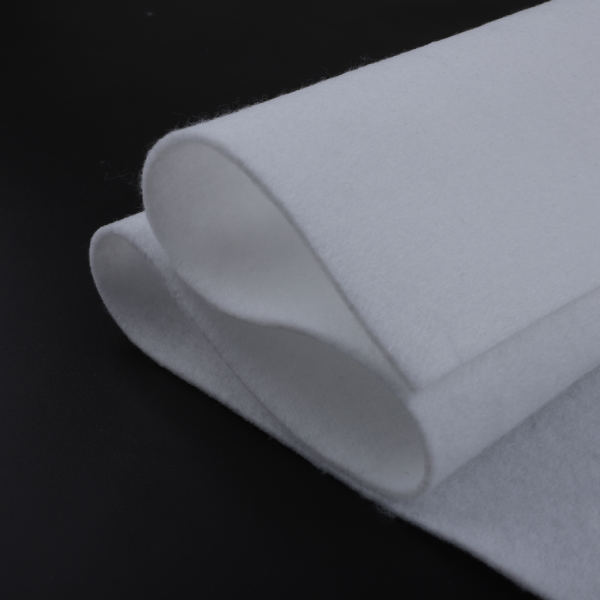
Unlike conventional films or woven materials, the internal performance of needle punched nonwoven fabric is closely related to its interlocked fiber structure.
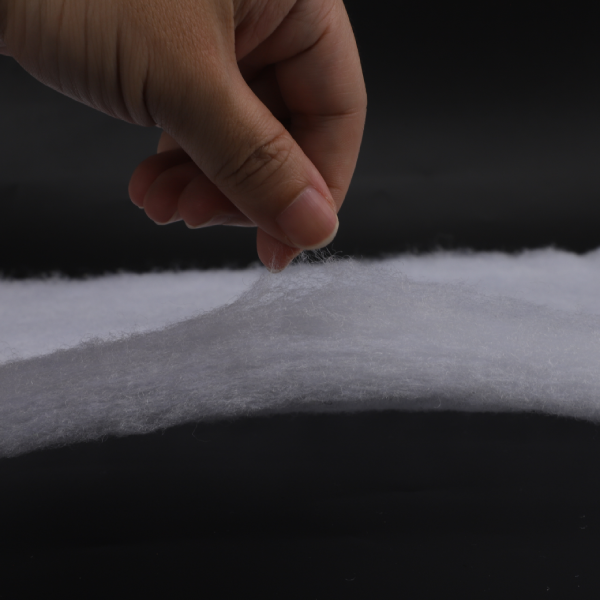
During the needle punching process, fibers are repeatedly penetrated and entangled by needles, creating a nonwoven material with a specific thickness and three-dimensional structure.
Therefore, punching density, fiber distribution, and web uniformity can all affect the structural stability of the finished product.
Buyers can initially evaluate the material by checking whether the surface is uniform, whether thickness is consistent, and whether there are obvious thin areas, hard spots, or uneven fiber distribution.
If the product requires subsequent slitting, die cutting, sewing, lamination, or other processing, a uniform and stable fiber structure is also important.
This is why when choosing a professional needle punched felt factory China, buyers should not rely only on product photos but should also understand the manufacturer's actual production equipment and process control capabilities.
Factor 4: Is the Bonding Strength Between Composite Layers Reliable?
For Composite Needle Punched Nonwoven Fabric, this is one of the key factors buyers should evaluate.
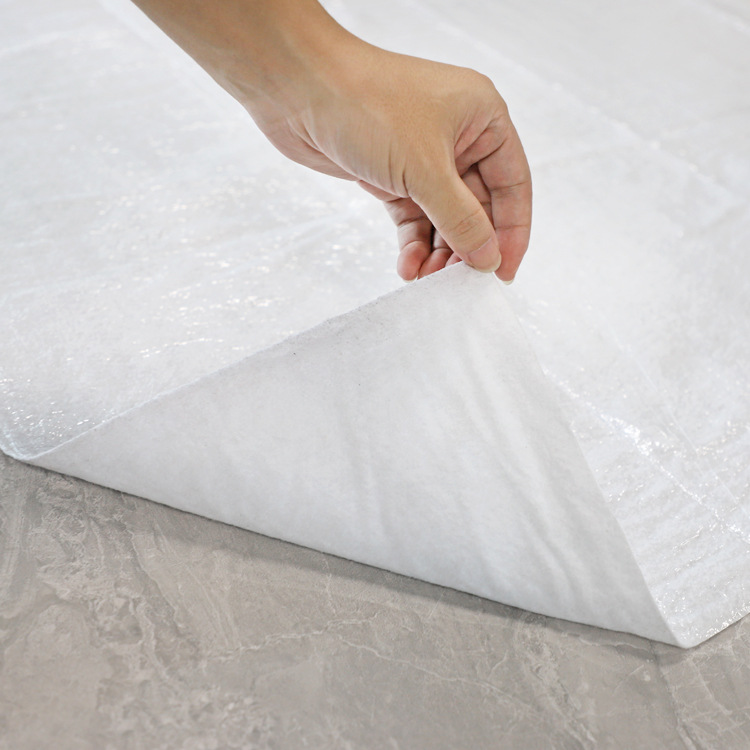
When needle punched nonwoven fabric is laminated with PE, TPE, aluminum foil, other nonwoven fabrics, or functional films, the bonding stability between different materials can directly affect the service life of the finished product.
If the bonding strength is insufficient, bubbling, delamination, or edge separation may occur during transportation, cutting, folding, installation, or long-term use.
Therefore, when evaluating composite materials, buyers should not only check whether the surface looks smooth. They should also consider:
Lamination method, lamination temperature, material compatibility, interlayer bonding strength, and long-term structural stability.
For waterproof floor protection products, the bonding between the waterproof backing and the needle punched layer is particularly important.
For industrial, automotive, and packaging products, buyers should also verify whether the composite structure can withstand the mechanical stress generated during downstream processing and actual use.
Factor 5: Does the Actual Performance Match the Final Application?
A common mistake when selecting Composite Needle Punched Nonwoven Fabric is to focus on the material itself while overlooking the final operating environment.
Different applications require different combinations of performance characteristics.
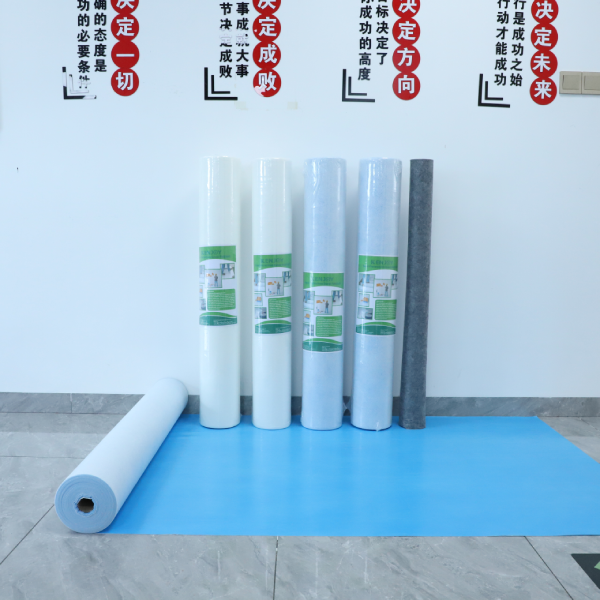
For example, Floor Protection Roll products generally require abrasion resistance, absorption, cushioning, waterproofing, and anti-slip performance. Automotive materials may place greater emphasis on sound insulation, acoustic performance, cushioning, dimensional stability, and durability. Industrial filtration products may focus more on air permeability, fiber structure, and filtration performance.
Therefore, buyers should first identify what problem the final product needs to solve and then determine the appropriate material structure.
For example:
If the main requirement is waterproofing, a needle punched layer laminated with PE or TPE backing can be considered.
If the main requirement is thermal insulation, aluminum foil or other insulation structures may be considered according to the application.
If the main requirement is cushioning and protection, the GSM, thickness, and fiber structure of the needle punched layer should be carefully adjusted.
A truly professional supplier should be able to help customers determine the appropriate material solution based on the final application rather than simply telling customers what standard products are available.
Factor 6: Does the Manufacturer Have Genuine OEM/ODM Capability?
For wholesalers, brands, and product manufacturers, standard products may not always meet long-term market requirements.
Many buyers encounter situations such as:
The required GSM is not available.
The required width cannot be produced.
PE or TPE lamination has to be outsourced.
Special colors or packaging cannot be supported.
The material structure cannot be adjusted when the product is upgraded.
These are important factors when evaluating whether a custom nonwoven felt manufacturer has genuine customization capability.
True OEM/ODM capability is not simply about changing dimensions. It should include the ability to adjust fiber materials, GSM, thickness, width, color, composite structure, surface treatment, roll length, and packaging according to the customer's application requirements.
For companies with long-term product development plans, this customization capability allows the material supplier to become part of the product development process rather than simply serving as a material purchasing channel.
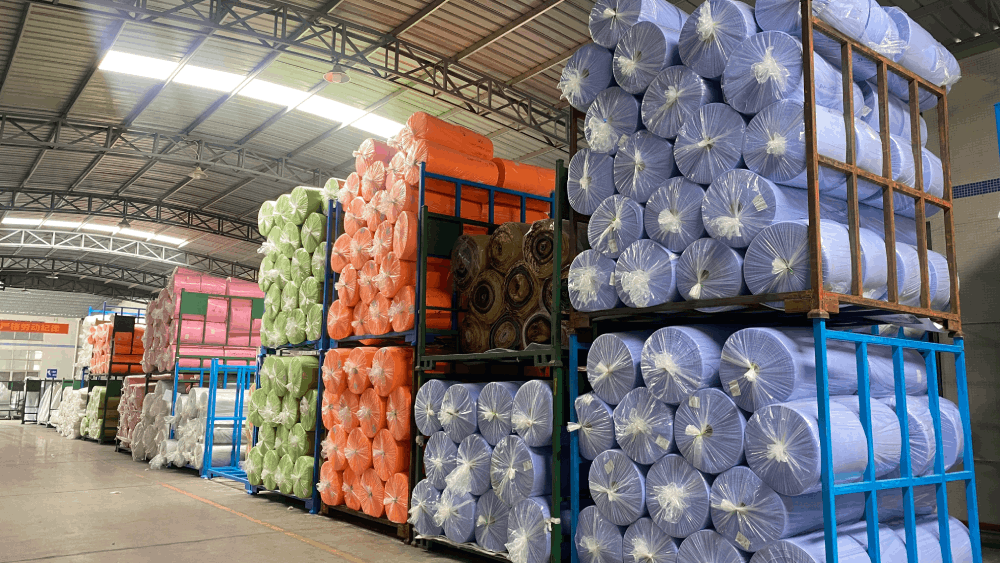
Factor 7: Does the Manufacturing Scale and Delivery Capability Match Your Purchasing Volume?
A supplier's ability to produce your sample does not necessarily mean that it can consistently fulfill long-term bulk orders.
When selecting a manufacturer, buyers should also understand the number of production lines, production capacity, equipment, monthly output, and production scheduling for different products.
This is especially important for wholesalers and importers. When order volumes increase from hundreds of kilograms to several tons or more, the supplier's ability to maintain stable lead times becomes increasingly important.
If manufacturing capacity is insufficient, even a high-quality product may fail to meet market demand because of delayed delivery.
Therefore, before establishing a cooperation relationship, buyers can confirm:
Standard production lead time, customized product lead time, peak-season capacity, MOQ, and continuous supply capability for bulk orders.
For long-term cooperation, stable production capacity is itself an important part of supplier value.
Factor 8: Is the Quality Control System Complete?
Consistent product quality should not depend only on final manual inspection. Quality control should run throughout the entire manufacturing process.
From raw material receiving to opening, carding, web forming, needle punching, lamination, slitting, winding, and final packaging, every stage can influence product performance.
Therefore, buyers can ask whether the manufacturer has clearly defined quality control procedures and whether the factory can inspect GSM, thickness, appearance, dimensions, strength, and lamination quality as required.
For long-term purchasing projects, buyers should also consider whether the manufacturer has batch traceability.
If a quality issue occurs, the ability to quickly identify the production batch, raw materials, and manufacturing process is another important indicator of supplier professionalism.
For B2B purchasing, quality control capability is often more important than attractive product photos.
Factor 9: Are the Testing Reports and Certifications Suitable for the Target Market?
If your products are entering European, North American, or other overseas markets, it is important to confirm whether the material can be supported by relevant testing reports and compliance documentation.
Different products and industries have different requirements.
Depending on the product and project requirements, documentation may include OEKO-TEX STANDARD 100, REACH, RoHS, and MSDS, while specialized products may also require flame-retardant, environmental, or other performance testing.
Buyers should not simply pursue “more certificates.” Instead, they should determine:
Is this certification relevant to my product?
Does it meet the requirements of my target market?
Can it support my end customer's supplier or product audit?
For export-oriented products, confirming relevant testing requirements during the purchasing stage can reduce the risk of having to redevelop or replace materials later.
Factor 10: Can the Manufacturer Keep Bulk Production Consistent with the Approved Sample?
This is an issue that many buyers overlook.
A supplier may provide an excellent sample, but the real test of a long-term partnership is the quality of bulk production.
Therefore, buyers should not evaluate a supplier based on only one sample test.
A more practical approach is to:
First confirm the material specifications.
Then conduct sample testing.
Confirm whether the product meets actual application requirements.
Place a small trial order.
Verify the consistency between the bulk order and the approved sample.
Then gradually increase the purchasing volume.
Key indicators should include GSM, thickness, color, surface structure, lamination strength, width, and packaging.
For long-term orders, buyers can also establish clear technical specifications with the supplier so that every production batch has a defined quality reference.
Passing the sample test is only the beginning. Consistent bulk quality is the foundation of a long-term supply relationship.
What Are the Advantages of Buying Composite Needle Punched Nonwoven Directly from a Factory?
For standard products and small-volume purchases, trading channels may offer certain flexibility.
However, for customers requiring customized products, bulk purchasing, and long-term stable supply, working directly with the manufacturer generally makes product specification control and production communication easier.
Buying directly from a factory can reduce supply-chain steps and allow customers to communicate more directly about raw materials, manufacturing processes, quality control, and delivery capability.
Especially for customers who frequently need to adjust product specifications, direct communication with the manufacturer can make sample development and product optimization more efficient.
Therefore, if your purchasing requirements involve long-term supply, OEM customization, bulk orders, or special specifications, working directly with a nonwoven felt manufacturer China is worth considering.
Why Is Jinhaocheng a Suitable Long-Term Supplier of Composite Needle Punched Nonwoven Fabric?
HUIZHOU JINHAOCHENG NONWOVENS CO., LTD was established in 2005 and has more than 20 years of experience in the development and manufacturing of nonwoven materials. The company is a professional needle punched nonwoven felt manufacturer.
With a production facility of approximately 26,000 square meters and multiple automated needle punching production lines, the company has an annual production capacity of more than 10,000 tons and provides stable nonwoven material supply for overseas importers, wholesalers, brands, and industrial customers.
The company not only manufactures standard needle punched nonwoven fabric but also provides OEM/ODM customization. Materials, GSM, thickness, width, color, roll length, and composite structures can be adjusted according to customer application requirements.
For different applications, we provide Floor Protection Roll, Painter Felt, Needle Punched Felt, and Composite Needle Punched Nonwoven Fabric products and customized solutions. These products can be used in floor protection, automotive, industrial filtration, construction, packaging, household, and other applications.
In terms of quality and compliance, the company has relevant certifications and management systems including ISO9001, ISO13485, ISO14001, ISO45001, IATF16949, OEKO-TEX STANDARD 100, GRS, BSCI, REACH, and RoHS, providing appropriate product support for customers in different markets.
For long-term customers, we focus on product quality stability, batch consistency, manufacturing capacity, and continuous supply capability rather than simply the price of a single order.
What Should Buyers Really Compare When Choosing a Composite Needle Punched Nonwoven Manufacturer?
For buyers, choosing a supplier is not about finding the “cheapest manufacturer,” but about finding the manufacturer that best fits their product and supply-chain requirements.
A reliable Composite Needle Punched Nonwoven Manufacturer for long-term cooperation should have stable raw materials, reliable needle punching and lamination processes, consistent GSM and thickness, good batch-to-batch consistency, effective quality control, flexible OEM/ODM capabilities, and reliable delivery performance.
If your product has specific requirements for waterproofing, abrasion resistance, absorption, cushioning, thermal insulation, sound insulation, or other functions, the supplier's ability to design the material structure according to the final application should also be carefully evaluated.
For importers, wholesalers, and brand manufacturers, choosing a genuine needle punched felt manufacturer with real manufacturing and customization capabilities is not simply about purchasing material. It is about building a stable long-term supply chain.
If you are looking for a needle punched nonwoven felt manufacturer, needle punched felt manufacturer, needle punched felt factory China, nonwoven felt manufacturer China, custom nonwoven felt manufacturer, OEM needle punched felt factory, or industrial felt factory, contact us with your application, specifications, and target performance requirements to discuss samples and customized material solutions.