How to Choose Between a Nonwoven Factory and a Trading Company? The Best Purchasing Strategy for Long-Term Buyers
For importers, wholesalers, brand owners, and industrial material buyers, finding a reliable nonwoven supplier is often more important than simply comparing prices.
One of the most common questions buyers ask is:
Should I purchase directly from a nonwoven factory, or work with a trading company?
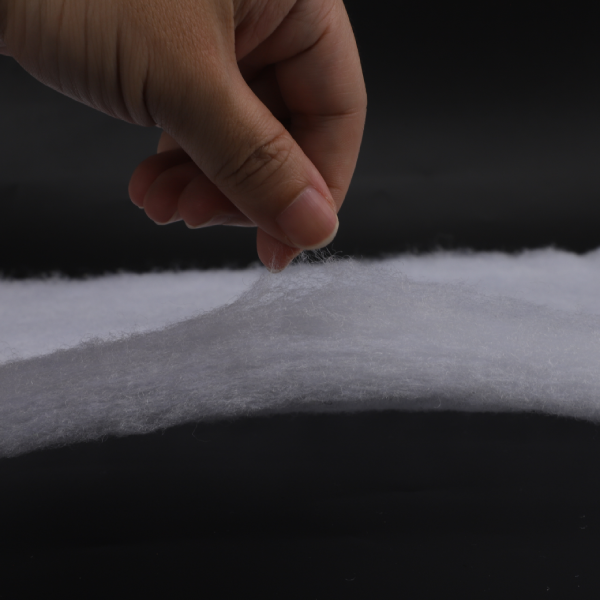
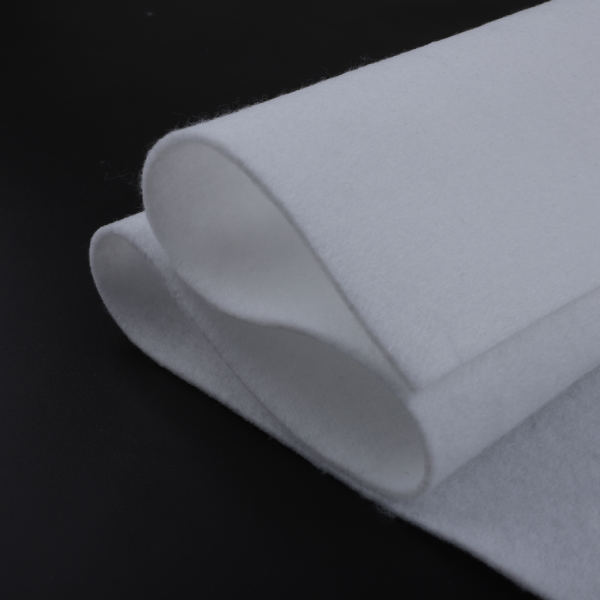
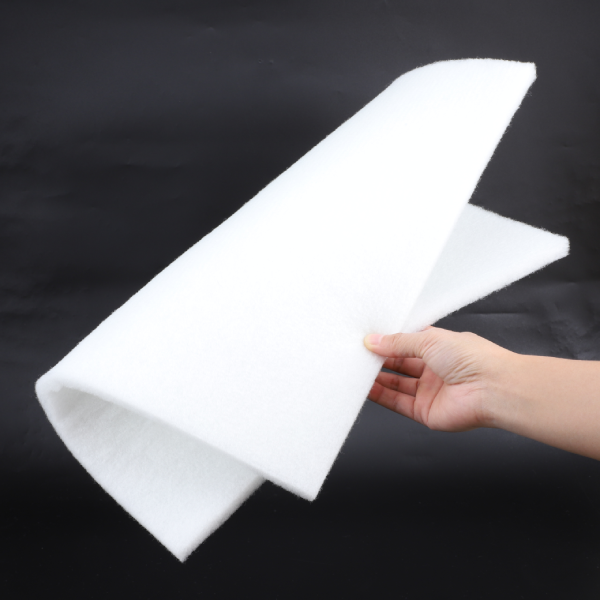
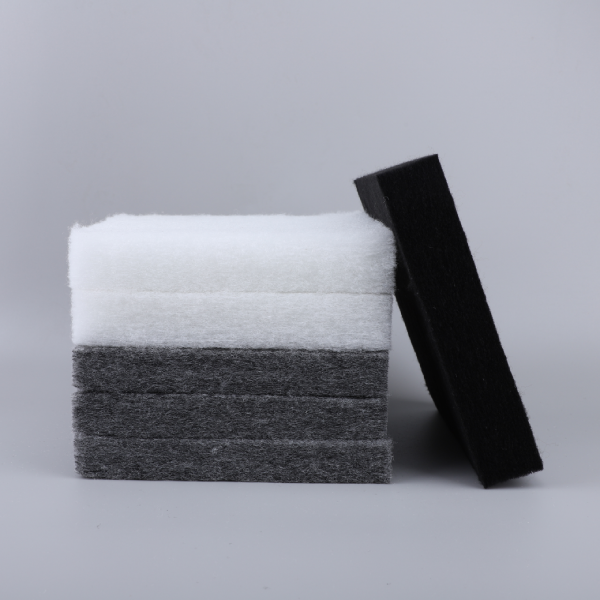
In reality, both sourcing models have their own advantages. Trading companies are often more flexible for standard products, small orders, and multi-category purchasing. However, for OEM projects, customized products, bulk production, and long-term supply, working directly with a needle punched nonwoven felt manufacturer usually provides better production control, more consistent quality, and stronger supply chain stability.
This article objectively compares Factory Direct and Trading Company sourcing from eight important perspectives: price, production control, customization, lead time, quality control, MOQ, after-sales support, and long-term supply.
What Is the Real Difference Between a Factory and a Trading Company?
Many buyers assume that the only difference is price, but the biggest difference is actually how closely you can participate in the manufacturing process.
A trading company mainly integrates supply chain resources, helping customers locate suitable factories while providing communication, purchasing, export, and logistics services. This model is especially convenient when sourcing multiple product categories or purchasing relatively small quantities.
A factory, on the other hand, is directly responsible for raw material selection, needle punching, lamination, slitting, packaging, and quality control. For products requiring OEM needle punched nonwoven, composite material development, or stable long-term production, a factory can manage every stage of manufacturing more efficiently.
Neither model is universally better. The right choice depends on your purchasing goals.
1. Price Advantage — Why Factory Direct Is Often Better for Long-Term Purchasing
Price is always important, but the total purchasing cost matters much more than the unit price.
When working directly with a needle punched nonwoven felt manufacturer, buyers can optimize specifications such as GSM, thickness, width, roll length, and packaging to reduce overall production costs. Because communication is more direct, design adjustments can usually be discussed during product development rather than after production.
Trading companies are often more suitable for small-volume and multi-category purchasing because they combine products from different manufacturers into one shipment.
For long-term projects, however, buyers should compare the overall supply cost instead of focusing only on quotation prices.
2. Production Control — Why Factories Deliver Better Specification Consistency
The same product name does not always mean the same quality.
For example, two suppliers may both offer composite needle punched nonwoven, yet use different fibers, needle punching densities, waterproof backings, or lamination processes. The final performance can vary significantly.
When purchasing directly from a factory, buyers can confirm complete specifications including:
Fiber, GSM, Thickness, Width, Roll Length, Backing, Color, and Packaging.
Once these specifications are approved, future production can follow the same technical standard, reducing variation between different batches.
For brands developing their own products, this consistency is extremely valuable.
3. OEM Customization — Which Projects Should Work Directly with a Factory?
If you're purchasing standard stock products, a trading company can often provide a fast solution.
However, projects involving OEM development usually require direct factory participation, including:
Composite needle punched nonwoven
PE or TPE waterproof backing
PVC, EVA, or sponge lamination
Custom widths and roll lengths
Brand colors
Logo printing
Customized packaging
A professional custom nonwoven felt manufacturer can participate from material design through mass production instead of simply offering existing catalog products.
For brand owners, OEM capability creates valuable product differentiation.
4. Lead Time — Is a Trading Company Always Faster?
Not necessarily.
For standard products with available inventory, trading companies may offer shorter delivery times.
For customized products, however, the actual lead time depends mainly on production scheduling rather than the sales channel.
Working directly with a factory allows buyers to clearly understand:
Sample development
Production schedule
Packaging preparation
Quality inspection
Shipment planning
This transparency helps reduce delays caused by multiple communication layers and makes production scheduling more predictable for OEM projects.
5. Quality Control — Why Batch Consistency Is More Important Than One Good Shipment
Many purchasing problems appear not in the first order, but in the second or third production batch.
The real value of long-term cooperation is batch consistency.
A factory can establish fixed production standards covering:
GSM consistency
Thickness tolerance
Color consistency
Lamination strength
Roll length accuracy
Packaging standards
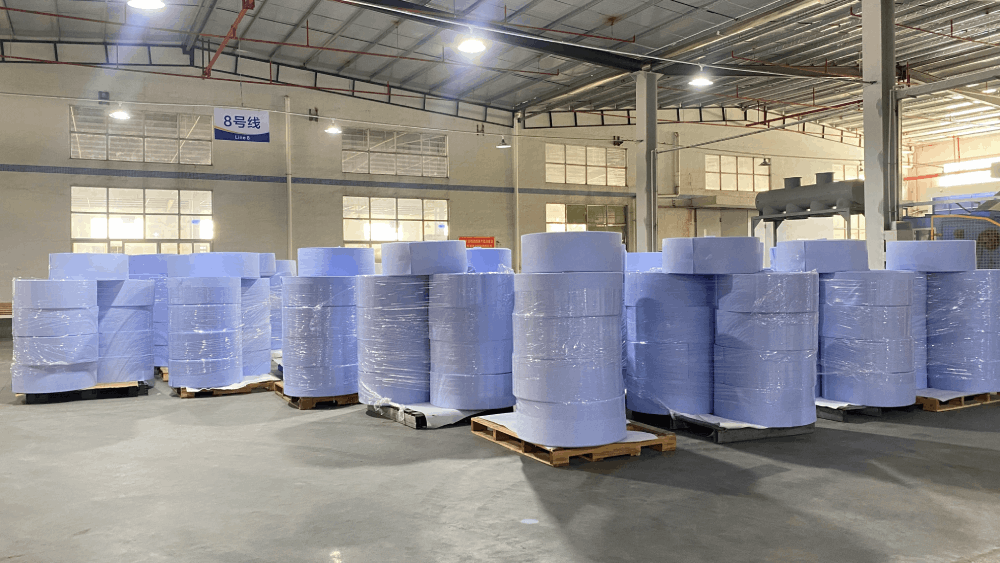
Each production batch can follow the same quality control procedure, creating more reliable products for importers and private-label brands.
6. MOQ — Why Are Factory and Trading Company Minimum Orders Different?
Minimum order quantity is another common purchasing concern.
Because trading companies combine orders from different customers, they may sometimes provide lower MOQs for standard products.
Factories usually determine MOQ according to the manufacturing process.
For example, pure needle punched nonwoven is commonly produced by weight, while laminated products combining PE, PVC, EVA, or other materials are typically scheduled by square meters.
This is not simply a restriction on small orders. It reflects the production efficiency required for different manufacturing processes.
For long-term buyers, a stable MOQ often contributes to more consistent quality and production planning.
7. After-Sales Support — Who Is Better for Continuous Product Improvement?
Trading companies usually provide comprehensive purchasing services for standard products.
Factories, however, are often better suited for ongoing product optimization.
Typical adjustments include:
Changing GSM
Optimizing thickness
Selecting different backing materials
Improving laminated structures
Upgrading packaging solutions
As markets evolve, products often require continuous improvement. Direct factory cooperation makes sample modification and technical development much more efficient for OEM customers.
8. Long-Term Supply — Why Manufacturing Capacity Creates Greater Value
Purchasing is more than completing a single transaction. It is about building a stable supply chain.
A professional needle punched felt factory in China usually controls the complete manufacturing process from raw materials through finished products, making long-term supply more reliable.
When specifications change or purchasing volumes increase, a manufacturing factory is generally better equipped to support product upgrades and production expansion.
For long-term cooperation, manufacturing capability, specification consistency, OEM responsiveness, and continuous supply become much more important than one-time pricing.
Factory Direct vs Trading Company — Which One Fits Your Business?
There is no universal sourcing model for every project.
Purchasing Requirement | Recommended Partner |
Standard products and small orders | Trading Company |
Multiple product categories | Trading Company |
OEM product development | Factory |
Long-term purchasing | Factory |
Large-volume production | Factory |
Private label products | Factory |
Professional sourcing is not about choosing one model over the other. It is about selecting the right partner for each stage of your business.
Why More Overseas Buyers Are Choosing Needle Punched Nonwoven Manufacturers
As private labeling and OEM demand continue to grow, more international buyers prefer building direct relationships with manufacturers.
In industries including floor protection, automotive materials, filtration, sound insulation, thermal insulation, and industrial protection, product consistency and long-term supply stability are often more valuable than short-term purchasing savings.
As a professional needle punched nonwoven felt manufacturer, Jinhaocheng has over 20 years of manufacturing experience, a 26,000㎡ production facility, and 15 automated needle punching production lines.
We provide integrated OEM and ODM solutions covering needle punched nonwoven production, composite lamination, slitting, packaging, and customized manufacturing.
Whether your project requires Floor Protection Roll, Composite Needle Punched Felt, Painter Felt, or other industrial nonwoven products, we can customize Fiber, GSM, Thickness, Width, Backing, Color, and Packaging according to your specifications.
Conclusion — Choose the Partner That Matches Your Long-Term Strategy
Factories and trading companies are not competitors. They serve different purchasing needs.
For standard products, small quantities, and multi-category sourcing, trading companies offer valuable flexibility.
For OEM development, private labeling, large-volume manufacturing, and long-term purchasing, working directly with a needle punched felt manufacturer usually provides stronger product development, better quality control, and more reliable supply stability.
For professional buyers, the most important comparison is not simply price—it is manufacturing capability, customization, delivery reliability, and long-term partnership value.