Composite Needle Punched Nonwoven MOQ: How Is Minimum Order Quantity Calculated?
For importers, wholesalers, brand customers, and OEM buyers purchasing Composite Needle Punched Nonwoven, one very direct question often comes up during the first inquiry:
What is the MOQ?
Many buyers want a fixed number.
For example:
“How many tons is the MOQ?”
or:
“Can I order 500 rolls?”
However, for customized composite needle punched nonwoven products, MOQ is not necessarily one fixed number that applies to every product.
Different production methods, material consumption, equipment arrangements, and composite structures can lead to different ways of calculating MOQ.
Some products may be better planned by weight, while others may be more suitable to calculate by area, rolls, or production batches.
Therefore, the more useful question for buyers is not:
“What is your MOQ?”
but:
“How is the MOQ calculated for my product?”
Understanding how MOQ is determined can help buyers plan order quantities more accurately and reduce unnecessary communication caused by an unsuitable order size.
What Is the MOQ for Composite Needle Punched Nonwoven?
MOQ (Minimum Order Quantity) refers to the minimum order quantity that a manufacturer can accept and produce under normal production conditions.
For standard products in stock, MOQ can sometimes be relatively simple.
However, for Composite Needle Punched Nonwoven products that require needling, lamination, or other processing, MOQ usually needs to be determined according to the actual production conditions.
This is because the manufacturer is not simply supplying an existing stock product. The factory needs to arrange:
Material Preparation
Production Batch
Machine Setup
Composite Processing
and subsequent production according to the customer's requirements.
Therefore, the essence of MOQ is not that “the factory does not accept small orders,” but:
Whether the order quantity is sufficient to support an efficient production run.
Once buyers understand this, it becomes easier to understand why the MOQ of an OEM product may differ from that of a standard product.
Why Is There No Single MOQ for All Composite Needle Punched Nonwoven Products?
Different composite needle punched nonwoven products may have different production conditions.
For example, one product may have a relatively simple structure, while another may require additional production processes.
If the material structure, lamination method, and final specifications are different, the production arrangement may also be different.
Therefore, MOQ needs to be determined according to the specific product.
When sending an inquiry, buyers should ideally provide at least:
Product Type
Required Structure
Order Quantity
Supply Format
This allows the manufacturer to evaluate a reasonable production batch for the specific order.
Therefore, when a supplier gives an MOQ, buyers should not automatically assume:
“All Composite Needle Punched Nonwoven products must meet this quantity.”
In many cases, the quoted MOQ simply represents the minimum efficient production quantity under a specific set of production conditions.
Why Does the Production Batch Affect MOQ?
Production Batch is one of the important factors that determines MOQ.
When a manufacturer starts production, the equipment and production process need to operate within a reasonable batch size.
If the order quantity is too small, fixed work such as machine preparation, production adjustment, and material arrangement may still be required.
Therefore, even if the final customer needs only a small quantity, the complete production process cannot necessarily operate at the same efficiency as a full production batch.
This is particularly obvious for OEM customers.
OEM products are usually not taken directly from existing stock. They need to be scheduled according to the customer's confirmed product requirements.
Therefore, MOQ is closely related to:
Production Efficiency
Once buyers understand this relationship, it becomes easier to understand why the MOQ for OEM products may differ from standard products.
How Does Material Consumption Affect MOQ?
Producing a composite needle punched nonwoven product requires the actual consumption of different materials.
For example:
Needle Punched Felt
Backing Material
Lamination Material
as well as other materials required by the product structure.
These materials need to be prepared according to the final product construction.
When a product requires a specific combination of materials, the manufacturer needs to prepare the corresponding production materials according to the order quantity.
Therefore, Material Consumption is also a practical factor in MOQ calculation.
A smaller order quantity does not necessarily mean that material preparation and production setup can be reduced proportionally.
This is one reason why some customized products have a higher MOQ than standard products.
Why Does Machine Setup Become Part of OEM MOQ?
For customized products, production cannot simply be completed by turning on a machine.
Before formal production begins, the manufacturer may need to carry out the necessary Machine Setup.
This can include adjusting production conditions according to product requirements, preparing materials, and confirming relevant processing conditions.
If an order is very small but still requires the complete equipment preparation process, setup time can represent a relatively large proportion of the total production effort.
Therefore, from the manufacturer's perspective, MOQ also needs to consider:
Setup Time
Production Time
and:
Expected Production Output
This is why some OEM products cannot simply be produced according to the exact final quantity requested by the customer.
Why Can Lamination Quantity Affect the MOQ of Composite Products?
For Composite Needle Punched Nonwoven products that require lamination, production planning needs to consider the additional composite processing stage.
If the product contains:
Needle Punched Felt
Backing Material
or other composite layers, the final production plan needs to account for the complete Composite Structure.
Lamination processing generally needs to be planned according to a reasonable production quantity.
If the order quantity is too small, the production run may not make full use of one complete manufacturing setup.
Therefore, Lamination Quantity can become one factor affecting MOQ.
For buyers, this does not mean that all composite products have exactly the same lamination MOQ.
The actual quantity still needs to be confirmed according to the product structure and production conditions.
Why Can the MOQ of Standard Products and OEM Products Be Different?
This is a common situation for buyers.
Standard products usually have established production specifications.
The manufacturer can arrange production according to these existing specifications.
OEM products, however, may require production based on the customer's specified:
Material Structure
Product Format
and other customized requirements.
Therefore, two products in the same general category may still have different MOQs.
For example:
Standard Product
may be suitable for smaller quantities of regular purchasing.
While:
OEM Composite Product
may require a minimum batch that is more suitable for efficient production planning.
Therefore, buyers should not compare suppliers based only on their MOQ number.
A more useful question is:
“What production conditions does this MOQ correspond to?”
Are Trial Orders and MOQ the Same Thing?
No.
MOQ is the minimum production order quantity that a manufacturer can normally accept.
A Trial Order focuses more on the first actual production or purchasing order.
Some OEM customers may want to place a smaller first order to verify the product before regular bulk purchasing begins.
In this case, the buyer needs to confirm separately whether a trial order below the regular MOQ can be arranged.
Therefore:
MOQ
and:
Trial Order Quantity
should not automatically be treated as the same thing.
Buyers can directly ask the supplier:
“Can you support a trial order below the regular MOQ?”
Whether this is possible depends on the specific product and production conditions.
Why Is a Bulk Order More Likely to Meet a Reasonable MOQ?
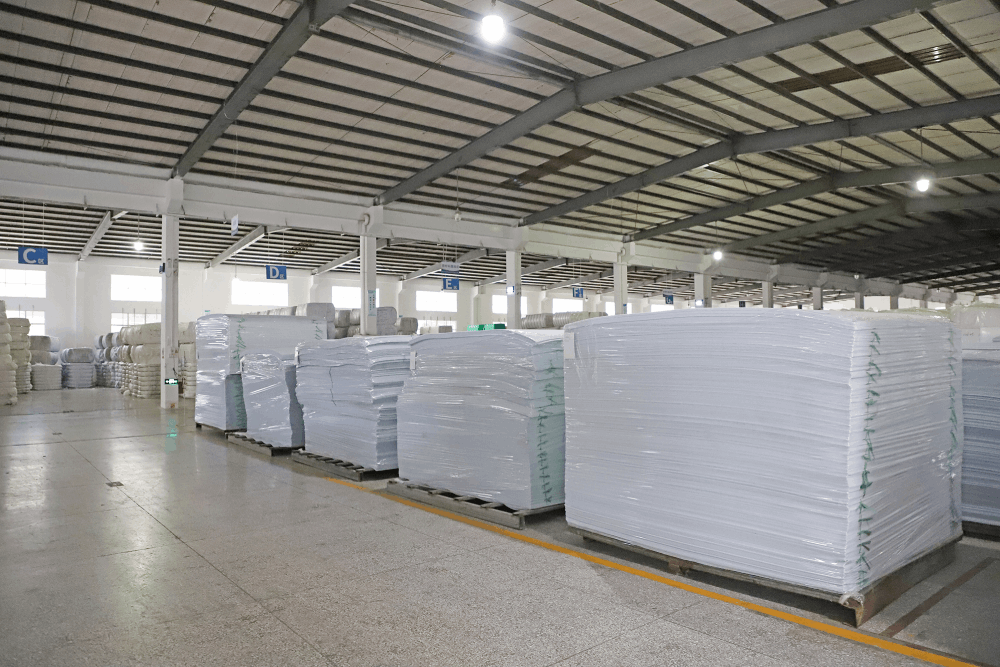
For a Bulk Order, once the quantity reaches a certain level, material preparation and equipment scheduling can usually be organized into a more efficient continuous production run.
This is why long-term purchasing projects often use relatively stable order quantities.
For suppliers, stable production volumes can make:
Material Preparation
Production Scheduling
Equipment Utilization
and overall production planning
more manageable.
Therefore, if a buyer expects to develop a long-term order relationship, it can be useful to tell the manufacturer:
Expected Monthly Quantity
or:
Annual Purchasing Volume
This allows the manufacturer to discuss MOQ from the perspective of long-term supply rather than only one individual order quantity.
Can Buyers Directly Ask a Supplier to Lower the MOQ?
Buyers can certainly ask, but they should not automatically assume:
“Lower MOQ = Better Supplier.”
MOQ is closely related to production conditions.
If an order quantity is significantly lower than the factory's normal production batch, the supplier may need to reorganize production scheduling.
Therefore, MOQ discussions are best based on the specific product.
For example, buyers can tell the supplier:
Current Trial Quantity
Expected Future Quantity
Regular Bulk Quantity
This allows the manufacturer to evaluate more accurately:
Whether the current trial order can be accepted.
Whether future bulk orders can meet a normal production batch.
Whether long-term orders can be arranged at a more stable quantity.
How Should MOQ Negotiation Be Handled?
For OEM purchasing, MOQ does not necessarily have to be treated as one single number.
Buyers can communicate with suppliers according to different stages of the purchasing process.
For example:
Trial Order
for the initial product verification stage.
Initial Bulk Order
for the early sales stage.
Regular Bulk Order
for long-term purchasing.
This allows MOQ to become more than just a “minimum quantity.” It can become part of a purchasing structure that better matches the actual business plan.
For importers and brand customers, this communication method is often more effective than simply saying:
“Please reduce your MOQ.”
How Should Buyers Confirm the MOQ When Purchasing Composite Needle Punched Nonwoven?
Before placing a formal order, buyers should connect the MOQ with their actual purchasing plan.
They can confirm:
What is the regular MOQ?
Is the MOQ calculated by weight, area, roll, or another unit?
Is the MOQ different for laminated products?
Can a trial order be arranged below the regular MOQ?
Will the MOQ change for long-term orders?
These questions help buyers understand the supplier's MOQ more accurately.
For customized products in particular, do not simply record:
MOQ: X
Instead, record:
MOQ + Unit + Production Condition
This is much more complete information.
Why Should MOQ Not Be Understood Separately from the Order Unit?
This is an important purchasing detail.
MOQ must correspond to a clearly defined Order Unit.
For example:
Kilograms
Square Meters
Rolls
or:
Pieces
If a buyer only sees:
“MOQ = 1000”
but does not know what the 1000 represents, the information has very limited value.
Therefore, during inquiry, buyers should confirm:
MOQ Quantity + MOQ Unit
For composite products, they should also confirm which final product format the quantity refers to.
Only then can the MOQ of different suppliers be compared meaningfully.
Why Should Buyers Not Simply Look for the “Lowest” MOQ for Composite Needle Punched Nonwoven?
For buyers, a low MOQ can reduce the pressure of making a large first purchase.
However, if the MOQ is too low and requires special production arrangements, it may also affect quotation and production planning.
Therefore, MOQ is not an independent price indicator.
The real factors to consider are:
MOQ
Unit Price
Production Efficiency
Future Order Quantity
For long-term projects, a more practical MOQ is one that allows the supplier to maintain stable production while fitting the buyer's actual sales and inventory plan.
Therefore, buyers should look for:
A workable MOQ
rather than simply:
The lowest MOQ
How Does Jinhaocheng Support Composite Needle Punched Nonwoven OEM Orders?
HUIZHOU JINHAOCHENG NONWOVENS CO., LTD. specializes in manufacturing needle punched nonwoven materials and related composite nonwoven products, with more than 20 years of nonwoven manufacturing experience.
The company has a production base of approximately 26,000 m² and 15 automated needle punching production lines, allowing production to be arranged according to different product structures.
For Composite Needle Punched Nonwoven OEM projects, MOQ can be confirmed according to the specific product structure, material requirements, production method, and order quantity.
For importers, wholesalers, brand customers, and OEM buyers, providing the following information during inquiry can help both sides determine a suitable production quantity:
Product Structure
Required Quantity
Supply Unit
Trial Order Requirement
Expected Bulk Order
This allows the manufacturer to evaluate the appropriate production quantity more accurately for the project.
How Should MOQ Be Planned for Long-Term Purchasing?
If a customer already expects to purchase continuously in the future, MOQ should not be considered only according to the first order.
For example:
The first order may be a:
Trial Order
The following orders may gradually become:
Bulk Order
Eventually developing into:
Regular Purchasing
As purchasing becomes more stable, buyers can adjust the quantity of each order according to actual sales.
Therefore, for long-term OEM projects, it is useful to tell the manufacturer in advance:
Expected Order Frequency
and:
Expected Purchasing Volume
This helps both sides establish a more stable production plan.
Conclusion: MOQ for Composite Needle Punched Nonwoven Is Essentially a Production Planning Issue
For Composite Needle Punched Nonwoven, MOQ is not simply a fixed number independent of the product.
It is generally related to:
Production Batch
Material Consumption
Machine Setup
Lamination Quantity
and:
Order Unit
Therefore, buyers should not only ask:
“What is your MOQ?”
A more effective question is:
“How is the MOQ calculated for my product?”
Buyers should then confirm:
MOQ Quantity + MOQ Unit + Production Condition
For trial orders, initial bulk orders, and long-term purchasing, different order quantities can also be discussed separately with the manufacturer.
If you are looking for a China manufacturer that can provide Composite Needle Punched Nonwoven OEM, custom nonwoven products, and stable bulk production support, Jinhaocheng can confirm a suitable MOQ according to your product structure, expected quantity, and purchasing plan.