
Does a Flame Retardant Felt Test Report Still Apply After Lamination, Adhesive, or Coating?
For overseas manufacturers and engineering teams sourcing flame retardant felt, obtaining a test report does not mean that the same report can automatically be used for every subsequent product construction. A single-layer flame retardant felt may have passed a specific test, but if adhesive, film, a surface coating, or another layer is added during further processing, the material structure changes. The applicability of the original test results must then be reassessed.
This issue is particularly relevant to automotive components, building components, industrial equipment, and composite material processing projects. A buyer may have completed supplier qualification for a single-layer material before making changes to the adhesive, backing, or lamination process during product development. If these changes are not reviewed in time, the buyer may discover that the documentation no longer matches the actual product during customer audits, product validation, or bulk delivery.
The key question is not whether every laminated product must undergo all tests again. It is whether the original test report covers the material and construction of the final product currently being sourced.
What Does the Original Flame Retardancy Test Report Actually Prove?
The scope of a test report depends on the specific test method, submitted specimen, material construction, test conditions, and conclusions stated in the report. A report documents the results obtained by a particular specimen under specified test conditions. It is not an unlimited guarantee covering every material with a similar name or intended application.
For example, a supplier's report may apply to a single-layer needle-punched flame retardant felt with a specific fiber composition, GSM, and thickness. If a polymer film, adhesive, or surface coating is subsequently added, the final product is no longer identical to the original test specimen.
Even if the base flame retardant felt remains unchanged, its original test results cannot automatically be used to predict the performance of the complete composite product. Interactions between layers, the combustion characteristics of additional materials, and the behavior of the final construction during testing may all affect the assessment.
Buyers should first check the product name, specimen identification, material composition, thickness, construction description, test standard, and scope of the reported results. If the report does not clearly establish whether the composite construction is covered, buyers should seek confirmation from the supplier, testing laboratory, or customer rather than extending the original conclusions to the new product structure on their own.
Why Should Changes to Adhesives, Films, or Coatings Trigger a Review?
Lamination changes the overall composition and construction of a material. Certain changes may affect the final product's fire behavior and therefore require assessment. However, the actual impact depends on the material system, operating conditions, lamination method, and applicable testing requirements. It cannot be determined from the material name alone.
When the adhesive or self-adhesive backing changes, the new adhesive may have a different chemical composition, application quantity, or distribution. The coated area, adhesive-layer thickness, and position within the composite structure may also differ. Buyers should therefore confirm whether the new adhesive system falls outside the construction covered by the original report.
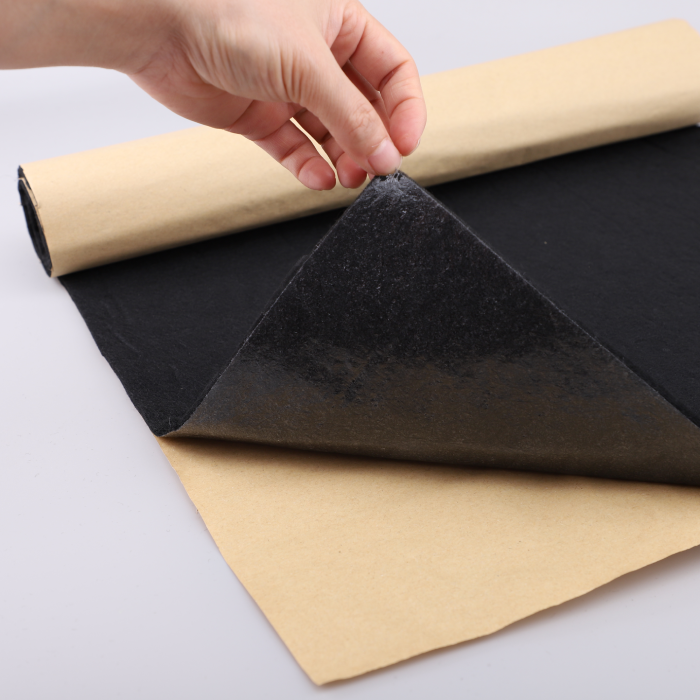
When a film or backing is added, the final product's number of layers, material composition, and behavior under heat exposure may change. If the original report covers only single-layer flame retardant felt, it should not automatically be treated as validation of the complete laminated product.
When the surface coating or treatment changes, the coating type, application weight, coverage, and curing process may affect the finished material's behavior. Even when the base material remains the same, the impact of these changes on the applicability of the original test results should be assessed.
When the layer sequence or thickness changes, the same materials arranged in a different order, with different layer thicknesses or a different overall thickness, may form a materially different construction from the original test specimen. Buyers should confirm whether these differences remain within the scope of the previously validated product construction.
The purpose of a change review is therefore not simply to determine whether an additional material is described as flame retardant. It is to verify whether the complete, modified construction still meets the requirements of the project.
Which Material Changes Should Trigger a Review?
When a material or processing method changes, buyers should initiate a formal change review before deciding whether the original test report can continue to be used. The following table lists common situations that procurement and quality teams can use as review triggers.
Change scenario | What to check | Recommended action |
Adding or changing an adhesive | Adhesive type, application quantity, layer thickness, coverage, and whether the original report covers the construction | Assess the impact on the original test conclusions and conduct supplementary testing if necessary |
Adding a film, backing, or another composite layer | Material composition, thickness, position, and final construction | Confirm whether the original report applies to the complete composite product |
Changing a surface coating or treatment agent | Coating composition, application weight, curing method, and surface coverage | Have technical or quality personnel assess the change risk and verification needs |
Changing the layer sequence or total thickness | Layer arrangement, individual thicknesses, GSM, and overall construction | Check whether the revised construction falls outside the previously validated range |
Changing the base fiber or flame-retardant system | Fiber composition, blend ratio, flame-retardant treatment, and critical material specifications | Reassess report applicability and determine whether testing is required under project requirements |
Changing the manufacturing process or critical process parameters | Whether the change affects material composition, layer structure, or final product consistency | Assess whether the process change requires revalidation |
Changing customer or regulatory requirements | Applicable test method, classification requirements, and acceptance criteria | Review the report and validation plan against the updated requirements |
These scenarios are triggers for a change review. They do not mean that every change automatically requires a complete new flame-retardancy test. The appropriate action should be determined according to the applicable test standard, customer specifications, extent of the change, and project risk.
If buyers cannot determine whether a change affects the report's applicability, the safer approach is to avoid using the original report for the revised construction until the issue has been reviewed. Confirmation can be obtained from qualified technical personnel, the testing laboratory, or the customer's quality department.
How Can Buyers Decide Between Document Review, Supplementary Testing, and Testing the Final Construction?
After identifying a material change, buyers should not immediately choose between continuing to use the original report and repeating every test. A more effective approach is to establish the scope of the original report first, then determine the required level of verification based on the nature of the change.
Scenario 1: The available evidence covers the current construction.
If the documentation clearly demonstrates that the current material construction, critical specifications, and applicable conditions fall within the scope of the original report and the project's approved requirements, the responsible technical or quality personnel may document the review rationale and determine whether the report can continue to be used. This conclusion should not be based solely on the fact that the product name remains unchanged.
Scenario 2: The impact of the change is unclear.
If adding an adhesive, film, coating, or processing adjustment may affect the test results but the available evidence is insufficient to determine the extent of that impact, further confirmation should be obtained from the supplier, testing laboratory, or customer. Depending on the circumstances, this may involve additional technical documentation, targeted supplementary testing, or a reassessment of the final construction.
Scenario 3: The final product falls outside the scope of the original report.
If the original report explicitly covers a single-layer material while the project requires validation of the complete composite product, the report cannot automatically replace validation of the final construction. Where the applicable standard or customer requirements call for testing the composite product, a specimen representing the compliant final construction should be used.
Scenario 4: The test standard or customer acceptance requirements have changed.
Even if the material construction remains unchanged, changes to the applicable standard, classification requirements, or customer acceptance criteria require a new review of the report's suitability. Whether the report can continue to be used cannot be determined solely by whether the material itself has changed.
In all these situations, buyers should avoid unsupported claims such as “the original report is permanently valid” or “every laminated product must be retested.” The objective is to reach a documented, traceable decision that matches the specific project requirements.
How Should Buyers Manage Construction Versions, Sample IDs, and Test Reports?
For long-term purchasing and OEM projects involving multiple revisions, document control should go beyond saving a single PDF file. Buyers need to trace which product construction a report covers and determine whether subsequent production versions remain consistent with the approved specimen.
Construction versions should be identified through clear revision numbers or change records. For example, the base flame retardant felt, the construction with an added adhesive layer, and the version with an additional film should be distinguishable through version control. A version number is a management tool; it does not replace an actual description of the material differences.
The bill of materials should record the critical material information relevant to the project, including the base felt's fiber composition, GSM, and thickness, as well as the types, specifications, and positions of adhesives, films, coatings, or other composite layers. The bill of materials should be updated whenever a structural change occurs.
Sample identification should link each specimen to its actual submitted construction version and production batch. This allows buyers to confirm whether the sample described in a test report corresponds to the product currently being purchased.
Test reports and approval records should include the report number, test standard, test date, results, scope of applicability, and internal review conclusion. If the customer requires an approved sample or formal change approval, the corresponding documents and confirmation records should also be retained.
Production records should link the final approved construction to the products manufactured in bulk. If materials are subsequently substituted, suppliers change, or processing parameters are adjusted, the change should be reviewed according to the agreed change-control requirements rather than automatically relying on previous records.
For projects subject to regulatory requirements, customer audits, or safety requirements, the specific records and retention periods should follow the applicable requirements and the customer's quality management procedures.
What Should Buyers Confirm with Suppliers Before Bulk Purchasing?
Before placing a bulk order, buyers should confirm that the quoted material construction, testing documents, and acceptance requirements all refer to the same product. The following items can be used as a checklist for the purchasing specification or sample approval document.
Confirmation item | What buyers should confirm |
Final material construction | The base flame retardant felt and the composition and layer sequence of all adhesives, films, coatings, and backings |
Critical specifications | Fiber composition, GSM, thickness, composite-layer specifications, and mutually agreed tolerances |
Test report | The specimen covered by the report, test standard, results, and scope of applicability |
Change records | Differences between the current construction and the tested specimen or previously approved version |
Validation plan | Whether additional documentation, technical review, supplementary testing, or testing of the final construction is required |
Sample approval | Whether the approved sample matches the construction planned for mass production |
Bulk quality control | Consistency between production materials and the approved construction, together with notification and approval procedures for future changes |
Buyers should also clarify that material substitutions or critical construction changes not agreed upon by both parties must not be introduced into production without the required review. For critical safety performance, verification should be arranged according to the final product construction and project requirements.
HuiZhou JinHaoCheng Nonwovens Co., Ltd. can discuss fiber composition, GSM, thickness, and composite-processing specifications for needle-punched flame retardant nonwoven and related customized materials according to customer project requirements. For projects with defined flame-retardancy verification requirements, buyers are advised to provide the intended application, target test requirements, and expected composite construction at the RFQ stage. This helps clarify sample development, document review, and subsequent verification arrangements early in the process.
Conclusion: Whether the Original Test Report Can Be Used Depends on the Final Construction
Passing a test as a single-layer flame retardant felt does not guarantee that the final product will achieve the same results after adhesive, film, coating, or other composite layers are added. At the same time, it is not appropriate to assume that every composite change requires a complete new round of testing.
A more reliable purchasing process starts by confirming the specimen and construction covered by the original report, documenting the differences between the current product and the original specimen, assessing the potential impact on the test conclusions, and then deciding whether supplementary verification or testing of the final construction is needed based on the applicable standard, customer requirements, and technical review.
For overseas buyers, engineering teams, and OEM manufacturers, construction versions, bills of materials, sample IDs, test reports, and change-approval records should be traceable to one another. This allows testing documentation to support sample approval, bulk purchasing, and subsequent quality traceability rather than simply serving as a standalone document on file.




