
How Should Equipment Manufacturers Specify Custom Die-Cut Flame Retardant Felt Parts?
For manufacturers of industrial equipment, electrical appliances, automotive components, and thermal protection assemblies, purchasing flame retardant felt rolls is not the same as purchasing ready-to-install die-cut parts.
Roll material procurement mainly focuses on material composition, GSM, thickness, flame-retardancy requirements, and supply specifications. Purchasing die-cut parts requires additional details, including part outlines, hole positions, dimensional tolerances, adhesive locations, release liners, installation orientation, and packaging methods. If these requirements are communicated only through emails or brief descriptions, the supplier may not fully understand the final part design. This can lead to repeated sample revisions, assembly problems, or delays in bulk delivery.
Therefore, when sourcing custom die-cut flame retardant felt parts, the key is not simply asking whether a supplier can cut parts according to a drawing. Buyers should organize material requirements, engineering drawings, processing specifications, and acceptance criteria into a purchasing specification that both parties can follow.
1. Provide a Complete 2D Engineering Drawing, Not Just a Part Photo
For flame retardant felt parts that must fit into a specific installation position, a 2D engineering drawing is usually an important reference for quotation and first-article approval. A photo can help the supplier understand the general shape, but it usually cannot accurately communicate every dimension, hole position, tolerance, and installation datum.
When requesting a quotation, provide a clear 2D drawing with the drawing number, revision number, measurement units, and necessary technical notes. If the part must fit an equipment housing, bracket, or another component, identify the critical installation dimensions and positioning datums.
For irregular shapes, the drawing should clearly define the outer profile, notches, slots, radii, and internal holes. For parts that require screws, clips, or other fixing structures, specify the hole diameters, hole-center positions, and dimensional relationships between the holes and the part edges.
If the part has a designated front and back, an inner and outer side, or a specific installation orientation, indicate this on the drawing. For adhesive-backed parts, an outline drawing alone may not be sufficient. The adhesive coverage area and adhesive-facing direction should also be identified.
If the existing drawing is incomplete, buyers can provide a physical sample, photos of the installation position, or drawings of matching components as supporting information. However, when dimensions and positioning are critical acceptance requirements, the final specifications should still be documented in clear, traceable technical files. This avoids relying on photos or verbal descriptions for bulk production.
2. Define Dimensional Tolerances, Thickness, and Measurement Conditions
Dimensional requirements for die-cut parts should be based on their actual assembly function rather than applying the same tolerance to every dimension.
For example, dimensions that fit screw holes, locating pins, or equipment openings may be more critical than outer-profile dimensions that do not affect installation. Buyers should identify critical dimensions on the drawing and agree with the supplier on the applicable tolerances.
Thickness should also be specified separately. Needle-punched flame retardant felt is a fibrous material, and its measured thickness may be affected by the material condition and measurement method. If the part will be compressed during installation, buyers should specify whether the required thickness refers to the uncompressed state or a defined compressed condition.
Thickness measured in a free state should not automatically be treated as equivalent to thickness measured under compression. Both parties should agree in advance on the measurement method, measurement locations, and any necessary test conditions so that first-article approval and bulk inspection use consistent criteria.
Item to Define | What the Purchasing Specification Should Include |
Overall dimensions | Length, width, outer profile, and critical positioning dimensions |
Holes and slots | Hole diameters, hole-center coordinates, slot dimensions, and positioning datums |
Dimensional tolerances | Permitted deviations for critical dimensions and the agreed inspection method |
Material thickness | Target thickness, permitted variation, and measurement condition |
Compression condition | Free state or specified compressed condition, including the required measurement method |
Critical installation dimensions | Dimensions related to matching components, locating features, or equipment openings |
Not every part requires a complicated dimensional inspection plan. The priority is to identify which dimensions affect installation, sealing, positioning, or equipment function and then establish clear acceptance criteria for them.
3. Specify the Adhesive, Release Liner, and Actual Installation Surface
If a custom flame retardant felt part requires self-adhesive installation, the adhesive requirements should be treated as a separate technical specification rather than simply stating “with adhesive” in the quotation request.
First, define the adhesive coverage area. The adhesive may cover the entire back surface or only selected areas. If the part contains holes, narrow edges, or areas that should remain uncoated, specify these details on the drawing or in a separate adhesive-layout diagram.
Second, define the release liner requirements. Specify whether the liner should cover the entire adhesive surface, whether divided sections or peel-friendly features are required, and whether the liner removal direction affects installation.
The installation surface is equally important. Buyers should specify the surface to which the part will be attached, such as a metal surface or another designated substrate, and provide the relevant installation conditions. Surface cleanliness, roughness, available installation space, and operating environment may affect actual adhesion. Therefore, the presence of an adhesive does not automatically mean that the part is suitable for every installation scenario.
If the part must be installed in a narrow space or attached in a specific orientation, specify the adhesive-facing direction, positioning method, and available working space. For parts that must be installed immediately after the release liner is removed, confirm in advance that the packaging will not cause parts to stick together, fold, or become mixed up in orientation.
Specific adhesive performance requirements should be determined according to the final application and customer specifications. Buyers should not focus only on the adhesive type while overlooking the actual installation surface, bonding area, and operating conditions.
4. Specify Flame-Retardant Material Requirements Separately from Final-Part Requirements
Custom die-cut flame retardant felt parts usually involve both base-material requirements and processed-part requirements. These are related, but they should not be treated as the same thing.
Base-material requirements may include material type, fiber composition, GSM, thickness, and the flame-retardancy performance required by the project. Final-part requirements cover the die-cut profile, dimensions, hole positions, adhesive construction, installation orientation, and delivery condition.
If a project must comply with a specific flame-retardancy test or customer technical specification, buyers should provide the exact standard, testing requirements, or relevant documents at the quotation stage rather than simply writing “flame retardant” or “fire resistant.”
Buyers should also confirm whether the existing test report applies to the base flame retardant felt or to the final structure identical to the part being purchased. If adhesive, film, coating, or another composite layer is added later, the applicability of the original report should be reviewed according to its scope, the applicable requirements, and the nature of the change.
Die-cutting itself does not replace flame-retardancy verification. Buyers should separately confirm material performance requirements and finished-part acceptance criteria, while identifying which documents or test results are required for project approval.
For projects with specific safety or regulatory requirements, the verification plan should be confirmed during sample development. This helps avoid discovering, after die-cutting or bulk production, that the material documentation does not match the requirements for the final product.
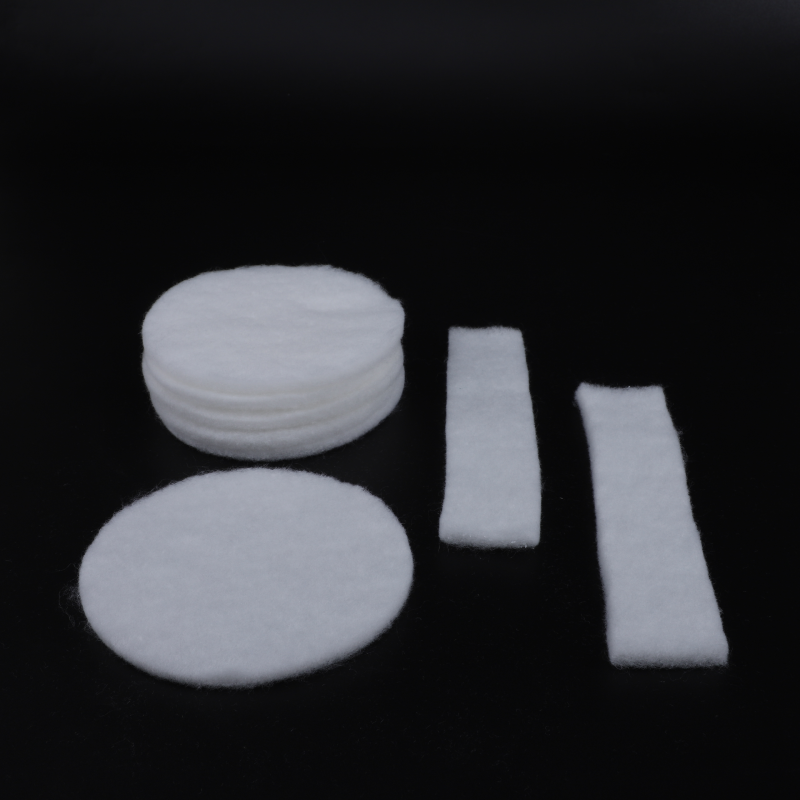
5. Confirm the First Article and Processing Tooling Before Bulk Production
For custom die-cut parts, first-article approval is an important step linking the engineering drawing to mass production. Even when the supplier has received the drawing, approval of the drawing alone does not mean that every processing detail has been verified.
If the part requires a dedicated die or fixture, both parties should confirm that the tooling arrangement matches the part design. For complex profiles, small holes, or special notches, the processing method should be evaluated in advance to determine whether it can meet the drawing requirements.
After the tooling has been confirmed, the supplier should produce the first article according to the agreed drawing revision. First-article inspection should go beyond checking whether the shape looks similar. It should include measurements of critical dimensions, hole positions, thickness, and other agreed acceptance items.
If the part must be installed in equipment or fit with other components, an actual assembly check should be conducted where practical. This can reveal problems that may not be obvious from visual inspection alone, such as hole-position deviations, misalignment, incorrect installation orientation, or local interference.
After first-article approval, retain the approval record and clearly identify the corresponding drawing revision, material specifications, and sample ID. If the first article needs modification, update the relevant revision and confirm it again to prevent subsequent production from using an unapproved design.
First-Article Approval Item | What to Verify |
Drawing revision | Whether the first article was produced according to the currently approved drawing |
Outer profile and holes | Whether critical dimensions, hole diameters, hole-center positions, and notches meet the requirements |
Thickness and material | Whether the material specifications and agreed thickness requirements are met |
Adhesive construction | Whether the adhesive coverage, release liner, and adhesive-facing direction are correct |
Assembly fit | Whether the part can be installed in the intended orientation without obvious interference |
Approval records | Whether the sample ID, inspection results, revisions, and approval status are documented |
For repeat orders, the approved first article and its corresponding drawing should serve as quality references for subsequent orders. However, if the material, construction, or critical processing requirements change, the parties should reassess the change according to their agreed change-control procedure rather than automatically relying on the previous approval.
6. Define Bulk Dimensional Sampling, Batch Labels, and Packaging Requirements
Passing first-article inspection does not guarantee that every subsequent part will be identical. Bulk purchasing also requires clear agreements on inspection methods, packaging requirements, and batch traceability.
Dimensional sampling should focus on critical dimensions that affect installation and function. Buyers can agree with the supplier on the number of samples, inspection frequency, measuring tools, and procedures for handling nonconforming parts. Inspection records should not be mixed across different part shapes, specifications, or drawing revisions.
Batch labels should help buyers identify the part number, drawing revision, batch or production date, and any other agreed traceability information. Clear identification is particularly important when several parts have similar outlines but different hole positions or installation orientations.
Packaging should also match the condition in which the parts will be delivered. For adhesive-backed parts, packaging should prevent the adhesive surface from becoming contaminated, the release liner from coming loose, or parts from sticking together. If parts have a designated front and back or installation orientation, layered packaging, individual bags, or orientation labels can help reduce the risk of mix-ups.
Buyers should also specify the number of parts per bag, box, or carton and whether individual packaging, labels, or other identification methods are required. Packaging affects not only transportation but also material handling and assembly efficiency on the production line.
Purchasing Requirement | What to Confirm |
Dimensional sampling | Inspection items, frequency, sample quantity, and measurement method |
Nonconforming-part handling | Procedures for isolating, reworking, replacing, and reporting out-of-tolerance parts |
Batch traceability | Part number, drawing revision, batch, or date identification |
Packaging orientation | Identification of the front and back, adhesive side, and installation orientation |
Packaging quantity | Number of parts per bag, box, or carton |
Adhesive protection | Prevention of adhesive contamination, release-liner separation, and parts sticking together |
Documents supplied with the order | Agreed inspection records, batch information, and other quality documents |
For recurring purchasing projects, these requirements should be included in a formal purchasing specification or quality agreement rather than confirmed informally by email for every order.
7. What Information Should Buyers Prepare Before Requesting a Quotation?
To help the supplier evaluate the die-cutting solution accurately and provide a meaningful quotation, buyers should provide as much relevant information as possible in the initial request. If critical dimensions, material construction, or acceptance requirements have not yet been finalized, identify the open items clearly to avoid a quotation based on assumptions that differ from the final requirements.
Quotation Item | Recommended Information |
Engineering drawing | 2D drawing, drawing number, revision number, and measurement units |
Part dimensions | Outer profile, holes, slots, critical tolerances, and datums |
Material specifications | Flame retardant felt type, known fiber requirements, GSM, and thickness |
Compression requirements | Free state or specified compressed condition, including measurement conditions |
Adhesive requirements | Whether adhesive is required, coverage area, adhesive-facing direction, and release liner |
Installation conditions | Installation surface, positioning method, operating environment, and matching-component information |
Flame-retardancy requirements | Applicable standards, customer specifications, test reports, or approval-document requirements |
Order information | Sample quantity, estimated bulk quantity, repeat-order requirements, and delivery schedule |
Processing confirmation | Whether a die or fixture is required and the first-article approval requirements |
Packaging and acceptance | Individual packaging, batch labels, sampling requirements, and accompanying documents |
If buyers do not yet have a complete drawing, they can initially provide an existing sample, photos of the equipment installation position, and known dimensions for a preliminary assessment. Before bulk production, however, the formal drawing, critical dimensions, and acceptance criteria should still be confirmed.
For custom projects, clarifying technical requirements early helps reduce repeated revisions and ensures that the quotation, sample, first article, and bulk order are based on the same specifications.
HuiZhou JinHaoCheng Nonwovens Co., Ltd. can discuss material composition, GSM, thickness, and related customization and processing requirements for needle-punched flame retardant nonwoven according to customer needs. For equipment manufacturers and OEM customers requiring die-cut parts, it is advisable to provide the engineering drawing, intended application, adhesive requirements, and estimated order quantity at the quotation stage. This helps the supplier evaluate material specifications, processing methods, and sample approval arrangements more accurately.
Conclusion: Use the Same Acceptance Criteria for Drawings, Samples, and Bulk Production
When purchasing custom die-cut flame retardant felt parts, manufacturers should not rely only on the material name or an outline drawing. Equipment manufacturers need to document material requirements, dimensional tolerances, hole positions, compression conditions, adhesive specifications, installation conditions, first-article approval, bulk sampling, and packaging methods in their purchasing documents.
The 2D drawing defines the part geometry, critical dimensions and tolerances control assembly fit, adhesive and release-liner requirements define the installation method, first-article approval verifies the processing result, and batch labels and inspection records help maintain consistency across subsequent orders.
For overseas equipment manufacturers and OEM procurement teams, the most effective approach is to ensure that the quotation documents, approved drawings, first-article samples, and bulk acceptance criteria all correspond to one another. This means the supplier delivers more than a piece of flame retardant felt cut to a particular shape: the delivered part meets the agreed specifications and is ready for its intended assembly process.




