
From Foam Lamination to Bag Production: Cutting, Sewing and Quality Checks
After purchasing foam laminated fabric rolls, bag manufacturers usually need to process the material through slitting, cutting, sewing, edge binding, and assembly before it becomes part of a bag body, lining, or other bag component.
In actual production, meeting the agreed material specifications does not automatically mean that the material is suitable for a bag manufacturing line. Even foam laminated fabrics with the same thickness may behave differently during cutting, sewing, folding, and edge binding because of differences in fabric construction, foam type, lamination layers, and processing equipment.
Therefore, when purchasing Foam Laminated Fabric for Bag Manufacturing, buyers need to confirm not only the material specifications but also its processing compatibility through actual production samples. Basic quality inspection requirements should also be established based on the approved samples.
This article focuses on cutting, sewing, edge binding, layer bonding, dimensional consistency, and batch quality checks in bag manufacturing. It does not repeat general foam laminated fabric material selection or the basic principles of peel testing.
Why Does Foam Laminated Fabric Need Processing Validation Before Entering a Bag Production Line?
Foam laminated fabric is generally a composite material made by laminating foam with fabric or another substrate. It can be used for bag bodies, side panels, linings, and other components that require flexible padding. However, it is an intermediate material, not a finished bag component that has already been cut, sewn, and assembled.
After the material is delivered, the bag manufacturer still needs to process it according to the product design and production workflow. Different bag factories may use different cutting equipment, sewing machines, edge-binding methods, and component constructions. As a result, the same foam laminated fabric roll may produce different processing results under different production conditions.
Buyers should distinguish between three separate stages of confirmation.
Confirmation stage | Main inspection items | Key question |
Material specification confirmation | Fabric, foam, number of layers, total thickness, GSM, dimensions, and other specifications | Does the delivered material meet the agreed specifications? |
Material structure inspection | Fabric and foam positioning, edge condition, surface condition, and layer bonding | Does the composite material itself meet the basic requirements? |
Actual processing validation | Cutting, sewing, edge binding, and component assembly | Is the material suitable for the bag factory's actual production workflow? |
These three stages cannot replace one another.
A material may meet the required thickness but still be unsuitable for cutting complex shapes. A flat sample may show no obvious defects, yet wrinkles, layer movement, or uneven edges may appear after sewing and edge binding.
For bag manufacturers, a Bag Foam Laminated Fabric Roll should be treated as an intermediate material that requires further processing validation, rather than a material that is automatically suitable for every bag production line.
What Should Be Checked When Cutting and Die-Cutting Foam Laminated Fabric?
Cutting is a common processing step when foam laminated fabric enters bag production. Buyers need to confirm not only whether the equipment can cut through the material, but also whether the layers remain in an acceptable condition after cutting and whether the cut edges meet the requirements of subsequent sewing, edge binding, and assembly.
Total Laminated Thickness and Number of Layers
Foam laminated fabric may consist of fabric and foam, or it may include additional backing fabric or other supporting layers. Different laminated constructions have different total thicknesses and layer combinations, which may also affect the number of layers that need to be processed during cutting.
For example, a two-layer Fabric + Foam construction and a three-layer Fabric + Foam + Backing Fabric construction should not be assumed to have the same cutting performance.
If the composite material is relatively thick or the layers have different flexibility characteristics, the cut edges may behave differently from those of single-layer fabric. Buyers should therefore confirm the actual total laminated thickness rather than evaluating cutting suitability based only on foam thickness.
Foam Deformation and Cut-Edge Condition
Foam has a certain degree of softness and compressibility. During cutting, the equipment and operating conditions may affect the material, potentially causing localized compression, edge deformation, or irregular cut surfaces.
Buyers can inspect whether the foam edges show obvious compression or irregularities after cutting, whether the fabric and foam have shifted relative to each other, and whether the cut edges meet the requirements of the next processing step.
These conditions are related to the foam type, thickness, laminated construction, and actual cutting conditions. They cannot be determined by material names such as PU or EVA alone.
Cutting Shapes and Material Direction
Bag components may have curved edges, corners, or irregular outlines. Straight slitting, fixed-size panel cutting, and die-cutting complex shapes do not place exactly the same requirements on the material.
If the material needs to be cut according to bag component drawings, buyers should provide actual cutting drawings, templates, or representative component samples. If the fabric has a distinct warp and weft direction or another structural direction, the cutting direction should also be confirmed to determine whether it affects subsequent folding, sewing, and edge binding.
Can the Cut Material Move Smoothly to the Next Processing Stage?
Completing the cutting process does not mean that the material has passed processing validation. Buyers should also check whether the cut material can move smoothly into sewing, edge binding, and assembly.
For example, some components may require additional edge treatment. Foam may deform during handling, and the fabric and foam may shift relative to each other. These conditions can affect subsequent processing.
Therefore, the purpose of Foam Laminated Fabric Cutting validation is not simply to determine whether the equipment can cut through the material. It is to confirm whether the cutting results meet the requirements of the subsequent bag manufacturing processes.
What Should Be Considered When Sewing Foam Laminated Fabric for Bags?
For bag components that require sewing, foam laminated fabric needs to meet not only the sewing requirements of the fabric itself but also the processing requirements created by the foam and other composite layers.
Material Thickness and Sewing Positions
The combination of fabric, foam, and additional backing layers creates a composite material with a certain total thickness. Buyers need to confirm whether the material is suitable for the intended sewing construction and sewing positions.
If the product requires several material layers to be sewn together, the combined thickness and any significant thickness variations around the sewing areas should also be evaluated.
The sewing performance of a single-layer fabric cannot be used on its own to determine whether the complete foam laminated material is suitable for sewing.
Relative Position of the Fabric and Foam
During sewing, the material may be affected by feeding, presser-foot pressure, and needle penetration. Buyers should observe whether the fabric and foam show noticeable misalignment, localized wrinkles, or other conditions that may affect the appearance of the finished product.
For laminated constructions containing multiple backing layers, buyers should also check whether the layers maintain their original arrangement during sewing.
Flexibility and Component Shapes
Bag components may need to bend, fold, or maintain specific shapes. The flexibility of the composite material can affect feeding, corner handling, and component positioning.
If the material is relatively thick or the fabric and foam have significantly different flexibility characteristics, buyers should validate the sewing results using actual component samples rather than directly applying processing settings intended for ordinary single-layer fabric.
Stitch Appearance and Equipment Compatibility
Different foam thicknesses, fabric constructions, and numbers of laminated layers may require different sewing machine settings. Stitch length, needle type, thread, presser foot, and feeding conditions should be confirmed according to the actual material and equipment.
Buyers should inspect whether sewing causes obvious wrinkles, skipped stitches, deformation around the sewing area, layer movement, or other conditions that do not meet the finished product requirements.
A fixed sewing speed or stitch length should not be treated as a universal standard for all foam laminated fabrics. Actual settings need to be validated using the target material and production equipment.
How Do Edge Binding, Folding, and Multi-Layer Assembly Affect Processing Compatibility?
After cutting and sewing, bag components may require edge binding, folding, connection, or other assembly operations. Different bag designs use different edge constructions and assembly methods, so the composite material needs to be validated against the relevant processes.
Edge Binding and Folding Requirements
Bag bodies, side panels, bottoms, flaps, and linings may use different edge-finishing methods, such as folding, binding tape, or stitching. The specific method depends on the bag design and production workflow.
During edge binding, buyers should check whether the material develops obvious wrinkles, localized foam compression, fabric creases, or uneven edge thickness after bending.
If additional materials are layered in the edge-binding area, buyers should also confirm whether the combined thickness affects sewing and component assembly.
Component Connections and Assembly
Foam laminated fabric is usually only one layer within a bag component. It is not equivalent to a complete bag body, bottom panel, or finished bag structure.
After cutting and sewing, the material may need to be connected to other fabrics, linings, reinforcement materials, or bag components. Buyers should confirm whether the dimensions, thickness, and edge condition of the composite material are suitable for the intended assembly construction.
For example, even if the bag body panels have been cut and sewn successfully, the final thickness or edge shape may still be incompatible with the bag structure and affect subsequent assembly.
Coordination Between Different Processing Stages
Processing validation should not focus only on cutting or sewing in isolation. If the actual production workflow includes slitting, panel cutting, sewing, edge binding, and assembly, buyers should confirm whether the material maintains an acceptable condition throughout the entire process.
A problem in one processing stage may affect the next stage. For example, irregular cut edges may make edge binding more difficult, while localized deformation after sewing may affect final assembly.
Therefore, buyers should evaluate the material according to the actual production sequence rather than checking only one individual processing step.
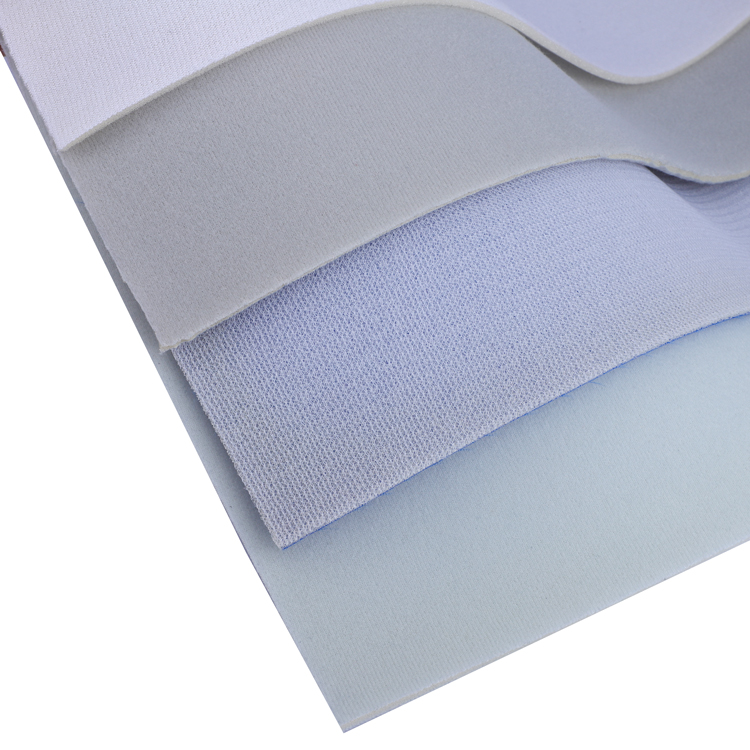
How Should Layer Bonding and Surface Quality Be Checked in Bag Foam Laminated Fabric?
Before foam laminated fabric enters a bag production line, its lamination condition should be inspected. For materials that need to undergo cutting, sewing, folding, and edge binding, layer bonding and surface condition can directly affect subsequent processing.
Layer Bonding Condition
Buyers can inspect whether there are obvious areas of localized delamination, edge separation, bubbles, or unbonded areas between the fabric and foam.
For rolls, inspection should not be limited to the outer layer or a single small sample. According to the agreed sampling method, samples can be taken from different roll numbers or different positions to check the lamination condition.
If the project has specific layer-bonding requirements, an appropriate peel or bonding test can be included in the quality inspection plan agreed upon by both parties.
The test method, specimen conditions, and acceptance criteria should be determined according to the actual material construction and customer requirements. Different foam, fabric, and lamination structures may produce different failure patterns. Test results from one material should not be directly applied to every type of bag foam laminated fabric.
Edge Separation and Localized Delamination
After cutting and edge binding, the edges of the material may expose the original bonding condition between the composite layers.
Buyers should check whether the cut edges show obvious separation, fabric-to-foam detachment, localized lifting, or other abnormalities that may affect subsequent processing.
If the material shows no obvious problems when laid flat but develops localized delamination after cutting, folding, or sewing, the processing stage where the problem occurs, the material construction, and the processing conditions should be further evaluated.
Surface Wrinkles and Appearance Defects
The surface quality of foam laminated fabric includes not only color and texture but also whether the laminated material has obvious wrinkles, bubbles, pressure marks, localized deformation, or other defects that may affect the appearance of the finished bag.
For visible outer fabrics, buyers should use the approved sample and actual finished-product requirements as references when confirming whether the surface condition is acceptable.
For internal padding materials, buyers should also check for surface abnormalities that may affect cutting, sewing, or assembly.
This article does not repeat the basic principles of peel testing. For explanations of interlayer bonding strength, peel test methods, and test results, refer to the guide to laminated fabric bonding strength and peel testing.
How Should Thickness, Density, GSM, and Dimensional Consistency Be Confirmed?
When purchasing foam laminated fabric in bulk, bag manufacturers need to clarify which parameters refer to individual material layers and which refer to the complete laminated product. These specifications should remain consistent between sample approval and bulk inspection.
Thickness
Buyers should clarify whether the specified thickness refers to the foam itself or the total thickness of the complete foam laminated fabric.
For multi-layer laminated materials, the fabric, foam, and additional layers all contribute to the final total thickness. Therefore, confirming only the foam thickness while ignoring the overall laminated thickness is insufficient.
If the bag component has specific thickness consistency requirements, the target value, acceptable range, measurement method, and measurement conditions should be confirmed during sample approval.
Density
Foam density is a specification of the foam material itself. It is not the same as the overall density of the laminated fabric, and it cannot independently represent foam hardness, softness, or sewing compatibility.
If foam density is included in the purchasing specification, buyers should identify the specific foam layer to which the parameter applies and confirm the relevant measurement or technical documentation.
GSM
GSM generally refers to mass per unit area and is commonly expressed in g/m².
For foam laminated fabric, buyers need to clarify whether the GSM refers to the weight of the fabric layer alone or the total weight of the complete composite material. If only the fabric GSM is specified without clarifying whether the finished laminated material also has a total GSM requirement, the buyer and supplier may interpret the specification differently.
Dimensional Consistency
For roll materials, buyers should confirm the following items according to actual production requirements:
Inspection item | What needs to be confirmed |
Roll width | Target width, acceptable tolerance, and compatibility with production equipment |
Roll length | Length per roll and acceptable range |
Total thickness | Target thickness, measurement conditions, and acceptable range |
GSM | Weight requirement for the individual fabric layer or complete laminated material |
Foam density | Material specification of the corresponding foam layer |
Roll condition | Winding, edges, surface condition, and packaging |
These parameters should be based on the material specifications and approved samples agreed upon by both parties. Universal standard values for the bag industry should not be established without actual production data.
For repeat orders, buyers are advised to manage specifications using a target value and an agreed tolerance range rather than expecting every parameter to remain absolutely fixed without a defined agreement.
How Can Sample Testing, Batch Acceptance, and Quality Records Help Maintain Bulk Consistency?
The purpose of sample approval is to establish a material and processing quality reference accepted by both parties. During bulk purchasing, the delivered materials should remain as consistent as possible with the approved samples, with agreed inspection items and records used for confirmation.
Retain Approved Reference Samples
After sample approval, both parties should retain the agreed physical samples and record the sample number, material composition, number of layers, layer construction, thickness, color, width, and other key specifications.
If the project includes specific performance tests, the corresponding test methods, test conditions, and acceptance requirements should also be retained with the sample records.
Define Material Specifications for Bulk Production
The purchase order or quality agreement should clearly specify the fabric, foam, and other material layers, together with their key parameters.
If the project involves a specified lamination process or bonding requirement, the agreed material construction and processing requirements should also be recorded to prevent unapproved changes to the material combination in subsequent batches.
Establish Batch Sampling and Inspection Records
For bulk orders, materials from different roll numbers or production batches can be inspected according to the sampling plan agreed upon by both parties.
Depending on the product requirements, inspection items may include material construction, surface condition, thickness, dimensions, GSM, roll condition, and layer bonding.
The specific sampling quantity, inspection frequency, and reinspection procedure should be determined according to order size, material risk, and the quality agreement between both parties. A universal sampling percentage should not be established without supporting requirements.
Keep Comparison Records Between Samples and Bulk Materials
Record item | Purpose |
Approved sample number | Identifies the quality reference accepted by both parties |
Material composition and layer construction | Prevents unapproved material or layer changes |
Thickness, GSM, and dimensions | Records key specifications and acceptable ranges |
Processing validation results | Confirms cutting, sewing, edge binding, and assembly conditions |
Batch inspection records | Tracks inspection results for different roll numbers or batches |
Nonconformity records | Documents problem locations, cause analysis, and agreed corrective actions |
If bulk materials differ from the approved samples, both parties should first identify which specification is different, whether the difference exceeds the agreed range, and whether it affects actual processing requirements. The issue should then be handled according to the agreed quality agreement.
The purpose of quality records is not to add unnecessary inspection procedures. It is to provide consistent references for sample approval, bulk production, and delivery acceptance.
How Can Bag Manufacturers Confirm Material Compatibility with Their Production Lines Before Bulk Purchasing?
Before purchasing foam laminated fabric in bulk, bag manufacturers should consider material specification confirmation, actual processing validation, and quality acceptance requirements together.
Buyers can follow the confirmation sequence below.
First, provide the bag type, material application positions, component drawings, or existing samples. Clarify the specific function of the material in the bag body, side panels, bottom, or lining.
Next, confirm the fabric, foam, number of layers, lamination structure, total thickness, GSM, density, and roll dimensions. For specifications that have not yet been finalized, identify which parameters still need further evaluation.
Then, conduct trial processing according to the actual production workflow. The material should go through cutting, sewing, edge binding, and assembly processes that are as close as possible to those used in bulk production. Record the material condition and processing results at each stage.
Finally, both parties should confirm the approved samples, key specifications, acceptable ranges, batch sampling methods, quality inspection items, and procedures for handling nonconformities. These requirements should be included in the purchase order or quality agreement.
For bag foam laminated fabric projects, HuiZhou JinHaoCheng Nonwovens Co., Ltd. has experience laminating PU/EVA foam with different materials. These projects involve flame lamination, adhesive lamination, and hot-melt lamination. Depending on individual project requirements, processing arrangements may involve internal operations or external processing partners.
This experience mainly relates to composite material development and lamination processes. It does not mean that the material supplier undertakes all subsequent bag cutting, sewing, edge binding, or finished-product assembly operations.
Therefore, when purchasing Foam Laminated Fabric for Bag Manufacturing, bag manufacturers should not judge suitability only by the material name, flat appearance, or supplier specification sheet. A more reliable approach is to confirm the material construction and supply format first, validate cutting, sewing, edge binding, and assembly according to the actual production sequence, and establish quality inspection records consistent with the approved samples.
Once the specific material combination has been validated under the target production conditions, bulk purchasing can proceed with clearer processing and quality requirements.



