How to Test Composite Needle Punched Nonwoven Before Bulk Purchasing? 7 Quality Tests for Buyers
Before placing a bulk order for composite needle punched nonwoven, buyers should never judge material quality by appearance alone. A sample may look smooth, uniform, and well-made, but its actual GSM, thickness, tensile strength, lamination strength, water resistance, and abrasion resistance may still fail to meet the requirements of the final application.
For importers, wholesalers, distributors, brands, and industrial buyers, sample testing is an important step before approving a supplier. A practical testing process can help identify potential quality problems early and reduce the risk of inconsistent bulk orders.
This article explains seven key tests that buyers can use to evaluate composite needle punched felt before making a large purchasing decision.
Why Should Buyers Test Samples Before Purchasing Composite Needle Punched Nonwoven?
A supplier sample is usually the first physical reference a buyer receives. However, the appearance of a sample cannot fully represent its actual performance.
Two materials may have a similar color, thickness, and surface appearance while having significant differences in fiber density, GSM, strength, lamination quality, or water resistance.
Sample testing allows buyers to compare the supplier's stated specifications with the actual material performance. It also provides a reference for future bulk production.
For buyers purchasing composite needle punched nonwoven in large quantities, testing samples before placing an order can help prevent problems such as unstable GSM, inconsistent thickness, weak lamination, insufficient strength, and poor batch consistency.
Test 1: GSM Test to Confirm the Actual Fabric Weight
GSM, or grams per square meter, is one of the most basic indicators for evaluating needle punched nonwoven.
If a supplier quotes a specific GSM, buyers should verify whether the actual sample meets the required specification. Significant variation in GSM may indicate unstable raw material feeding, fiber distribution, or production control.
For example, if a product is specified as 200 GSM but the actual material varies significantly from the target value, its thickness, strength, absorbency, and overall performance may also change.
For regular purchasing, buyers should not only test one point of the sample. Testing several areas can provide a better understanding of whether the GSM is consistently controlled.
Test 2: Thickness Test to Evaluate Material Structure Stability
Thickness is another important indicator when evaluating composite needle punched felt.
Different applications may require different thickness levels. However, thickness alone does not determine material quality. The key question is whether the thickness remains relatively stable across the entire roll or batch.
A material with inconsistent thickness may create problems during converting, laminating, cutting, packaging, or final product assembly.
Therefore, buyers should measure the thickness at several different positions of the sample rather than relying on a single measurement.
When GSM and thickness are evaluated together, buyers can gain a better understanding of the material's overall structure and production consistency.
Test 3: Tensile Strength Test to Confirm Sufficient Stretching Strength
Tensile strength measures how much force a material can withstand before breaking or failing under tension.
For needle punched nonwoven felt, tensile strength can be affected by fiber type, fiber distribution, needle punching density, GSM, thickness, and manufacturing conditions.
If the final application involves pulling, stretching, installation, handling, or mechanical stress, tensile strength should be included in the sample evaluation process.
Buyers should compare the test results with the actual requirements of the application instead of simply choosing the material with the highest strength.
The goal is to confirm that the material provides sufficient performance for its intended use while maintaining a reasonable purchasing cost.
Test 4: Tear Strength Test to Evaluate Resistance to Tearing
Tear strength measures the ability of a material to resist the growth of an existing tear.
This performance is particularly important when the material may be cut, stretched, dragged, folded, installed, or exposed to mechanical stress during use.
A material can have acceptable tensile strength but still show relatively poor tear resistance. Therefore, tensile strength and tear strength should not be treated as exactly the same property.
For buyers of composite needle punched nonwoven, tear strength testing provides another way to evaluate whether the material can withstand practical handling and application conditions.
Test 5: Peel Strength / Lamination Strength Test to Confirm Strong Composite Bonding
For composite materials, the strength between different layers is just as important as the strength of the nonwoven itself.
If the product consists of needle punched nonwoven combined with PE film, adhesive, rubber, another nonwoven layer, or another backing material, buyers should evaluate the bonding between the layers.
Peel Strength or Lamination Strength testing can help determine whether the composite structure remains firmly bonded during use.
Weak lamination may cause delamination, peeling, bubbling, or separation after repeated handling or environmental exposure.
For products used in demanding applications, buyers should therefore test not only the surface material but also the bonding quality between each functional layer.
Test 6: Water Resistance Test to Confirm Actual Waterproof Performance
If the composite needle punched nonwoven is intended to provide water resistance or waterproof protection, buyers should conduct a practical water resistance test.
Different composite structures provide different levels of water resistance. A PE-backed or other waterproof composite material may perform differently depending on the backing thickness, bonding process, surface structure, and manufacturing quality.
A simple water test can provide an initial indication of whether water penetrates the material or passes through the composite layer.
However, for products with strict waterproof requirements, laboratory testing should be used together with practical testing to obtain more reliable results.
The key point is that buyers should verify water resistance according to the actual application rather than assuming that every composite material has the same waterproof performance.
Test 7: Abrasion Resistance Test to Evaluate Long-Term Friction Performance
Abrasion resistance measures how well the material withstands repeated friction and wear.
For products used on floors, in construction, transportation, automotive applications, industrial environments, or other areas involving frequent movement, abrasion resistance can directly affect service life.
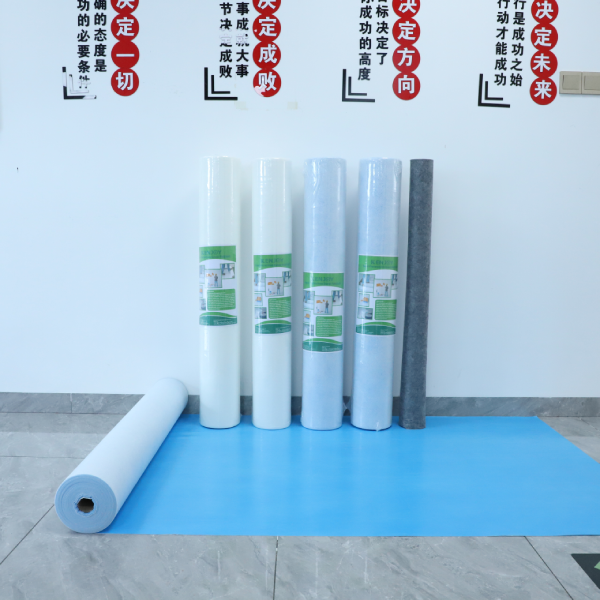
For example, Floor Protection Roll and Painter Felt may be repeatedly walked on, dragged, folded, or exposed to tools and construction materials. If the surface wears too quickly, the protective performance may decline during the project.
Therefore, abrasion resistance testing can help buyers determine whether the material is suitable for the expected working environment and service conditions.
What Should Buyers Do After Completing These 7 Tests?
Completing the seven tests does not necessarily mean that a sample is ready for bulk purchasing.
The test results should be compared with the technical requirements of the final application. Buyers should also compare the results with the specifications provided by the supplier.
If the sample passes the basic requirements, buyers can then evaluate other important factors such as production capacity, lead time, packaging, customization capability, quality control, and long-term supply stability.
The purpose of sample testing is not simply to find a material that looks good. It is to establish a clear quality reference before bulk production begins.
Why Should Buyers Test More Than One Sample?
Testing only one sample may not fully represent the supplier's actual production consistency.
A sample may come from a particularly stable production batch, while future bulk production could show differences in GSM, thickness, strength, or lamination quality.
For long-term purchasing, buyers should therefore pay attention to both sample quality and batch consistency.
When possible, buyers can request samples from different production batches or compare samples produced at different times. This provides a better understanding of whether the supplier can maintain stable quality throughout long-term cooperation.
How Can Buyers Build a Simple Composite Needle Punched Nonwoven Sample Testing Process?
A practical sample evaluation process can start with confirming the supplier's technical specifications.
First, confirm the required GSM, thickness, material composition, dimensions, backing material, and intended application.
Second, conduct the basic physical tests, including GSM and thickness measurement.
Third, evaluate mechanical performance through tensile strength and tear strength testing.
Fourth, for composite materials, test Peel Strength or Lamination Strength to verify the bonding between different layers.
Fifth, conduct Water Resistance testing when waterproof or water-resistant performance is required.
Sixth, conduct Abrasion Resistance testing when the material will be exposed to repeated friction or heavy use.
Finally, record all test results and use them as the quality reference for future bulk production.
This process helps buyers make purchasing decisions based on measurable material performance rather than appearance alone.
Why Is an OEM-Capable Manufacturer Better for Sample Development?
Sample development often requires adjustments to GSM, thickness, fiber composition, needle punching density, backing materials, bonding methods, width, length, and other specifications.
A manufacturer with genuine OEM/ODM capability can adjust production parameters according to the buyer's application and technical requirements.
This is particularly important when buyers are developing new products or need a material with specific performance requirements.
Working directly with a manufacturer can also make communication between sample development and bulk production more efficient, helping reduce the difference between the approved sample and the final production batch.
Why Is Jinhaocheng a Suitable Composite Needle Punched Nonwoven Supplier?
Jinhaocheng has more than 20 years of experience in nonwoven manufacturing and provides customized production solutions for customers in different industries.
As a professional needle punched nonwoven felt manufacturer, Jinhaocheng operates a large-scale production facility with multiple automated needle punching production lines and an annual production capacity of more than 10,000 tons.
The company provides OEM and ODM services covering different materials, GSM requirements, thicknesses, widths, backing structures, and composite configurations.
Its production capabilities support applications including Floor Protection Roll, Painter Felt, automotive materials, industrial filtration, sound insulation, and other industrial nonwoven applications.
For importers, wholesalers, distributors, and industrial buyers, working with a professional needle punched felt manufacturer can provide better support for sample development, specification confirmation, quality control, and long-term supply.
Jinhaocheng aims to provide stable material quality and customized manufacturing solutions for customers looking for a reliable needle punched felt factory in China.
Conclusion: Do Not Judge a Sample by Appearance Alone
Before purchasing composite needle punched nonwoven in bulk, buyers should not approve a supplier based on appearance alone.
GSM, Thickness, Tensile Strength, Tear Strength, Peel Strength / Lamination Strength, Water Resistance, and Abrasion Resistance provide seven practical testing directions for evaluating material quality.
A systematic sample testing process allows buyers to identify potential risks before bulk production and establish measurable quality standards for future orders.
For importers, wholesalers, distributors, brands, and industrial buyers, choosing a reliable custom nonwoven felt manufacturer or OEM needle punched felt factory is not only about the sample itself. It is also about whether the supplier can consistently reproduce the approved specifications during long-term production.
Test the sample. Confirm the specifications. Then approve the bulk order.