How to Choose PE or TPE Waterproof Backing for Composite Needle Punched Nonwoven? A Buyer’s Guide for Different Applications
When purchasing composite needle punched nonwoven, many buyers initially focus on GSM, thickness, width, and price, but may overlook the waterproof backing on the reverse side.
In fact, for products that require water resistance, moisture protection, liquid isolation, abrasion resistance, or repeated use, the backing material can directly affect the final product's performance.
Even when the needle punched nonwoven has the same GSM and thickness, PE backing and TPE backing can result in significant differences in water resistance, flexibility, abrasion resistance, lamination strength, service life, and overall cost.
For importers, wholesalers, distributors, brands, and industrial buyers, the real question is not simply:
“Which is better, PE or TPE?”
The more important question is:
“Which waterproof backing is right for my product?”
If the wrong backing is selected, even high-quality needle punched nonwoven may experience water penetration, cracking, delamination, excessive stiffness, insufficient abrasion resistance, or unnecessarily high costs during actual use.
Therefore, before purchasing composite needle punched felt, buyers should understand the characteristics of PE and TPE backing and select the appropriate composite structure according to the final application.
Why Does Composite Needle Punched Nonwoven Need PE or TPE Waterproof Backing?
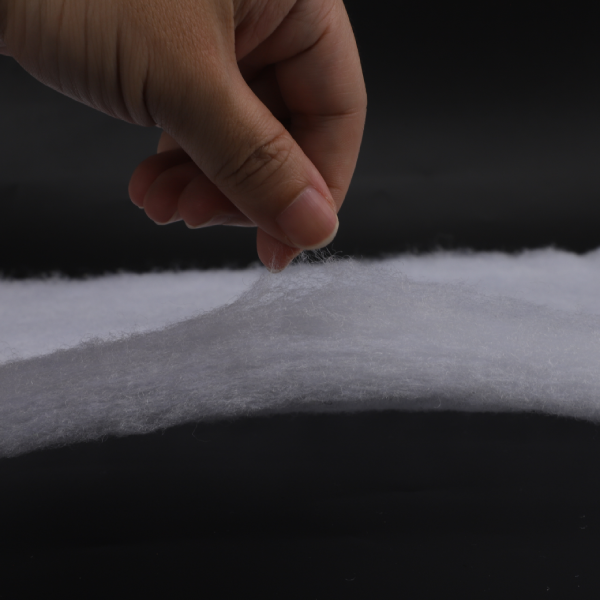
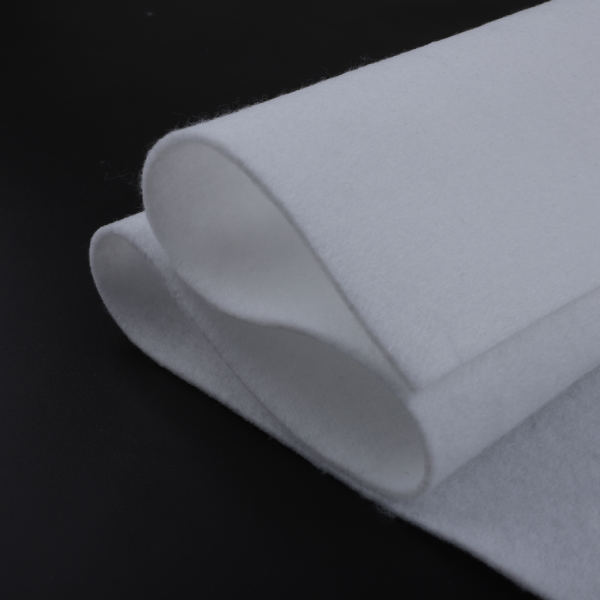
Needle punched nonwoven offers good softness, cushioning, absorbency, breathability, and abrasion resistance, which makes it widely used in floor protection, automotive products, industrial applications, packaging, and other products.
However, when the product needs waterproof or liquid-barrier performance, needle punched nonwoven alone may not be sufficient.
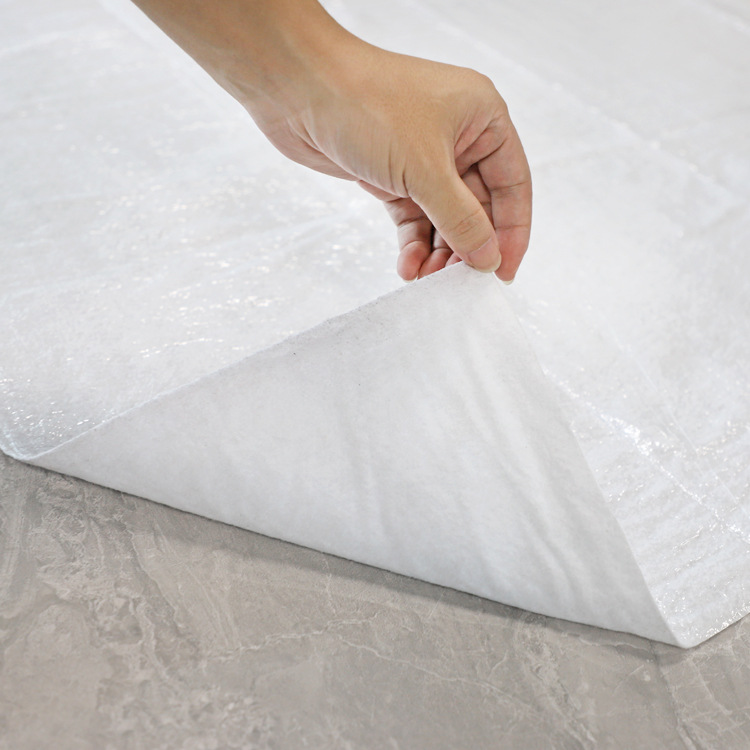
Adding a functional waterproof backing to the reverse side of the nonwoven can create a more complete composite structure.
The needle punched nonwoven mainly provides absorption, cushioning, protection, and abrasion resistance, while PE or TPE backing mainly provides water resistance, moisture protection, and liquid isolation.
By combining the two materials, a single product can provide both a soft protective layer and a waterproof barrier layer.
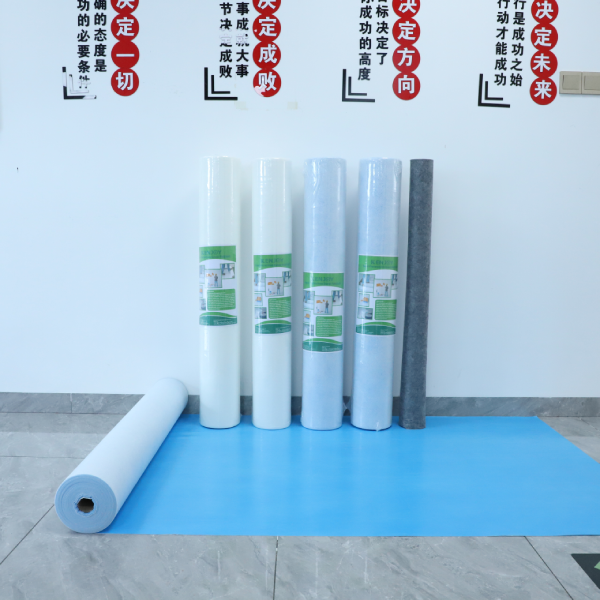
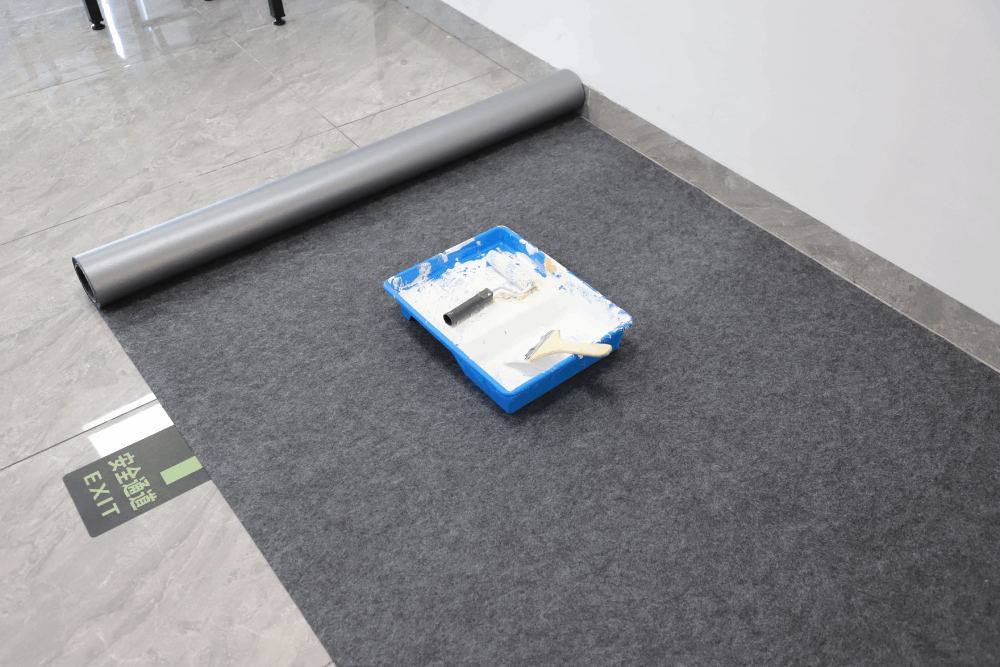
For example, in a Floor Protection Roll, the needle punched nonwoven surface can help absorb water, paint, and other liquids generated during construction while reducing friction caused by workers, tools, and equipment. The waterproof backing can then help reduce the risk of liquids penetrating further into the floor.
Therefore, lamination is not simply about adding another material. It is about designing a functional structure according to the final application.
A Common Buyer Concern: Why Do Waterproof Backings Have Different Prices and Performance?
Many buyers find that quotations for composite needle punched nonwoven can vary significantly between suppliers.
Some suppliers use PE, while others use TPE. Even when suppliers use the same type of PE or TPE, the backing thickness, material formulation, lamination method, and production control can still be different.
Therefore, buyers should not simply assume:
“PE is always cheaper, while TPE is always more expensive.”
The actual price and performance depend on the complete composite structure.
For example, the GSM of the needle punched nonwoven, fiber type, thickness, needle punching density, waterproof backing thickness, lamination strength, and order quantity can all affect the final product cost.
For wholesalers and importers, it is better to compare quotations after confirming the same technical specifications. Otherwise, a product that appears to have a lower price may simply have lower specifications.
What Are the Advantages of PE Waterproof Backing? When Is PE a Better Choice?
PE, or Polyethylene, is one of the commonly used waterproof backing materials for composite needle punched nonwoven.
One of the main advantages of PE backing is its ability to provide stable liquid-barrier performance while offering good cost control.
For high-volume floor protection products, construction protection materials, and industrial products that require waterproof performance, PE is often a practical choice.
If your product mainly focuses on the following requirements, PE backing can be considered as a priority.
First, the product needs stable basic waterproof and moisture-resistant performance.
Second, the product is purchased in large quantities and overall production cost needs to be controlled.
Third, the product is mainly used for renovation, construction, handling, or temporary protection.
Fourth, the product needs to be manufactured in large quantities while maintaining relatively stable material specifications.
Fifth, the product requires a reasonable balance between waterproof performance and cost.
For Floor Protection Roll, Painter Felt, construction protection fleece, and certain industrial protection materials, the composite structure of needle punched nonwoven and PE backing offers strong practical value.
Therefore, if buyers want to balance waterproof performance and cost, PE is often a practical option worth considering.
What Are the Advantages of TPE Waterproof Backing? When Is TPE a Better Choice?
TPE, or Thermoplastic Elastomer, is a type of thermoplastic material with elastomeric characteristics.
Compared with conventional rigid plastic films, TPE composite structures generally place greater emphasis on flexibility, elasticity, and adaptability during repeated bending and use.
For products that need to be rolled, folded, unfolded, or reused frequently, the flexibility of the backing material can become more important.
If your product has the following requirements, TPE backing may be worth considering.
First, the product requires good flexibility.
Second, the product needs to be frequently rolled, folded, and unfolded.
Third, the product needs to be reused.
Fourth, the product needs to maintain good structural stability in complex operating environments.
Fifth, the final product requires not only waterproof performance but also good flexibility and usability.
Therefore, for products that place greater emphasis on long-term use, repeated handling, and flexibility, TPE may be more suitable than a backing solution focused primarily on low cost.
However, this does not mean that TPE is better than PE for every application.
A more appropriate purchasing approach is to select the material according to the actual application environment and performance requirements rather than simply choosing the more expensive material.
PE vs TPE Waterproof Backing: Which Specifications Should Buyers Compare?
Simply asking a supplier, “Do you use PE or TPE?” is not enough.
A professional purchasing comparison should evaluate the complete composite structure.
Comparison | PE Backing | TPE Backing |
Waterproof requirements | Suitable for standard waterproof and moisture-resistant applications | Suitable for products requiring waterproof performance with greater flexibility |
Flexibility | Varies depending on the film and overall structure | Generally places greater emphasis on flexibility and elasticity |
Repeated bending | Depends on the specific formulation and thickness | Generally more suitable for products requiring repeated bending |
Cost control | Usually easier to meet high-volume cost requirements | Generally more suitable for products with higher performance requirements |
Construction protection | Very commonly used | Can be customized according to product requirements |
Reusability | Depends on the complete composite structure | Can be used for products requiring repeated use |
Customization | Can be customized according to thickness, color, structure, and other specifications | Can be adjusted according to specific application requirements |
It is important to note that the comparison above cannot replace actual product testing.
The final performance depends not only on PE or TPE itself, but also on backing thickness, needle punched nonwoven structure, lamination process, and lamination strength.
Therefore, buyers should ideally request actual samples from the supplier and conduct testing before confirming the material.
Why Should Buyers Look Beyond Waterproof Performance? Lamination Strength Matters Too
This is an aspect that is easily overlooked when purchasing composite needle punched nonwoven.
Many buyers test whether the material leaks water but do not test whether the nonwoven and waterproof backing are firmly bonded.
In fact, if the lamination strength between the two layers is insufficient, the product may experience delamination, bubbling, or separation during repeated rolling, folding, transportation, or use.
This means that even if the product initially provides good waterproof performance, problems may occur after a period of use.
Therefore, when evaluating samples, buyers should not only conduct a Water Resistance test but should also pay attention to Peel Strength / Lamination Strength.
For long-term purchasing projects, lamination strength should also be treated as an important part of the supplier's quality control requirements.
Why Should Waterproofing, Flexibility, and Abrasion Resistance Be Designed Together?
A high-quality composite needle punched nonwoven product is not necessarily one in which a single performance indicator is maximized.
For example, simply increasing the thickness of the waterproof backing may increase material costs while also changing the softness and overall weight of the product.
Overemphasizing thickness does not necessarily create practical value that matches the additional cost.
Therefore, a professional composite structure should achieve a reasonable balance between multiple performance requirements.
The needle punched nonwoven provides cushioning, absorption, and abrasion resistance, the waterproof backing provides water resistance and liquid isolation, while the lamination process helps combine the two materials into a stable structure.
The appropriate GSM, thickness, backing type, backing thickness, and lamination strength should ultimately be determined according to the product application.
This is also why different customers may require different specifications even when purchasing the same type of product.
Should Different Applications Use PE or TPE?
If the product is mainly used for renovation, painting, floor protection, or other temporary protection applications, and the purchase volume is large while waterproof performance and cost control are both important, PE backing is often a practical choice.
If the product needs to be frequently folded, rolled, transported, and reused, while the buyer places greater importance on flexibility and long-term usability, TPE or another flexible waterproof backing solution can be considered.
For automotive interiors, industrial protection, packaging, and other specialized applications, the backing material should not be selected simply according to the product name. Instead, it should be customized according to the working environment, temperature, friction, bending frequency, and expected service life.
Therefore, a professional supplier should not simply tell customers, “We offer PE and TPE.” The supplier should help buyers determine a more suitable composite structure according to the actual application.
How Can Buyers Avoid Choosing the Wrong Waterproof Backing?
Buyers should start with the actual application rather than the material name.
First, determine whether the product really requires waterproof performance.
If waterproofing is required, determine whether the product needs moisture resistance, liquid isolation, or long-term contact with water.
Second, determine whether the product is intended for single use or repeated use.
If the product needs to be reused over a long period, buyers should pay greater attention to backing flexibility, abrasion resistance, and the stability of the laminated structure.
Next, determine the main cost target of the product.
For high-volume purchasing, a reasonable balance must be achieved between material performance and purchasing cost.
Finally, conduct sample testing.
Buyers are recommended to confirm at least GSM, Thickness, Tensile Strength, Tear Strength, Peel Strength / Lamination Strength, Water Resistance, and Abrasion Resistance.
Only when the sample test results match the requirements of the final application should the product proceed to bulk purchasing.
Why Should Buyers Choose a Manufacturer That Can Customize PE and TPE Structures?
For importers, wholesalers, distributors, and brands, the most valuable supplier is not simply a factory that offers standard products. It is a manufacturer that can adjust the composite structure according to the product requirements.
For example, even with the same needle punched nonwoven felt, different customers may require different GSM, thickness, width, roll length, and waterproof backing.
Some customers may need PE, others may need TPE, while some may also require a self-adhesive layer, anti-slip layer, or other composite structures.
If the manufacturer has genuine OEM/ODM capability, the material can be developed around the customer's final product instead of forcing the buyer to choose from existing standard specifications.
For long-term purchasing, this customization capability can reduce the time and cost associated with repeatedly searching for suppliers or changing product specifications.
Why Is Jinhaocheng a Suitable Composite Needle Punched Nonwoven Supplier?
Jinhaocheng has more than 20 years of nonwoven manufacturing experience. Its factory covers approximately 26,000㎡ and has 15 automated needle punching production lines, with an annual production capacity of more than 10,000 tons.
As a professional needle punched nonwoven felt manufacturer, the company not only produces needle punched nonwoven but also provides composite processing, slitting, and OEM/ODM customization solutions according to different product requirements.
For waterproof composite products, Jinhaocheng can develop PE or TPE waterproof composite structures according to the customer's application requirements and customize different GSM, thickness, width, roll length, and composite structures.
These composite materials can be used in applications including Floor Protection Roll, Painter Felt, construction floor protection, automotive materials, and industrial protection.
For importers, wholesalers, distributors, and brand customers, working directly with a professional needle punched felt manufacturer makes it easier to complete sample development, specification confirmation, and bulk production.
If you are looking for a stable needle punched felt factory in China, or need to develop custom nonwoven felt with waterproof, abrasion-resistant, and flexible properties, an experienced OEM manufacturer can provide more comprehensive supply support than simple trading procurement.
Conclusion: Don't Ask Which Is Better, PE or TPE—Ask Which Is Right for Your Product
For composite needle punched nonwoven, there is no absolute answer to whether PE or TPE is better.
PE is generally suitable for products that focus on waterproof performance, high-volume purchasing, and cost control, while TPE can be considered for products that place greater emphasis on flexibility, repeated bending, and long-term usability.
A professional purchasing decision should start with the final application and consider water resistance, moisture protection, abrasion resistance, flexibility, lamination strength, operating environment, cost, and reusability as a complete set of requirements.
For importers, wholesalers, distributors, and brands, the goal is not to purchase the “most expensive material,” but to find the composite structure that truly matches the product requirements.
Before purchasing, conduct proper sample testing and work with a needle punched nonwoven felt manufacturer that has stable production capabilities and genuine OEM/ODM capacity. This can help reduce the risks associated with bulk purchasing more effectively.
If you are looking for PE backed needle punched felt, TPE backed needle punched felt, waterproof composite felt, or custom needle punched nonwoven, it is recommended to define the final application first and then work with the manufacturer to develop the appropriate composite structure.