
What Is the Micron Rating of Meltblown Filter Media? Nominal vs. Absolute Filtration Ratings
When a supplier's quotation lists 5 μm, 10 μm, or 20 μm, buyers may assume these figures represent the particle sizes that the material can capture. However, for liquid filtration materials, a micron rating alone does not fully describe filtration performance.
This is particularly important when purchasing Meltblown Filter Media. Different suppliers may use Nominal Micron Rating or Absolute Micron Rating to describe their products. Without information about filtration efficiency, test methods, and testing conditions, two materials carrying the same micron rating may not deliver the same filtration performance.
For filter cartridge manufacturers, industrial filtration equipment companies, and OEM buyers, the key question is not simply how many microns a supplier claims. Buyers need to understand how the rating is defined, how it is tested, and whether the results represent the performance expected in the final application.
Why Shouldn't Buyers Rely Only on the Micron Rating Provided by Suppliers?
A micron (μm) is a unit of length. One micron equals 0.001 mm. In filtration specifications, a micron rating is generally used to describe a filter material's ability to retain particles of a specified size.
However, it does not necessarily mean that the material contains pores of exactly the same size. Nor does it mean that every particle larger than the stated rating will be completely retained.
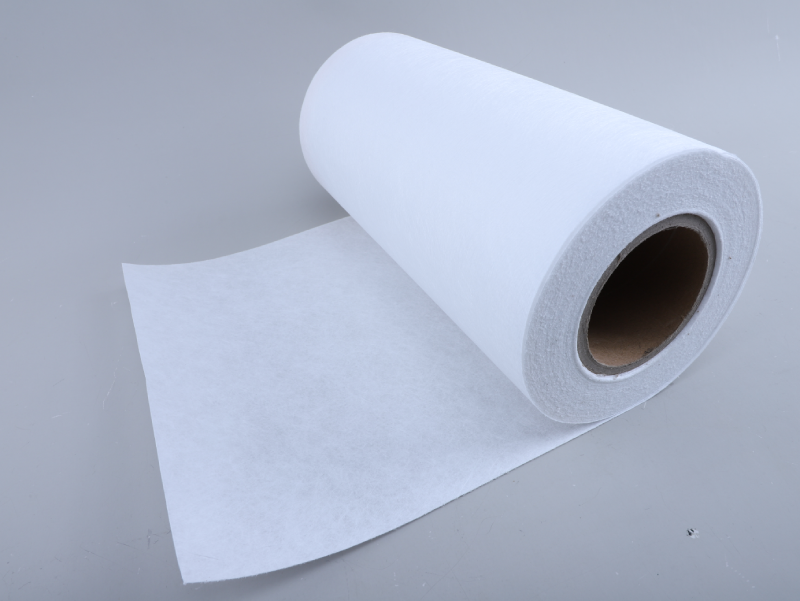
Meltblown filter media typically consists of a network of fine fibers that forms a porous structure. As liquid passes through the material, particles may be captured on the surface or within the fiber network. Actual filtration performance can be affected by fiber structure, material thickness, basis weight, pore distribution, liquid properties, and operating conditions.
Therefore, when buyers see a micron rating in a supplier's specification, they should confirm at least three things:
First, does the rating refer to nominal filtration or absolute filtration?
Second, what test method and filtration efficiency definition does the supplier use to establish this rating?
Third, are the test liquid, particle characteristics, flow rate, and pressure conditions relevant to the intended application?
Without this information, comparing micron ratings alone can easily lead to incorrect purchasing decisions.
What Is the Difference Between Nominal Micron Rating and Absolute Micron Rating?
Nominal Micron Rating generally describes the ability of a filter material to retain a certain proportion of particles at a specified particle size under defined test conditions.
However, there is no single efficiency definition that should automatically be applied to every supplier and product. Different manufacturers may use different particle retention efficiencies, test methods, and evaluation conditions.
For example, if a supplier only states "10 μm nominal" without specifying the corresponding particle retention efficiency and test method, buyers still cannot accurately determine what that specification means.
Absolute Micron Rating is generally used to describe a material's ability to achieve a high or near-complete level of particle retention at a specified particle size under defined test conditions.
However, an absolute rating must also be interpreted according to its specific definition. Different suppliers, product categories, or testing systems may use different efficiency thresholds and evaluation methods. Buyers should not assume that every product labeled "absolute" follows the same filtration efficiency standard.
The main difference is not simply the number. It is how the supplier defines the micron rating and what particle retention efficiency and test evidence support that rating.
Comparison | Nominal Micron Rating | Absolute Micron Rating |
Basic meaning | A specified level of particle retention at a given particle size under defined conditions | A high level of particle retention at a given particle size under defined conditions, according to the supplier's definition |
Efficiency definition | The supplier's particle retention efficiency must be confirmed | The supplier's absolute rating criteria and efficiency threshold must be confirmed |
Universal definition | Different suppliers should not be assumed to use the same definition | Different suppliers should not be assumed to use the same definition |
Key purchasing considerations | Particle size, retention efficiency, and test conditions | Particle size, efficiency threshold, test method, and supporting report |
Can buyers compare ratings by number alone? | No | No |
For example, two suppliers may both claim to offer 10 μm filter media. However, one may provide a nominal rating while the other provides an absolute rating. If their efficiency definitions and testing conditions differ, buyers cannot determine which material offers better filtration performance based on the "10 μm" figure alone.
Purchasing advice: Don't just ask suppliers for the micron rating. Ask how that rating is defined and verified.
Why Can't the Same Micron Ratings Be Compared Directly?
Even when two suppliers use the same Nominal or Absolute terminology, their test results may differ because of variations in testing conditions.
First, the test particles need to be clearly identified. The particle material, particle size distribution, and particle concentration used in testing may all affect the results. If two reports use different test particles, their final efficiency figures should not be compared without considering these differences.
Second, the test liquid and operating conditions are also important. Water, oil, and other industrial liquids may have different viscosities and chemical properties. Liquid viscosity, temperature, flow rate, and operating pressure can all affect liquid flow through the filter material and the resulting pressure drop.
Third, buyers need to confirm whether the test was performed on a material sample or a complete filtration element. The test results of flat filter media do not necessarily represent the performance of the final product after pleating, winding, lamination, or cartridge assembly.
Buyers can use the following checklist to determine whether test data from different suppliers are comparable:
Item to Check | Information to Confirm | Why It Matters |
Filtration rating definition | Nominal or Absolute | Clarifies the meaning of the micron rating |
Particle size | Test particle size and distribution | Confirms whether the test objects are comparable |
Retention efficiency | Actual efficiency at the specified particle size | Shows the performance requirement behind the rating |
Test method | Test standard, method, and version | Identifies the basis of the test results |
Test liquid | Water, oil, or another liquid | Determines whether the test liquid represents the intended application |
Flow rate and pressure | Flow rate, operating pressure, and pressure drop | Helps evaluate whether the test conditions are relevant |
Sample information | Material specification, thickness, and sample identification | Confirms whether the report applies to the material being purchased |
If a supplier cannot provide this information, buyers should not treat the micron rating as a fully verified performance guarantee.
What Filtration Test Information Should Buyers Request from Suppliers?
For liquid filtration projects, buyers should request more than a product specification sheet showing a micron rating. They should also confirm the test information supporting that rating.
Filtration Test Method and Standard
Confirm the test standard, method number, and version used by the supplier. If the project requires a specific customer standard or third-party laboratory test, communicate this requirement in advance. This helps prevent situations where the supplier's test method does not match the final acceptance requirements.
Particle Retention Efficiency
Ask the supplier to specify the retention efficiency corresponding to the stated micron rating and explain how the Nominal or Absolute rating is defined. If the report provides efficiency data for multiple particle sizes, confirm whether those results were obtained under the same testing conditions.
Initial Pressure Drop and Flow Conditions
Liquid passing through filter media encounters resistance. Buyers should understand the test flow rate, initial pressure drop, and related testing conditions rather than focusing only on particle retention efficiency.
If the project has a defined pressure-loss limit, buyers should also confirm whether the material meets the design requirements at the target flow rate.
Dirt-Holding Capacity or Terminal Pressure Drop
For filtration systems designed for continuous operation, the amount of contaminant a material can hold and the pressure drop at which replacement becomes necessary may directly affect operating costs and maintenance intervals.
If dirt-holding capacity is a purchasing requirement, ask the supplier to specify the test method, test termination conditions, and corresponding results. Dirt-holding capacity should not be estimated solely from material thickness or appearance.
Relationship Between the Test Sample and the Report
Check whether the sample name, material specification, thickness, batch number, or sample identification in the report matches the product being quoted and supplied.
If the report refers to a different material structure or specification, it cannot automatically be used as proof of the performance of the current purchasing item.
For projects requiring third-party reports, confirm the laboratory qualification requirements, sample preparation method, and report contents in advance.
Why Should Filtration Efficiency Be Evaluated Together with Pressure Drop and Flow Rate?
Filtration efficiency is not the only factor that matters when evaluating liquid filter media.
As liquid passes through filter media, the material structure creates resistance to flow. Buyers need to consider particle retention capability, flow requirements, and pressure drop limitations together.
If buyers focus only on achieving higher particle retention efficiency while ignoring the system's allowable pressure drop, the final material may fail to meet the equipment's flow or operating requirements.
Likewise, a low initial pressure drop does not automatically mean that the material has adequate filtration performance.
Therefore, buyers should establish the following conditions according to the requirements of the final filtration system:
The target liquid and its viscosity range.
The types and size ranges of particles that need to be retained.
The target flow rate and allowable operating pressure.
The initial pressure drop and required terminal pressure drop.
The material's dirt-holding and replacement requirements during continuous filtration.
These conditions should be determined by the filtration system designer, filter cartridge manufacturer, or final product engineering team based on the actual equipment. Material data provided by suppliers should correspond to these requirements rather than replace the validation of the complete filtration system.
Can GSM, Thickness, and Material Structure Prove Filtration Accuracy?
No.
GSM, thickness, and material structure are basic specifications that buyers need to confirm when purchasing meltblown filter media. However, they cannot independently prove a specific micron rating or filtration efficiency.
GSM (grams per square meter) represents the mass of material per unit area. It helps buyers confirm the material specification, but a higher GSM does not automatically indicate higher filtration efficiency.
Thickness affects the material structure and the liquid flow path. However, materials with the same thickness may have different filtration characteristics because of differences in fiber diameter, fiber distribution, and pore structure.
Fiber structure and pore distribution influence how particles are captured within the material. The filtration performance of meltblown media cannot be determined solely from fiber diameter or visual appearance. Relevant filtration testing is still required.
Therefore, buyers should confirm material specifications and filtration performance separately.
Material specifications are used to confirm basic purchasing parameters, such as GSM, thickness, width, and supply format.
Filtration testing is used to verify micron rating, particle retention efficiency, pressure drop, and other performance requirements specified for the project.
Both types of information should be clearly documented. Neither should be used as a substitute for the other.
Do Material Test Results Represent the Filtration Performance of the Final Filter Cartridge?
Not necessarily.
Meltblown filter media may be used as one layer within a filter cartridge or another filtration element. After pleating, winding, lamination, support-layer assembly, or other processing, the effective filtration area, liquid flow path, and structural condition of the final product may change.
Therefore, the test results of a flat material sample cannot automatically be treated as the filtration performance of the final filter cartridge.
For filter cartridge manufacturers and OEM customers, validation should be carried out in two stages.
The first stage is material validation. Confirm the meltblown material's micron rating definition, filtration efficiency, pressure drop, GSM, thickness, and other agreed specifications.
The second stage is final product validation. Process the material into the target filter cartridge or filtration element, then test it under the agreed liquid, flow rate, and pressure conditions to determine whether the finished product meets customer requirements.
If the final product has specific filtration standards or acceptance criteria, these should be clarified at the beginning of the project. The parties should also confirm whether the material supplier, filter cartridge manufacturer, or end customer is responsible for the relevant testing.
How Should Buyers Specify Filtration Requirements Before Bulk Purchasing?
For long-term purchasing and OEM projects, simply stating "10 μm filter media" or "absolute filtration" in a quotation request is not sufficient.
Buyers should document the filtration rating and testing requirements in the purchasing specification or an agreed technical document.
Purchasing Item | Recommended Information to Specify |
Material name | Meltblown Filter Media or a specific product model |
Filtration rating | Nominal or Absolute |
Micron rating | Agreed particle size |
Efficiency requirement | Particle retention efficiency and evaluation criteria at the specified particle size |
Test method | Standard name, method number, and version |
Testing conditions | Test liquid, flow rate, pressure, and other key conditions |
Pressure drop requirement | Initial pressure drop and applicable terminal pressure drop requirements |
Basic specifications | GSM, thickness, width, and roll length |
Sample approval | Sample identification, test results, and approval records |
Bulk acceptance | Sampling method, acceptance criteria, and nonconformity handling |
If a supplier uses Nominal or Absolute as a product selling point, ask them to clearly state the corresponding efficiency definition and testing basis in the technical documentation. This can reduce misunderstandings during sample approval, quotation comparison, and bulk delivery.
For projects without a clearly defined testing standard, buyers can first provide the final product structure, target liquid, particle requirements, and equipment parameters. The supplier and product engineering team can then work together to determine the required validation items rather than simply accepting an unexplained micron rating.
As a manufacturer of nonwoven materials, HuiZhou JinHaoCheng Nonwovens Co., Ltd. provides nonwoven filtration materials and related customized products. Its website lists meltblown nonwoven production lines and presents nonwoven filtration material solutions for air, water, oil, and industrial liquid filtration. The suitability of a specific liquid filtration project, available material structures, and achievable micron ratings need to be further confirmed according to the target liquid, product specifications, and actual testing requirements.
Conclusion: Micron Ratings Must Be Confirmed Together with Test Definitions and Operating Conditions
When purchasing Meltblown Filter Media, Nominal Micron Rating and Absolute Micron Rating should not be compared by name or numerical value alone.
Buyers need to confirm the definition of the micron rating, the corresponding particle retention efficiency, test method, test liquid, flow rate, pressure, and sample information. These details should also be evaluated in relation to the structure of the final filtration element.
A meaningful micron rating is more than a number on a specification sheet. It is a performance figure supported by a clearly defined test method, testing conditions, and applicable scope.
By documenting these requirements in technical specifications and acceptance documents before quotation and bulk purchasing, buyers can establish a more reliable basis for comparing suppliers, quotations, and test results.




