
Medical Underpads and Nursing Pads: Choosing the Right Absorbent Nonwoven Layer
For medical underpad manufacturers, choosing the right absorbent nonwoven material involves more than comparing absorption capacity or purchase prices. Material specifications must match the product design, liquid must be able to enter the absorbent layer as intended, the material must meet the required liquid retention performance, and the material must be compatible with downstream processing. All these factors can affect the performance of the finished product.
When sourcing materials for medical underpads and medical absorbent pads, buyers should first define the role of the absorbent layer in the finished product, then determine the material specifications and sample acceptance criteria based on the intended application.
Even when two materials have similar GSM or thickness, they may differ in fiber composition, structural uniformity, liquid management performance, and processing compatibility. Rather than simply asking suppliers for a high-absorbency material, buyers should translate their product requirements into specifications that can be checked and tested.
Why Should Buyers Look Beyond Absorption Capacity When Sourcing Materials for Medical Underpads?
Absorption capacity is an important indicator when evaluating absorbent materials, but it cannot determine on its own whether a material is suitable for a particular underpad.
First, the design and intended use of underpads can vary. Different products may have different requirements for liquid intake, absorption, distribution, and retention. Therefore, the same absorbent layer specification should not automatically be assumed to suit every product.
Second, the performance of a material tested on its own may differ from its performance once incorporated into the finished product. The liquid passage characteristics of the top layer, the structure of the absorbent layer, and the contact between different materials can all affect liquid movement and distribution within the product.
Finally, purchasing specifications must support downstream manufacturing. If a material deforms easily during cutting, handling, or lamination, or if thickness and uniformity vary significantly between batches, production adjustments may become more difficult.
Buyers should therefore define the required liquid management functions first, then select the material properties to compare and establish methods for sample testing and bulk acceptance.
How Should the Top Layer and Absorbent Core Work Together?
Different material layers in an underpad perform different functions. When sourcing an absorbent layer, buyers should consider not only the absorbent core itself but also how liquid enters the core and whether the combined materials meet the product design requirements.
Top Layer: Can Liquid Pass into the Absorbent Layer as Intended?
The top layer is located on the contact surface of the product. Its surface properties and liquid passage characteristics may affect how liquid enters the underlying absorbent layer.
If liquid cannot pass through the top layer as intended, the overall product may not perform as expected, even if the absorbent core has good absorption capacity.
Buyers should confirm that the top layer is compatible with the absorbent layer based on the intended product design and evaluate liquid passage during sample testing. Softness, surface integrity, and processing compatibility can also be included in the assessment where relevant.
If the product involves contact with skin or other human tissue, applicable material safety requirements should also be confirmed according to the intended use. Suitability should not be determined solely by softness or absorption performance.
Absorbent Core: Can It Meet the Required Absorption and Retention Performance?
The absorbent core receives liquid entering the product and absorbs and retains it according to the product design.
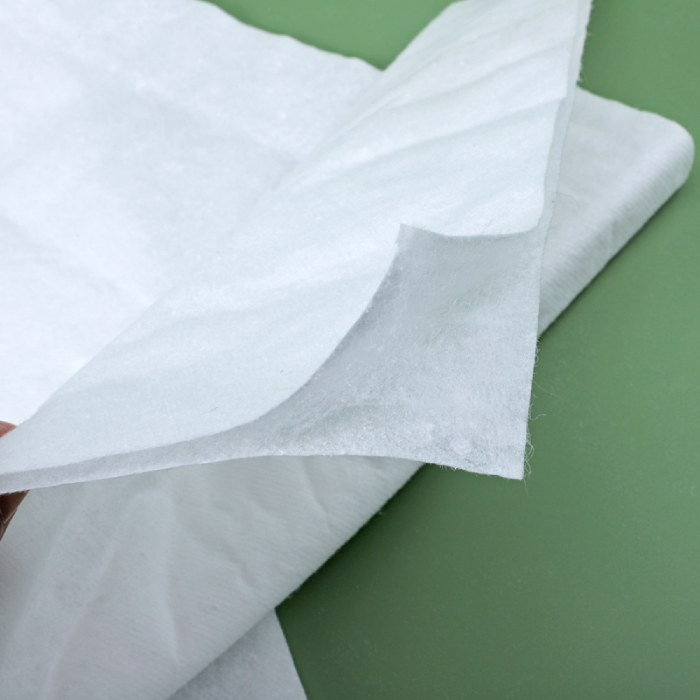
Needle-punched absorbent nonwoven materials can be developed for different liquid management requirements through adjustments to fiber composition, material structure, and specifications. However, actual performance depends on the specific material formulation, manufacturing process, and product structure. Suitability cannot be determined from the material name alone.
During procurement, buyers should confirm whether the supplier's material is appropriate for the intended application and verify key properties through sample testing. If the absorbent layer will be combined with a top layer or other functional materials, the combined structure should also be evaluated where practical, rather than testing only the individual layer.
Why Should the Combined Performance Be Evaluated?
Even if the top layer and absorbent core each meet their individual material requirements, the combined product may not necessarily perform as expected.
Material combinations can affect liquid intake, distribution, and retention, as well as finished thickness, softness, and processing behavior. After initial material screening, buyers should therefore validate the representative combined structure whenever practical.
How Should Buyers Define Absorbent Layer Specifications Based on Underpad Design?
Absorbent layer specifications should be determined by product requirements, rather than selecting a GSM value first and assuming that it will suit every underpad.
Material Composition
Different fibers may affect absorption performance, softness, structural stability, and cost. Buyers should explain the intended application to the supplier and confirm whether the material composition meets the project requirements.
If the product requires a specific fiber blend or other material conditions, these should be stated during quotation rather than added only after sample testing or bulk production has begun.
GSM and Thickness
GSM refers to the mass of a material per square meter. Thickness describes the material's thickness under specified measurement conditions.
Both parameters help define material specifications, but neither alone represents absorption capacity or liquid retention performance. Materials with different fiber compositions and structures may perform differently even when their GSM values are the same.
Buyers should determine the specification range to evaluate based on the permitted finished-product thickness, the space allocated to the absorbent layer, downstream processing requirements, and target performance.
Dimensions and Supply Format
Depending on the supplier's production capabilities, absorbent materials may be supplied in rolls or as pre-cut sheets. Buyers should specify the required width, length, sheet dimensions, and processing requirements, then confirm whether these specifications fit the existing production process.
If the product requires different sizes or shapes, representative samples should be used to verify cutting performance and material stability. The appearance of the full roll alone is not enough to determine suitability.
Specifications Must Be Linked to Acceptance Criteria
An effective purchasing specification should include more than the material name, GSM, and thickness. It should also define the key performance requirements related to the product design and the agreed acceptance methods.
Depending on the project, buyers may need to control material composition, visual uniformity, absorption performance, liquid retention, dimensional variation, and processing compatibility. Not every item applies to every underpad, so the criteria should be selected according to the actual product design.
How Can Buyers Determine Whether the Absorbent Layer Meets Liquid Retention Requirements?
Liquid absorption and liquid retention are different properties. A material's ability to absorb liquid does not necessarily mean it will retain the liquid in the intended location.
Buyers should therefore evaluate liquid retention as a separate performance requirement and determine the test method based on the product structure and intended use conditions.
Do Not Rely Only on a Single Absorption Result
A single absorption test can help with initial material screening, but the result may be affected by the test liquid, test method, contact time, and material specifications.
Test results from different suppliers may not be directly comparable if they were obtained under different conditions. Buyers should standardize the test method and conditions before comparing candidate materials.
Define Liquid Retention Tests Based on Product Requirements
Depending on the design, an underpad may need to retain absorbed liquid within the absorbent layer and limit liquid movement when the product is subjected to contact or pressure.
The specific tests should be determined by the intended product. For example, the product development team may evaluate liquid retention after absorption, performance under compression, or whether liquid distribution meets the design requirements.
A single absorption value or test result should not be treated as a universal acceptance standard for all underpads. Test conditions, evaluation methods, and acceptable ranges should be clearly defined for each project.
Validate Combined Materials and the Finished Structure Where Necessary
If the absorbent layer will be combined with a top layer or other functional materials, buyers should evaluate both the individual material and a representative combined structure whenever practical.
This helps identify whether differences in performance originate from the absorbent material itself, the top layer, interlayer contact, or the overall structure. For buyers, this provides a more reliable basis for material selection than relying only on supplier-provided specifications.
What Should Buyers Verify When Evaluating Samples?
Before confirming a supplier and material specification, buyers should establish a clear sample evaluation process based on the product design.
Step 1: Define the Product Application and the Role of the Absorbent Layer
Explain the intended product type, the function of the absorbent layer, the required liquid management performance, and whether the material will contact skin or other human tissue.
If the product has specific material safety or compliance requirements, these should also be clarified at the beginning of the project so that suitability can be assessed appropriately.
Step 2: Confirm Material Specifications
During quotation, provide the known material composition, GSM, thickness, width, supply format, and other relevant requirements. If some parameters have not yet been finalized, explain the product design constraints so the supplier can propose candidate specifications for evaluation.
Step 3: Establish Sample Acceptance Criteria
Select evaluation items according to the project requirements. These may include material appearance, uniformity, absorption performance, liquid retention, dimensional stability, and processing compatibility.
Buyers should define the test methods, test conditions, and acceptable results rather than relying only on general descriptions such as "high absorption," "soft," or "good quality."
Step 4: Verify Actual Processing Performance
If the material requires cutting, lamination, or other processing, its performance should be checked under representative production conditions.
The evaluation should consider whether the material is easy to handle, whether it maintains the required structure after processing, and whether the combined materials meet the product design requirements.
Step 5: Keep Confirmed Specifications and Test Records
After sample approval, the agreed material specifications, test results, and acceptance requirements should be documented in the purchasing records. This supports quality checks during subsequent bulk orders and helps identify differences between material batches.
How Should Buyers Define Material Specifications and Quality Standards Before Bulk Purchasing?
Sample approval is only one part of the material procurement process. Before moving to bulk production, buyers should also confirm that the supplier can consistently provide materials that meet the agreed specifications.
First, both parties should agree on material composition, GSM, thickness, dimensions, and supply format. If the project has specific performance requirements, the relevant inspection items and acceptance methods should also be defined.
Second, the inspection process for each batch should be confirmed, including the specifications, appearance, and other key properties that need to be checked. Important product requirements should be documented in mutually agreed specifications rather than left to verbal descriptions alone.
Finally, for customized production projects, buyers should discuss sample approval, production scheduling, packaging, and specification control for repeat orders in advance. Clear purchasing documents can help reduce misunderstandings about material specifications and differences between approved samples and bulk production.
For overseas buyers, working with a supplier that can discuss product requirements, support sample evaluation, and provide customized manufacturing services can help improve procurement clarity and bulk supply consistency.
With experience in nonwoven R&D and manufacturing, HuiZhou JinHaoCheng Nonwovens Co., Ltd. can discuss nonwoven material options based on customers' applications, specifications, and processing requirements. The company provides a range of nonwoven materials and customized processing services and supports OEM/ODM projects. The suitability of any material for a target underpad must still be validated according to the intended use, product design, and applicable requirements.
If you are developing medical underpads or absorbent pads, you can review our medical needle-punched nonwoven fabric product information. When requesting a quotation, provide the intended application, target specifications, supply format, and sample acceptance requirements so that material suitability can be discussed in more detail.
Conclusion: Define Product Requirements First, Then Validate Absorbent Layer Performance
When sourcing absorbent materials for underpads, buyers should not compare only absorption capacity, GSM, or price. A more effective approach is to define the role of the absorbent layer in the finished product while considering top-layer compatibility, material specifications, liquid retention, processing compatibility, and batch consistency.
Translating product requirements into clear material specifications and sample acceptance criteria, then validating them through individual material tests and, where necessary, combined-structure testing, helps buyers screen candidate materials more effectively and establish clearer quality requirements for bulk purchasing.




