
How to Choose Orthopedic Cast Padding: Softness, Cushioning, and Breathability of Nonwoven Materials
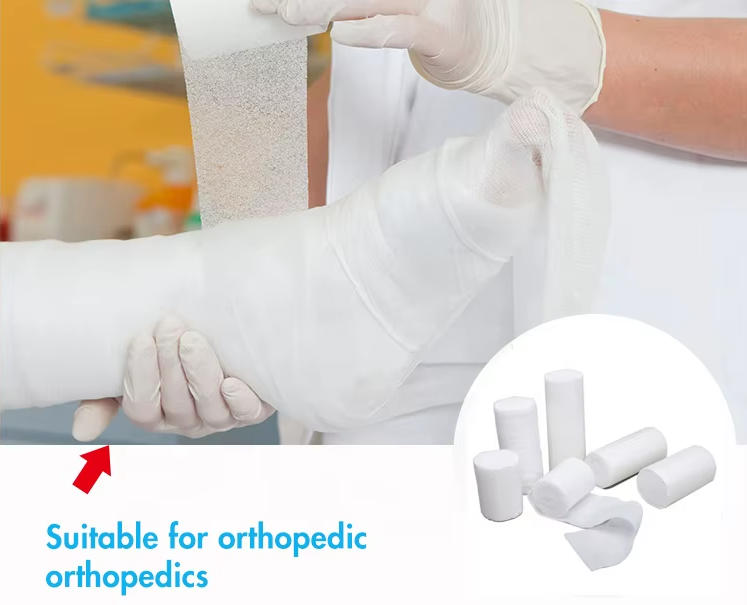
Orthopedic cast padding is a cushioning layer used beneath plaster casts or other external immobilization materials. For manufacturers of orthopedic support products, padding materials need to offer appropriate softness while meeting product-specific requirements for cushioning, breathability, structural uniformity, and processability.
When sourcing materials, comparing only grammage, thickness, or unit price is often insufficient to determine how different materials will perform in the finished product. Even when two nonwoven materials have similar grammage and thickness, differences in fiber composition, fiber arrangement, and bonding processes can affect their feel, compression behavior, and air permeability.
Therefore, when selecting orthopedic cast padding material, buyers should first define the product requirements, then translate expectations for softness, cushioning, and breathability into measurable specifications and sample acceptance criteria.
Why Should Buyers Look Beyond Grammage and Thickness?
Grammage and thickness are basic parameters that are easy to compare during material sourcing, but they cannot represent every aspect of material performance.
Grammage, usually expressed in grams per square meter (GSM), describes the mass per unit area. Thickness measures the material's thickness under specified measurement conditions. These parameters help buyers screen potential materials, but they cannot independently establish whether a material is sufficiently soft, how it behaves under compression, or how readily air can pass through its structure.
For example, a thicker material does not necessarily provide better cushioning. If its structure becomes significantly thinner under pressure, its actual cushioning performance may differ from the buyer's expectations. Similarly, a higher GSM does not automatically mean that a material is softer or more breathable.
For plaster cast padding projects, a more reliable approach is to evaluate GSM, thickness, fiber composition, structural uniformity, and the performance requirements of the intended product together. Sample testing should then confirm whether the selected specifications meet the actual design requirements.
What Should Buyers Look for in Softness, Cushioning, and Breathability?
Softness: Is the Surface and Overall Feel Consistent?
Softness is an important material characteristic to consider when selecting orthopedic cast padding. For material manufacturers and buyers, softness should not be judged solely by a single tactile assessment. Consistency of feel and structure across different areas of the material also matters.
Fiber type, fiber fineness, web distribution, and the way fibers are bonded can all affect the softness of a nonwoven material. Locally stiff areas, uneven thickness, or inconsistent fiber distribution may affect subsequent processing and finished-product consistency.
During sample evaluation, buyers can check whether the material surface is uniform, whether its feel is consistent across different areas, and how it compares with an approved reference sample.
However, softness alone does not demonstrate that a material meets every requirement for a particular medical product. Final material selection must still take the product design, applicable standards, and necessary validation results into account.
Cushioning: Does the Material Meet the Design Requirements Under Compression?
Cushioning concerns how a material behaves under pressure and whether it maintains the structural performance required by the product design.
For orthopedic cast padding, buyers should not simply equate greater thickness with better cushioning. Fiber structure, density, thickness, and bonding strength can all affect how a material responds to compression.
If a product has specific cushioning requirements, buyers should work with the material supplier to establish an appropriate evaluation method. Depending on the product design, this may include measuring thickness changes under defined test conditions, examining structural stability, or evaluating compression recovery. The actual test items and acceptance ranges should be determined by the product requirements and applicable standards rather than copied directly from unrelated nonwoven products.
For material suppliers, understanding the customer's target thickness, intended use conditions, and finished-product structure helps identify a suitable material option instead of recommending a product based on GSM alone.
Breathability: Does the Fiber Structure Allow Air to Pass Through?
Breathability is a performance characteristic worth confirming when sourcing breathable cast padding material.
The distribution of fibers and the pore structure within a nonwoven material can affect how easily air passes through it. A more open structure may have different air permeability from a denser structure, but actual breathability cannot be determined reliably from appearance or touch alone.
Buyers should define the required breathability and, where necessary, compare samples using an agreed testing method. Testing conditions should be kept consistent so that the results can be compared meaningfully.
In addition, the air permeability of the base material is not necessarily the same as that of the finished product. If the final product contains additional material layers or undergoes lamination or other composite processing, relevant performance should be evaluated in the context of the final structure.
How Do Fiber Composition and Nonwoven Manufacturing Processes Affect Material Performance?
Nonwoven materials are not a single standardized product category. Different fiber compositions, web-forming methods, and fiber-bonding processes create different material structures, which can influence softness, thickness, strength, breathability, and processability.
Needle-punched nonwoven materials are produced by mechanically entangling fibers with needles to form a fiber web with a certain thickness and structural stability. By adjusting fiber types, fiber proportions, GSM, and production parameters, manufacturers can develop materials with different structures to suit different product requirements.
Other nonwoven manufacturing processes may also be appropriate for different padding designs. The choice of process should depend on the target performance, downstream processing methods, and finished-product requirements. A material should not be considered suitable based solely on the label "nonwoven fabric" or "needle-punched felt."
For orthopedic cast padding projects, buyers should explain the intended application, desired softness, cushioning requirements, and breathability targets to the supplier. They should also confirm whether the material composition and manufacturing process can support those requirements.
For medical products involving human contact, buyers should also confirm the raw materials, manufacturing processes, quality controls, and applicable compliance requirements based on the intended use, target market, and relevant regulations. General nonwoven material performance does not automatically establish suitability for a specific medical application.
How Should Buyers Define Material Specifications?
GSM and Thickness
GSM and thickness are basic parameters that should be clarified at the quotation stage. Buyers should provide a target GSM, a thickness range, and acceptable tolerances whenever possible, rather than simply asking whether a supplier has a "soft padding material."
If a project is still in the development stage, buyers can compare samples in different specifications before confirming the final range based on sample performance and product design.
GSM and thickness should be specified separately. Even when two materials have similar GSM, differences in fiber structure and compaction can result in different thicknesses and tactile properties.
Fiber Composition and Structure
Buyers should confirm the fiber types, fiber composition, and relevant manufacturing details. They should also identify which parameters must remain fixed as part of the purchasing specification.
If the product has specific requirements for softness, cushioning, or breathability, those requirements should be linked to the material composition and structure rather than replaced by a single parameter.
For customized projects, buyers should distinguish between mandatory requirements and parameters that can be adjusted after sample evaluation. This helps suppliers propose a more suitable material option.
Roll Dimensions and Downstream Processing Requirements
In addition to material performance, roll width, roll length, slit dimensions, and packaging can affect downstream processing and purchasing costs.
Buyers should specify whether the material will be supplied in rolls, sheets, or custom-cut dimensions. They should also provide the required width, processing direction, and other relevant dimensional requirements for their equipment.
If the material will undergo slitting, lamination, or other processing, these requirements should be explained in advance. This allows the supplier to evaluate material stability during processing and helps reduce specification mismatches during bulk production.
How Can Buyers Evaluate Whether a Sample Is Suitable for the Intended Product?
The purpose of sample evaluation is not simply to select the softest material or the one with the greatest thickness. It is to confirm whether the material meets the actual requirements of the intended product.
Step 1: Define the application and the material's role. Buyers should explain the intended application, target product structure, and requirements for softness, cushioning, and breathability.
Step 2: Confirm the basic specifications. At a minimum, record fiber composition, GSM, thickness, material dimensions, and supply format. This ensures that different samples can be compared using consistent baseline information.
Step 3: Establish sample acceptance criteria. Determine the performance characteristics to be compared, the test conditions, and the acceptable ranges based on the product design. If a particular characteristic is especially important, agree on the validation method before placing a bulk order.
Step 4: Check actual processing performance. If the material will undergo slitting, lamination, or other downstream processing, evaluate it under appropriate processing conditions. Do not make the final decision solely on the appearance or feel of an unprocessed sample.
Step 5: Keep approval records. Maintain records of approved samples, material specifications, and test results. These records help buyers verify consistency during subsequent bulk production.
For products intended for medical applications, passing a basic material performance evaluation does not mean that all required medical product validation has been completed. Buyers must still complete the relevant evaluations and compliance checks required for the intended market.
How Can Buyers Maintain Material Consistency Before Bulk Purchasing?
For importers, medical consumables manufacturers, and OEM/ODM buyers, sample approval is only one part of the sourcing process. Maintaining the agreed material specifications throughout bulk production is equally important.
Before placing an order, buyers should confirm the material composition, GSM, thickness, dimensions, key performance requirements, acceptance methods, packaging, and batch inspection requirements with the supplier. For projects based on approved samples, retain a reference sample or mutually confirmed specification document for comparison against subsequent orders.
If a product has defined requirements for softness, cushioning, and breathability, connect these characteristics to specific evaluation methods and acceptance ranges. Avoid relying solely on subjective descriptions such as "soft" or "breathable" as bulk acceptance criteria.
When selecting a supplier, a factory with stable production capacity, established quality management processes, and customization capabilities can make it easier to coordinate material composition, specifications, and processing requirements. HuiZhou JinHaoCheng Nonwovens Co., Ltd. offers various nonwoven material manufacturing and customized processing capabilities and can discuss material options based on the customer's application and specification requirements. For medical-related projects, the suitability of a specific material for its intended product must still be established through mutually confirmed technical information, sample evaluation, and any necessary compliance validation.
If you are sourcing materials for medical product development, explore our medical needle-punched nonwoven fabric and provide the intended application, target GSM, thickness, fiber composition, and performance requirements when making an inquiry. This information helps establish a more focused discussion about potential material options.
Conclusion: Choose Orthopedic Cast Padding Based on Application Requirements
When selecting orthopedic cast padding, GSM and thickness are only basic reference parameters. Softness, cushioning, breathability, material structure, and downstream processing requirements should also be evaluated in relation to the intended product.
For orthopedic padding manufacturers and medical material buyers, a more effective sourcing process starts by defining the required product performance, then establishing basic specifications and sample acceptance criteria before confirming quality control requirements for bulk purchasing.
By translating application requirements into clear, verifiable material specifications, buyers can compare supplier proposals more effectively and establish a more consistent basis for quality control in subsequent bulk production.




