
What Determines Meltblown Nonwoven Fabric Price? Six Factors Behind a Supplier Quote
When sourcing meltblown nonwoven fabric, buyers often encounter a familiar situation: several suppliers provide quotations with significantly different prices, even though all of them describe their products as PP Meltblown Nonwoven Fabric. Why can the prices vary so much when the product name appears to be the same?
The difference is usually not just a matter of supplier profit margins or pricing strategies. Raw materials, product specifications, special treatments, order quantities, slitting and packaging requirements, and delivery conditions can all affect the final quotation.
Another important factor is the pricing unit. Some suppliers quote by kilogram, others by square meter, while some provide prices per roll. Without standardizing the specifications and commercial terms first, comparing the figures on different quotations can lead to misleading conclusions.
For importers, wholesalers, filtration material manufacturers, and OEM buyers, the real objective is not simply to find the lowest quoted price. It is to determine whether the products covered by the quotations are equivalent, whether all relevant costs are included, and whether the delivered material will meet the requirements of the intended application.
This article examines six cost factors that influence Meltblown Nonwoven Fabric Price and explains how buyers can compare supplier quotations on a consistent basis.
1. Raw Materials and Material Structure: Why Can PP Meltblown Fabric Have Different Prices?
Raw materials are one of the basic factors affecting meltblown fabric prices.
Polypropylene (PP) is a common raw material for meltblown nonwoven fabric. However, buyers should not assume that products from different suppliers are identical simply because both are described as PP meltblown fabric.
Different PP grades, raw material quality requirements, and material formulations may affect production suitability, material properties, and cost. For projects with specific performance requirements, suppliers also need to confirm whether the selected raw material is suitable for the intended application.
In addition to the basic raw material, the material structure should also be clarified.
For example, are you purchasing single-layer PP meltblown fabric or a composite material? Does the product need to be combined with spunbond nonwoven, another nonwoven material, or a functional layer? If the quotation covers a composite material, it should not be compared directly with the price of ordinary single-layer meltblown fabric.
When requesting quotations, buyers should clearly specify the material type, raw material requirements, single-layer or composite construction, and any special formulation or functional requirements.
It is important to note that changes in raw material prices alone cannot explain every difference between supplier quotations. To determine whether quotations are comparable, buyers need to evaluate raw materials, material structure, and final product specifications together.
2. GSM, Thickness, Width, and Roll Dimensions: Standardize the Specifications Before Comparing Unit Costs
GSM, thickness, width, and roll length are among the specifications most likely to cause inconsistencies when comparing meltblown fabric quotations.
GSM refers to the mass per unit area, usually expressed in g/m². Different GSM values mean different material weights per square meter, which can affect material costs.
However, buyers should not compare GSM alone. Even when two quotations specify the same GSM, differences in thickness, material structure, or other performance requirements may mean that the products are not equivalent.
Width and roll length are equally important.
For example, Supplier A may quote a roll with a different width and length from Supplier B. Even if the two suppliers offer similar prices per roll, the actual area contained in each roll may be different. Comparing only the price per roll does not show which quotation offers better value.
How Can You Convert Different Quotations into Comparable Units?
If a supplier quotes by roll, buyers can first calculate the theoretical area of each roll:
Roll area (m²) = Roll width (m) × Roll length (m)
Then calculate the price per square meter:
Price per m² = Price per roll ÷ Roll area
If a supplier quotes by kilogram, the theoretical area can also be calculated using the GSM:
Theoretical area (m²) = Material weight (kg) × 1,000 ÷ GSM (g/m²)
These calculations are intended only to standardize the pricing unit. They do not represent the actual usable area of the material and cannot replace confirmation of thickness, performance, roll quality, splice quantity, and usable yield.
For example, two suppliers may both offer PP meltblown fabric, but one quotes by kilogram while the other quotes by square meter. Buyers should first confirm that the GSM, material structure, width, and roll length are comparable before converting the prices into the same unit.
If the product specifications are different, converting both quotations into a price per square meter still does not make them directly comparable.
When requesting a quotation, buyers should specify at least the GSM, thickness, width, roll length, core requirements, roll weight, and whether roll splices are acceptable. For projects with strict dimensional requirements, specification tolerances should also be confirmed.
3. Electret Treatment, Surface Treatment, and Performance Verification: How Can Special Requirements Affect the Price?
Not all meltblown fabrics use the same treatment methods, and not every application requires electret treatment or third-party performance testing.
Buyers should therefore clarify the final application before deciding which treatments and verification requirements are necessary.
Electret Treatment
In certain air filtration applications, meltblown materials may require electrostatic electret treatment to meet specific filtration performance requirements.
Electret treatment involves additional material and process requirements. If buyers need electret meltblown fabric, they should clarify whether electret treatment is required, what performance targets apply, which test methods will be used, and whether relevant test records must be provided.
A supplier's use of terms such as "Electret" or "High Filtration Efficiency" does not, by itself, prove that the product meets the requirements of a specific purchasing project.
Other Surface Treatments or Functional Requirements
Some projects may require special surface treatments, lamination, or other functional properties.
These requirements may involve additional materials, processing steps, or quality verification, so the quotation needs to be based on the specific requirements.
However, buyers should not directly compare ordinary meltblown fabric with specially treated products. Nor should they assume that every special treatment is suitable for their application.
Performance Verification and Third-Party Testing
If a customer requires filtration efficiency, pressure drop, or other performance test data, the supplier needs to confirm the test items, test methods, sample quantity, report requirements, and whether testing by a third-party laboratory is necessary.
These requirements may affect sample preparation, testing arrangements, and project costs.
It is particularly important to ensure that the testing requirements are relevant to the intended application. Results obtained using different test methods and conditions should not be compared directly.
If you need more information about test reports and performance verification for meltblown filter media, refer to the related buyer guide on Meltblown Filter Media Requirements.
When requesting quotations, buyers should distinguish between the price of standard material, the price of specially treated material, and quotations that include testing services. This helps prevent comparisons between quotations with different service scopes.
4. Order Quantity and Production Planning: Why Can Bulk Orders Affect the Unit Price?
Order quantity is one of the factors suppliers need to consider when calculating a quotation.
When product specifications are the same, order quantity may affect raw material purchasing, production planning, equipment preparation, packaging, and the allocation of order management costs.
For standard specifications, larger order quantities may make it easier for suppliers to arrange continuous production and raw material preparation, potentially reducing some unit costs.
However, this does not mean that prices will always decrease by a fixed percentage as order quantities increase.
If an order requires special widths, non-standard specifications, different material combinations, or additional treatments, the supplier still needs to calculate the costs according to the actual production requirements, even when the order quantity is relatively large.
Buyers should also distinguish between the quantity of a single order and a long-term purchasing forecast.
For example, a customer may plan to purchase a certain quantity of meltblown fabric every month, but each individual order may be relatively small. The supplier needs to confirm whether these orders can be combined into a production schedule, whether separate raw material preparation is required, and whether the goods need to be delivered in batches.
These arrangements may affect the final quotation.
When requesting a quotation, do not provide only the estimated annual purchasing volume. It is better to specify the quantity per order, expected purchasing frequency, whether split deliveries are required, and whether there is a stable plan for repeat orders.
A quotation for Bulk Meltblown Fabric should be based on a clearly defined order quantity and delivery plan, rather than a general annual demand estimate alone.
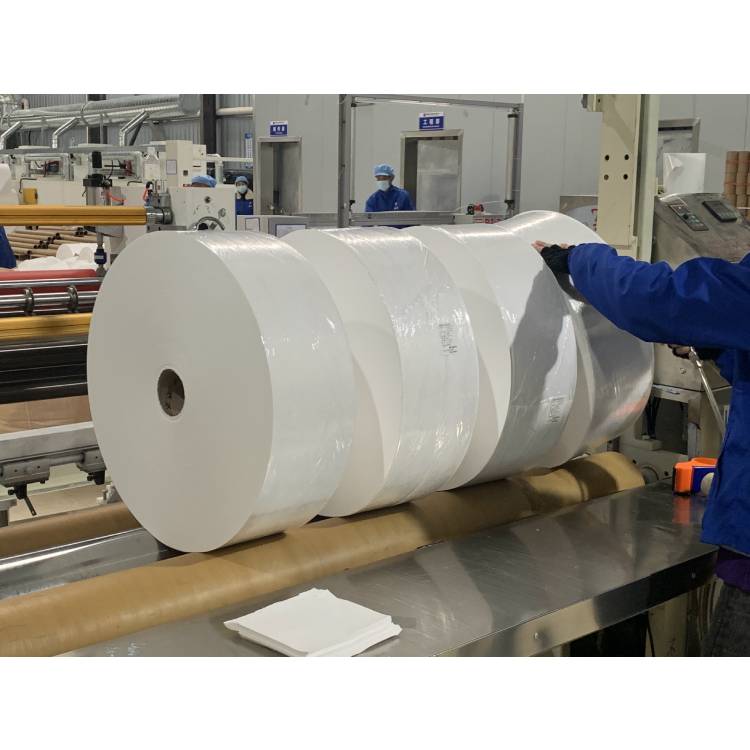
5. Slitting, Packaging, and Processing Requirements: How Does the Delivery Format Affect the Cost?
The purchasing cost of meltblown fabric depends not only on the material itself but also on the form in which the supplier needs to deliver it.
The production and downstream processing arrangements may differ between standard-width jumbo rolls and products that require multiple narrow widths, smaller rolls, or specified lengths.
Slitting Requirements
If buyers need master rolls to be slit into multiple narrower rolls, the supplier needs to arrange processing according to the required dimensions.
Buyers should specify the finished width, length, number of rolls, dimensional tolerances, and whether splices are acceptable.
If one order includes several widths or roll lengths, these requirements should also be stated when requesting a quotation because different slitting arrangements may affect processing and packaging costs.
Packaging Requirements
Standard packaging and customized packaging may involve different requirements.
For example, buyers may request individual packaging, moisture-resistant packaging, specified labels, brand identification, or export packaging for transportation. The actual packaging materials and procedures need to be confirmed according to the requirements.
If the packaging solution involves customized materials, printing, or special labels, additional costs may apply.
Other Processing Requirements
If the material also requires lamination, cutting, or other downstream processing, the quotation should clearly state whether these services are included in the unit price.
Buyers should ask suppliers to clarify the price scope for the material itself, processing services, and packaging. This helps avoid misunderstandings about additional charges later.
Therefore, when requesting a quotation, specify the final product format you need rather than simply writing "meltblown fabric roll."
6. Shipping, Trade Terms, and Delivery Conditions: Why Is the Ex-Works Price Not the Final Purchasing Cost?
Supplier quotations may use different delivery terms.
Some quotations are based on factory delivery, while others include certain export-related costs. Some may also include international transportation or part of the costs at the destination.
If buyers do not confirm the trade terms, they may mistakenly compare quotations that cover different cost scopes.
Confirm the Trade Terms
When requesting a quotation, specify the agreed Incoterm and named place, such as EXW, FOB, or CIF.
Different Incoterms define different responsibilities for costs, risks, and transportation arrangements between the buyer and seller. Buyers should not assume that all costs are included simply because a quotation states FOB or CIF. The named port, transportation scope, and other agreed conditions also need to be checked.
Confirm the Shipping Method and Destination
Meltblown fabric is commonly delivered in rolls. Roll dimensions, weight, packaging, and order quantity may all affect transportation arrangements.
Buyers should specify the destination country, destination port or delivery address, and whether sea freight, air freight, or another shipping method is required.
If a supplier provides only a factory price while the buyer needs a DDP door-to-door quotation, the two quotations do not cover the same delivery scope.
Confirm the Quotation Validity and Payment Terms
Raw material costs, transportation expenses, and exchange rates may change over time. Buyers should therefore confirm the quotation validity period, payment method, and payment schedule.
If a quotation does not specify a validity period, the price and delivery conditions should be reconfirmed before placing an order after a long delay.
For a meaningful comparison, product prices, processing fees, packaging costs, shipping expenses, and trade terms should be included in the same cost comparison rather than evaluated only by the material unit price.
7. How Can Buyers Compare Meltblown Fabric Quotations Fairly?
When comparing Meltblown Nonwoven Fabric Price, the most important principle is to standardize the product specifications and quotation scope before comparing prices.
For example, Supplier A may quote ordinary PP meltblown fabric, while Supplier B may quote electret-treated material with testing services included. Even if both quotations are expressed per square meter, they cannot be compared directly.
Buyers should use the same specification requirements when requesting quotations from different suppliers.
Comparison Item | What Should Be Confirmed? |
Raw Material | PP or other material, raw material requirements, and material structure |
Product Type | Single-layer meltblown fabric or composite material |
GSM | Basis weight and allowable tolerance |
Thickness | Required thickness and measurement conditions |
Width | Finished width and dimensional tolerance |
Roll Length | Length per roll, number of rolls, and roll requirements |
Treatment | Whether electret treatment or other surface treatments are required |
Performance Requirements | Required performance indicators and test conditions |
Testing Services | Whether test reports or third-party testing are required |
Processing Requirements | Whether slitting, lamination, or other downstream processing is needed |
Packaging Requirements | Standard packaging or customized packaging |
Order Quantity | Quantity per order, purchasing frequency, and split-delivery requirements |
Trade Terms | EXW, FOB, CIF, DDP, or other terms and the named place |
Payment Terms | Payment method, payment schedule, and quotation validity |
After confirming these details, buyers can compare the price per kilogram, per square meter, or per roll, as well as the corresponding total purchasing cost.
If one supplier offers a significantly lower quotation, do not immediately assume that it represents a better price. First check whether there are differences in GSM, roll length, missing special treatments, excluded testing services, or transportation costs that have not been included.
On the other hand, a higher quotation does not automatically mean better material quality. Buyers still need to verify whether the product meets their requirements through specifications, samples, and appropriate test results.
A fair quotation comparison is not about identifying the supplier with the lowest number. It is about determining which supplier can provide a product that best meets the project's requirements under the same specifications, quality expectations, and delivery conditions.
8. What Information Should You Prepare Before Requesting a Quotation from JHC?
If you are looking for a Meltblown Fabric Manufacturer, it is helpful to prepare your basic specifications and purchasing plan before sending an inquiry.
For a standard meltblown fabric order, you should at least specify the material type, GSM, thickness, width, roll length, and estimated order quantity.
If your project requires electret treatment, special performance properties, test reports, composite processing, or customized packaging, these requirements should also be stated in advance.
For long-term purchasing projects, it is helpful to provide the estimated monthly or annual purchasing volume and indicate whether split deliveries are required.
HuiZhou JinHaoCheng Nonwovens Co., Ltd. lists meltblown nonwoven materials and related customized product options on its website. The product page presents customization options for materials, width, length, color, and OEM/ODM services. Specific material specifications, treatment methods, processing requirements, testing items, and order conditions should be confirmed according to the actual project requirements.
Buyers can provide the product application, material requirements, target specifications, order quantity, and delivery destination together when contacting the supplier. This helps the supplier assess the quotation scope and reduces the time spent on repeated clarification.
Conclusion: Make Sure the Quotation Conditions Match Before Comparing Meltblown Fabric Prices
Meltblown Nonwoven Fabric Price is not determined by a single factor.
Raw materials and material structure define the basic material requirements. GSM, thickness, width, and roll length affect product specifications and unit costs. Electret treatment, special processing, and performance verification may add relevant costs. Order quantity, slitting, packaging, and shipping conditions further influence the final purchasing expenses.
Therefore, buyers should not select a supplier based only on the quoted price per kilogram, square meter, or roll.
A more reliable approach is to standardize the material, specifications, treatment methods, testing requirements, order quantity, packaging, and trade terms before comparing supplier quotations.
When all quotations are based on the same conditions, buyers can identify the reasons behind price differences more accurately and choose a supplier whose offer genuinely meets their project requirements.




