Nonwoven Fabric Basics and Buying Guide: Types, Applications and Manufacturing Processes
Short Description:
Learn the basics of nonwoven fabric, including its definition, key properties, manufacturing processes and major applications. This guide helps importers, wholesalers and industrial buyers choose suitable nonwoven materials and understand the value of customized OEM solutions from an experienced manufacturer.
What Is Nonwoven Fabric?
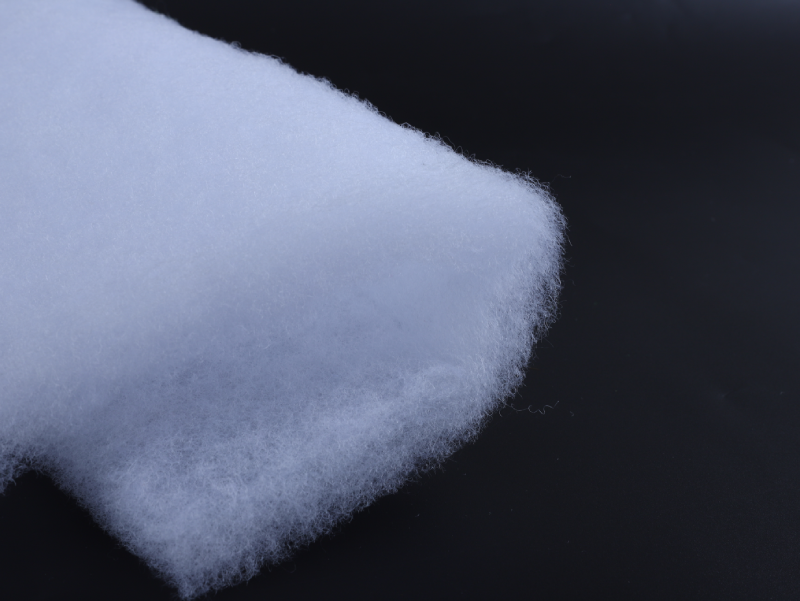
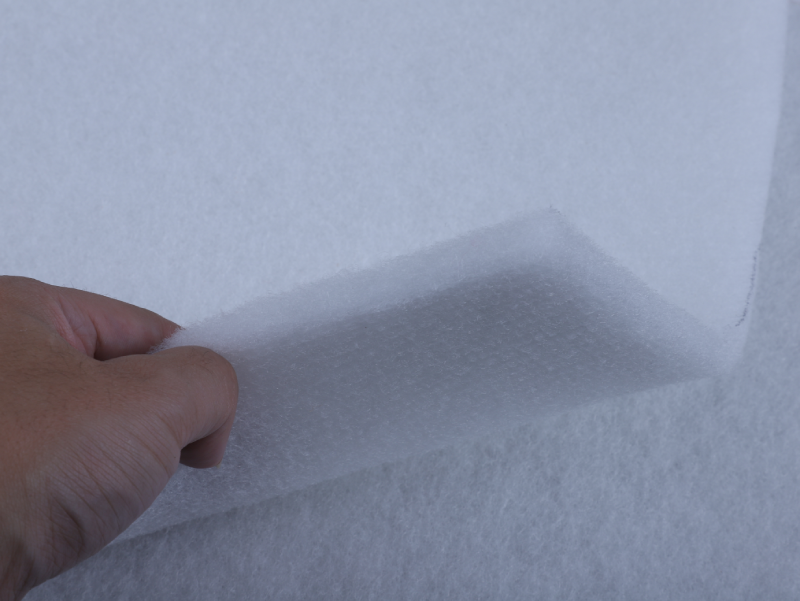
The more accurate technical name for nonwoven fabric is nonwoven, also commonly referred to as non-woven material. Unlike traditional textiles, nonwoven fabric does not require spinning yarns and weaving them into fabric.
Instead, short fibers or continuous filaments are arranged in a directional or random web, and the fiber web is then bonded through mechanical, thermal or chemical methods to create a material with the required strength and functional properties.
This manufacturing approach differs fundamentally from conventional textile production. It offers a relatively short production process, high production efficiency, flexible raw material selection, controllable costs and a wide range of applications.
For buyers, it is important to understand that nonwoven fabric is not a single material. Different fiber types, GSM, thickness, density, softness and bonding methods can significantly affect the final performance and application.
Therefore, when sourcing nonwoven fabric, defining the end use is often more important than simply comparing prices.
What Are the Main Properties of Nonwoven Fabric?
One of the key advantages of nonwoven fabric is its flexibility in material design. Different fibers and manufacturing processes can be combined to achieve different performance characteristics.
Common properties include softness, breathability, absorbency, wear resistance, filtration performance, thermal insulation, water resistance and certain flame-retardant properties.
Depending on the structure and application, nonwoven fabric can range from lightweight and soft materials to thick, dense and highly durable needle punched felt.
For industrial buyers, this flexibility makes it possible to adjust product specifications according to the actual application instead of being limited to one standard material.
What Are the Common Types of Nonwoven Fabric?
Nonwoven fabric can be classified according to its manufacturing process. Since each process creates a different fiber structure, materials can vary significantly in terms of hand feel, strength, thickness, absorbency and applications.
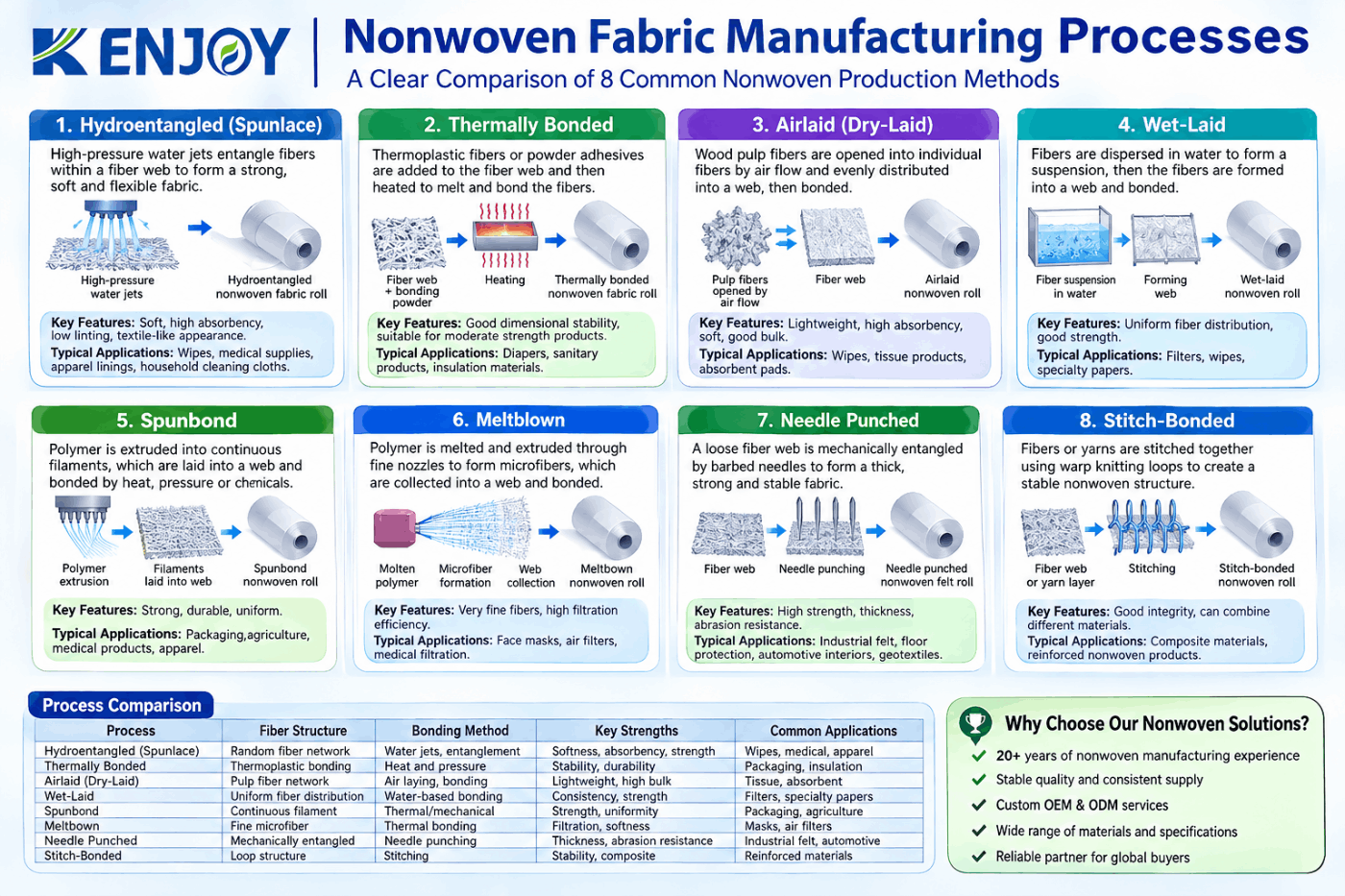
Hydroentangled Nonwoven Fabric
Hydroentangled nonwoven fabric, also known as spunlace nonwoven, is produced by using high-pressure fine water jets to entangle fibers within a fiber web. This process creates a strong and integrated nonwoven structure.
A typical production process includes fiber blending, opening and cleaning, carding and web formation, pre-wetting, hydroentanglement, surface treatment, drying and winding.
Since the process does not rely on conventional resin binders, it can maintain the inherent softness of the fiber web.
Hydroentangled nonwoven fabric is commonly characterized by softness, good drape, relatively high absorbency, low linting and a textile-like appearance. It is widely used for wipes, cleaning materials, medical and hygiene products, apparel-related materials and certain decorative applications.
Thermally Bonded Nonwoven Fabric
Thermally bonded nonwoven fabric is produced by adding fibrous or powdered thermoplastic bonding materials to the fiber web. The web is then heated so that the bonding material melts and forms a stable structure after cooling.
This process is suitable for products that require a certain level of structural stability and dimensional retention.
Airlaid Nonwoven Fabric
Airlaid nonwoven fabric is also known as airlaid paper or dry-laid papermaking nonwoven material.
The basic process involves opening wood pulp into individual fibers and using an airflow system to distribute the fibers into a web. The web is then bonded to form the finished material.
This process is suitable for applications that require lightweight construction, absorbency and efficient production.
Wet-Laid Nonwoven Fabric
Wet-laid nonwoven fabric is produced by dispersing fiber raw materials in a water medium. Different fibers are mixed into a suspension, which is then transferred to a web-forming system. The fibers form a web in a wet state before being bonded.
This process can provide relatively uniform fiber distribution and is suitable for applications where material consistency is important.
Spunbond Nonwoven Fabric
Spunbond nonwoven fabric is mainly produced from polymer raw materials. The polymer is extruded and stretched into continuous filaments, which are then laid into a web and bonded through thermal, mechanical or other bonding methods.
Because spunbond materials are made from continuous filaments, they are widely used in packaging, agriculture, medical and hygiene products and other applications.
Meltblown Nonwoven Fabric
The basic meltblown production process can be summarized as:
Polymer feeding → Melting and extrusion → Fiber formation → Fiber cooling → Web formation → Bonding
The fibers produced through meltblown technology are typically very fine, allowing the material to form a specialized fiber network. This makes meltblown nonwoven particularly useful in filtration-related applications.
Needle Punched Nonwoven Fabric
Needle punched nonwoven fabric is a type of dry-laid nonwoven material.
Its basic principle is to repeatedly punch a loose fiber web with barbed needles. The needles mechanically entangle the fibers, creating a material with controlled thickness, strength and structural stability.
Compared with some lightweight nonwoven materials, needle punched nonwoven is particularly suitable for industrial materials, filtration materials, acoustic materials, automotive interiors, geotextiles and floor protection applications.
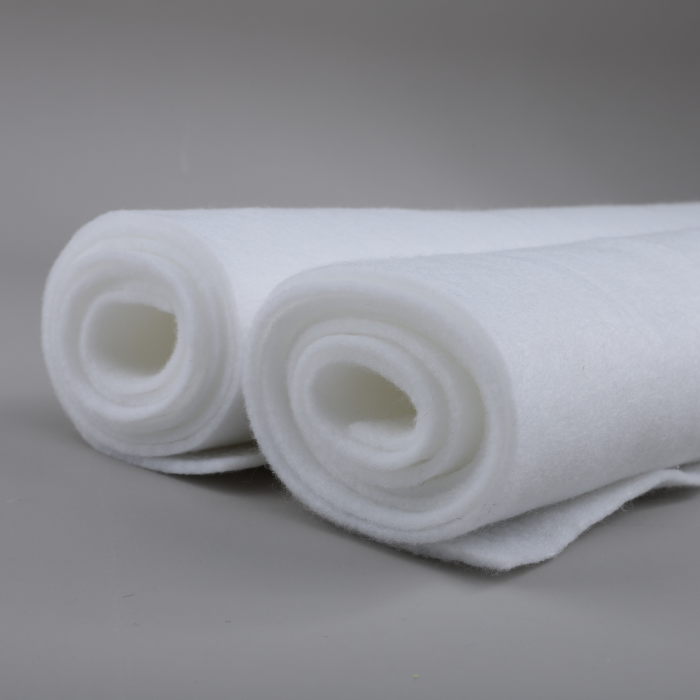
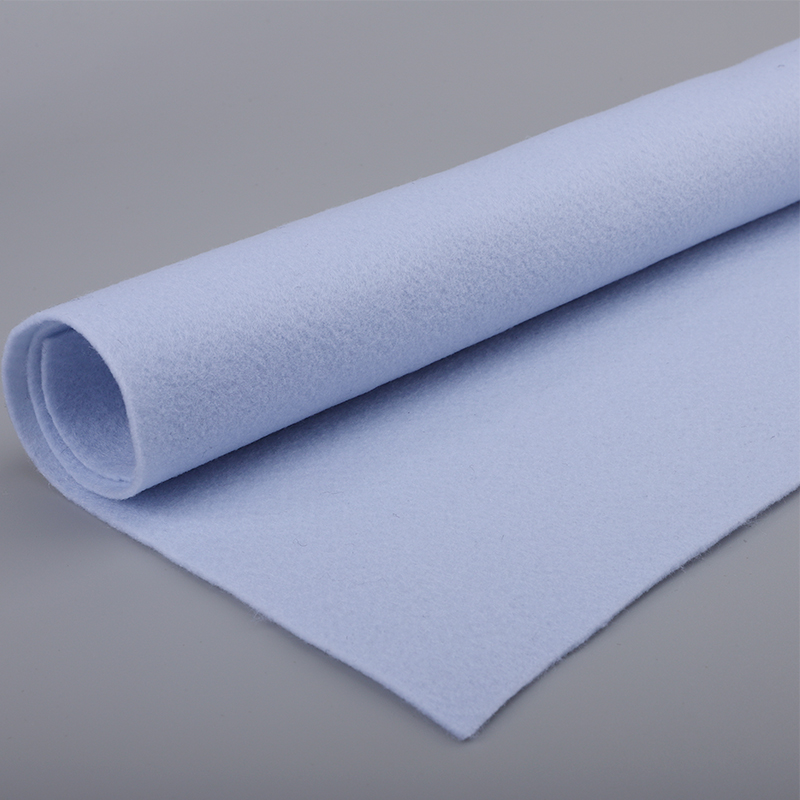
This is also an important product category for a professional needle punched nonwoven felt manufacturer, as the material can be customized according to different applications and technical requirements.
Stitch-Bonded Nonwoven Fabric
Stitch-bonded nonwoven fabric uses warp-knitting loop structures to reinforce fiber webs, yarn layers or other materials, creating a stable nonwoven structure.
This process allows different materials to be combined according to the final application and is suitable for certain composite and reinforced nonwoven products.
Main Applications of Nonwoven Fabric
Nonwoven fabric offers a wide range of raw material options, flexible manufacturing processes, adjustable performance and convenient processing characteristics. As a result, it is widely used in apparel, leather and footwear, home decoration, medical and hygiene products, construction, filtration, industrial applications, automotive, packaging, agriculture and horticulture.
Different fiber structures and manufacturing processes can be selected to meet requirements for strength, softness, breathability, absorbency, wear resistance, sound insulation, thermal insulation, water resistance and filtration.
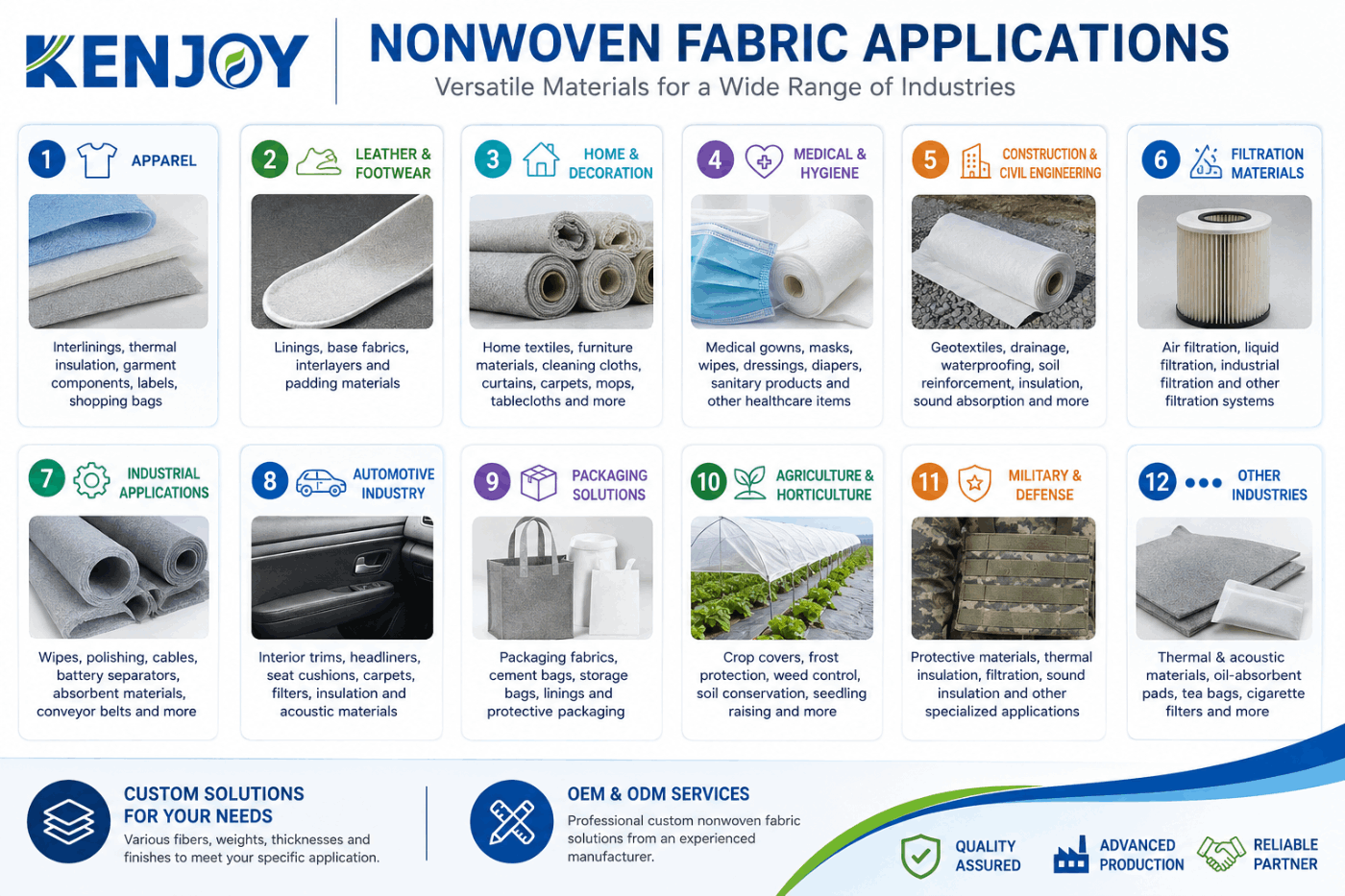
1. Apparel Nonwoven Fabric
Apparel nonwoven fabric is mainly used as an auxiliary or functional material in clothing production. Different GSM, thickness and softness levels can be selected according to the garment structure.
Common applications include:
Clothing and glove interlining: Used inside clothing and gloves to provide support and improve the overall structure and wearing performance.
Thermal insulation and filling materials: Used as filling and insulation materials because of the loft and thermal properties of certain nonwoven structures.
Underwear and outerwear: Selected according to the structure and functional requirements of different garments.
Clothing labels: Used for clothing labels and related auxiliary materials.
Shopping bags: Certain nonwoven materials are lightweight, durable and easy to process, making them suitable for shopping bags and other bag products.
2. Nonwoven Fabric for Leather and Footwear
Nonwoven fabric for leather and footwear is mainly used as an auxiliary material or base material in shoes and leather products. Different thicknesses, strengths and stiffness levels can be selected according to product requirements.
Common applications include:
Lining: Used inside footwear and leather products to support the structure and improve comfort.
Surface material: Certain nonwoven materials can be used as surface materials for specific products.
Base fabric: Used as a base material for leather, synthetic materials and composite products.
Intermediate padding materials: Used inside products to provide padding and structural support.
3. Home Decoration and Household Nonwoven Fabric
Home decoration and household nonwoven fabric covers a particularly broad range of applications. Materials can be selected according to requirements for softness, thickness, wear resistance, breathability and other functional properties.
Common applications include:
Carpets and carpet backing: Used as a backing material to support carpet structures.
Wall covering materials: Used as a base or supporting material for wall decoration products.
Furniture decoration: Applied to sofas, furniture and other home furnishing products.
Dust covers: Used to protect furniture, equipment and other items from dust.
Spring wrapping fabric and isolation fabric: Used to wrap internal spring structures and separate different materials.
Speaker fabric: Used for covering and decorating speakers and related equipment.
Bedding and curtains: Used in bedding, curtains and other home textile products.
Other decorative materials: Used for different types of home decoration and soft furnishing products.
Wiping cloths, wet and dry polishing cloths: Used for cleaning, wiping and polishing according to absorbency, softness and surface structure.
Filter fabric: Used in certain household equipment and daily-use filtration products.
Aprons: Used in household, cleaning and related working environments.
Cleaning bags: Used for cleaning products and storage applications.
Mops: Certain nonwoven materials can be used in mops and cleaning tools.
Napkins, tablecloths and dining cloths: Used in dining and household products.
Ironing felt and soft pads: Used for ironing felt and cushioning materials where softness, thickness and heat resistance are required.
Sleeping bags, rainproof fabric and tents: Used in outdoor products according to specific construction and functional requirements.
4. Medical and Hygiene Nonwoven Fabric
Medical and hygiene nonwoven fabric is an important application area for nonwoven materials. Different fibers and manufacturing processes can be selected to achieve specific levels of softness, breathability, absorbency and structural performance.
Common applications include:
Clinical products: Used for various clinical products and auxiliary materials.
Isolation gowns, caps and shoe covers: Used for protective and isolation products in medical environments.
Dressings and bandages: Used in wound care and related medical products.
Wet towels and cotton pads: Used for wipes, cleaning and personal care products.
Masks and face masks: Used in masks and face protection products according to structural and filtration requirements.
Curtains: Used for separation and partitioning in medical environments.
Mattresses and bed sheets: Used for bedding and related materials in healthcare environments.
Disinfection, blood filtration and antibacterial fabrics: Used in relevant medical, hygiene and filtration products.
Sanitary napkins and diapers: Nonwoven fabric can be used as surface, inner or supporting materials in hygiene products.
Vacuum cleaner bags: Used in certain cleaning and vacuum products.
Tea bags and coffee bags: Used for tea bags, coffee bags and other filtration packaging applications according to material requirements.
Travel underwear: Used in certain disposable or portable hygiene products.
Incontinence products: Used in related personal care and hygiene products.
Dry and wet wipes: Used for medical, hygiene and daily cleaning applications.
Cosmetic tissues: Used in beauty and personal care products.
Lens cleaning paper: Used for cleaning glasses, lenses and other precision surfaces.
Soft pads: Used as cushioning materials in medical care and related products.
Other medical and hygiene materials: Additional nonwoven materials can be developed according to specific product structures and performance requirements.
5. Nonwoven Fabric for Construction, Civil Engineering and Water Applications
Nonwoven fabric is widely used in construction, civil engineering and water-related projects for reinforcement, separation, filtration, drainage, waterproofing, thermal insulation and sound absorption.
Common applications include:
Geotextiles: Used for separation, filtration, drainage and reinforcement in civil engineering.
Asphalt road bases: Used in road construction to improve separation and structural stability.
Road and railway subgrades: Used for separation, reinforcement, filtration and drainage.
Soil reinforcement: Used to improve soil stability in engineering projects.
Drainage: Used for drainage and water management.
Dams: Used in dam and water conservancy projects.
Golf course and tennis court fabrics: Used in sports field construction and base structures.
Artificial turf: Used as a backing or supporting material for artificial turf systems.
Soil sediment and erosion control: Used to help reduce soil loss and erosion in construction areas.
Silt control: Used in relevant engineering projects for sediment and silt management.
Building waterproofing materials: Used as a base or reinforcement material in certain waterproofing products.
Insulating fabric: Used for relevant insulation applications in construction and engineering.
Sound absorption materials: The fiber structure of nonwoven materials can help absorb and reduce certain levels of sound.
Tents: Used in certain outdoor construction and structural materials according to product requirements.
Pipe wrapping fabric: Used for pipe wrapping, protection and separation.
Other building materials: Other functional nonwoven materials can be developed according to engineering requirements.
6. Nonwoven Fabric for Filtration Materials
Nonwoven filtration materials use a three-dimensional fiber network and controlled pore structure to filter air, liquids or specific particles.
According to the application, manufacturers can adjust fiber type, GSM, thickness, density and pore structure to meet different filtration requirements.
These materials are used in industrial filtration, air filtration, liquid filtration and other filtration systems.
7. Industrial Nonwoven Fabric
Industrial nonwoven fabric covers a broad range of applications and can be customized according to specific industrial requirements.
Common applications include:
Coated fabric: Used as a base material for coated products.
Polishing materials: Used for polishing and surface treatment based on fiber structure and wear resistance.
Wiping cloths: Used for cleaning industrial equipment and production lines.
Sterile clothing: Used in relevant cleanroom and protective environments.
Abrasive products: Used in grinding and surface processing applications.
Cable wrapping fabric: Used to wrap and protect cables and related wires.
Battery separators: Used in certain battery-related materials.
Plastic reinforcement fabric: Used as a reinforcing base in composite materials.
Adhesive fabric: Used as a base material for adhesive tapes and related products.
Protective clothing and laboratory clothing: Used for industrial and laboratory protection.
Absorbent materials: Used to absorb liquids, oils and other substances.
Lubricating pads: Used as auxiliary materials in machinery and industrial equipment.
Flame-retardant fabric: Used in products requiring certain flame-retardant properties, depending on the material and manufacturing process.
Conveyor belts: Used in conveyor belt and related industrial products.
Disposable felt: Used for single-use or short-term industrial applications.
Papermaking felt: Used in relevant papermaking production processes.
Acoustic felt: Used for industrial sound absorption and noise reduction.
8. Nonwoven Fabric for the Automotive Industry
The automotive industry is an important application area for nonwoven materials. Their lightweight structure, processability and adjustable properties make them suitable for many automotive components.
Common applications include automotive interiors, headliners, seat cushion linings, carpets, door panels, automotive filter media, vibration-reduction materials and acoustic materials.
Different automotive components have different requirements for GSM, thickness, stiffness, wear resistance and acoustic performance. Therefore, material selection should be based on the specific vehicle component and application.
9. Packaging Nonwoven Fabric
Packaging nonwoven fabric takes advantage of the material's lightweight, flexible and easy-to-process characteristics.
Common applications include composite cement bags, luggage lining, packaging base materials, quilt filling, storage bags, jacquard luggage fabrics and other packaging materials.
Different thicknesses, GSM levels and surface structures can be selected according to packaging requirements.
10. Agricultural and Horticultural Nonwoven Fabric
Agricultural and horticultural nonwoven fabric is mainly used for crop protection, thermal insulation, insect protection and soil conservation.
Common applications include:
Thermal covering: Used for crop covering and temperature protection.
Frost and insect protection: Used to reduce the impact of frost and certain pests on crops.
Water and soil conservation: Used for soil and water management in agricultural and horticultural applications.
Soilless cultivation: Used in certain soilless cultivation systems.
Artificial vegetation: Used in artificial vegetation and ecological engineering.
Lawn protection: Used for lawn covering and protection.
Plant root protection: Used for covering and protecting plant roots.
Seedling raising fabric: Used for seedling cultivation and agricultural production.
11. Nonwoven Fabric for Military and Defense Industries
Military and defense applications generally require materials with specific functional properties and consistent performance.
Depending on the product requirements, nonwoven materials can be used for protection, thermal insulation, filtration, sound insulation, structural support and other specialized applications.
The required material properties should be determined according to the final application and technical specifications.
12. Nonwoven Fabric for Other Industries
Beyond the applications listed above, nonwoven materials can be developed for additional specialized applications by combining different fibers, manufacturing processes and functional treatments.
Examples include thermal and acoustic insulation materials, oil-absorbing felt, cigarette filter materials, tea bags and other specialized industrial and consumer products.
As nonwoven technology continues to develop, new fiber materials, composite processes and functional finishing technologies are expanding the range of possible applications.
What Parameters Should Buyers Consider When Sourcing Nonwoven Fabric?
If you are an importer, wholesaler, brand owner or industrial buyer, simply asking for the price per kilogram is usually not enough to determine whether a nonwoven material is suitable for your market.
The following specifications should be confirmed before placing an order.
Raw Materials
Common raw materials include PP, PET and other synthetic fibers. Different fibers can affect strength, softness, temperature resistance and the final application of the material.
GSM and Thickness
GSM and thickness have a direct influence on the material's coverage, structure and overall performance.
For applications such as floor protection and industrial felt, the appropriate GSM should be selected according to the working environment rather than simply choosing the heaviest material.
Width and Roll Length
For wholesalers, importers and converters, roll width and roll length can directly affect packaging, transportation and downstream processing efficiency.
When requesting a quotation, it is therefore useful to provide the required width, roll length, GSM and packaging requirements.
Softness, Hardness and Surface Finish
Nonwoven materials with the same GSM can still have different levels of softness or stiffness because of differences in fiber structure and manufacturing processes.
Some industrial products require a firm structure, while filling, household and skin-contact applications may place greater emphasis on softness.
Customization Requirements
When standard specifications cannot meet your market requirements, working with a custom nonwoven manufacturer can provide greater flexibility.
Depending on the application, specifications such as GSM, thickness, width, roll length, softness, hardness and surface finish can be customized.
Why Work with an Experienced Needle Punched Nonwoven Manufacturer?
For long-term buyers, supplier stability can be just as important as unit price.
An experienced needle punched felt manufacturer needs to provide more than finished products. Stable raw material management, production capacity, quality control and customization capabilities are all important when establishing a reliable supply chain.
As a China-based needle punched nonwoven felt manufacturer, Jinhaocheng provides needle punched nonwoven production capabilities together with OEM, ODM and customized manufacturing services.
Our product range includes floor protection rolls, Painter Felt, Painter Cover Fleece, needle punched nonwoven felt and other industrial nonwoven materials, supporting importers, wholesalers, distributors and industrial buyers with material and production solutions.
For buyers with ongoing sourcing requirements, working with an experienced nonwoven felt manufacturer in China can help reduce repeated testing and communication between multiple suppliers while making it easier to establish consistent product specifications and quality standards.
How Should Buyers Choose Nonwoven Fabric for Different Applications?
The right nonwoven material should be selected based on the final application.
For floor protection, buyers can consider needle punched nonwoven, protective fleece and Painter Cover Fleece according to the required level of protection.
For industrial filtration, key factors include fiber structure, pore characteristics, GSM, thickness and air permeability.
For automotive interiors, buyers should consider wear resistance, thickness, stiffness, acoustic performance and processing requirements.
For household filling, softness, resilience, breathability and thickness are often more important.
For agricultural covering, GSM, breathability, weather resistance and the specific growing environment should be considered.
For this reason, the most effective sourcing approach is to work backward from the final application and then determine the appropriate material and specifications.
Conclusion: Understanding Nonwoven Fabric Leads to Better Purchasing Decisions
Nonwoven fabric is not a single material, but a broad category of materials produced from different fibers, web-forming methods and bonding technologies.
From hydroentanglement, thermal bonding and spunbond to meltblown and needle punching, each manufacturing process creates a different material structure and serves different applications.
For importers, wholesalers and industrial buyers, the key is to determine the appropriate raw material, manufacturing process, GSM, thickness, width and functional requirements according to the final application.
If you are looking for a reliable nonwoven felt manufacturer or need custom needle punched nonwoven, floor protection materials, Painter Felt or other nonwoven products, working directly with an experienced China factory can provide stronger support for long-term sourcing and product development.
Contact Jinhaocheng for OEM, ODM and customized nonwoven solutions.