What Is PET Absorbent Felt? Applications of Needle Punched Absorbent Felt in Floral, Filter, and Packaging Industries
In many industries, controlling and absorbing excess liquid is an important part of product performance. From flower packaging and fragrance products to filtration systems and fresh produce packaging, manufacturers need an absorbent material that can provide stable liquid absorption, good moisture retention, structural strength, and consistent quality.
This is where PET absorbent felt becomes a practical material solution.
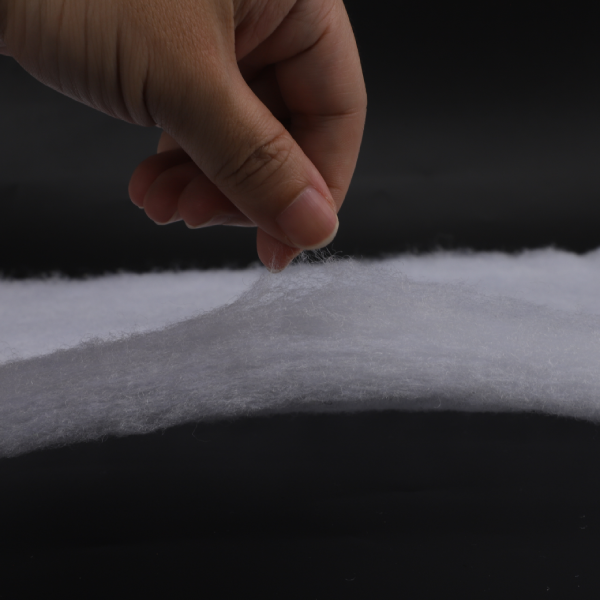
Made from polyester fibers and manufactured through a needle punching process, PET absorbent felt creates a three-dimensional fiber structure with numerous internal spaces. These spaces allow the material to take up and distribute liquid while maintaining its physical structure.
For manufacturers, distributors, and companies developing absorbent products, choosing the right material is not simply about finding something that can absorb water. The material also needs to match the product's thickness, density, size, softness, processing method, and expected service conditions.
As an experienced needle punched nonwoven felt manufacturer, Jinhaocheng provides customized nonwoven materials for different industrial and commercial applications, with support for OEM, ODM, and custom nonwoven products.
What Is PET Needle Punched Absorbent Felt?
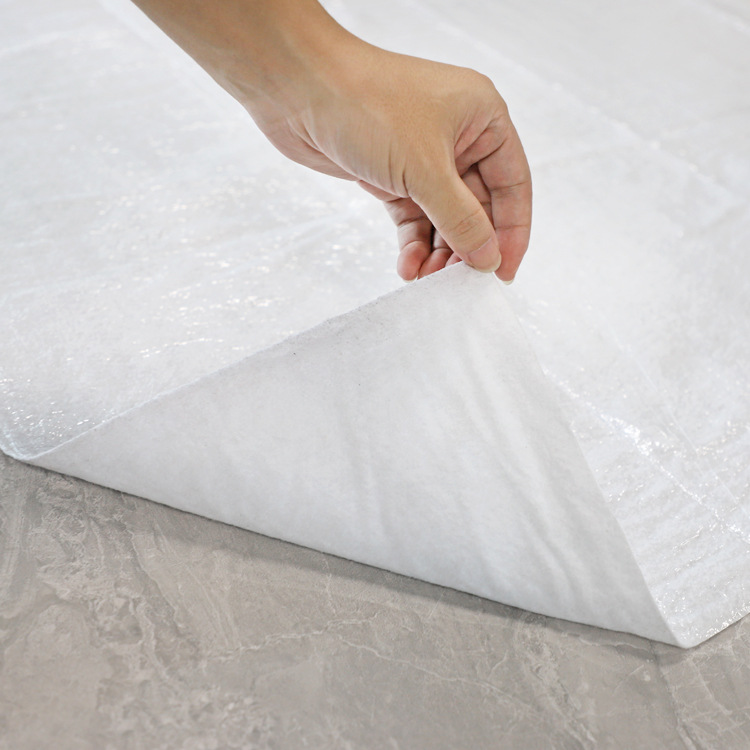
PET absorbent felt is a type of needle punched nonwoven material made primarily from polyester fibers.
During production, polyester fibers are first opened and carded into a relatively uniform fiber web. Special barbed needles then repeatedly penetrate the web, causing individual fibers to move through different layers and become mechanically entangled.
As the fibers become increasingly interconnected, the loose fiber web develops a stable structure with a certain thickness, strength, flexibility, and internal porosity.
This manufacturing principle gives needle punched absorbent felt a different structure from conventional woven fabrics. Instead of relying on yarn intersections, the material obtains its integrity from the physical entanglement of fibers.
The resulting three-dimensional structure provides space for liquid absorption and distribution, making it suitable for a wide range of absorbent products.
Why Is Polyester a Suitable Material for Absorbent Felt?
The raw material has a direct influence on the durability and processing performance of absorbent felt.
Polyester fiber is widely used because it provides good mechanical strength and dimensional stability. When processed into a needle punched structure, the fibers create interconnected spaces that allow liquid to enter and spread through the material.
For manufacturers, another advantage is the flexibility of polyester nonwoven production. By adjusting the fiber composition, fiber arrangement, needle punching density, GSM, and thickness, the material can be developed for different end-use requirements.
This makes PET absorbent felt particularly suitable for customers who require custom nonwoven products rather than a single fixed specification.
What Are the Main Features of PET Absorbent Felt?
Fast Liquid Absorption
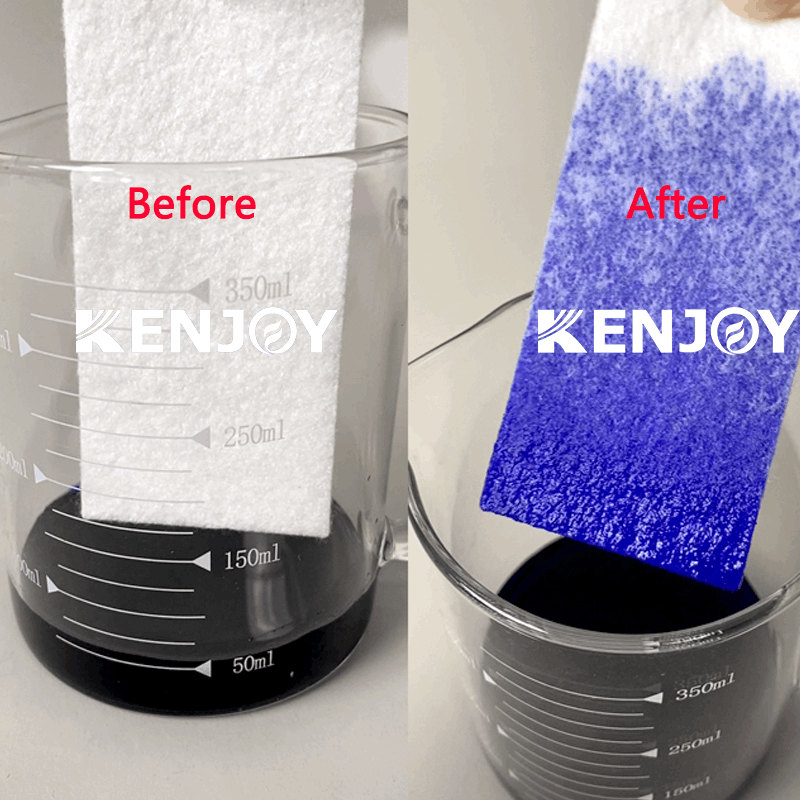
One of the most important characteristics of absorbent felt is its ability to take up liquid efficiently.
The internal spaces within the needle punched fiber structure allow liquid to penetrate the material and spread across a larger area. This can help reduce localized accumulation and improve the overall utilization of the absorbent material.
For applications such as flower packaging and fragrance products, this property can be particularly useful.
Good Moisture Distribution
Absorbing liquid is only one part of the process. In many applications, the liquid also needs to be distributed relatively evenly throughout the material.
The interconnected fiber structure of PET absorbent felt allows moisture to move through the material rather than remaining concentrated in one small area.
This makes it suitable for applications where controlled moisture distribution is important.
Stable Thickness and Structure
For industrial buyers, material consistency is often just as important as absorbency.
A properly manufactured needle punched structure can maintain relatively stable thickness and physical form during converting and assembly.
This is especially important when the absorbent material needs to be die-cut, laminated, assembled into a filter, or incorporated into packaging.
Flexible GSM and Thickness Options
Different applications require different material structures.
A thin absorbent pad may be suitable for fragrance products, while a thicker structure may be more appropriate for flower hydration or certain industrial applications.
By adjusting GSM, thickness, density, and fiber structure, manufacturers can develop absorbent felt for different product requirements.
Where Is PET Absorbent Felt Commonly Used?
Floral Water Absorbent Applications
Fresh flowers require sufficient moisture during storage and transportation.
Floral absorbent felt can hold water and provide a moisture source around the flower stem or root area, making it suitable for certain flower packaging and transportation systems.
The material can be converted into different sizes and shapes according to the packaging structure.
For flower suppliers and packaging manufacturers, customized absorbent felt can help simplify the design of moisture-retaining packaging.
Fragrance and Aroma Products
Absorbent materials are commonly used in products designed to hold and release fragrances.
PET absorbent felt can absorb liquid fragrance formulations and distribute them through the fiber structure.
This makes it suitable for certain fragrance pads, aroma products, air fresheners, and scent-diffusion components.
Different thicknesses and densities can be considered depending on the required absorption capacity and release characteristics.
Filter and Liquid Management Applications
In certain filtration and liquid-management products, absorbent felt can help distribute or retain liquid within a system.
The actual filtration performance depends on the material structure, pore size, density, and application conditions, so buyers should select the appropriate specification according to the final equipment requirements.
As a needle punched felt manufacturer, Jinhaocheng can develop different material structures according to specific application requirements.
Fruit and Food Packaging
Fresh produce packaging may encounter excess moisture caused by condensation, damaged fruit, or natural liquid release.
Absorbent pads made from suitable nonwoven materials can help capture excess liquid inside packaging and maintain a cleaner internal environment.
For packaging manufacturers, material thickness, absorbency, dimensions, and converting performance should all be considered when selecting an absorbent nonwoven.
Household and Daily-Use Products
Because PET needle punched materials can be produced in different thicknesses and shapes, they can also be converted into various household and daily-use absorbent products.
Depending on the final application, manufacturers can adjust softness, density, dimensions, and absorbency requirements.
This flexibility allows polyester absorbent felt to be used beyond a single product category.
How Does the Needle Punching Process Affect Absorbent Felt Performance?
The manufacturing process plays an important role in the final performance of absorbent felt.
During needle punching, thousands of needle penetrations cause the fibers to move between different layers of the web. As the fibers become mechanically entangled, the material gradually develops its final thickness and structural strength.
The number of needle punches, fiber composition, web uniformity, and production settings can influence the final material.
Poor process control may result in uneven thickness, inconsistent density, weak areas, or unstable absorbency.
For bulk buyers, this is one reason why selecting an experienced needle punched felt manufacturer is important. Stable production equipment and standardized manufacturing processes can contribute to more consistent material performance between batches.
How Should Buyers Choose the Right Absorbent Felt?
There is no single absorbent felt specification that works equally well for every application.
The first consideration should be the required liquid absorption capacity.
The second consideration is the required GSM and thickness. A thicker material is not automatically better. The appropriate structure depends on the amount of liquid that needs to be absorbed and the available installation space.
The third consideration is density and fiber structure, which can influence liquid distribution, flexibility, and physical stability.
The fourth consideration is the required shape and dimensions. Buyers may require rolls, sheets, strips, pads, or customized die-cut components.
Finally, buyers should consider the supplier's production capacity, quality control, customization capabilities, and ability to maintain stable bulk supply.
Why Work With a Professional Nonwoven Manufacturer?
For distributors and industrial buyers, purchasing absorbent felt is usually a long-term supply requirement rather than a one-time purchase.
Differences between production batches can create problems during converting, assembly, packaging, or final product manufacturing.
Jinhaocheng has more than 20 years of nonwoven manufacturing experience, with an approximately 26,000 m² production facility and 15 automated needle punching production lines.
As a professional needle punched nonwoven felt manufacturer, nonwoven felt manufacturer, and nonwoven manufacturer China, we provide customized nonwoven materials for a wide range of applications.
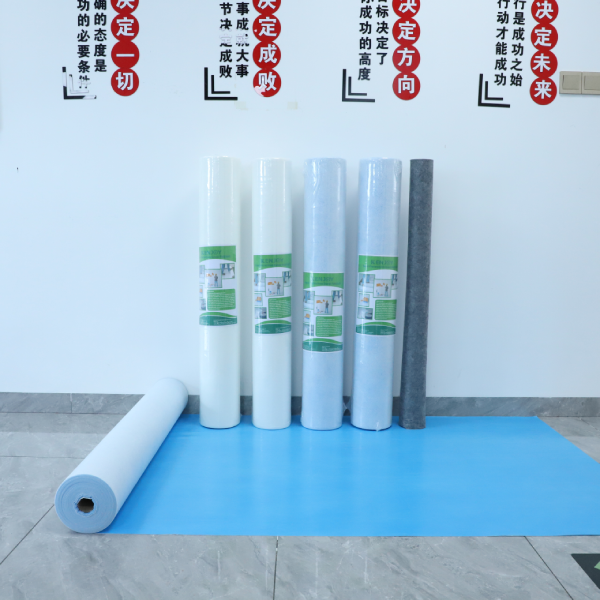
Our product range includes PET absorbent felt, needle punched felt, floor protection felt, painter felt, anti-condensation felt, Soundproofing felt, thermal bonded wadding, and laminated foam fabric.
We also support OEM nonwoven manufacturing, ODM development, and custom needle punched felt according to customer specifications.
For companies looking for a reliable needle felt supplier China, our production capabilities allow us to support projects from material development and sample testing to bulk manufacturing.
What Should Be Confirmed Before a Bulk Order?
Before placing a large order, buyers should clearly confirm the required material specifications.
Important parameters include fiber composition, GSM, thickness, density, width, length, absorbency, color, packaging, and converting requirements.
For customized applications, sample testing is strongly recommended.
Testing the material under actual working conditions can help determine whether the selected absorbent felt provides the required liquid absorption and structural performance.
This approach can reduce the risk of choosing a specification based only on appearance or price.
Conclusion: Why Is PET Absorbent Felt a Versatile Absorbent Material?
PET absorbent felt combines a three-dimensional needle punched structure with the stable physical properties of polyester fiber.
Its ability to absorb and distribute liquid, together with its flexible thickness, density, and dimensional options, makes it suitable for applications including floral packaging, fragrance products, filtration, fresh produce packaging, and various household products.
For manufacturers and distributors, the most important factor is not simply whether an absorbent material can absorb water. The better solution is to match the fiber composition, GSM, thickness, density, absorption requirements, and converting method to the final product.
With more than two decades of manufacturing experience, Jinhaocheng provides custom nonwoven products, OEM and ODM services, and stable production support for customers looking for a professional needle punched nonwoven felt manufacturer and nonwoven manufacturer China.