
PU vs. EVA vs. PE Foam Laminated Fabric: Material Differences and Application Fit
When sourcing foam laminated fabric, PU, EVA, and PE are three commonly considered materials. All three can be used in cushioning, padding, or laminated fabric products, but this does not mean they are interchangeable in every application.
For example, furniture products may require a soft feel and consistent support. Footwear materials may need to provide comfort during bending, cushioning, and compatibility with the product structure. Automotive interior materials may require consideration of dimensional stability, durability, odor, emissions, and specific regulatory requirements. For packaging and protective products, lightweight cushioning and moisture resistance may also be important.
Therefore, when choosing PU Foam Laminated Fabric, EVA Foam Laminated Fabric, or PE Foam Laminated Fabric, buyers should not compare materials based only on their names or prices. They should first identify the function of the foam in the finished product, then evaluate the material together with the fabric structure and actual application conditions.
This article compares the characteristics, potential applications, and sample evaluation considerations of PU, EVA, and PE foam laminated fabrics to help buyers identify a suitable material direction and understand what information they should confirm with suppliers.
What Is Foam Laminated Fabric?
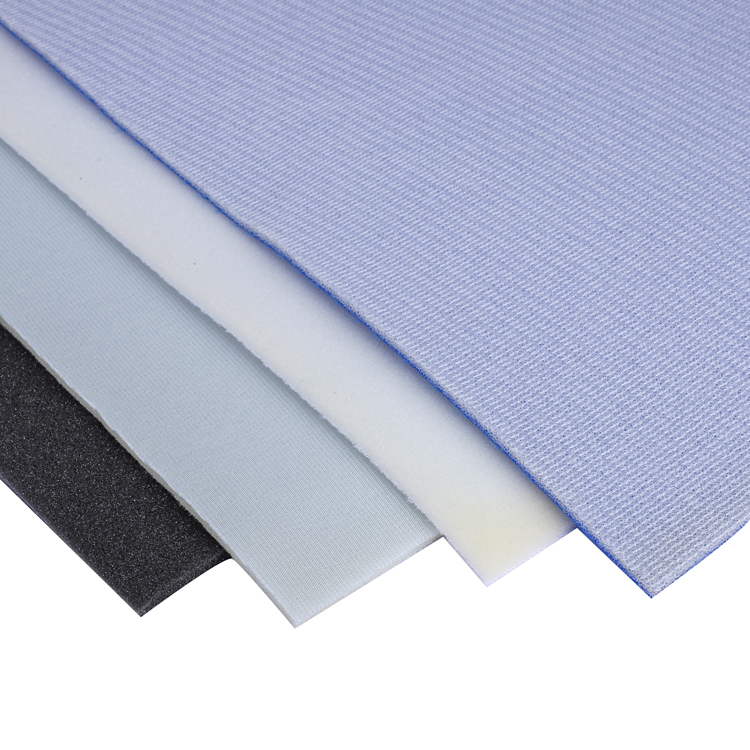
Foam Laminated Fabric is a composite material made by combining foam with fabric, needle-punched nonwoven, knitted fabric, or other suitable substrates. Depending on the requirements of the finished product, different foam types, fabric layers, and composite structures can be used.
In this type of composite material, the foam layer generally provides cushioning, padding, soft support, or certain insulation functions. The fabric layer may contribute surface texture, appearance, abrasion resistance, structural support, or properties required for subsequent processing.
Different layer combinations can affect the final material's hand feel, thickness, flexibility, appearance, and processing compatibility. Therefore, even if two materials both use PU foam, they cannot be assumed to have the same performance simply because they share the same material name.
Buyers should distinguish between two concepts: the characteristics of the foam material itself and the overall performance of the laminated material after combining the foam with fabric. The former helps identify an initial material direction, while the latter is directly related to the finished product's use and processing requirements.
This article focuses on comparing PU, EVA, and PE foam. It does not cover the complete lamination process, base fabric selection, or equipment processing procedures.
PU Foam Laminated Fabric: Softness, Flexibility, and Cushioning Characteristics
PU Foam is short for polyurethane foam. Flexible PU foam can be designed with different formulations and structures to provide a range of softness, support, and elasticity characteristics.
In foam laminated fabric, PU foam is commonly considered for products that require a soft feel, conformability, or cushioning. One of its characteristics is the flexibility to achieve different user experiences through the selection of specific foam grades, rather than relying on hardness alone.
For furniture fabrics, buyers may focus on the feel of the laminated material, seating comfort, and support characteristics. For footwear materials, the foam may need to provide a certain level of softness during contact with the foot while accommodating bending and subsequent processing requirements. For some protective or padding products, cushioning performance may also be a reason to consider PU foam.
However, PU is not a material with one fixed performance profile. Different PU foams can vary significantly in cell structure, density, hardness, elasticity, and recovery after compression. A softer PU foam does not necessarily provide better long-term support, and higher hardness does not automatically make a foam suitable for products requiring conformability and a soft feel.
When selecting PU Foam Laminated Fabric, buyers should confirm the foam grade, thickness, hardness, compression behavior, and overall feel after lamination with the fabric. If the product will be exposed to sustained pressure, appropriate sample testing should also be conducted to determine whether the material meets the actual application requirements.
EVA Foam Laminated Fabric: Lightweight Structure and Impact Cushioning Characteristics
EVA Foam is short for ethylene-vinyl acetate copolymer foam. Common EVA foams are known for their lightweight structure, flexibility, and cushioning characteristics. Some products use a closed-cell structure and can be considered for material designs that require reduced weight and impact cushioning.
The actual performance of EVA foam depends on its formulation, density, hardness, and cell structure. Different grades can range from relatively soft to more supportive, so the final hardness or cushioning effect cannot be determined by the material name alone.
In footwear development, EVA is commonly considered for product structures that require lightweight cushioning. Buyers may focus on material thickness, flexibility, compression behavior, and the overall performance after the foam is combined with upper fabrics, mesh, or other materials.
EVA may also be used in sports products, protective gear, and certain protective applications that require lightweight cushioning and a degree of structural support. However, its suitability for a specific product still depends on the product design, loading conditions, and actual testing requirements.
For EVA Foam Laminated Fabric, buyers should not focus only on whether the material is lightweight. They should also consider hardness, thickness, compression behavior, bending performance, and whether the laminated structure meets the requirements of the finished product.
If the product needs to withstand repeated bending or long-term compression, sample evaluation under conditions close to actual use is recommended. Material selection should not be based on the foam name alone.
PE Foam Laminated Fabric: Lightweight Cushioning and Moisture Resistance
PE Foam is short for polyethylene foam. Common PE foams are lightweight and used for cushioning. Many types have a closed-cell structure and generally exhibit relatively low water absorption, making them suitable for certain applications that require lightweight cushioning and moisture resistance.
PE foam is commonly used in packaging cushioning, protective materials, insulation, and some industrial applications. As with other foam materials, its performance depends on factors such as the raw material type, foaming method, crosslinking status, density, and structure.
Buyers should note that standard PE Foam, EPE Foam, and Cross-linked PE Foam are not exactly the same material category. They may differ in cell structure, compression behavior, support, and processing characteristics. The performance of one type of PE foam should not automatically be applied to all PE foam products.
In foam laminated fabric, PE foam can be used as a lightweight cushioning layer. For certain packaging, protective, or insulation products, buyers may focus on material weight, cushioning requirements, and moisture resistance.
However, PE foam does not necessarily provide better cushioning in every situation, nor does every PE foam meet the same moisture resistance or long-term compression requirements. The specific foam type and grade must be evaluated.
When sourcing PE Foam Laminated Fabric, buyers should specify whether they need standard EPE, cross-linked PE, or another particular type. The foam structure, thickness, hardness, and requirements of the laminated material should then be confirmed.
What Are the Main Differences Between PU, EVA, and PE Foam?
PU, EVA, and PE can all be used in foam laminated fabric, but their material systems and common application characteristics are different.
PU foam generally offers a broad range of softness and elasticity options. It is suitable for products that require a soft feel, conformability, or specific cushioning characteristics. EVA foam is commonly used in lightweight, flexible structures that require cushioning and impact absorption. PE foam is often considered for lightweight cushioning and applications where relatively low water absorption is important.
Comparison | PU Foam | EVA Foam | PE Foam |
Material name | Polyurethane Foam | Ethylene Vinyl Acetate Foam | Polyethylene Foam |
Common characteristics | A wide range of softness and elasticity options | Lightweight, flexible, with different cushioning options | Lightweight, commonly available in closed-cell structures, generally low water absorption |
Main selection considerations | Softness, support, and compression behavior | Weight, hardness, impact cushioning, and bending performance | Foam type, cushioning, water absorption, and compression behavior |
Potential applications | Furniture, footwear, interiors, and padding | Footwear, sports products, protective gear, and cushioning products | Packaging, protection, insulation, and some industrial products |
What buyers should confirm | Foam grade, hardness, thickness, and recovery characteristics | Density, hardness, thickness, and actual cushioning requirements | EPE or cross-linked PE type, structure, hardness, and thickness |
This table is intended to help buyers identify an initial material direction. It does not mean that each material has fixed and unchanging performance characteristics. Actual performance depends on the specific foam grade, formulation, structure, and material combination after lamination.
Another issue that is easily overlooked is that the performance of the foam itself is not the same as the final performance of the laminated fabric. For example, a foam may have suitable compression characteristics, but if the fabric layer's flexibility, composite structure, or overall thickness does not meet the product requirements, the finished material may still be unsuitable for its intended use.
Therefore, material comparison should be treated as an initial selection reference rather than a final purchasing decision.
How Should Buyers Choose Foam for Furniture, Automotive, Footwear, and Protective Products?
Different end products have different foam requirements. Buyers should first identify the specific function of the foam in the product and then select suitable materials for further evaluation.
Furniture and Upholstery Products
Furniture fabrics may require a soft feel, padding, and a certain level of support. For seating, cushions, and other upholstered products, buyers need to consider the feel of the laminated material, its behavior under pressure, and long-term usage requirements.
PU foam can be considered when a soft feel and different support options are required. Whether EVA or PE is suitable depends on the furniture structure and actual application requirements. The decision should not be based only on material price or weight.
Automotive Interior Products
Selecting materials for automotive interiors is generally more complex than selecting materials for ordinary household products. In addition to softness and cushioning, buyers may need to consider dimensional stability, heat resistance, durability, odor, emissions, flame retardancy, and specific market regulatory requirements.
PU, EVA, or PE cannot be considered suitable for a particular automotive interior component based on the material name alone. Buyers should provide the specific component application, installation location, processing method, and applicable testing requirements before the supplier evaluates a material solution.
Footwear and Sports Products
Footwear materials often need to meet requirements related to wearing comfort, weight, bending performance, cushioning, and structural compatibility. EVA can be evaluated as a lightweight cushioning option, while PU can be considered for softness and conformability depending on the specific foam grade.
For footwear components such as upper laminates, tongues, insoles, or other shoe materials, the position and function of each component may differ, which means the required foam structure may also be different. Buyers should evaluate actual footwear samples to confirm material thickness, bending behavior, feel, and subsequent processing performance.
Protective and Packaging Products
Protective products and packaging materials may place greater emphasis on impact cushioning, weight, dimensional stability, and moisture resistance. PE and EVA can be evaluated as lightweight cushioning options, but the final selection should take into account the weight and shape of the product being protected, transportation conditions, and loading conditions.
If the product is intended for repeated use, buyers should also consider changes after multiple compression cycles rather than judging the material only by how it feels when pressed for the first time.
Overall, no single foam material is suitable for every furniture, automotive, footwear, or protective application. The final material selection should be determined by product function, usage conditions, and sample testing together.
How Should Buyers Evaluate Foam Laminated Fabric Samples?
After confirming the material direction and preliminary specifications, buyers still need to evaluate the actual condition of the laminated foam and fabric. Inspecting the foam alone cannot fully represent the performance of the final composite material.
Sample evaluation can focus on the following aspects.
First, Check the Composite Structure and Surface Condition.
Confirm that the sample matches the agreed number of layers, fabric type, foam type, and lamination direction. Check for visible wrinkles, uneven areas, bubbles, or other conditions that may affect appearance and use.
Second, Compare Softness and Overall Hand Feel.
Compare different material samples under the same conditions to determine whether they meet the required softness, support, and conformability. Do not rely on hand feel alone to judge long-term performance.
Third, Evaluate Bending and Compression Behavior.
If the finished product needs to bend, be compressed, or withstand repeated loads, sample evaluation should follow the actual usage method as closely as possible. Observe whether the foam shows significant deformation or whether the laminated fabric develops changes that are unsuitable for the product.
Fourth, Confirm the Bonding Condition Between Layers.
Check whether there is visible delamination, localized separation, or other abnormalities between the fabric and foam. If the finished product requires die cutting, sewing, heat pressing, or other subsequent processing, samples should be evaluated under conditions close to the actual production process.
Fifth, Confirm the Actual Usage Environment.
If the material is intended for humid environments, high temperatures, automotive interiors, or products exposed to long-term pressure, additional testing should be selected according to the final application. A foam material should not be assumed to meet every environmental requirement simply because it belongs to a particular material category.
For projects with defined performance requirements, buyers should provide the test methods, acceptance criteria, and applicable conditions before sample approval. Suppliers and buyers should evaluate samples under the same testing conditions to avoid confirming material suitability based only on subjective descriptions.
What Should Buyers Confirm Before Selecting a Foam Material?
If buyers have decided to source foam laminated fabric but have not yet chosen PU, EVA, or PE, they can first prepare information about the finished product and then discuss material options with the supplier.
Before requesting a quotation or developing samples, buyers should confirm the following information:
Information to Confirm | Details Buyers Should Provide |
End product application | Furniture, automotive interiors, footwear, sports products, packaging, or protective products |
Foam type | PU, EVA, PE, or a request for the supplier to help evaluate suitable options |
Fabric layer | Knitted fabric, woven fabric, needle-punched nonwoven, or another substrate |
Composite structure | Single-sided lamination, double-sided lamination, or a multilayer structure |
Thickness and weight | Target thickness, foam thickness, and overall material weight |
Softness and hardness requirements | Target hand feel, support, and compression requirements |
Usage environment | Temperature, humidity, loading, bending, and service life |
Subsequent processing | Die cutting, sewing, heat pressing, or other finished-product processing requirements |
Testing requirements | Performance characteristics to be verified, test methods, and acceptance criteria |
Sample requirements | Reference samples, drawings, dimensions, and expected quantities |
If buyers are not sure which foam type to choose, they can provide finished product photos, structural drawings, or existing material samples, together with an explanation of the function performed by the foam in the final product. This gives the supplier a better basis for evaluating possible material options than simply asking which is better: PU, EVA, or PE.
For Neoprene, buyers should also note that it belongs to a different synthetic rubber foam material system. It should not be treated as a direct equivalent of PU, EVA, or standard PE foam. If a footwear project specifically requires a Neoprene structure, the material should be evaluated separately according to the product requirements.
The recommended approach is to identify the product application and material function first, compare the specific grades of PU, EVA, and PE next, and then confirm the actual performance through laminated samples. The foam material name is only the starting point. The final purchasing decision should be based on a complete laminated structure that meets the requirements of the finished product.




