How Should Buyers Verify Adhesive Compatibility Before Using Self-Adhesive Floor Protection on Hardwood Floors?
For flooring contractors, commercial remodelers, and buyers of floor protection materials, self-adhesive floor protection fleece helps reduce movement during construction and improves installation efficiency.
However, for hardwood flooring, the real concern is not simply whether the fleece sticks to the floor.
If the adhesive layer is incompatible with the floor finish, curing condition, or surface moisture, removing the fleece may result in adhesive residue, surface discoloration, coating changes, or other surface damage.
Before bulk use, buyers should verify one critical question:
Is the self-adhesive floor protection compatible with the target hardwood floor surface, and can it be removed cleanly after actual installation?
Why Can't Self-Adhesive Floor Protection Be Used on Every Hardwood Floor?
The adhesive layer is designed to provide enough grip to keep the protection fleece in place during construction.
However, hardwood floors are finished with different coatings and surface treatments, and their condition may vary depending on curing time, humidity, and the construction environment.
If the adhesive strength is too low, the fleece may shift during work. If it is too aggressive or incompatible with the floor finish, the risk of adhesive residue, coating damage, or surface discoloration increases during removal.
The goal is not the strongest adhesive—it is the right balance between secure positioning and clean removal.
What Should Buyers Confirm About the Hardwood Floor Surface?
Before installing self-adhesive floor protection, buyers and contractors should first confirm that the hardwood floor has reached a suitable surface condition for temporary protection.
This is especially important for newly installed or newly finished hardwood flooring. The surface should be fully cured and dry before large-area application.
The floor should also be inspected for:
Dust
Oil or grease
Cleaning chemical residue
Surface moisture
These conditions can significantly affect real adhesive performance.
Instead of asking only whether a product is suitable for hardwood flooring, buyers should provide the actual floor type, surface finish, and installation environment so the supplier can recommend a more suitable solution.
How Should Buyers Perform a Small-Area Adhesion Test?
Before covering the entire floor, perform a small-area adhesion test on the actual flooring surface.
Select a test area that represents the finished project, clean the surface, and apply a small piece of self-adhesive protection fleece using the same installation method planned for the jobsite.
After the intended contact period, remove the fleece slowly and inspect the floor carefully.
Check whether:
Any adhesive residue remains
The floor color has changed
The surface coating shows visible changes
Removal causes excessive adhesion or surface damage
If the results are satisfactory, the product can be evaluated for larger installation areas.
For commercial projects, this validation is usually more reliable than depending only on a “residue-free” product claim.
Why Doesn't Easy Removal Always Mean Residue-Free Removal?
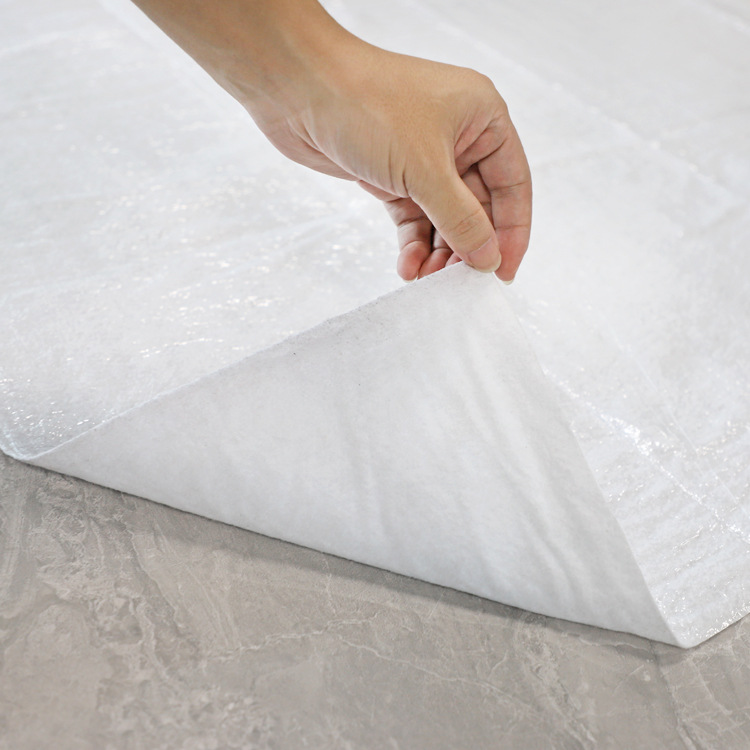
A floor protection fleece that removes easily does not automatically guarantee that it leaves no residue.
Removal performance depends on the adhesive formulation, floor finish, contact duration, ambient temperature, humidity, and actual site conditions.
The same product may behave differently on different hardwood finishes.
For projects where appearance is critical, buyers should evaluate the surface condition after removal as part of sample approval instead of checking only whether the fleece stays in place during installation.
How Should Buyers Determine the Removal Window?
There is no universal maximum installation period that applies to every hardwood floor.
The appropriate removal window depends on the floor surface condition, temperature, humidity, construction environment, adhesive properties, and actual installation duration.
Rather than specifying a fixed number of days, buyers should validate the expected installation period under real project conditions.
For longer renovation projects, the condition of both the fleece and the hardwood floor should be inspected regularly instead of leaving the material in place without review.
If changes such as edge lifting, adhesive behavior, moisture, or surface abnormalities are observed, the removal schedule should be reassessed immediately.
How Should Residue and Surface Protection Requirements Be Written into the RFQ?
For self-adhesive floor protection used on hardwood flooring, the RFQ should be more specific than simply requesting:
Self-adhesive floor protection for hardwood.
A better specification includes:
Hardwood floor type
Surface finish
Construction environment
Expected installation period
Required adhesion level
Removal method
Acceptable adhesive residue
Required surface appearance after removal
If the project involves premium hardwood flooring, the sample stage should also define how discoloration and coating changes will be evaluated.
This helps suppliers recommend a more suitable adhesive system and composite structure rather than supplying a generic self-adhesive product.
How Can JHC Support Custom Self-Adhesive Floor Protection?
Different flooring projects require different adhesive and nonwoven structures rather than one universal specification.
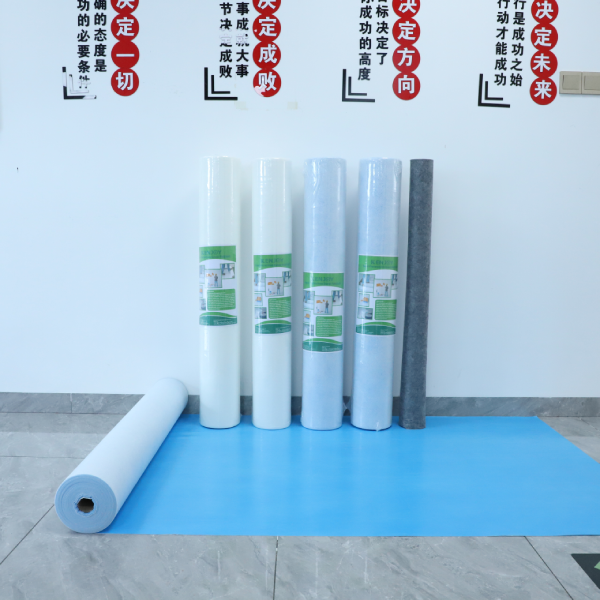
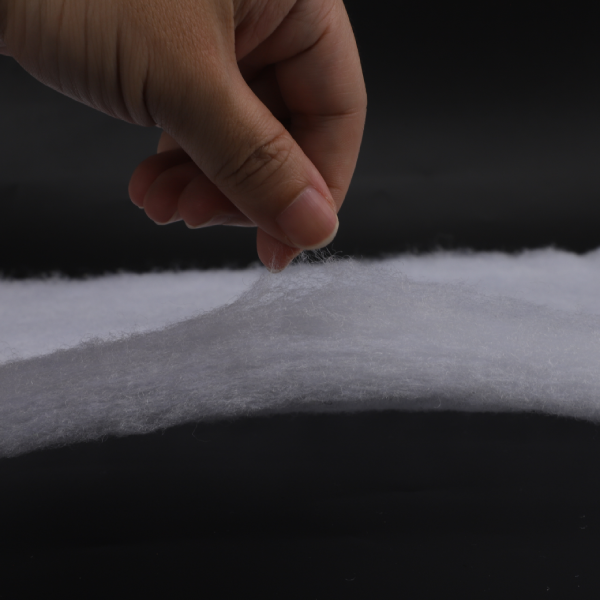
HuiZhou JinHaoCheng Nonwoven Co., Ltd. manufactures needle punched nonwoven materials and floor protection rolls, supporting OEM and ODM customization with different GSM, thickness, PE film, adhesive systems, and composite structures.
When requesting samples, buyers are encouraged to provide the actual hardwood sample, floor finish information, expected installation period, and requirements for residue-free removal and surface protection so the material can be validated under realistic conditions.
Conclusion
For hardwood flooring projects, the key purchasing question is not simply whether a self-adhesive floor protection fleece sticks well or how many days it can remain on the floor.
The real priority is verifying adhesive compatibility with the hardwood surface and clean removal without residue or surface damage.
By confirming the floor condition and performing small-area adhesion and removal tests before bulk installation, contractors and distributors can significantly reduce the risk of residue, discoloration, and coating damage while selecting a more reliable floor protection solution.