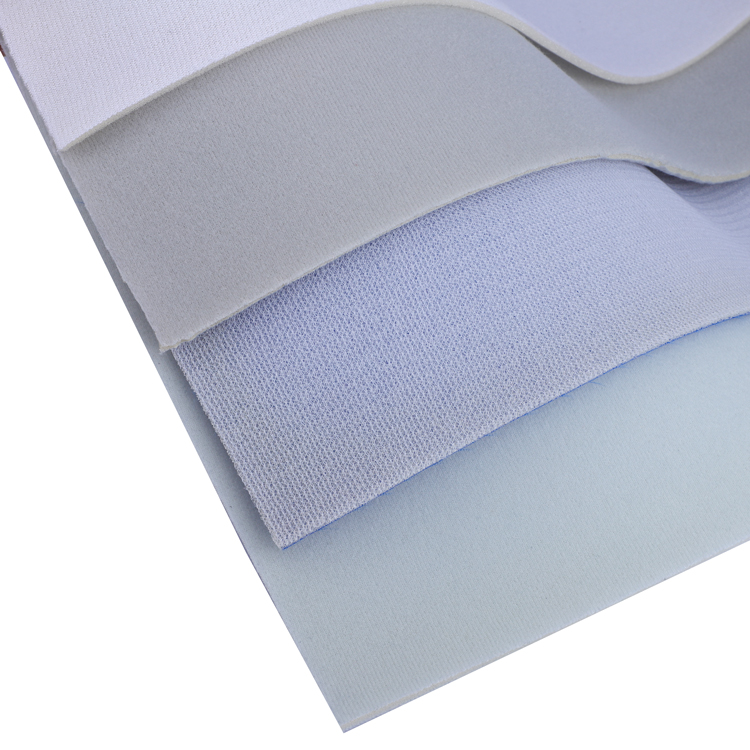
Knitted, Woven, Nonwoven or Mesh? How to Choose Fabric Substrates for Foam Laminated Composites
When developing foam laminated fabric, buyers usually need to consider both the foam and the fabric. However, the structure of the fabric substrate is equally important during product development.
Even when the same type of foam is used, combining it with different fabric structures can result in different surface appearances, textures, flexibility, and processing characteristics.
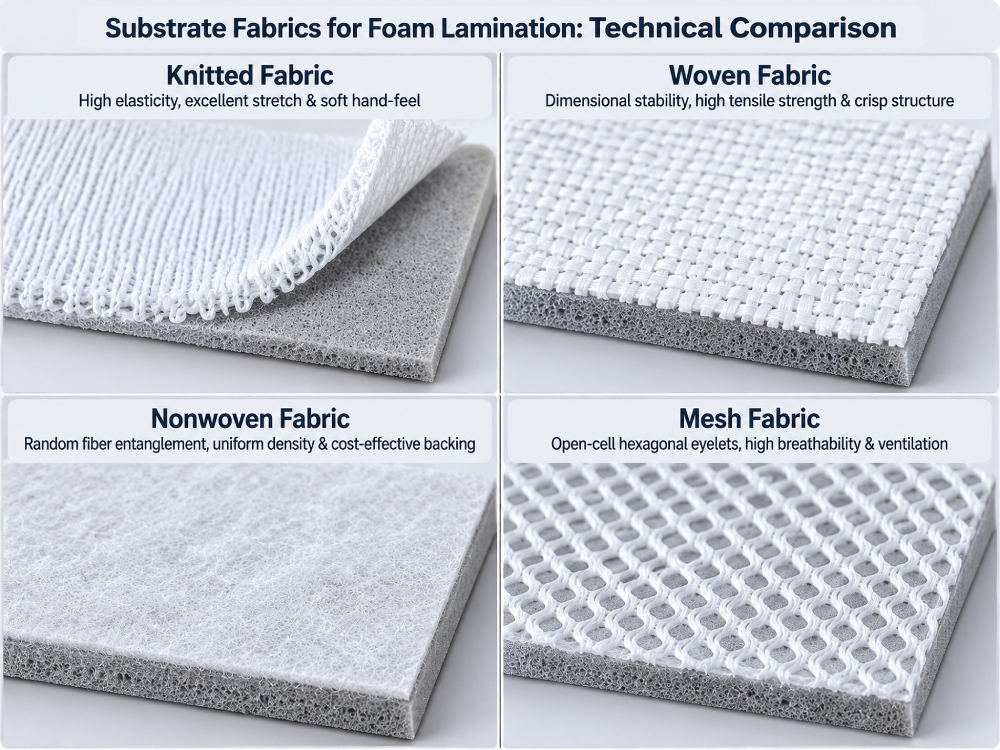
For example, knitted fabrics are formed by interconnected yarn loops, woven fabrics are made by interlacing warp and weft yarns, and nonwoven fabrics are produced by forming and bonding fibers. Mesh fabrics are characterized by their open, net-like structures. These structural differences can influence the overall performance of the laminated material.
For applications such as footwear, automotive interiors, furniture, and protective products, buyers should not select a substrate based only on its fabric category. Instead, they should consider the finished product's application environment, structural requirements, and further processing methods.
This article explains the characteristics of knitted, woven, nonwoven, and mesh fabrics as substrates for foam lamination, as well as the key considerations buyers should understand during product development and sourcing.
Why Does Fabric Structure Affect Foam Laminated Composites?
Foam laminated fabric usually consists of foam combined with one or more fabric substrates. Different material layers serve different purposes in the finished composite.
Foam is generally used to provide thickness, cushioning, and support, while the fabric substrate influences the surface appearance, texture, structural support, and further processing characteristics of the laminated material.
Different fabric structures can produce different results, even when the foam material and thickness remain the same.
For example, the loop structure of knitted fabric may provide a certain degree of stretch and conformability. The interlaced warp and weft structure of woven fabric generally helps maintain the fabric's shape. The properties of nonwoven fabric depend on its fiber composition, web-forming method, and bonding method. The open structure of mesh fabric provides space for airflow, but whether the laminated material retains the required breathability must be verified together with the foam and bonding method.
Therefore, when selecting a fabric substrate for foam lamination, buyers should consider more than the fabric name. The following factors are also important.
Surface appearance and texture: The fabric substrate directly affects the texture, appearance, and feel of the outer surface of the composite. This is particularly important for materials that come into direct contact with the body or serve as the visible exterior layer of a product.
Flexibility and conformability: Different fabric structures may behave differently when bent, stretched, or applied to curved surfaces. The final flexibility is also affected by foam thickness, material combinations, and lamination conditions.
Structural stability: Buyers should evaluate whether the substrate can maintain the required shape during cutting, sewing, forming, and actual use.
Breathability and airflow: Fabric structure may affect the conditions for air to pass through a material. However, the final breathability of a foam laminated composite cannot be determined simply by whether its substrate is knitted, nonwoven, or mesh.
Further processing: If the material needs to undergo die cutting, slitting, sewing, or other processing, both the fabric structure and the overall laminated material should be evaluated in advance.
The fabric substrate is not the only factor that determines the finished product's performance. Buyers need to consider the foam, substrate, composite structure, and actual processing requirements together.
What Are the Characteristics of Knitted Fabric Laminated with Foam?
Knitted fabric is made by forming interconnected loops with yarn. Unlike woven fabric, which is constructed by interlacing warp and weft yarns, knitted fabric has a loop-based structure that may provide a certain degree of stretch and deformation in some directions.
When knitted fabric is laminated with foam, buyers often focus on flexibility, conformability, and surface appearance.
Knitted fabric can be considered for composite material development when a product requires a certain degree of softness, bending ability, or conformity to curved surfaces. For example, some footwear materials, apparel-related materials, and products requiring a soft outer surface may use knitted fabric combined with foam.
However, not all knitted fabrics have high elasticity. Different knitting structures, yarn materials, loop densities, GSM, and finishing methods can all affect the actual stretch characteristics of the fabric.
When selecting knitted fabric as a foam lamination substrate, buyers should pay attention to the following factors.
Knitting structure: Confirm the specific knitting type and fabric structure rather than providing only the general description "Knitted Fabric."
Stretch and recovery: If the finished product needs to stretch or bend, evaluate the fabric's stretch in the required directions and whether it can recover to the required condition after being stretched.
Surface appearance: Knitted fabrics can have different textures, thicknesses, and surface feels. The selection should match the appearance requirements of the finished product.
Dimensional behavior after lamination: Knitted fabrics may deform during processing and use. Samples should therefore be checked to evaluate the dimensions and structural stability of the laminated material.
If a product needs to cover curved surfaces, bend, or maintain a soft surface feel, knitted fabric can be considered as a candidate substrate. Its actual suitability still needs to be verified together with the specific foam and knitted fabric specifications.
What Are the Characteristics of Woven Fabric Laminated with Foam?
Woven fabric is made by interlacing warp and weft yarns according to a specific pattern. Common weave structures include plain weave, twill, and satin. Different weaving patterns create different surface textures and structural characteristics.
Compared with knitted fabric, woven fabric generally has clearly defined warp and weft directions. Some woven structures offer advantages in maintaining dimensions and shape, but the actual performance still depends on the fiber material, weave structure, yarn density, and finishing method.
In foam laminated composite development, woven fabric can serve as a substrate for products that require a defined surface texture, structural support, or a certain degree of shape retention.
For example, some furniture fabrics, automotive interior fabrics, footwear materials, and bag materials may combine woven fabric with foam to meet surface appearance and structural requirements.
When selecting woven fabric, buyers should consider the following factors.
Warp and weft structure: Plain weave, twill, and other weaving patterns create different surface appearances and fabric structures. The selection should match the requirements of the finished product.
Differences between warp and weft directions: The stretch and deformation characteristics of woven fabric may differ between the warp and weft directions. For products that need bending, wrapping, or cutting, the performance in both directions should be considered.
Fabric GSM and thickness: The weight and thickness of the substrate affect the overall structure of the laminated material. The finished thickness and weight should not be determined by the foam specifications alone.
Surface texture: If the product requires a particular appearance, texture, or feel, the actual result after lamination should be checked during sample evaluation.
Cutting and sewing requirements: If the finished product needs to be cut into complex shapes or sewn into a specific form, the fabric's stability during these processes should be evaluated.
For products that require a defined surface structure, texture, and shape retention, woven fabric can be considered as a candidate substrate for foam lamination. However, dimensional stability and processing performance cannot be determined from the general material name "Woven Fabric" alone.
What Are the Characteristics of Nonwoven Fabric Laminated with Foam?
Nonwoven fabric is produced by forming fibers into a web and then bonding them through mechanical, thermal, or other suitable methods. Unlike knitted and woven fabrics, nonwoven materials are not formed by interlaced warp and weft yarns or continuous yarn loops.
Common nonwoven types include needle-punched nonwoven, thermal-bonded nonwoven, and spunbond nonwoven. Different production methods and fiber compositions can result in different softness, thickness, surface conditions, structural strength, and processing characteristics.
In foam laminated composite development, nonwoven fabric can serve as a substrate or an intermediate material layer. The specific selection should depend on the product application and finished structure.
When selecting nonwoven fabric, buyers should pay particular attention to the following factors.
Fiber composition: PET, PP, and other fibers may have different material properties. Buyers should confirm the actual fiber composition rather than specifying only "Nonwoven Fabric."
Web-forming and bonding methods: Needle punching, thermal bonding, and spunbond processes produce different structures. These differences may affect thickness, surface condition, and mechanical performance.
GSM and thickness: Nonwoven fabrics are available in different GSM and thickness specifications. These parameters affect the overall structure and performance of the laminated material.
Softness and support: Different nonwoven materials may provide different levels of softness and structural support. The selection should be based on the requirements of the finished product.
Surface condition and fiber stability: If the composite material needs to contact other materials directly, undergo cutting, or be used in further processing, its surface condition and structural stability should be checked.
It is important to note that not all nonwoven fabrics are low-cost materials, nor are they necessarily softer than knitted or woven fabrics. Their actual performance depends on fiber composition, production structure, GSM, thickness, and finishing methods.
For composite material development requiring specific thickness, GSM, or structural characteristics, buyers can consider nonwoven fabric as a candidate substrate and verify its compatibility with the foam through samples.
What Are the Characteristics of Mesh Fabric Laminated with Foam?
Mesh fabric generally has an open structure with visible pores or mesh openings. It can be produced through different methods, including knitting and weaving. Therefore, mesh is not a single fabric structure category that is completely separate from knitted and woven fabrics.
When mesh fabric is laminated with foam, buyers usually focus on the mesh structure, surface appearance, flexibility, and airflow requirements.
For some products that require an open surface structure or a specific appearance, mesh can be considered as a candidate substrate for foam lamination. For example, certain sports products, footwear materials, underwear materials, and products requiring some degree of airflow may use mesh combined with foam.
However, the presence of mesh openings does not mean that the finished laminated material will automatically have a specific breathability level.
The foam structure, mesh opening size, substrate coverage, lamination method, and adhesive distribution can all change the airflow path. Even when the same mesh fabric is used, combining it with different foam materials or composite structures may result in different finished performance.
When selecting mesh fabric, buyers should focus on the following factors.
Mesh opening size and distribution: The size and distribution of the openings affect how open the material is and can also influence the surface appearance of the composite.
Mesh structure: Confirm whether the mesh is knitted or woven, together with the specific yarn and structural details.
Mesh flexibility: If the finished product needs to bend, wrap around a surface, or be formed into a specific shape, evaluate the overall flexibility of the mesh after lamination with foam.
Open structure after lamination: Check whether the foam and adhesive layer cover the mesh openings and whether the final structure meets the product's airflow requirements.
Further processing performance: If the product needs cutting, sewing, or forming, confirm whether the mesh structure can remain stable during these operations.
The suitability of mesh fabric should not be judged only by how visible its openings are. The final structure needs to be checked through actual laminated samples.
How Should Foam Lamination Substrates Be Selected for Different Applications?
Knitted, woven, nonwoven, and mesh fabrics can all be considered as candidate substrates during foam laminated material development. However, there is no fixed ranking that makes one type suitable for every product.
Buyers should select the substrate according to the finished product's application environment, surface requirements, structural needs, and further processing methods.
Final application | Substrate options to evaluate | Key considerations |
Automotive interiors | Knitted, woven, nonwoven, or mesh fabric | Surface appearance, dimensional stability, curved-surface wrapping, and further forming requirements |
Furniture and upholstery | Knitted, woven, or nonwoven fabric | Texture, surface feel, flexibility, and support structure |
Footwear | Knitted, woven, mesh, or nonwoven fabric | Bending performance, surface structure, sewing, and cutting requirements |
Protective and cushioning products | Nonwoven, knitted, or other suitable fabrics | Cushioning structure, surface condition, dimensions, and processing requirements |
These are candidate selection directions based on material structures and product development requirements. They do not mean that a particular substrate can only be used for one product category, nor do they mean that every material combination has already been validated in actual production.
For example, automotive interiors may require consideration of curved-surface wrapping and further forming. Furniture fabrics may place greater emphasis on surface texture and feel. Footwear materials may require attention to bending and sewing, while protective products may focus more on the overall structure and cushioning requirements.
Different substrates may also be used for products within the same category. The key is to identify the actual requirements of the finished product rather than directly applying commonly used material names.
For foam laminated product development, the public product catalog of HuiZhou JinHaoCheng Nonwovens Co., Ltd. shows a mesh-based three-layer foam laminated product and product offerings involving microfiber fabric laminated with sponge foam. The confirmed foam lamination experience includes PU and EVA foam, involving flame lamination, adhesive lamination, and hot melt lamination. Specific combinations of fabric substrates and foam still need to be confirmed for each project. Related processing arrangements also involve both in-house production and external processing.
If you are developing foam laminated products with different substrate structures, you can explore our foam laminated fabric product range.
If your project involves a combination of medical microfiber and sponge foam, you can also refer to our breathable sponge foam laminated fabric product to learn more about this product direction.
How Should Buyers Confirm Fabric Substrates for Foam Lamination?
Before requesting a quotation or placing a bulk order, buyers need to specify the actual fabric structure rather than providing only broad descriptions such as Knitted Fabric, Woven Fabric, Nonwoven Fabric, or Mesh Fabric.
Each category may contain different fibers, structural designs, and specifications. Suppliers generally cannot accurately assess the material requirements based only on the fabric category.
To help suppliers evaluate the material combination more accurately, buyers should prepare the following information.
Fabric material and structure: Specify whether the fabric is knitted, woven, nonwoven, or mesh. If the exact fabric structure is known, provide those details as well.
Fiber composition: Confirm whether the fabric is made from PET, PP, nylon, cotton, or other fibers. Different fiber compositions may affect the final performance of the composite.
GSM and thickness: Provide the GSM and thickness requirements of the substrate. Clarify whether these figures refer to the fabric alone or the total laminated material.
Surface and color requirements: If the finished product requires a particular texture, color, feel, or appearance, provide a reference sample or image whenever possible.
Finished product application: Explain whether the material will be used for footwear, automotive interiors, furniture, or another product. Also specify whether it needs bending, wrapping, sewing, die cutting, or other processing.
Breathability and structural requirements: If the product requires airflow, clarify whether the substrate itself needs an open structure or whether the entire foam laminated composite must achieve a specific breathability performance.
Sample approval: Before bulk purchasing, use actual samples to confirm the bonding condition between the substrate and foam, surface appearance, flexibility, and further processing performance.
If buyers have not yet selected a suitable substrate, they can provide an existing product sample, structural drawing, finished-product photos, or application requirements. The supplier can then evaluate potential material options based on the actual application.
For different combinations of fabric substrates and foam, feasibility cannot be determined from the fabric name or product image alone. Actual production feasibility, the laminated structure, and finished-product performance all need to be confirmed through material evaluation and sample validation.
If you need a more accurate quotation for foam laminated fabric, refer to our guide to foam laminated fabric product specifications and purchasing requirements to prepare the substrate, foam, layer structure, and finished-product processing details in advance.
Choosing a suitable substrate for foam lamination is not simply a matter of deciding whether knitted, woven, nonwoven, or mesh fabric is better. It requires selecting a material combination according to the finished product's surface appearance, flexibility, structural stability, airflow requirements, and further processing conditions. Clearly defining the material structure and validating samples can help reduce material compatibility risks during product development.