Adhesive Compatibility on Metal Roofing: What Affects Anti-Condensation Felt Bonding?
The bonding performance of self-adhesive anti-condensation felt depends on more than the adhesive itself. The type of metal substrate, surface coating, cleanliness, application temperature, and bonding process can all affect how well the felt adheres to a roofing panel.
Galvanized steel, pre-painted steel, and other coated metal surfaces may have different surface characteristics. Therefore, a self-adhesive PET felt that performs well on one roofing panel should not automatically be considered suitable for every metal roof.
Before placing a bulk order, buyers should evaluate the actual metal substrate and validate the bonding performance through three stages: initial bonding, processing compatibility, and environmental validation. This helps identify potential compatibility issues before the material enters commercial production.
Why Can't Self-Adhesive Anti-Condensation Felt Be Assumed to Work on Every Metal Roof?
Metal roofing panels are not made with identical surface conditions. Even when two panels use the same base metal, their surface coatings, treatments, and manufacturing processes may differ.
These differences can affect the contact between the adhesive layer and the metal surface. A suitable bonding result depends on whether the adhesive configuration is compatible with the actual substrate, rather than simply whether the material is described as self-adhesive.
For buyers sourcing adhesive-backed PET roofing felt, it is important to provide the supplier with the actual roofing panel type and surface information. The adhesive configuration should be evaluated against the intended application instead of relying on a general claim that the felt is suitable for metal roofs.
How Can the Surface Characteristics of Galvanized Steel Affect Bonding?
Galvanized steel has a zinc coating that protects the underlying steel. However, the surface condition of galvanized panels can vary depending on the coating process, surface treatment, storage conditions, and handling.
These differences may influence adhesive contact and bonding performance. Surface residues, protective treatments, or contamination can also affect how the adhesive interacts with the panel.
For this reason, buyers should not assume that all galvanized steel sheets will produce the same bonding result. Testing should be carried out using the actual galvanized panel intended for production.
The key consideration is whether the selected adhesive configuration can establish reliable contact with the specific galvanized surface under the intended application conditions.
Why Should Pre-Painted Steel Panels Be Evaluated Separately?
Pre-painted steel panels have a coating layer on the metal surface. The adhesive does not bond directly to the underlying steel; it contacts the outer coating.
Different paint systems and coating conditions may have different surface properties. As a result, bonding performance can vary between pre-painted panels, even when their base metal is similar.
Buyers should provide information about the coating type whenever it is available. More importantly, the actual coated panel should be used for sample testing.
A bonding result obtained on bare or galvanized steel should not be treated as proof that the same adhesive will perform equally well on pre-painted steel. The compatibility between the adhesive and the outer coating needs to be verified separately.
How Do Different Coated Metal Roofing Surfaces Affect Adhesive Compatibility?
Metal roofing panels may have different surface coatings or treatments depending on their intended use and manufacturing specifications.
The surface that the adhesive contacts is an important factor in anti-condensation felt adhesive compatibility. Differences in coating composition, surface finish, and treatment may affect adhesive contact and bonding consistency.
For example, a bonding result confirmed on one coated steel panel does not automatically establish compatibility with another panel that uses a different coating system.
When evaluating PET fleece for coated metal roofing, buyers should identify the actual substrate and coating rather than using the general description of the metal panel alone.
If a project involves several types of roofing panels, each relevant surface should be evaluated separately. This helps avoid applying one sample result to substrates that have not been tested.
How Can Dust, Oil, and Other Contaminants Affect Bonding?
Even a suitable adhesive may not achieve consistent bonding if the metal surface is contaminated.
Dust, oil, grease, moisture, and other residues can interfere with direct contact between the adhesive layer and the substrate. These contaminants may reduce the effective bonding area and contribute to inconsistent adhesion.
Surface cleanliness should therefore be checked before sample testing and production.
Buyers and manufacturers should also clarify whether the roofing panel requires any surface preparation before the felt is applied. Cleaning methods and suitable cleaning agents should be confirmed according to the actual coating and substrate. An unsuitable cleaning method could affect the coating itself.
Testing on a clean sample is useful, but the result should also reflect the surface condition expected in the actual production process.
What Should Be Confirmed About Adhesive Type, Application Temperature, and Bonding Pressure?
The adhesive configuration is only one part of the bonding process. Application conditions can also influence the final result.
The adhesive type and construction should be confirmed according to the intended metal substrate. Buyers should not assume that every adhesive backing has the same bonding characteristics or is suitable for every coating.
Application temperature is another important factor. The temperature of the material, metal panel, and production environment may influence adhesive contact and bonding behavior. The suitable application conditions should be established through testing rather than assumed in advance.
Bonding pressure and the application method also need to be considered. Insufficient or inconsistent pressure may affect contact between the adhesive and the metal surface. The actual lamination or application process should therefore be reflected in sample validation.
Before bulk purchasing, buyers should confirm the adhesive configuration, application temperature, bonding pressure, and relevant processing conditions with the supplier.
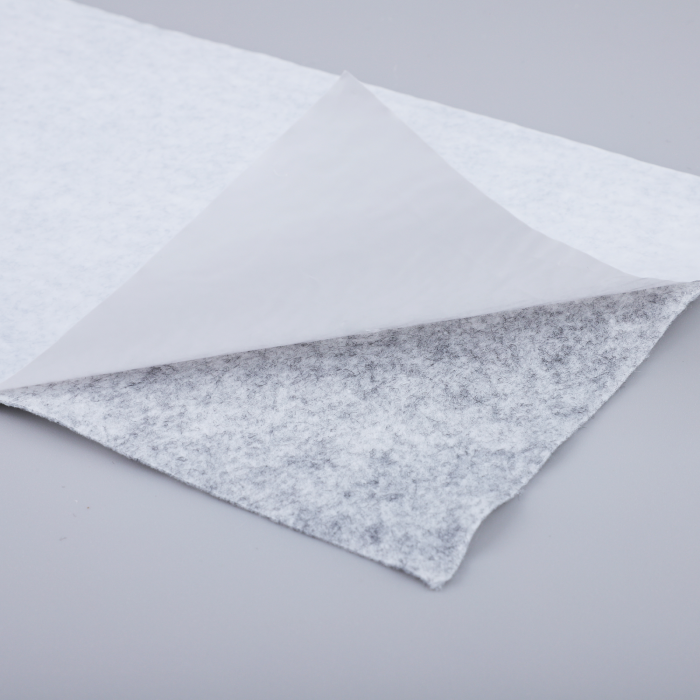
How Can Buyers Verify Adhesive Compatibility Using Actual Metal Panel Samples?
The most practical way to evaluate compatibility is to test the material against the actual metal panel that will be used in the project.
A general material description or a test result from a different substrate cannot replace sample validation. Buyers should provide representative metal panel samples, including the relevant coating and surface condition.
The sample evaluation should focus on the following factors:
The first consideration is whether the adhesive can make sufficient contact with the metal surface and establish initial bonding.
The second is whether the bonding remains consistent during the actual manufacturing or application process. If the roofing panel passes through a roll-forming or other production process, the sample evaluation should reflect the relevant processing conditions.
The third is whether the bonding remains acceptable under the intended operating environment. The environmental conditions and evaluation criteria should be agreed upon before testing.
For projects involving different metal surfaces, separate samples should be evaluated for each relevant substrate. This provides a more reliable basis for selecting the adhesive configuration before commercial production.
How Should Bonding Stability Be Checked in Three Stages?
A structured validation process helps buyers and manufacturers evaluate adhesive compatibility more clearly. The process can be divided into three stages.
Initial Bonding
The first stage is to check whether the self-adhesive PET felt can bond to the actual metal panel after application.
The evaluation should consider adhesive contact, bonding consistency, and visible edge lifting or detachment. The test should use the intended substrate and the agreed application conditions.
Initial bonding confirms whether the adhesive can establish contact with the selected surface. However, it does not by itself prove that the material will remain suitable throughout subsequent processing or under long-term operating conditions.
Processing Compatibility
The second stage is to evaluate the material during the intended manufacturing or application process.
For metal roofing production, buyers should consider whether the bonded felt remains stable when the panel goes through relevant processing steps. The evaluation should reflect the actual production equipment and operating conditions as closely as possible.
Changes in bonding condition, edge lifting, or partial detachment should be recorded. A sample that performs well during initial application may still require further evaluation if it is exposed to additional processing.
Environmental Validation
The third stage is to evaluate whether the bonding performance is suitable for the intended operating environment.
Metal roofs may be exposed to changing temperatures, humidity, and other environmental conditions. These factors should be considered when defining the validation requirements.
The environmental test conditions, evaluation methods, and acceptance criteria should be agreed upon according to the project requirements. Without relevant test data, it is not appropriate to make a fixed claim about long-term bonding performance or service life.
These three stages help distinguish initial adhesion from processing stability and environmental suitability. They also provide a clearer basis for deciding whether the selected adhesive configuration is appropriate for bulk production.
What Validation Records Should Be Kept Before Bulk Purchasing?
Before confirming a bulk order, buyers should keep records of the substrate and testing conditions used during validation.
Important records include the metal panel type, coating information, surface condition, adhesive configuration, application temperature, bonding pressure, and sample processing conditions.
The evaluation results should also document initial bonding, any edge lifting or detachment observed during processing, and the outcome of environmental validation where applicable.
Keeping these records helps both parties identify which adhesive configuration was evaluated and under what conditions the result was obtained. It also reduces the risk of applying an approved sample result to a different metal surface or production process.
For repeat orders, the approved sample and its corresponding specifications can serve as a reference for checking material consistency.
Frequently Asked Questions
Can self-adhesive anti-condensation felt be applied to all metal roofing sheets?
Not automatically. Compatibility depends on the metal substrate, surface coating, cleanliness, adhesive configuration, application temperature, bonding pressure, and processing conditions. Testing on the actual roofing panel is recommended before bulk production.
Will the same adhesive work on galvanized and pre-painted steel?
Not necessarily. Galvanized steel and pre-painted steel have different surface characteristics. The adhesive must be evaluated against the actual surface that it will contact.
Can buyers confirm adhesive compatibility using a general metal sample?
A general sample may provide an initial reference, but it cannot replace testing on the actual roofing panel. The sample should represent the substrate, coating, and surface condition used in the project.
Does initial bonding prove long-term adhesive stability?
No. Initial bonding only indicates whether the adhesive can establish contact under the tested conditions. Processing compatibility and environmental validation require separate evaluation.
What information should buyers provide when requesting self-adhesive anti-condensation felt?
Buyers should provide the metal panel type, coating information, actual panel samples, application method, and intended operating environment. These details help the supplier evaluate the appropriate adhesive configuration and sample-testing requirements.
Conclusion: Verify Adhesive Compatibility with Actual Metal Roofing Samples
The bonding performance of self-adhesive anti-condensation felt depends on the interaction between the adhesive and the actual metal roofing surface. Galvanized steel, pre-painted steel, and other coated panels should not be treated as identical substrates.
Before bulk purchasing, buyers should verify initial bonding, processing compatibility, and environmental suitability using representative metal panel samples. This approach provides a more reliable basis for confirming whether the selected adhesive configuration meets the requirements of the intended roofing application.
HuiZhou JinHaoCheng Nonwovens Co., Ltd.,established in 2005, has more than 20 years of experience in nonwoven material development and manufacturing. For self-adhesive PET anti-condensation felt, buyers can discuss customized basis weight, thickness, roll width, roll length, and suitable adhesive configurations according to their project requirements. The actual adhesive structure and bonding performance should be confirmed against the intended metal substrate and processing conditions through sample validation.