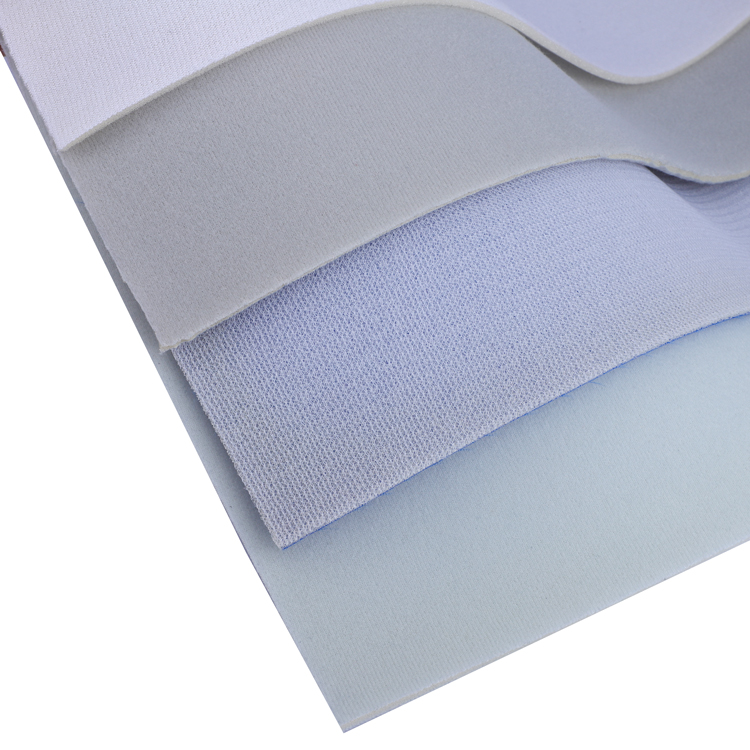
Integrating Anti-Condensation Felt into Continuous Metal Roofing Production Lines
For metal roofing sheet manufacturers, integrating anti-condensation felt into continuous roll-forming production involves more than selecting the right PET needle-punched nonwoven material. The material specifications, roll handling requirements, and bonding conditions must also be compatible with the existing production process.
Even when the GSM, thickness, and roll width meet the purchasing specifications, this does not automatically mean the felt can run smoothly on a customer's production line. Manufacturers need to evaluate whether the roll can unwind properly, whether the material can maintain a stable feeding position, whether the adhesive can bond to the actual metal surface, and whether wrinkles or edge misalignment occur during production.
In actual projects, HuiZhou JinHaoCheng Nonwovens Co., Ltd. has supplied anti-condensation felt for customers using continuous metal roofing production lines. Related application videos and photos are available. JHC's role is to supply the felt material and assist customers with material compatibility evaluation, rather than provide or integrate the entire metal roofing roll-forming line.
For buyers looking for PET fleece for metal roofing sheet manufacturers, the right approach is to confirm where the material enters the production process before bulk purchasing. Roll specifications, unwinding and feeding requirements, bonding conditions, and production trial acceptance criteria should also be reviewed.
What Does Continuous Roll Forming Mean? What Does It Require from Anti-Condensation Felt?
Continuous roll forming is a common manufacturing process for metal roofing sheets. Metal coil passes through a series of forming stations, gradually taking the required roofing panel profile.
For manufacturers adding anti-condensation felt to their roofing products, the material must meet the requirements of the finished product while also being suitable for the actual production process.
Two separate questions need to be considered: how the metal sheet moves through the roll-forming equipment to become a finished profile, and at which production stage the anti-condensation felt is bonded to the metal sheet. These processes may involve different equipment configurations and material handling conditions. It should not be assumed that every production line uses the same installation sequence.
Manufacturers should first establish whether the felt is introduced before metal forming, during the forming process, or at another processing stage. The actual sequence needs to be confirmed by the customer's equipment and production technicians.
The material supplier can then evaluate the felt specifications according to the confirmed process. A general description such as "suitable for metal roofing" is not enough to establish compatibility with a specific production line.
Where Should Anti-Condensation Felt Enter the Metal Roofing Production Process?
The material feeding position is the starting point for production compatibility evaluation.
Different metal roofing production lines may have different equipment layouts, processing sequences, and bonding methods. The felt may need to be combined with the metal sheet at a particular processing stage, but its exact position cannot be determined simply from the type of finished roofing panel.
During quotation and sample evaluation, roofing manufacturers should explain at which production stage the felt will be introduced. Equipment photos, process diagrams, or other relevant production information can help clarify the actual sequence.
The supplier also needs to understand how the felt will be handled when it enters the line. For example, will the material need to unwind continuously? Will it run in synchronization with the metal sheet? Will it pass through a bonding or pressing station? Will additional forming or cutting operations take place after bonding?
These details affect the required roll specifications, adhesive configuration, and sample validation method.
JHC has actual project experience supplying anti-condensation felt for customers' continuous roll-forming production lines. The company has also conducted continuous bonding trials involving self-adhesive anti-condensation felt and metal sheets. However, a standard feeding position has not yet been confirmed across these projects. Therefore, one bonding sequence should not be presented as a universal process for all roofing production lines.
Buyers should confirm the feeding position according to their own equipment layout and production process before discussing the required material specifications and validation conditions with the supplier.
How Should Felt Roll Width Match the Roofing Panel and Production Line?
Roll width is one of the first specifications buyers should confirm when sourcing anti-condensation felt.
The required roll width should not be determined solely by the nominal width of the roofing panel. Buyers also need to consider the actual coverage area, effective panel width, production line feeding position, and any requirements for edge allowance or trimming.
If the felt is too wide, it may increase material consumption or require additional trimming. If it is too narrow, it may not cover the intended area or meet the customer's installation requirements.
When specifying an anti-condensation felt roll, buyers should provide the actual roofing panel dimensions or drawings and clearly identify the area that needs to be covered.
It is also important to distinguish between the overall panel width, the effective coverage width after forming, and the actual width required for the felt. These dimensions may not be the same, so one should not automatically be used as the required material roll width.
JHC can customize anti-condensation felt roll width, roll length, and winding specifications according to customer requirements, with established production experience in these customized formats. For continuous production projects, buyers should still provide their equipment's feeding requirements so that the material delivery specifications can be checked against the production line.
The final roll width and roll specifications should be determined according to the actual equipment requirements, product structure, and sample validation results.
What Should Buyers Check About Unwinding, Feeding, and Tension Control?
During continuous production, roll unwinding and material feeding affect whether the felt can enter subsequent processing stages smoothly.
Buyers should first confirm how the anti-condensation felt roll will be installed on the existing equipment. Relevant requirements may include core diameter, roll outer diameter, roll weight, installation space, and unwinding direction.
These factors determine whether the material roll can be properly mounted on the customer's equipment. Even when roll width and length meet the purchasing specifications, the material may not be directly usable if its core size or outer diameter exceeds the equipment limits.
During feeding, manufacturers should also observe whether the material can run continuously and smoothly. Slack material, lateral movement, or inconsistent feeding may affect the bonding position and finished panel appearance.
Tension must also be evaluated according to the equipment and material characteristics. Excessive or unstable tension may cause the material to stretch or change position during operation. Insufficient tension may result in unstable feeding or loose material.
Different production lines have different unwinding structures and control systems, so there is no single tension value that can be applied to every line. Buyers should provide the equipment's roll specifications and operating requirements. Their production technicians can then determine suitable machine settings and evaluate the material during an actual production trial.
For the material supplier, providing suitable roll width, roll length, and winding specifications is an important part of material compatibility support. However, the unwinding equipment and tension control remain dependent on the customer's existing production system.
How Should the Adhesive Backing of Self-Adhesive Anti-Condensation Felt Match the Metal Sheet Process?
For projects using self-adhesive PET anti-condensation felt, the adhesive backing must be compatible with the metal sheet surface and the actual bonding process.
First, buyers should identify the type of metal surface that the felt will contact, such as galvanized steel, pre-painted steel, or metal sheets with other surface treatments. Different surface conditions may affect adhesive contact and bonding performance.
Next, the bonding stage needs to be clarified. Buyers should explain the surface condition of the metal sheet during bonding, the application temperature, the pressing method, and whether the bonded material will pass through additional processing stages.
If the material undergoes further continuous processing after bonding, buyers should not check only its initial bonding condition. They should also observe whether edge lifting, partial detachment, or uneven bonding occurs during subsequent operations.
JHC has conducted continuous bonding trials involving self-adhesive anti-condensation felt and metal sheets. This shows that material compatibility evaluation has gone beyond product specification discussions. However, because complete trial records are not currently available, specific bonding temperatures, pressures, production speeds, and adhesion strength values cannot be published. These trials also cannot be treated as proof that the adhesive has been validated on every type of metal surface.
For different metal coatings and production conditions, sample validation should be carried out using the actual metal panels. A satisfactory result on one metal surface does not automatically establish compatibility with all pre-painted steel panels or other metal substrates.
Therefore, the adhesive configuration for needle-punched PET roofing felt should be confirmed according to the actual metal substrate and production process. The material supplier can discuss suitable material structures and adhesive options, while final compatibility with the customer's production line should be assessed through sample trials agreed upon by both parties.
How Do Felt Thickness and Winding Conditions Affect Production?
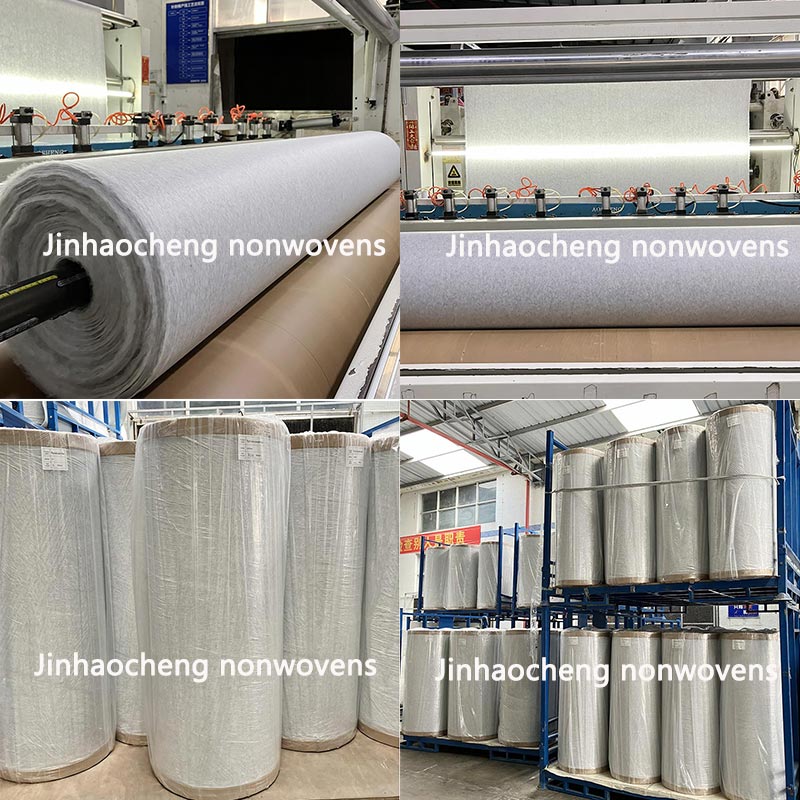
In addition to roll width and length, material thickness and winding conditions should also be checked during purchasing.
The thickness of anti-condensation felt affects its overall dimensions and handling characteristics when entering the equipment. If the material includes an adhesive backing or another laminated structure, buyers should clarify whether the stated thickness refers to the nonwoven base material or the complete finished construction.
This distinction is particularly important for continuous bonding applications because the customer's equipment handles the complete material structure, not necessarily just the PET needle-punched felt base.
Roll winding conditions can also affect subsequent unwinding. Buyers can check whether the roll edges are even, whether the winding is uniform, whether there are visible wrinkles on the roll surface, and whether the material tends to loosen or shift during unwinding.
Noticeable uneven edges or local deformation may make feeding and alignment more difficult after the roll is installed. Therefore, in addition to GSM, thickness, and width, roll appearance and winding condition should be included in sample acceptance requirements.
For custom PET nonwoven roofing felt, buyers should confirm the material specifications, roll dimensions, winding requirements, and packaging method before placing an order. Samples should then be checked to determine whether these requirements are suitable for the existing production equipment.
What Problems Should Be Observed During a Continuous Production Trial?
Meeting the material specifications does not automatically mean that the felt has passed production compatibility validation. For metal roofing manufacturers, an actual production trial is an important step in determining whether the material can run on the existing production line.
The following points should be observed during the trial.
Edge Misalignment
Check whether the felt gradually moves away from its intended position during continuous feeding and whether its edges remain aligned with the target bonding area on the metal sheet.
If the material keeps shifting during feeding, the equipment alignment method, roll installation, feeding path, and material edge condition should be checked. The issue should not automatically be attributed to roll width alone.
Wrinkles
Observe whether longitudinal or transverse wrinkles appear before or after the bonding stage. Record whether they occur during unwinding, feeding, or bonding.
Wrinkles appearing at different production stages may have different causes. The first step is to record their location and appearance so that the equipment and material technicians can evaluate the situation together.
Uneven Bonding
For self-adhesive constructions, check whether there are locally unbonded areas, lifted edges, or partial detachment between the felt and metal sheet.
Also confirm whether the metal surface, adhesive configuration, and bonding conditions used during the trial are consistent with those intended for bulk production.
Continuous Feeding Performance
In addition to checking the bonding result of an individual sample, evaluate whether the material can run continuously according to the customer's production process. Record whether feeding remains stable, whether the material becomes loose or shifts position, and whether roll replacement and reinstallation meet the equipment requirements.
Trial results should be assessed against inspection items and acceptance criteria agreed upon in advance. A short section of successfully bonded material alone is not sufficient to establish suitability for long-term continuous production.
What Should Be Confirmed Before Approving Bulk Production?
After the sample trial, buyers and suppliers should document the confirmed material specifications and production line requirements. These records can serve as the reference for subsequent bulk orders.
First, confirm the material specifications, including PET needle-punched felt construction, GSM, thickness, roll width, roll length, adhesive configuration, and allowable tolerances.
Next, confirm roll delivery requirements, including core size, roll outer diameter, roll weight, winding direction, edge condition, and packaging method. The specific requirements should be based on the customer's actual equipment.
Then document the production compatibility evaluation, including material installation, unwinding performance, feeding stability, material alignment, bonding condition, and any abnormalities observed during subsequent processing.
For self-adhesive anti-condensation felt, buyers should also retain information about the actual metal panel samples, surface coatings, bonding conditions, and sample validation results. This helps prevent an old approval result from being reused without review when the metal panel or processing conditions change.
For repeat orders, both parties should identify the approved sample and specification document that will serve as the production reference. Any changes to the specifications should trigger a new compatibility review where necessary.
For JHC, material supply and customer validation support are two important parts of the project. JHC can provide established roll width, roll length, and winding specifications according to customer requirements, and work with customers to confirm the material construction and suitable adhesive configuration. Customers remain responsible for their own equipment settings and final production acceptance.
Frequently Asked Questions
Can anti-condensation felt be added directly to every continuous metal roofing roll-forming line?
This should not be assumed. Production line layouts, feeding methods, bonding stages, and metal panel structures may differ. The material entry point should first be confirmed, followed by sample trials under the actual equipment requirements.
Should the anti-condensation felt roll width be the same as the metal roofing panel width?
Not necessarily. Buyers need to distinguish between the overall metal panel width, the effective coverage width after forming, and the actual area that the felt needs to cover. The final roll width should be determined according to the panel drawings, equipment feeding requirements, and trial results.
Can self-adhesive anti-condensation felt be bonded before metal sheet forming?
This depends on the specific production line layout and processing sequence. Buyers should confirm the bonding stage and whether the bonded material will pass through additional roll-forming or processing operations. Validation should then be carried out using actual metal panel samples.
Is checking adhesive bonding performance alone enough during a production trial?
No. In addition to bonding, buyers should observe roll installation, unwinding, feeding, edge alignment, and continuous running performance. If further processing takes place after bonding, the material should also be checked during those operations.
Can an anti-condensation felt supplier guarantee compatibility with a customer's roll-forming line?
Compatibility should not be guaranteed based only on material specifications or a product catalogue. The supplier can discuss a material solution based on the customer's equipment information and application requirements, and assist with material compatibility evaluation. However, actual production line compatibility needs to be confirmed through sample trials on the customer's equipment.
Conclusion: Validate Material and Production Line Compatibility Before Confirming Bulk Specifications
Integrating anti-condensation felt into a continuous metal roofing production line requires consideration of material specifications, roll handling, bonding conditions, and the actual production line configuration.
Buyers should look beyond GSM, thickness, and roll width. They also need to confirm the felt entry point, core and outer diameter requirements, unwinding and feeding conditions, and adhesive compatibility with the actual metal panel surface.
Before bulk purchasing, it is recommended to conduct a production trial using actual roofing panels and the intended material specifications. Record material installation, continuous feeding, edge alignment, bonding condition, and performance during subsequent processing.
JHC has relevant customer application experience and established customization capabilities for roll width, roll length, and winding specifications. The company can also assist customers with material compatibility evaluation. However, the exact bonding stage, equipment parameters, and final production performance must still be confirmed through trials on the customer's actual production line.
Only after the material specifications, production line conditions, and mutually agreed acceptance requirements have been confirmed should the trial results be used as the basis for subsequent bulk orders.