
Wrinkles, Bubbles and Edge Misalignment in Laminated Nonwoven Rolls: What Affects Production Stability?
Laminated nonwoven rolls are used in a wide range of industrial and commercial applications. During production, however, some rolls may develop wrinkles, bubbles, or uneven edges. These issues can affect not only the appearance of the finished material but also its performance during storage, transportation, and downstream processing.
A sample that looks smooth and well-aligned does not always guarantee the same consistency in bulk production. The causes of these defects may be related to the base material, feeding conditions, lamination process, winding, or transportation. In some cases, problems only become visible after the material is unwound or processed by the buyer.
Therefore, it is important to identify where and when a defect occurs rather than assume that every problem comes from the same production issue.
Why Do Wrinkles Appear in Laminated Nonwoven Rolls?
Wrinkles are among the common appearance problems found in laminated nonwoven rolls. They may appear as longitudinal lines, transverse creases, or irregular folds across the material surface.
One possible cause is a difference in tension between the base material and the laminated layer. During the lamination process, different materials may respond differently to tension. If the feeding conditions are not well matched, one layer may move or stretch differently from another, resulting in wrinkles.
Feeding speed and the condition of the material during lamination can also affect the final surface. If the materials do not move through the process consistently, wrinkles may form during bonding or appear as the material is collected into a roll.
Differences in the thickness and structure of the base material may also contribute. Nonwoven fabrics with different thicknesses, densities, or levels of flexibility do not necessarily behave in the same way during lamination. These material characteristics need to be considered when selecting a suitable composite structure.
Why Do Bubbles Form Between Laminated Layers?
Bubbles usually appear as raised or hollow areas between two laminated layers. They may be visible immediately after production or become more noticeable during subsequent handling.
The surface condition of the materials is one factor to consider. Dust, contamination, or an uneven surface may affect contact between the layers and prevent them from bonding evenly.
Adhesive distribution is another possible factor in adhesive lamination. If the adhesive is not distributed consistently, some areas may have insufficient contact between the layers. This can result in localized bubbles or areas that are not firmly bonded.
Air trapped between the layers may also contribute to bubble formation. During lamination, the materials need to make consistent contact so that air can be removed rather than remaining between the layers.
Temperature and pressure conditions may also affect the lamination result. If these conditions are not suitable for the material combination, the layers may not bond evenly across the surface.
It is important to assess the material structure and lamination conditions together instead of assuming that all bubbles are caused by insufficient adhesive.
Why Are the Edges of Laminated Nonwoven Rolls Uneven?
Uneven edges may appear as misaligned layers, inconsistent roll widths, or edges that do not form a straight line.
One possible cause is misalignment between the material layers during lamination. If the base nonwoven and the film or other laminated material do not enter the process in the correct positions, their edges may not line up in the finished roll.
Slitting can also affect the final edge condition. Even when the laminated layers are properly aligned during production, differences in slitting position or width control may result in inconsistent finished edges.
For buyers, it is important to distinguish between layer misalignment and cutting-related edge problems. They may look similar at first, but they occur at different stages of production and require different corrective actions.
How Do Material Thickness and Flexibility Affect Lamination Quality?
The thickness and flexibility of the base material can influence how a laminated nonwoven roll behaves during production and subsequent handling.
Thicker or more compressible materials may respond differently to pressure during lamination. Their structure and surface characteristics can affect how evenly the laminated layers make contact.
Flexible nonwoven materials combined with a relatively rigid film may also behave differently from two materials with similar flexibility. If the layers respond differently during feeding, bonding, or winding, wrinkles or uneven surfaces may occur.
For multilayer structures, the characteristics of each layer need to be considered together. The thickness, flexibility, and structure of one material can influence the overall behavior of the composite roll.
This is why the material combination should be evaluated according to the intended application and downstream processing requirements, rather than considering the base material or film separately.
How Can Winding, Packaging, and Transportation Affect Roll Appearance?
Not all wrinkles or edge problems are necessarily created during lamination. Winding, packaging, and transportation can also affect the appearance of a finished roll.
The winding condition may influence how the material is arranged in the roll. If the material is not collected evenly, folds or uneven edges may become visible when the roll is unwound.
Packaging and transportation may also change the condition of the roll. Pressure during storage or transit, as well as handling conditions, may cause deformation or damage to the outer layers.
To identify the possible source of a defect, buyers should consider when it first appeared and where it is located. A defect that is already present before shipment may have a different cause from damage that becomes visible after transportation or downstream processing.
Observing the defect's position, shape, and distribution can help distinguish possible production issues from winding or transportation-related damage.
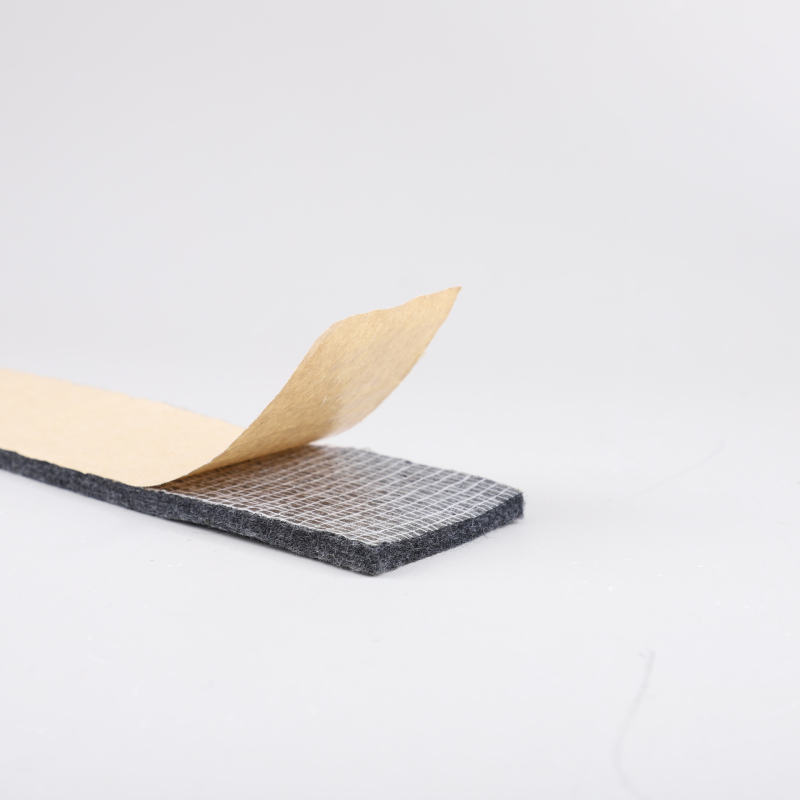
What Should Buyers Check When Evaluating Laminated Nonwoven Samples?
A sample evaluation should cover more than the general appearance of the material. Buyers should check whether the sample is suitable for the intended application and whether its structure remains consistent during handling.
Surface flatness: Check whether the laminated surface is smooth and whether there are visible wrinkles, bubbles, or irregular raised areas.
Layer bonding: Observe whether the layers remain properly bonded and whether there are localized areas of separation or poor contact.
Edge alignment and dimensions: Check whether the laminated layers are aligned and whether the roll or sample width meets the agreed specifications.
Unwinding and rewinding: Unwind the sample and observe whether wrinkles, folds, or alignment problems become visible. Rewinding can also help identify whether the material remains stable during handling.
Consistency across different areas: Do not evaluate the sample based on only one small section. Check different positions to see whether the appearance and structure remain consistent.
These checks help buyers understand the condition of the composite material before moving forward with a bulk order.
How Can Buyers Reduce Quality Risks in Bulk Production?
Reducing quality risks starts with confirming the material requirements before production. Buyers and manufacturers should agree on the base material, laminated layer, weight, thickness, width, and other relevant specifications.
Appearance requirements should also be discussed in advance. Terms such as wrinkles, bubbles, and edge misalignment should be clearly understood by both parties so that the expected product condition is not based on different interpretations.
An approved sample can serve as a reference for bulk production. It helps both sides confirm the material structure, appearance, and basic specifications before larger quantities are produced.
Batch and roll number records are also useful for identifying differences between production batches. When a quality issue occurs, these records can help narrow down the affected rolls and production batches.
In addition, inspections should focus on the characteristics that matter to the specific product and its intended use. If a problem is found during bulk production or after delivery, buyers should keep clear records of the affected roll numbers and defect locations, together with relevant photos or videos.
Clear specifications, an approved sample, and consistent batch records can help both buyers and manufacturers reduce misunderstandings and manage quality risks more effectively.
Frequently Asked Questions
Why can a laminated nonwoven sample be smooth while bulk rolls develop wrinkles?
A sample may not fully represent the conditions of continuous bulk production. Differences in material structure, feeding conditions, lamination, or winding may affect the appearance of larger production batches. Buyers should therefore evaluate both the approved sample and the consistency of bulk rolls.
Are bubbles in laminated nonwoven always caused by insufficient adhesive?
No. Bubbles may also be related to surface contamination, uneven contact between layers, trapped air, or unsuitable temperature and pressure conditions. The actual cause depends on the material combination and lamination process.
Are uneven edges caused by lamination or slitting?
Both are possible. Misalignment between material layers may occur during lamination, while inconsistent slitting position or width control may affect the finished edges. The defect should be examined to identify the stage where it occurs.
Does thicker nonwoven fabric wrinkle more easily during lamination?
Not necessarily. Thickness alone does not determine whether wrinkles will occur. Material density, compressibility, flexibility, and the characteristics of the laminated layer can all affect how the materials behave during processing.
How can buyers distinguish production defects from transportation damage?
Buyers should consider when the defect first appeared and where it is located. Comparing the material condition before shipment with its condition after delivery can help identify possible changes during winding, packaging, or transportation. The shape and distribution of the defect should also be examined.
How can buyers reduce the risk of defects in bulk laminated nonwoven rolls?
Buyers can reduce risks by confirming material specifications, agreeing on appearance requirements, approving a reference sample, and keeping batch and roll number records. Inspection should focus on the actual requirements of the product and its downstream application.
Conclusion
Wrinkles, bubbles, and edge misalignment in laminated nonwoven rolls can have different causes. Material properties, feeding conditions, adhesive distribution, lamination conditions, winding, and transportation may all influence the final appearance.
For buyers, the key is to understand the possible source of a defect and confirm the material requirements before bulk production. Evaluating samples, agreeing on appearance standards, and maintaining clear batch records can help reduce quality risks.
HuiZhou JinHaoCheng Nonwovens Co., Ltd. manufactures laminated nonwoven materials for different industrial and commercial applications. For a project inquiry, buyers can provide the base material, laminated material, weight, thickness, width, roll length, downstream slitting or die-cutting requirements, and any available reference samples or drawings. These details help clarify the required material structure and product specifications before production.




