How Should the Bonding Strength of Laminated Nonwoven Fabric Be Accepted? A Guide to Peel Testing and Quality Standards
When purchasing laminated nonwoven fabric, many buyers expect suppliers to provide strong and reliable bonding between material layers. However, simply asking for “strong bonding” is not a clear or measurable acceptance requirement.
For example, when nonwoven fabric is laminated with PE film, aluminum foil, paper, or foam, a smooth surface does not necessarily mean that the layers will remain bonded when the material is pulled, bent, or processed further.
For laminated materials intended for long-term use or further processing, buyers need to confirm more than whether the layers are bonded together. They also need to evaluate whether the bonding between layers is stable, whether the selected peel test is suitable for the actual material structure, and whether bulk production meets the agreed acceptance requirements.
Peel strength is one of the important indicators used to evaluate the bonding performance between layers. However, peel strength alone cannot represent the overall bond integrity of a laminated material. The test method, specimen structure, peel angle, testing speed, and environmental conditions can all affect the results.
Therefore, establishing clear testing methods and acceptance criteria before purchasing is more practical than simply asking a supplier to provide one peel strength value.
Why Does Laminated Nonwoven Fabric Need Clear Bonding Quality Requirements?
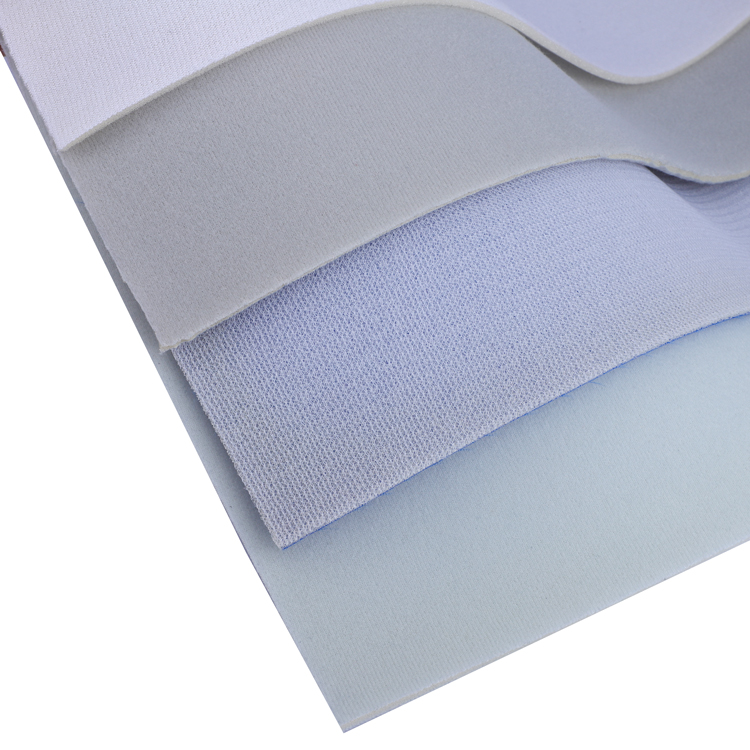
Laminated nonwoven fabric is usually made by combining two or more materials, such as needle-punched nonwoven fabric with PE film, paper, aluminum foil, foam, or another nonwoven layer.
Different material layers may serve different functions. The nonwoven layer may provide softness, thickness, cushioning, or absorbency, while the laminated layer may provide waterproofing, barrier protection, support, or other functional properties.
If the bonding between the layers is unstable, the product may develop localized separation, edge lifting, bubbling, or more extensive delamination during unwinding, slitting, bending, transportation, or further processing.
These problems do not necessarily appear immediately when samples are delivered. Some materials may look normal during the initial visual inspection but show bonding problems only after mechanical handling or during subsequent processing.
Therefore, buyers should not judge lamination quality solely by whether the material surface looks smooth. They should also avoid relying only on supplier descriptions such as “strong bonding” or “stable lamination.”
For customized laminated materials, buyers and suppliers should agree on the material structure, bonding quality requirements, test methods, and result evaluation criteria before confirming the order. This provides a consistent basis for both sample approval and subsequent bulk inspection.
When purchasing adhesive laminated nonwoven fabric, buyers should also confirm the specific laminated structure and bonding method to avoid receiving test results from different suppliers that cannot be directly compared because of differences in material combinations.
What Is the Difference Between Peel Strength and Bond Integrity?
Peel strength and bond integrity are both related to the bonding quality of laminated materials, but they do not represent exactly the same concept.
Peel strength mainly refers to the force required to progressively separate two material layers under specified testing conditions. It is commonly used to evaluate the resistance of a bond to peeling. The test result can be expressed according to the specimen width and the agreed calculation method.
For example, a specimen made from nonwoven fabric and film can be prepared to specified dimensions and tested on a tensile testing machine using a defined peeling method. The force generated during the peeling process can then be recorded.
Peel strength helps buyers and suppliers compare the bonding performance of different samples or production batches. However, it represents the result under specific specimen and testing conditions. It does not mean that the material will demonstrate the same bonding performance in every application environment.
Bond integrity focuses on whether the entire laminated structure remains intact. In addition to peel force, it also involves checking for localized delamination, bubbles, edge lifting, unbonded areas, and other structural defects.
For example, some areas of a roll of laminated nonwoven fabric may show relatively high average peel strength, while localized areas along the edges still have insufficient bonding. Looking at only one peel test result may not reveal these defects.
Therefore, peel strength testing and overall bond integrity inspection should be used together.
The former provides measurable data on the separation force between layers, while the latter helps determine whether localized defects exist in the actual laminated structure. Together, they provide a more complete basis for quality acceptance.
Which Peel Test Method Should Be Used for Different Laminated Structures?
Not all laminated nonwoven fabrics are suitable for the same peel test method. The selection should depend on the flexibility of the materials, the structure between layers, whether the specimen can be bent, and the actual bonding configuration.
For structures in which both layers have a certain degree of flexibility, such as flexible nonwoven fabric laminated with flexible film, a T-peel test may be suitable for evaluation.
ISO 11339:2022 specifies a T-peel test method for adhesive bonds between two flexible adherends. The method measures the force generated as the two ends of the specimen are progressively separated.
For bonded structures consisting of one flexible material and one rigid material, a 180-degree peel test may be suitable for evaluation. ISO 8510-2:2006 specifies a corresponding 180-degree peel test method for adhesive bonds between flexible and rigid adherends.
If a material structure cannot accommodate a particular peeling method, for example, if the specimen is prone to breaking, cracking, or other abnormal behavior during testing, an unsuitable method should not be forced simply to obtain a numerical result. The test method should be selected according to the material structure. A professional laboratory may be consulted when necessary.
Different structures, such as nonwoven fabric laminated with film, nonwoven fabric laminated with paper, and foam laminated with fabric, may have significant differences in flexibility, thickness, elongation, and failure behavior.
Therefore, when specifying a test method, buyers should first provide the actual material structure and samples rather than simply requiring every supplier to use the same peel angle.
The purpose of selecting a test method is to ensure that the results reflect the bonding performance of the actual laminated structure, rather than simply pursuing a particular test value.
How Should Specimen Width, Peel Angle, Testing Speed, and Environmental Conditions Be Specified?
Even when the same peel testing equipment is used, test results may not be directly comparable if specimen dimensions, peel angle, testing speed, or environmental conditions differ.
Therefore, buyers should not simply write “Peel Strength Test Required” in a technical specification. The test method and relevant conditions should also be clearly defined.
Specimen Width and Length
Specimen width affects how peel force is expressed and how different test results are compared. Buyers and suppliers should specify the specimen width, bonded length, and effective testing area according to the selected testing standard or an agreed testing procedure.
If different suppliers use specimens with different widths, the resulting peel force values may not be directly comparable, even if the numerical values are the same.
For laminated rolls, buyers should also confirm where the specimens will be taken from. If the material may vary across its width or length, samples can be taken from different positions according to the purchasing requirements. This helps avoid using one localized specimen to represent the entire roll.
Peel Angle and Testing Method
T-peel, 180-degree peel, and other peeling methods involve different loading conditions. Results obtained using different methods should not be treated as the same measurement for direct comparison.
Buyers should specify the applicable standard or testing procedure and confirm that the specimen structure meets the requirements of that method.
Testing Speed
Testing speed affects how the material responds to force during the peeling process. For nonwoven fabrics with a certain degree of elongation or flexibility, changes in testing speed may also affect specimen deformation and separation behavior.
Therefore, testing speed should be determined according to the selected standard or a testing method agreed upon by both parties, and it should be recorded in the test report.
Environmental Conditions and Specimen Preparation
Temperature, humidity, specimen storage conditions, and pre-test conditioning requirements may all affect material performance.
If samples from different batches are tested under different environmental conditions, the results may vary. Buyers and suppliers should agree in advance on whether specimen conditioning is required and which environmental conditions should be used.
For laminated materials that need to undergo high-temperature, humid, or other environmental exposure, routine peel testing should be distinguished from peel testing after environmental conditioning. The results from these two types of tests should not be treated as interchangeable.
Ultimately, specimen dimensions, peeling method, testing speed, environmental conditions, and result expression should all be included in the test records. Only when the testing conditions are reasonably consistent can buyers and suppliers make meaningful comparisons between different samples and production batches.
Why Does Average Peel Strength Not Represent the Bonding Quality of an Entire Laminated Roll?
Peel testing usually requires specimens of specified dimensions to be cut from the material. Therefore, the test result initially reflects only the performance of the area being tested.
However, a laminated roll may contain localized variations.
For example, one section of the material may meet the agreed peel strength requirement, while other areas of the roll may still have localized bubbles, edge separation, or insufficient bonding. If only one position is tested, problems in other areas may be overlooked.
Different failure modes may also occur during testing.
Adhesive Interface Failure occurs when two materials separate at the contact interface, indicating that the separation takes place between the material layers.
Cohesive Failure Within the Adhesive Layer occurs when the adhesive itself breaks internally, potentially leaving adhesive residue on both material surfaces.
Substrate Failure occurs when the nonwoven fabric, film, or another bonded material tears or breaks instead of separating solely at the bonding interface.
These failure modes have different meanings. The final peel force value should not be evaluated without considering where and how the failure occurred.
For example, if the nonwoven fabric tears before the bonding interface separates during testing, the result cannot simply be interpreted as proof that the bond has reached a specific maximum peel strength. The substrate failure should be recorded, and the validity of the result should be evaluated according to the test method and material structure.
For buyers, test reports should record not only peel force but also, whenever possible, the failure mode, specimen location, and any abnormal observations.
In addition, overall bond integrity inspection should not be omitted. For roll materials, different positions can be checked according to the agreed sampling plan to identify surface defects, edge bonding problems, and localized delamination.
This helps prevent situations in which the peel test result passes but the actual laminated roll still contains localized bonding defects.
How Should Sample Approval and Bulk Sampling Inspection Be Arranged?
Sample approval and bulk inspection should form a continuous quality control process rather than two unrelated stages.
Sample Approval Stage
First, confirm the material structure, including the type of nonwoven substrate, the specifications of the film or other laminated layers, total basis weight, thickness, and other relevant requirements.
Then, select a suitable peel test method according to the material structure and define the specimen dimensions, testing conditions, and result expression.
During testing, record not only the peel force but also whether there is adhesive interface separation, cohesive failure within the adhesive layer, substrate tearing, or localized bonding defects.
After sample approval, it is advisable to retain the sample accepted by both parties, the test records, and the material specifications as references for subsequent bulk production.
Bulk Production Stage
Bulk acceptance should follow the sampling plan agreed upon before the order is placed, rather than having inspection criteria decided only after a problem occurs.
Both parties should define the sampling batches, sampling locations, inspection items, and procedures for handling nonconforming results.
For continuously produced roll materials, specimens can be taken from different roll numbers or positions according to the order requirements and quality risks. The specific sampling quantity should not be set arbitrarily without considering the batch size and relevant risk factors.
For products with higher bonding requirements, peel testing can be included in the agreed sampling plan, together with visual inspection to identify localized delamination.
Comparison Between Samples and Bulk Production
If the peel performance of bulk products differs from that of the approved sample, the material structure, test method, specimen location, and testing environment should first be checked.
Only when the testing conditions are comparable is it appropriate to further evaluate whether there has been a change in bulk product quality.
This approach helps avoid rejecting an entire batch based solely on one test while also reducing disputes caused by inconsistent testing conditions.
What Should Be Specified in a Purchase Contract or Technical Specification?
If buyers want bonding strength to be a formal acceptance item, simply writing “Strong Bonding” or “Good Lamination Quality” in the contract is not sufficient.
These descriptions lack clear testing methods and evaluation criteria, which may lead buyers and suppliers to have different interpretations of what constitutes an acceptable product.
For customized laminated nonwoven fabric, the following information should be clearly specified in the technical specification or quality agreement.
Material Structure and Specifications
Specify the nonwoven substrate, film or other laminated materials, material types, thickness, basis weight, and number of layers. If an adhesive or another bonding method is used, the corresponding laminated structure should also be described.
Test Method and Standard Version
Specify the applicable peel test standard or a testing procedure agreed upon by both parties, including the standard version. Simply stating “tested according to international standards” without identifying the specific standard is not sufficient.
Specimen Dimensions and Testing Conditions
Specify the specimen width, length, effective testing area, peeling method, testing speed, environmental conditions, and specimen conditioning requirements.
Result Expression
Define the units used, as well as how the results are calculated and recorded. For products requiring multiple tests, also agree on how the results will be summarized and whether average values, individual results, and failure modes must be recorded.
Acceptance Criteria
The acceptable peel performance should be jointly determined by the buyer and supplier based on the material structure, end-use application, and sample validation results.
If a minimum peel strength is required, the applicable testing method and conditions should also be specified. A numerical value alone is not sufficient without defining how the test is performed.
Sampling and Retesting Requirements
Define the arrangements for sample approval and bulk sampling inspection, as well as the procedures for retesting and handling the relevant batch if the results do not meet the requirements.
These details help buyers establish clearer quality agreements and reduce disputes caused by inconsistent testing conditions after order delivery.
Why Do Different End-Use Applications Require Different Bonding Acceptance Criteria?
Different laminated materials have different end uses, so buyers may have different priorities when evaluating bonding performance.
For materials made by laminating nonwoven fabric with PE film, if the product is used for waterproofing or liquid barrier applications, buyers should evaluate not only the peel performance between layers but also the integrity of the backing film and the structural stability of the product during actual use.
For example, floor protection fleece needs to be evaluated for possible layer separation during unwinding, bending, rewinding, and handling at construction sites. The bonding durability of composite floor protection fleece should also be assessed under actual use conditions. A single initial peel strength value cannot represent all aspects of its performance.
For nonwoven fabric laminated with paper, buyers may also need to consider whether the paper tears or deforms during testing. If the substrate fails first, the test result needs to be interpreted in combination with the observed failure mode.
For foam laminated with fabric, the flexibility and deformation behavior of the foam may affect the peeling process. The specimen structure and testing method should be checked to ensure they are suitable for this material combination.
For automotive interior laminated materials, subsequent cutting, forming, and assembly may place different requirements on the laminated structure. When developing laminated needle punched automotive felt, buyers should define bonding acceptance requirements according to the specific product structure and processing methods rather than directly applying standards from other industries.
Therefore, there is no single acceptance value suitable for all laminated nonwoven fabrics. A practical standard should correspond to the material structure, testing method, and final application requirements.
Frequently Asked Questions
Does Higher Peel Strength Always Mean Better Laminated Nonwoven Fabric Quality?
Not necessarily. A higher peel force may indicate stronger resistance to peeling under specific testing conditions, but it does not prove that the entire laminated structure is free from localized defects. Nor does it directly represent product performance in every application environment. Buyers should also consider the material structure, failure mode, and overall bond integrity.
Can All Laminated Nonwoven Fabrics Be Tested Using a 180-Degree Peel Test?
No. The test method should be selected according to the flexibility, rigidity, and specimen structure of the bonded materials. T-peel testing may be considered for adhesive bonds between flexible materials, while 180-degree peel testing may be considered for structures consisting of flexible and rigid materials. The applicable standard and actual specimen structure should determine the final method.
Can Buyers Directly Require Suppliers to Meet a Fixed N/25 mm Value?
A specific value can be agreed upon after both parties confirm the testing method and product requirements. However, a universal value should not be applied without supporting validation. The required value should be determined according to the material combination, testing method, end-use application, and sample validation results.
Why Do Peel Test Results Vary?
Specimen width, material thickness, peeling method, testing speed, environmental conditions, and sampling location can all affect the results. In addition, the elongation, tearing, or structural changes of the nonwoven fabric itself may influence the measurement. Therefore, testing conditions and specimen preparation must remain consistent.
How Should a Test Be Evaluated If the Nonwoven Fabric Tears First?
This is a case of substrate failure rather than simple separation at the bonding interface. The failure location and type should be recorded, and the validity of the result should be evaluated according to the testing method and product requirements. It should not be treated as an ordinary peel strength value without further assessment.
Can Peel Strength Testing Replace Overall Bond Quality Inspection?
No. Peel strength reflects the resistance to peeling under specified specimen and testing conditions. Overall bond integrity inspection also needs to consider localized delamination, bubbles, edge lifting, and unbonded areas. The two types of inspection should be used together according to product risks.
Conclusion
The bonding strength acceptance of laminated nonwoven fabric cannot be reduced to a single peel force value.
Buyers should first confirm the material structure, then select a suitable peel test method and clearly define specimen dimensions, peeling method, testing speed, environmental conditions, and result evaluation criteria.
At the same time, peel strength testing cannot replace overall bond integrity inspection. Localized delamination, edge lifting, substrate tearing, and cohesive failure within the adhesive layer may all affect the performance of the final product.
For customized laminated materials, it is advisable to establish the testing method and acceptance requirements during the sample approval stage and include the standards accepted by both parties in the technical specification or purchase contract. This helps ensure that sample testing, bulk inspection, and final delivery are all based on consistent quality requirements.