How to Choose Fire Resistant Insulation Material for Battery Enclosures? 8 Key Parameters Buyers Should Check
As electric vehicles, energy storage systems, and various battery products continue to develop, material selection inside battery systems is receiving increasing attention from manufacturers and procurement teams.
In battery compartments, battery packs, modules, and related structures, some applications may require materials with flame-retardant, fire-resistant, thermal insulation, or thermal protection properties to meet product design, space, and safety requirements.
For buyers, the real challenge is not simply finding a “fire resistant felt,” but determining whether the material is suitable for their specific battery application.
Products described as Battery Fire Resistant Felt, Battery Insulation Felt, or Battery Thermal Insulation Material may differ significantly in fiber composition, GSM, thickness, density, flame-retardant performance, structural stability, and processing characteristics.
Therefore, when purchasing fire resistant insulation materials for battery applications, buyers should evaluate more than the question of “maximum temperature resistance.” Installation position, flammability testing, material structure, processing requirements, and batch consistency should all be considered.
For battery manufacturers, material distributors, importers, and OEM customers that require long-term supply, choosing a manufacturer with stable specifications and customization capabilities is equally important.
Why Are Fire Resistant Insulation Materials Used in Battery Enclosures?
Battery products usually have limited internal space, and different components need to be arranged according to specific design requirements.
In some battery structures, materials may need to provide functions such as flame retardancy, fire resistance, thermal insulation, thermal protection, electrical insulation, or structural filling, depending on the application.
Therefore, battery-related materials should not simply be selected on the assumption that “thicker is better” or “higher temperature resistance is always better.”
The actual material selection should be based on the installation position, surrounding components, available space, weight requirements, processing method, and the technical requirements of the battery product itself.
For example, the same material may have different thickness, flexibility, and dimensional requirements when installed inside a battery pack, around a battery module, or near an enclosure.
This is why battery-related nonwoven materials often require application-specific customization.
What Is the Most Common Confusion Between Battery Fire Resistant Felt and Standard Insulation Felt?
When searching for battery materials, buyers may use different terms such as “fire resistant felt,” “thermal insulation felt,” “flame-retardant felt,” and “battery insulation material.”
These terms may be used interchangeably in the market, but they do not necessarily represent exactly the same performance characteristics.
Fire resistance or flame retardancy mainly concerns how a material behaves when exposed to combustion under specified test conditions.
Thermal insulation performance focuses more on the material's ability to reduce or slow heat transfer.
A practical battery application may require several properties at the same time, so buyers should not determine material suitability based only on the product name.
A more effective approach is to first determine:
Where will the material be installed?
What is the main problem the material needs to solve?
What testing requirements must it meet?
What are the allowable thickness and weight?
How will the material be processed?
After these requirements are clear, asking the manufacturer to recommend a suitable material structure is generally more reliable than purchasing based solely on the term “fire resistant felt.”
Key Parameter 1: First Confirm the Exact Installation Position in the Battery Product
This is one of the most easily overlooked issues when purchasing fire resistant insulation materials for battery applications.
Even within battery-related applications, different installation positions can require different material properties.
For example, the material may be used around battery modules, between components, inside an enclosure, near a cover, or in another location requiring thermal protection or separation.
Different installation positions may create different requirements for:
Thickness
Flexibility
Compression performance
Dimensional stability
Flame-retardant performance
Processing method
If the material needs to be installed in a very limited space, excessive thickness may make assembly difficult.
If the material needs to be die-cut, punched, or processed into complex shapes, flexibility and structural stability become even more important.
Therefore, before purchasing, it is recommended that buyers provide the manufacturer with installation dimensions, structural drawings, or basic requirements for the target product whenever possible.
Key Parameter 2: How Should Buyers Evaluate UL 94 Flammability Performance?
If a battery-related project has specific flame-retardant requirements, UL 94 can be an important reference when evaluating material flammability performance.
UL 94 evaluates the burning characteristics of materials under specified test conditions. Different materials, thicknesses, and structures can produce different test results, so buyers should not focus only on the phrase “UL 94 passed.”
More importantly, buyers should confirm:
What exact material was tested?
What was the test thickness?
What material structure does the result apply to?
Does the test report correspond to the actual product being purchased?
This point is particularly important.
UL 94 material testing should not be treated as equivalent to battery system-level thermal runaway testing.
Therefore, if a project involves battery thermal runaway, thermal propagation, or energy storage system safety validation, buyers still need to confirm the applicable testing requirements for the final product and system.
For your current product range, a more appropriate positioning is: providing fire-resistant or flame-retardant nonwoven materials with relevant UL 94 flammability performance and developing material specifications according to the customer's specific application requirements.
It is not appropriate to directly claim that the material itself can prevent battery thermal runaway.
Key Parameter 3: GSM, Thickness, and Density Need to Be Determined Together
When purchasing battery fire resistant felt, confirming only the thickness is usually not enough.
For example, two materials may both be 5 mm thick, but if their GSM and density are different, their internal fiber structures, weight, flexibility, and compression behavior may also differ significantly.
Therefore, GSM, thickness, and density should be evaluated together.
For battery applications, buyers generally need to find a balance between:
Sufficient structural stability
Suitable installation thickness
Acceptable weight
Required thermal insulation and flame-retardant performance
Subsequent processing and assembly requirements
Therefore, it is not recommended to assume that “thicker is always better.”
If the battery product has very limited installation space, a more appropriate material density and structural design may be more important than simply increasing thickness.
Key Parameter 4: Can the Material Maintain Structural Stability Under High-Temperature Conditions?
For battery-related applications, thermal resistance is only one part of material performance.
Buyers should also consider whether the material may experience significant shrinkage, deformation, structural loosening, or surface fiber shedding under actual operating conditions.
This is particularly important when the material needs to remain fixed in a specific position. Significant dimensional changes after exposure to high temperatures may affect subsequent assembly or structural stability.
Therefore, when evaluating a material, buyers should not ask only:
“What is the maximum temperature it can withstand?”
They should also confirm:
Under what test conditions was this value obtained?
How long did the test last?
What was the material thickness?
How did the appearance and structure change after high-temperature exposure?
How closely do the actual application conditions match the test conditions?
Different fiber systems and needle punched structures may perform differently, so actual application testing is recommended for specific projects.
Key Parameter 5: Will Flexibility and Processing Performance Affect Battery Assembly?
Battery-related materials are usually not simply purchased and installed without further processing.
Many projects require slitting, die cutting, punching, bending, laminating, bonding, or forming.
If the material is too rigid, it may not conform well to complex structures.
If the material structure is too loose, edge fiber shedding, dimensional changes, or localized deformation may occur during processing.
Therefore, in addition to flame-retardant and thermal insulation performance, buyers should confirm whether the material is compatible with their existing processing equipment.
For example:
Can it be continuously slit?
Is it suitable for die cutting?
Does the edge remain stable after processing?
Can it be laminated or bonded with other materials?
Can customized dimensions be supplied according to drawings?
For non-standard battery projects, these factors can directly affect final production efficiency.
Key Parameter 6: Can the Supplier Maintain Consistency After the Sample Is Approved?
This is a common concern for overseas buyers during long-term cooperation.
Some materials perform well during sample testing, but once mass production begins, GSM, thickness, color, hand feel, density, or even surface structure may change.
In many cases, the problem comes from inconsistent raw material management.
For battery manufacturers, such variation may affect processing parameters and assembly performance.
Therefore, when selecting a needle punched nonwoven manufacturer, buyers should not evaluate only one sample.
They should also understand whether the supplier has stable raw material management, automated production capabilities, and quality control procedures.
In particular, buyers should confirm:
GSM tolerance
Thickness tolerance
Width tolerance
Batch consistency
Raw material consistency
Finished-product inspection standards
For long-term supply projects, stable batch-to-batch consistency is often more valuable than a single sample with attractive test results.
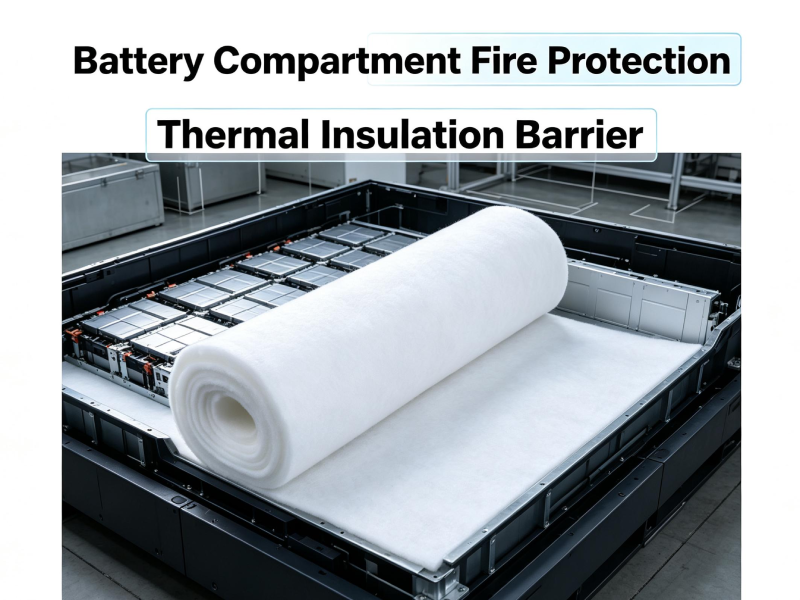
Key Parameter 7: Can the Supplier Customize the Material for Your Battery Structure?
Battery-related materials often have strong non-standard requirements.
Different customers may require different:
Fiber compositions
GSM
Thickness
Density
Widths
Roll lengths
Cut dimensions
Composite structures
If a supplier can only provide fixed standard specifications, customers may need to perform significant additional processing themselves.
A custom nonwoven felt manufacturer can discuss the material structure according to the specific application and adjust relevant specifications according to customer requirements.
This capability is particularly important for OEM and ODM projects.
During the early stages of development, buyers can provide the target thickness, dimensions, installation method, flame-retardant requirements, and processing method, allowing the manufacturer to develop samples based on these conditions.
This is often more efficient than purchasing large quantities of standard material first and then trying to modify it internally.
Key Parameter 8: What Information Should Buyers Confirm with the Manufacturer Before Purchasing?
Before placing a formal order, buyers should document the material requirements as clearly as possible.
At minimum, the following information should be confirmed:
Material name and fiber composition
GSM and allowable tolerance
Thickness and allowable tolerance
Density or structural requirements
UL 94 test information, if required by the project
Product dimensions
Roll or sheet format
Post-processing method
Batch inspection standards
Packaging method
If the project has special performance requirements, buyers should also request test data that corresponds to the actual product specification, rather than relying on a test report for another product.
In particular, when UL 94 is involved, buyers should confirm whether the material, thickness, and actual purchased product in the test report are consistent.
This can help reduce the risk of a situation where the sample meets the requirements but the mass-produced product does not.
Why Is Needle Punched Fire Resistant Felt Suitable for Non-Standard Battery Material Projects?
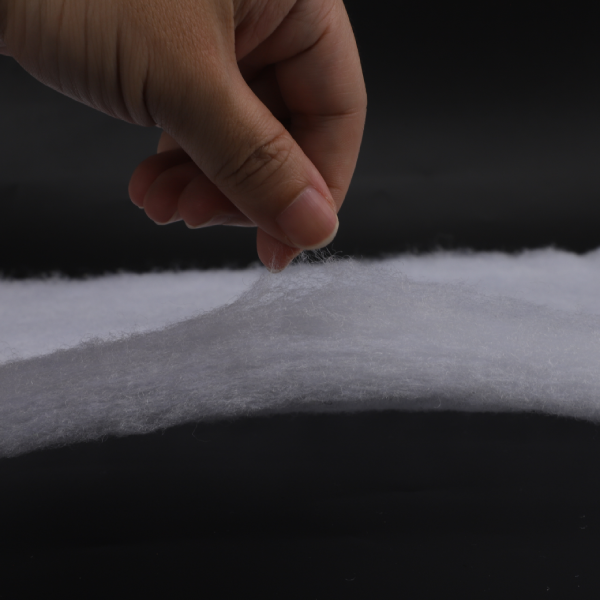
Needle punched nonwoven materials form an interlocked fiber structure through mechanical needle punching. The fiber composition, GSM, thickness, density, and structure can be adjusted for different applications.
For battery-related projects that require cutting, die cutting, or different dimensional processing, this material format provides a certain level of processing flexibility.
At the same time, needle punching can accommodate different fiber systems and material structures, allowing manufacturers to develop different specifications of needle punched fire resistant felt according to specific project requirements.
Of course, whether the material is ultimately suitable for a specific battery product still needs to be verified according to the customer's installation structure, testing standards, and actual operating conditions.
Therefore, a more effective purchasing approach is not simply to ask:
“Do you have battery fire resistant felt?”
Instead, buyers should explain:
What is my battery structure?
Where will the material be installed?
What flame-retardant testing is required?
What are the thickness and weight limitations?
How will the material be processed?
This allows the manufacturer to identify a more suitable material structure.
Why Is Choosing a Stable Needle Punched Nonwoven Manufacturer More Important Than Simply Comparing Unit Prices?
Battery-related materials are often part of long-term projects.
If the supplier's GSM, thickness, or material structure changes significantly from batch to batch, customers may need to repeat testing or even adjust their production processes.
Therefore, when selecting a manufacturer, buyers should consider:
Production equipment
Raw material management
Quality control
Batch consistency
Customization capabilities
Delivery capability
This is why a professional needle punched felt manufacturer needs to provide more than samples. The manufacturer also needs stable mass-production capabilities.
For overseas customers, if the supplier can directly manage raw materials, needle punching production, and subsequent processing, communication and specification management can also be more direct.
How Does Jinhaocheng Provide Customized Fire Resistant and Thermal Insulation Materials for Battery-Related Applications?
HUIZHOU JINHAOCHENG NONWOVENS CO., LTD was established in 2005 and has long focused on the development and manufacturing of needle punched nonwoven materials and related products.
The company operates a production base of approximately 26,000 square meters with 15 automated needle punching production lines, providing stable needle punched nonwoven manufacturing capacity for different industrial applications.
According to specific customer requirements, we can discuss and develop fiber composition, GSM, thickness, density, width, roll length, and subsequent processing formats for different projects.
For materials with flame-retardant requirements, we can also provide corresponding material testing and sample development support according to specific product specifications and project requirements.
It is important to emphasize that the suitability of a material for a specific battery product must be verified by the customer based on the actual battery structure, operating conditions, and applicable testing requirements.
Our role is better positioned around the development of customized needle punched fire resistant felt, flame-retardant nonwoven materials, and thermal insulation nonwoven materials for battery-related applications, rather than simply supplying one fixed specification.
For customers requiring OEM or ODM cooperation, material specifications can also be developed according to the target product structure.
What Should Buyers Really Focus on When Purchasing Fire Resistant Insulation Materials for Batteries?
When selecting fire resistant insulation materials for battery-related applications, buyers should not focus on a single performance indicator.
The actual evaluation should consider:
Installation position
Flame-retardant requirements
UL 94 testing requirements
GSM
Thickness
Density
Structural stability at high temperatures
Processing performance
Batch consistency
Supplier customization capabilities
For battery-related projects, the material itself is only one component of the overall product structure.
Therefore, a reasonable purchasing approach is to first define the actual application requirements, then select the material structure and supplier rather than purchasing a material first and trying to make it fit the product later.
For customers requiring long-term supply, a stable needle punched nonwoven manufacturer, clear quality standards, and consistent batch performance are often more important than simply pursuing the lowest purchase price.
Conclusion: Battery Fire Resistant Felt Is Not “Better” Simply Because It Is Thicker
When selecting fire resistant insulation materials for battery enclosures and related battery products, buyers should not simply assume that “higher temperature resistance is always better” or that “a thicker material is automatically safer.”
A more appropriate approach is to evaluate installation position, flame-retardant performance, GSM, thickness, density, structural stability, processing performance, and batch consistency together.
If a project requires UL 94 flammability performance, buyers should also confirm whether the specific test result corresponds to the actual purchased material and its thickness.
At the same time, it is important to understand that UL 94 is a material flammability test and should not be treated on its own as proof of battery system-level thermal runaway or thermal propagation performance. The specific testing and safety requirements for a battery product should be determined by the final product design and applicable standards.
For manufacturers, importers, and material buyers developing battery-related products, working with a needle punched felt manufacturer with stable production and OEM/ODM customization capabilities can make it easier to develop suitable material specifications according to the actual structure.
Jinhaocheng can provide customized needle punched fire resistant felt, flame-retardant nonwoven materials, and related nonwoven materials according to customer requirements, helping customers establish more stable material solutions in terms of specifications, processing, and bulk supply.