Where Can Fire Resistant Needle Punched Felt Be Used? 10 Applications and Key Material Requirements Buyers Should Check
For importers, wholesalers, product manufacturers, and industrial buyers, one of the most common questions when evaluating fire resistant needle punched felt is simple: Can this material actually be used for my product?
The answer depends on the application.
An emergency fire blanket, automotive fire protection product, welding protection mat, BBQ protection mat, industrial insulation component, furniture material, and building protection product may all require fire-resistant nonwoven materials, but their performance requirements are not necessarily the same.
Factors such as fiber composition, GSM, thickness, density, flexibility, thermal performance, flame resistance, mechanical strength, processing requirements, and applicable testing standards may need to be considered differently according to the final product.
For buyers developing new products or sourcing materials for existing production, selecting a suitable needle punched fire resistant felt is therefore more important than simply choosing the lowest-priced material.
Why Can't the Same Fire Resistant Felt Be Used for Every Product?
Different applications expose the material to different working conditions.
An emergency fire blanket may prioritize flexibility, portability, and rapid fire protection, while a welding protection mat may require greater thickness, abrasion resistance, and resistance to sparks and molten particles.
Automotive applications may require materials that can withstand specific temperature conditions, vibration, compression, or space limitations. Industrial insulation applications may place greater emphasis on thermal performance, dimensional stability, and long-term service conditions.
For furniture, mattresses, and building-related applications, the final product may also need to meet specific market regulations, testing requirements, and product standards.
Therefore, buyers should not simply ask whether a material is “fire resistant.”
A more useful question is:
Does this fire resistant felt have the right material structure and performance for my specific application?
Application 1: Emergency Fire Blankets
One of the most recognizable applications of fire resistant needle punched felt is emergency fire blankets.
Fire blankets may be used in kitchens, homes, camping environments, emergency kits, industrial workplaces, and portable fire protection products.
For these applications, the material needs to provide an appropriate combination of flame resistance, flexibility, thickness, weight, and ease of handling.
For portable products, excessive weight or stiffness can make the blanket difficult to fold, store, or deploy quickly.
For industrial applications, buyers may require a different thickness or structure depending on the intended protection environment.
Therefore, manufacturers may need to customize the fiber composition, GSM, thickness, density, and flexibility according to the final fire blanket design.
Application 2: Automotive Emergency Fire Protection Products
Automotive applications represent another important area for fire resistant felt.
Materials may be used in automotive emergency fire blankets, vehicle fire protection products, trunk emergency products, EV emergency fire protection products, and automotive thermal protection components.
Depending on the vehicle design, the material may also be considered for engine compartment insulation, automotive heat protection, trunk insulation, or other thermal protection applications.
For these products, buyers should pay attention to the specific working environment.
Temperature exposure, available installation space, material flexibility, mechanical requirements, and the applicable testing requirements can all influence material selection.
The fiber composition and testing performance can be customized according to the intended automotive application and product design.
Application 3: Welding Fire Protection Mats
Welding environments create a different set of protection requirements.
During welding, sparks, hot particles, and localized heat may come into contact with floors, work surfaces, equipment, or surrounding materials.
Therefore, welding fire protection mats, welding blankets, spark protection mats, fire mats, and industrial heat pads may use fire resistant needle punched felt as part of their protective structure.
For welding applications, buyers may need to consider material thickness, density, surface structure, flexibility, and mechanical durability according to the working environment.
A workshop floor protection product may have different requirements from a flexible welding blanket used to cover equipment or surrounding areas.
Therefore, the final felt structure should be selected according to the actual welding environment and intended use.
Application 4: BBQ and Grill Protection Mats
Fire resistant felt can also be used in products designed to protect outdoor surfaces during BBQ and grilling.
A BBQ protection mat or grill protection mat may be placed underneath or around cooking equipment to help protect decks, patios, concrete surfaces, and other outdoor flooring from heat, sparks, grease, and hot embers.
For outdoor cooking applications, buyers may need to consider the balance between fire resistance, flexibility, thickness, weight, and ease of cleaning or handling.
The required structure may also depend on whether the product is designed for occasional household BBQ use or more frequent outdoor cooking applications.
Therefore, manufacturers can develop different felt specifications according to the final product structure and application requirements.
Application 5: Travel, Camping, and Outdoor Fireproof or Thermal Insulation Products
Portability becomes particularly important for travel and outdoor applications.
Fireproof and thermal insulation blankets used for camping, hiking, outdoor travel, vehicle emergency kits, outdoor cooking, emergency preparedness, and survival applications may need to balance protection performance with lightweight construction.
If the material is too heavy or rigid, it may be inconvenient to carry, fold, and store.
Therefore, buyers developing outdoor products may pay particular attention to GSM, thickness, flexibility, weight, and overall material structure.
For manufacturers, the material can be customized according to the intended product size, portability requirements, and application environment.
Application 6: Home Fire Protection
Fire resistant felt can also be incorporated into different home fire protection products.
Examples include kitchen fire blankets, emergency fire pads, fireplace and stove protection products, heat protection materials, appliance thermal protection, home workshop protection, and garage fire protection products.
Household applications often require materials that are practical to handle and suitable for integration into compact products.
The final material requirements depend on the product design, expected heat or flame exposure, flexibility requirements, and applicable testing standards.
For buyers developing household fire protection products, it is therefore important to evaluate the material together with the complete product structure rather than selecting the felt based only on price or thickness.
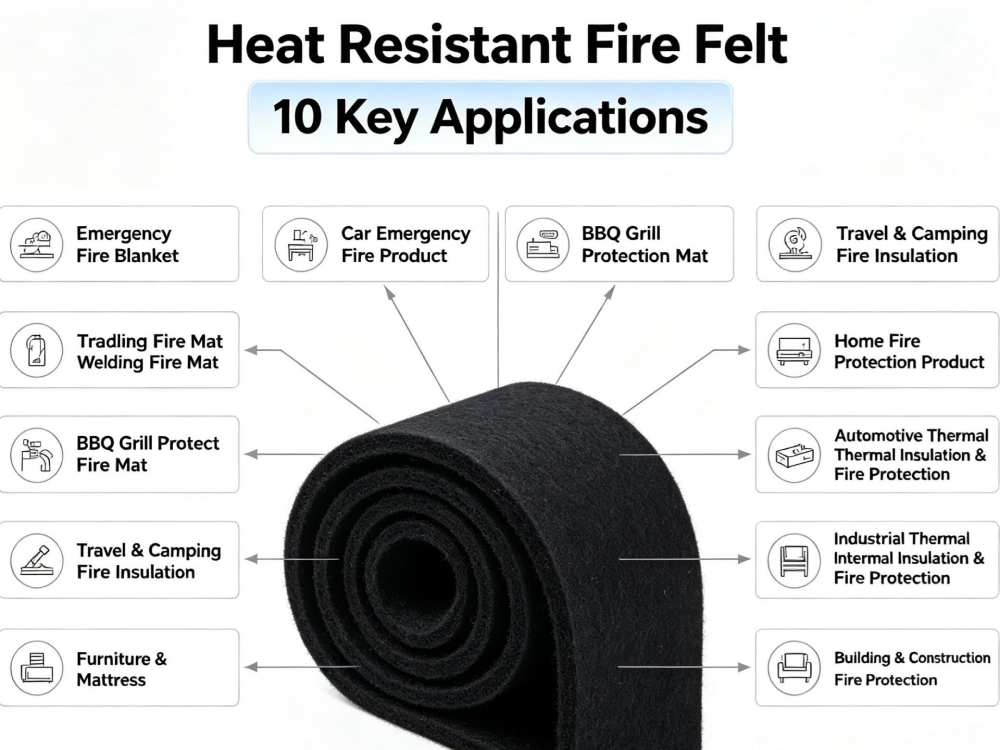
Application 7: Automotive Thermal and Fire Protection
Beyond emergency products, fire resistant felt can also be considered for broader automotive thermal and fire protection applications.
Potential applications include automotive thermal insulation, engine compartment insulation, heat shields, exhaust system protection, battery thermal protection, EV thermal management, automotive interior flame-retardant materials, trunk insulation, and automotive acoustic or thermal insulation.
These applications can have significantly different operating conditions.
For example, an engine compartment may involve higher temperatures and mechanical exposure, while an interior application may have different requirements related to flexibility, weight, acoustic performance, and flame resistance.
For EV-related applications, buyers may also need to consider the specific thermal environment and applicable automotive standards.
Therefore, material selection should be based on temperature conditions, flame exposure, mechanical requirements, installation space, and applicable standards rather than simply selecting the thickest or heaviest felt.
Application 8: Industrial Insulation and Fire Protection
Industrial applications represent a broad category for needle punched fire resistant felt.
The material may be used for thermal pads, insulation components, furnace insulation parts, pipe insulation, equipment heat shields, industrial covers, mechanical protection, high-temperature insulation, spark protection, and fire barrier components.
Different industrial environments can have very different temperature, mechanical, and installation requirements.
Some applications may require flexible insulation components, while others may need thicker or denser materials for equipment protection.
Therefore, industrial buyers should evaluate the required fiber composition, GSM, thickness, density, temperature conditions, mechanical requirements, and processing method before selecting the material.
For customized industrial products, the ability to adjust material specifications can be particularly important.
Application 9: Furniture and Mattress Fire Protection
Fire resistant nonwoven materials can also be incorporated into furniture and mattress components.
Potential applications include mattress components, upholstered furniture, sofa cushions, furniture padding, bedding, cushioning materials, upholstery lining, and other fire-resistant furniture components.
For these applications, material selection is closely related to the requirements of the target market and final product.
Buyers may need to consider fiber composition, thickness, flexibility, processing performance, and applicable fire-testing requirements.
Because furniture and mattress regulations can differ between markets and product categories, the material should be selected according to the specific target market and final product requirements.
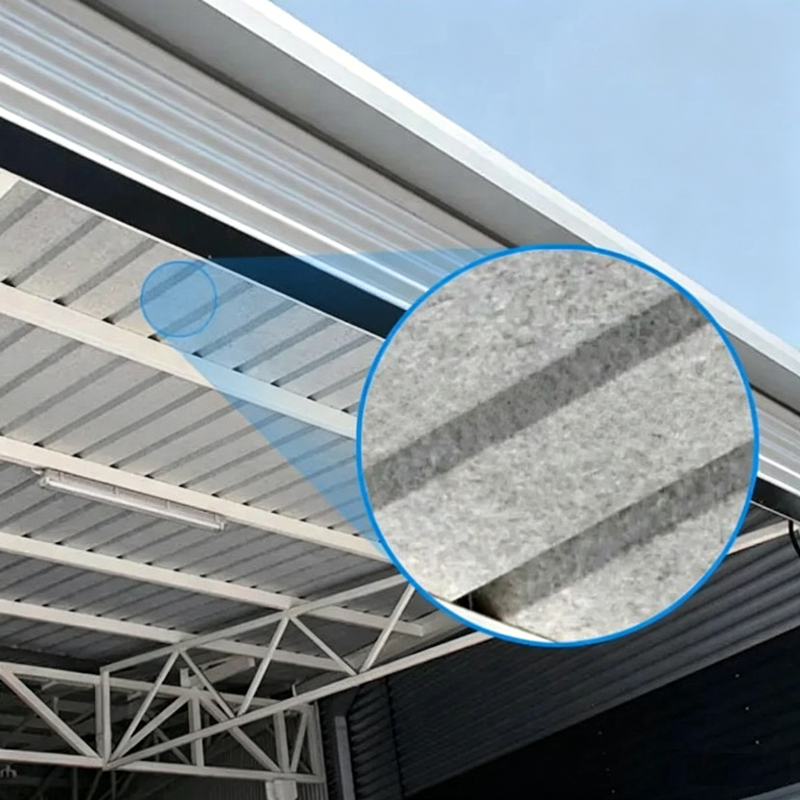
Application 10: Building and Building Fire Protection
The tenth major application area is building-related fire protection.
Fire resistant needle punched felt may be considered for fire protection layers, insulation components, HVAC insulation, pipe insulation, equipment insulation, industrial building insulation, and other building protection applications.
The material requirements can vary depending on where the product is installed and what type of protection it is intended to provide.
For example, HVAC and pipe insulation may have different requirements from equipment insulation or other building protection components.
Therefore, buyers should evaluate material structure, thickness, density, thermal performance, flame resistance, mechanical requirements, and applicable building or product standards according to the final application.
Why Should Buyers Not Compare Fire Resistant Felt Only by Price?
When purchasing fire resistant nonwoven materials, price is naturally an important factor.
However, comparing only the quotation can create problems later.
A lower-priced material may not provide the same GSM consistency, thickness stability, fiber structure, flexibility, mechanical performance, or batch consistency as another supplier's material.
If the material is being used for an OEM product, inconsistent specifications can also increase cutting waste, production adjustments, quality inspection costs, and finished-product variation.
Therefore, buyers should evaluate the complete material specification and production consistency rather than simply choosing the lowest quotation.
For long-term purchasing, a stable fire resistant felt manufacturer can provide greater value than a supplier that competes only on initial price.
Why Is Fire Resistant Needle Punched Felt Suitable for OEM and Custom Products?
One advantage of needle punched nonwoven technology is its flexibility in material design.
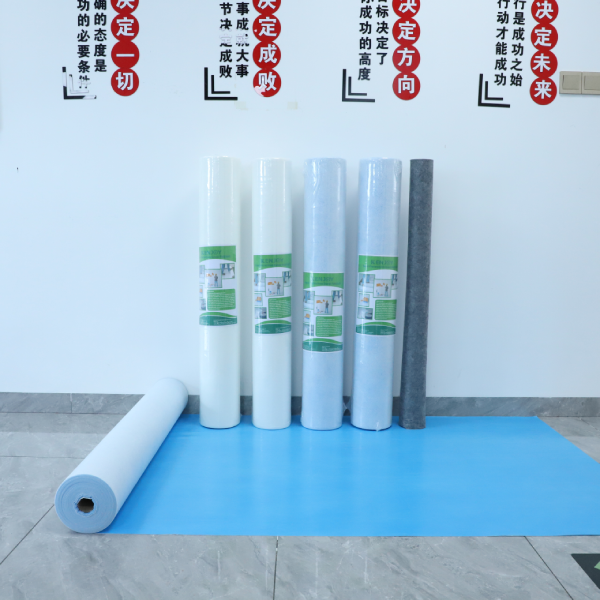
Depending on the application, manufacturers can adjust fiber composition, GSM, thickness, density, width, roll length, color, and processing format.
This makes custom fire resistant felt suitable for different product development requirements.
For example, a portable emergency fire blanket may require a lightweight and flexible structure, while an industrial fire protection component may require greater thickness or density.
Automotive and building applications may also require specific dimensions or converting processes to fit the final product.
Therefore, working with a custom nonwoven felt manufacturer can help buyers develop material specifications around the actual product rather than adapting the final product to a fixed standard material.
How Can Jinhaocheng Provide Customized Fire Resistant Felt?
HUIZHOU JINHAOCHENG NONWOVENS CO., LTD has more than 20 years of nonwoven manufacturing experience and focuses on the production of needle punched nonwoven felt and customized nonwoven materials.
Our production base covers approximately 26,000 square meters and is equipped with 15 automated needle punching production lines, providing stable production capacity for different nonwoven applications.
As a professional needle punched felt manufacturer and fire resistant felt manufacturer, we can discuss material specifications according to different application requirements, including fiber composition, GSM, thickness, density, width, roll length, color, and processing requirements.
We also support OEM and ODM cooperation for customers developing customized fire-resistant products.
For overseas buyers looking for a nonwoven felt manufacturer China, custom nonwoven felt manufacturer, or OEM needle punched felt factory, working directly with a manufacturer can make it easier to coordinate material development, production specifications, and long-term supply.
How Can Buyers Find the Right Fire Resistant Felt for Their Product?
The first step is to clearly define the final application.
Buyers should determine whether the material will be used for an emergency fire blanket, automotive product, welding protection mat, BBQ mat, outdoor product, home fire protection product, industrial component, furniture or mattress product, or building protection application.
Next, buyers should identify the required fiber composition, GSM, thickness, density, flexibility, mechanical requirements, thermal requirements, and applicable testing standards.
Finally, the supplier should be evaluated based on manufacturing capability, production consistency, customization capability, and long-term supply stability.
This approach allows buyers to select a needle punched fire resistant felt based on the actual product requirements rather than simply comparing material prices.
Conclusion: Choose Fire Resistant Felt According to the Final Application
Fire resistant needle punched felt can be used across many different product categories, from emergency fire blankets and automotive fire protection to welding mats, BBQ protection, outdoor products, industrial insulation, furniture, mattresses, and building protection.
However, these applications do not require exactly the same material structure.
The right choice depends on the final product's fiber composition, GSM, thickness, density, flexibility, thermal and flame requirements, mechanical requirements, processing needs, and applicable standards.
For OEM and large-volume projects, working with an experienced needle punched felt manufacturer, fire resistant felt manufacturer, or nonwoven felt manufacturer China can provide greater flexibility in material development and long-term supply.
Jinhaocheng supports customized needle punched fire resistant felt and other nonwoven materials for different application requirements, with OEM/ODM capabilities and automated needle punching production capacity.
The key is not simply to find a fire resistant felt material.
It is to find the right material structure for the final product and application.