Why Does Fire Resistant Felt Performance Differ? 6 Manufacturing Factors That Affect Flame Resistance
When purchasing needle punched fire resistant felt, buyers may notice an important problem: two products with similar specifications can sometimes show different flame-retardant or fire-resistant performance.
This does not necessarily mean that one product is “good” and another is “bad.” The actual performance of fire resistant felt can be affected by many manufacturing factors, including fiber type, fiber ratio, GSM, thickness, density, needle punching structure, and production consistency.
For industrial applications, welding protection, automotive interiors, thermal protection, and other projects where flame resistance matters, understanding these manufacturing factors is more useful than simply comparing product prices or maximum temperature claims.
So, why can the performance of similar needle punched fire resistant felt products vary? The answer is closely related to how the material is designed and manufactured.
Why Can Similar Needle Punched Fire Resistant Felt Products Have Different Performance?
Needle punched fire resistant felt is not defined by the name alone.
Different manufacturers may use different flame-retardant fibers, fiber blends, GSM, thicknesses, densities, and needle punching parameters. These differences can affect the final fiber structure and therefore influence flame behavior, dimensional stability, thermal performance, and other properties.
Even when two products have the same nominal GSM or thickness, their internal fiber structures may still be different.
This is why buyers should not evaluate fire resistant felt only by its product name or one laboratory test result. The material system and manufacturing consistency are equally important.
Key Factor 1: How Does the Type of Flame-Retardant Fiber Affect Fire Resistant Felt Performance?
The fiber type provides the basic performance foundation of fire resistant felt.
Different flame-retardant or fire-resistant fibers have different combustion behavior, thermal stability, and processing characteristics.
For example, flame-retardant polyester can be designed for applications requiring flame-retardant performance, while other specialized fibers may be selected for applications with higher thermal or flame-protection requirements.
The choice of fiber therefore needs to match the actual application.
A professional fire resistant felt manufacturer should be able to select suitable fiber systems according to the required flame-retardant performance, temperature environment, flexibility, thickness, and processing requirements.
This means that choosing the right fiber is the first step toward developing a suitable needle punched fire resistant felt.
Key Factor 2: Why Does Fiber Ratio Affect Flame-Retardant Performance?
Using a flame-retardant fiber does not automatically mean that the final felt will have exactly the same flame performance under every condition.
When different fibers are blended, their proportions can affect the final material structure and performance.
The fiber ratio can influence how the material responds to flame exposure, how the fibers interact during needle punching, and how stable the finished nonwoven structure becomes.
Therefore, for customized flame retardant felt, manufacturers may need to adjust the fiber composition according to the target application and required performance.
For OEM projects, this is particularly important because different customers may have different requirements for flame retardancy, flexibility, thickness, density, and processing.
Key Factor 3: Why Does GSM Affect the Actual Performance of Needle Punched Fire Resistant Felt?
GSM, or grams per square meter, is an important specification for needle punched nonwoven materials.
For needle punched fire resistant felt, GSM affects the amount of fiber contained within a specific area and therefore influences the overall material structure.
A higher GSM does not automatically mean better fire resistance.
If the material becomes heavier without the fiber system, thickness, density, and needle punching structure being properly matched, the final performance may not improve proportionally.
Therefore, GSM should be selected together with the intended application, thickness, density, fiber type, and required flame-retardant performance.
For industrial and OEM projects, stable GSM control is also important because significant variation between batches can lead to differences in the finished material.
Key Factor 4: Why Should Thickness and Density Not Simply Be “As High as Possible”?
Thickness and density are also important factors affecting the structure of fire resistant felt.
A thicker material may provide more material volume and can offer different levels of thermal protection or cushioning depending on its construction.
However, thicker does not automatically mean better.
If thickness and density are increased without considering the fiber type, application environment, weight requirements, flexibility, and processing method, the finished material may become unnecessarily heavy or difficult to process.
For automotive interiors, industrial equipment, welding protection, and other applications, the appropriate combination of GSM, thickness, and density should be determined according to the actual use requirements.
The goal is not simply to produce the thickest fireproof nonwoven felt, but to develop a material structure that provides the required performance while remaining practical to process and install.
Key Factor 5: Why Does the Needle Punched Structure Affect the Stability of Fire Resistant Felt?
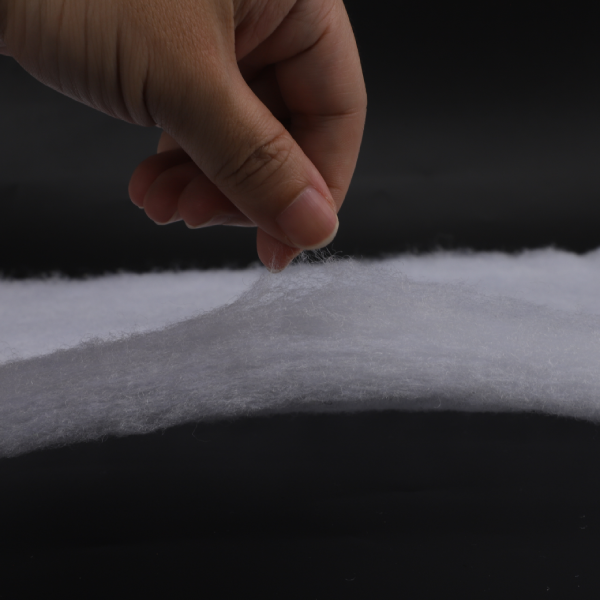
Needle punching creates the three-dimensional fiber structure that gives needle punched nonwoven felt its characteristic mechanical properties.
During production, the fiber web is repeatedly penetrated by barbed needles, causing fibers from different directions to become mechanically entangled.
The final structure can be affected by needle density, punching depth, processing parameters, fiber characteristics, and web uniformity.
If the fiber structure is not sufficiently stable or uniform, the finished material may show differences in thickness, density, strength, or surface stability.
For needle punched fire resistant felt, structural stability is particularly important because the flame-retardant fiber system needs to remain consistently distributed throughout the material.
Therefore, needle punching is not simply a mechanical forming step. It is also an important factor in determining the consistency of the finished fire-resistant nonwoven structure.
Key Factor 6: Why Is Production Consistency More Important Than a Single Test Result?
A single sample can demonstrate that a particular piece of fire resistant felt meets a certain performance target.
However, long-term industrial projects require much more than one successful sample.
If raw materials, fiber ratios, GSM, thickness, density, or production parameters change significantly between batches, the finished material may also show performance differences.
For OEM and large-volume applications, batch-to-batch consistency is therefore a critical consideration.
A reliable needle punched felt manufacturer needs to maintain stable raw materials, standardized production conditions, specification control, and finished-product inspection.
For customers purchasing the same material repeatedly, stable production can be more valuable than a single high-performing sample.
Why Can the Self-Extinguishing Time of the Same Fire Resistant Felt Also Vary?
The self-extinguishing behavior of a material can be affected by its fiber system, GSM, thickness, density, material structure, and testing conditions.
For example, the same general type of flame retardant felt may show different results when its thickness or material composition changes.
Testing methods and standards can also affect the measured result.
Therefore, self-extinguishing time should not be treated as a universal number that applies to every fire-resistant felt product.
When a project requires a specific flame-retardant or self-extinguishing performance, buyers should confirm the applicable testing method, material specification, thickness, and actual application requirements.
This is particularly important for industrial and OEM projects where compliance with a specific standard may be required.
Why Can a Sample Pass Testing While the Bulk Order Shows Different Performance?
This is one of the most important concerns for long-term buyers.
A sample may be produced under controlled conditions and successfully meet the expected performance target.
However, if the raw material, fiber blending, GSM, thickness, density, needle punching parameters, or other production conditions are not controlled consistently, the bulk production may show differences.
This is why buyers should evaluate not only the sample but also the manufacturer's ability to maintain stable batch-to-batch production.
A professional fire resistant felt manufacturer should have a clear quality-control system covering raw materials, production specifications, process parameters, and finished-product inspection.
For OEM customers, consistency between the approved sample and mass production is particularly important.
How Should Different Applications Determine the Manufacturing Structure of Fire Resistant Felt?
Different applications require different material structures.
For industrial equipment, the focus may be on flame resistance, thermal protection, dimensional stability, and suitability for the working environment.
For welding protection, the material may need to provide appropriate flame-retardant performance, heat protection, and resistance to the specific conditions created by sparks and hot particles.
For automotive interiors, the material may need to balance flame-retardant performance, flexibility, weight, thickness, dimensional stability, and processing requirements.
For emergency fire blankets and other specialized applications, the required material structure may depend on the intended use, testing requirements, flexibility, thickness, and handling requirements.
Therefore, the manufacturing solution should be developed according to the actual application rather than simply selecting one standard fire resistant felt specification for every project.
Why Is Needle Punched Technology Suitable for Customized Flame-Retardant Fire Resistant Felt?
One advantage of needle punched nonwoven technology is its flexibility in material design.
Manufacturers can adjust fiber types, fiber blends, GSM, thickness, density, width, and other specifications according to different applications.
This makes needle punched construction suitable for developing customized flame retardant felt and fire resistant nonwoven materials.
For OEM projects, customers may also require specific dimensions, roll formats, cutting methods, packaging, or other processing requirements.
A manufacturer with flexible needle punching and finishing capabilities can therefore develop material structures according to the customer's actual requirements instead of supplying only one standard specification.
How Can Buyers Determine Whether a Fire Resistant Felt Manufacturer Has Stable Mass-Production Capability?
When selecting a fire resistant felt manufacturer, buyers should look beyond the sample.
First, they should understand the manufacturer's raw material control and fiber selection capabilities.
Second, they should confirm whether the manufacturer can consistently control GSM, thickness, density, and material structure.
Third, buyers should evaluate whether the manufacturer has stable needle punching production capabilities for large-volume orders.
Fourth, the consistency between samples and bulk production should be considered.
Finally, buyers should check whether the supplier can provide customized specifications and maintain stable long-term supply.
For industrial and OEM projects, these factors can be more important than simply choosing the lowest-priced supplier.
How Does Jinhaocheng Control the Batch Consistency of Needle Punched Fire Resistant Felt?
HUIZHOU JINHAOCHENG NONWOVENS CO., LTD focuses on the development and manufacturing of needle punched nonwoven materials and provides customized solutions for different industrial applications.
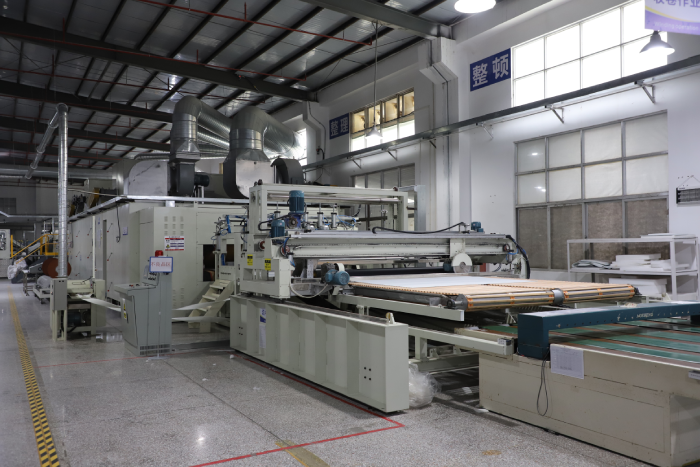
With a production base of approximately 26,000 square meters and 15 automated needle punching production lines, Jinhaocheng has the production capacity to support different specifications and large-volume orders.
For needle punched fire resistant felt, material specifications can be developed according to application requirements, including fiber type, GSM, thickness, density, width, and other product specifications.
The company also supports OEM and ODM customization, allowing customers to develop suitable nonwoven material structures for different applications.
For customers looking for a reliable needle punched felt manufacturer, fire resistant felt manufacturer, or nonwoven felt manufacturer China, stable production capability and specification control are important parts of long-term cooperation.
Conclusion: Why Does Fire Resistant Felt Performance Differ?
The performance of needle punched fire resistant felt is influenced by more than the product name or one individual specification.
The six key manufacturing factors include fiber type, fiber ratio, GSM, thickness and density, needle punched structure, and production consistency.
These factors work together to determine the final material structure and influence its flame-retardant and fire-resistant performance.
For industrial, welding, automotive, thermal protection, and OEM applications, buyers should therefore avoid selecting materials based only on price, thickness, or a single test result.
Instead, the right fire resistant felt should be developed according to the application environment, required performance, material structure, manufacturing specifications, and long-term batch consistency.
For companies looking for a needle punched felt manufacturer, fire resistant felt manufacturer, or custom fire resistant felt supplier, choosing a manufacturer with stable production capabilities and customization experience can help build a more reliable long-term material supply chain.